The Long Book
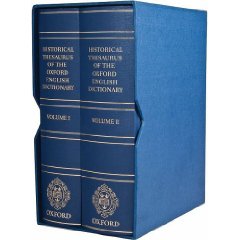
Good things can be done over long times. Oxford University, with its multi-century history and perspective, is one of the few institutions to support very long-term projects. Oxford University Press will this year release a book that has taken almost 45 years to finish. It’s the world’s largest thesaurus — and includes almost the entire vocabulary of English. The project was begun in 1965. (Thanks, Joe Stirt)
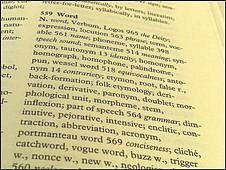
According to the BBC report:
The work was nearly destroyed in a fire in 1978, but despite the building being gutted, a metal filing cabinet protected the files. A spokesman said the final tome would contain over 230,000 categories with 800,000 meanings. The thesaurus was nearly completed in 1980, but the team decided to include words from updated versions of the Oxford English Dictionary. This added almost 30 years more work to the project.
One wonders what other kinds of things could we do if we were willing to devote half a century to it?
According to Oxford U Press the book features:
- A unique thesaurus resource – the very first historical thesaurus to be compiled for any of the world’s languages
- The largest thesaurus resource in the world, covering more than 920,000 words and meanings from Old English to the present day based on the Oxford English Dictionary
- Synonyms listed with dates of first recorded use in English, in chronological order, with earliest synonyms first
- Uses a thematic system of classification, with synonyms and related words forming part of a detailed semantic hierarchy
- Comprehensive index enables complete cross-referencing of nearly one million words and meanings
- Contains a comprehensive sense inventory of Old English
- Includes a free fold-out colour chart which shows the top levels of the classification structure
You can preorder the “Historical Thesaurus of the Oxford English Dictionary: With Additional Material from A Thesaurus of Old English” at Amazon for $316.