


How Will the Miracle Happen Today?


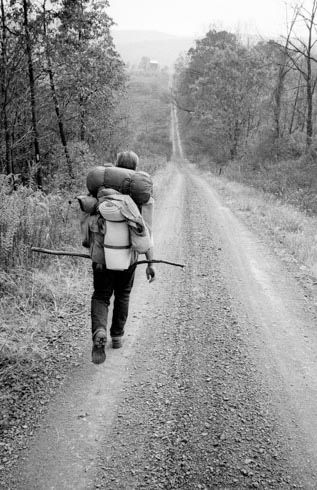
When I was in my twenties I would hitchhike to work every day. I’d walk down three blocks to Route 22 in New Jersey, stick out my thumb and wait for a ride to work. Someone always picked me up. I had to punch-in for my job as a packer at a warehouse at 8 o’clock sharp, and I can’t remember ever being late. It never ceased to amaze me even then, that the kindness of strangers could be so dependable. Each day I counted on the service of ordinary commuters who had lives full of their own worries, and yet without fail, at least one of them would do something kind, as if on schedule. As I stood there with my thumb outstretched, the question in my mind was simply: “How will the miracle happen today?”
Shortly after that rare stint of a real job, I took my wages and split for Asia, where I roamed off and on for the next 8 years. I lost track of the number of acts of kindness aimed at me, but they arrived as dependably as my daily hitchhiking miracle. Random examples: In the Philippines a family living in a shack opened their last can of tinned meat as a banquet for me, a stranger who needed a place to crash. Below a wintry pass north of Gilgit in the Pakistan Himalayas, a group of startled firewood harvesters shared their tiny shelter and ash-baked bread with me when I bounded unannounced into their campfire circle one evening. We ended up sleeping like sardines under a single home-woven blanket while snow fell. In Taiwan, a student I met on the street one day befriended me in that familiar way to most travelers, but surprised me by offering me a place at his family’s apartment in Taipei. While he was away at school, I sat in on the family meals and had my own bedroom for two weeks.
One remembrance triggers another; I could easily list thousands of such gestures without much trouble, because – and this is important – not only did I readily accept such gifts, but I eventually came to rely on them being offered. I could never guess who the messenger would be, but kindness never failed to materialize once I put myself in some position to receive it.
As in my hitchhiking days, I began my days on the road in Asia and elsewhere with the recurring question “how will the miracle happen today?” After a lifetime of relying on such benevolence I have developed a theory of what happens in these moments and it goes like this.
Kindness is like a breath. It can be squeezed out, or drawn in. You can wait for it, or you can summon it. To solicit a gift from a stranger takes a certain state of openness. If you are lost or ill, this is easy, but most days you are neither, so embracing extreme generosity takes some preparation. I learned from hitchhiking to think of this as an exchange. During the moment the stranger offers his or her goodness, the person being aided can reciprocate with degrees of humility, dependency, gratitude, surprise, trust, delight, relief, and amusement to the stranger. It takes some practice to enable this exchange when you don’t feel desperate. Ironically, you are less inclined to be ready for the gift when you are feeling whole, full, complete, and independent!
One might even call the art of accepting generosity a type of compassion. The compassion of being kinded.
One year I rode my bicycle across America, from San Francisco to New York. I started out camping in state parks, but past the Rockies, parks became scarce, so I switched to camping on people’s lawns. I worked up a routine. As darkness fell, I began scouting the homes I passed for a likely candidate: neat house, big lawn in the back, easy access for my bike. When I selected the lucky home, I parked my bag-loaded bike in front of the door and rang the bell. “Hello,“ I’d say. “I’m riding my bike across America. I’d like to pitch my tent tonight where I have permission and where someone knows where I am. I’ve just eaten dinner, and I’ll be gone first thing in the morning. Would you mind if I put up my tent in your backyard?”
I was never turned away, not once. And there was always more. It was impossible for most folks to sit on their couch and watch TV while a guy who was riding his bicycle across America was camped in their backyard. What if he was famous? So I was usually invited into their home for desert and an interview. My job in this moment was evident: I was to relate my adventure. I was to help them enjoy a thrill they secretly desired, but would never accomplish. My account in their kitchen would make this legendary ride part of their lives. Through me and my retelling of my journey, they would get to vicariously ride a bicycle across America. In exchange I would get a place to camp and a dish of ice cream. It was a sweet deal that benefited both of us.
The weird thing is that I was, and still am, not sure whether I would have done what they did and let me sleep in the backyard. The “me” on the bicycle had a wild tangled beard, had not showered for weeks, and appeared destitute (my whole transcontinental trip cost me $500). I am not sure I would invite a casual tourist I met to take over my apartment, and cook for him, as many have done for me. I definitely would not hand him the keys to my own car, as a hotel clerk in Dalarna, Sweden, did one mid-summer day when I asked her how I could reach the painter Carl Larsson’s house 150 miles away.
The many times I was down or dazed, and a stranger interrupted their life to assist me is a less perplexing mystery to me that when, for no noble reason at all, an impoverished legendary Chinese painter insists that I take one of his treasures. I’d like to think that I would without hesitation drive far out of my way to bring a sick traveler to the hospital (in the Philippines), but I am having trouble seeing myself emptying my bank account to purchase a boat ticket for someone who has more money than I do. And if I were a cold drink seller in Oman, I would definitely not give cold drinks away for free just because the recipient was a guest in my poor country. But those kind of illogical blessings happen when you are open to a gift.
Yet while I rely on miracles, I don’t believe in saints. There are no saints even among the gentle monks of Asia, or I should say, especially among the monks. Rather, generosity is rampant in everyday lives, but no more in one place, race, or creed than others. We expect altruism among kinfolk and neighbors, although the world would, as we all know, be a better place if neighborhood and family kindness happened even more.
Altruism among strangers, on the other hand, is simply strange. To the uninitiated its occurrence seems as random as cosmic rays. A hit or miss blessing that makes a good story. The kindness of strangers is gift we never forget.
But the strangeness of “kindees” is harder to explain. A kindee is what you turn into when you are kinded. Curiously, being a kindee is an unpracticed virtue. Hardly anyone hitchhikes any more, which is a shame because it encourages the habit of generosity from drivers, and it nurtures the grace of gratitude and patience of being kinded from hikers. But the stance of receiving a gift – of being kinded — is important for everyone, not just travelers. Many people resist being kinded unless they are in dire life-threatening need. But a kindee needs to accept gifts more easily. Since I have had so much practice as a kindee, I have some pointers on how it is unleashed.
I believe the generous gifts of strangers are actually summoned by a deliberate willingness to be helped. You start by surrendering to your human need for help. That we cannot be helped until we embrace our need for help is another law of the universe. Receiving help on the road is a spiritual event triggered by a traveler who surrenders his or her fate to the eternal Good. It’s a move away from whether we will be helped, to how: how will the miracle unfold today? In what novel manner will Good reveal itself? Who will the universe send today to carry away my gift of trust and helplessness?
When the miracle flows, it flows both ways. When an offered gift is accepted, then the threads of love are knotted, snaring both the stranger who is kind, and the stranger who is kinded. Every time a gift is tossed it lands differently – but knowing that it will arrive in some colorful, unexpected way is one of the certainties of life.
We are at the receiving end of a huge gift simply by being alive. It does not matter how you calculate it, our time here is unearned. Maybe you figure your existence is the result of a billion unlikely accidents, and nothing more; then certainly your life is an unexpected lucky and undeserved surprise. That’s the definition of a gift. Or maybe you figure there’s something bigger behind this small human reality; your life is then a gift from the greater to the lesser. As far as I can tell none of us have brought about our own existence, nor done much to earn such a remarkable experience. The pleasures of colors, cinnamon rolls, bubbles, touchdowns, whispers, long conversations, sand on your bare feet – these are all undeserved rewards.
All of us begin in the same place. Whether sinner or saint, we are not owed our life. Our existence is an unnecessary extravagance, a wild gesture, an unearned gift. Not just at birth. The eternal surprise is being funneled to us daily, hourly, minute by minute, every second. As you read these words, you are rinsed with the gift of time. Yet, we are terrible recipients. We are no good at being helpless, humble, or indebted. Being needy is not celebrated on day-time TV shows, or in self-help books. We make lousy kindees.
I’ve slowly changed my mind about spiritual faith. I once thought it was chiefly about believing in an unseen reality; that it had a lot in common with hope. But after many years of examining the lives of the people whose spiritual character I most respect, I’ve come to see that their faith rests on gratitude, rather than hope. The beings I admire exude a sense of knowing they are indebted, of resting upon a state thankfulness. They recognize they are at the receiving end of an ongoing lucky ticket called being alive. When the truly faithful worry, it’s not about doubt (which they have); it’s about how they might not maximize the tremendous gift given them. How they might be ungrateful by squandering their ride. The faithful I admire are not certain about much except this: that this state of being embodied, inflated with life, brimming with possibilities, is so over-the-top unlikely, so extravagant, so unconditional, so far out beyond physical entropy, that is it indistinguishable from love. And most amazing of all, like my hitchhiking rides, this love gift is an extravagant gesture you can count on. This is the meta-miracle: that the miracle of gifts is so dependable. No matter how bad the weather, soiled the past, broken the heart, hellish the war – all that is behind the universe is conspiring to help you – if you will let it.
My new age friends call that state of being pronoia, the opposite of paranoia. Instead of believing everyone is out to get you, you believe everyone is out to help you. Strangers are working behind your back to keep you going, prop you up, and get you on your path. The story of your life becomes one huge elaborate conspiracy to lift you up. But to be helped you have to join the conspiracy yourself; you have to accept the gifts.
Although we don’t deserve it, and have done nothing to merit it, we have been offered a glorious ride on this planet, if only we accept it. To receive the gift requires the same humble position a hitchhiker gets into when he stands shivering on the side of the empty highway, cardboard sign flapping in the cold wind, and says, “How will the miracle happen today?”
