




Tegaderm

Use this 3M material, called Tegaderm, for applying dressing over a bleeding injury. It’s much better than adhesive tape or a big band-aid. Tegaderm is an air-permeable plastic film, as thin as cling film, but stronger and with an adhesive. I’ve found it adheres perfectly and because it is so thin it’s unnoticeable, especially on joints. You don’t even remember it’s on. Because of its thinness Tegaderm works really great under clothing. It’s breathable, too, and won’t come off in water. And since it is transparent, the dressing is not as visible, and you can see what’s going on underneath. It comes in sterile packaging about the size of a playing card, so you can apply it right over the injury, with the option to include some gauze underneath at first. I’ve cut smaller pieces for finger cuts, but I’ve found that waterproof bandaids work better for this.

-- KK  

Nexcare Tegaderm Waterproof Dressing
$8

Available from Amazon

Manufactured by Nexcare

Sample Excerpts:


On the right a bicyclist has applied Tegaderm over his road-rash shown on left. The bandage is hardly visible.
Image via NY Velocity


Unibits

I use unibits, or stepped drills, constantly because there’s nothing better for drilling sheet material. Let’s say you need to make some holes in 1/16th-inch thick acrylic. Your standard two flute drill bit will just tear it to pieces. But the unibit does it without any chaff or shattering or anything. This is because it’s not fluted; it doesn’t pull itself into the cut. It makes the cut with its leading edge, and it’s effectively a scraper. The stepped shape — giving different sized holes in one bit — is simply an added bonus.  I use them for all kinds of sheet materials, so I’ve got a ton of them.

-- Adam Savage  

[We first reviewed the Unibit back in 2008. Thanks, Adam, for the update!--OH]

Neiko Titanium Step Drill Bit
$14

Available from Amazon

Manufactured by Neiko


Tool Rental Know-How

The benefits of ownership are often overrated. Renting a tool can be a far smarter way to go than purchasing it. Renting can be far cheaper, and you’ll get the latest version of the tool. You can try out a new-to-you tool. Maintenance is not your headache. For instance you don’t have to store large tools, like a cement mixer. (You do have to return them!) Of course renting is particularly great for those tools you only need for a one-time job. How often do you need a wet saw, or a jackhammer?

But don’t stop there. Most people are unaware of the vast variety of expert tools available for rental from any decent rental store. The choices are mind-boggling and inspiring. Many of these tools will make a tough job easy and smooth. I did a tile fireplace once only because I was able to rent that wet saw to cut through marble like butter.

About 1

Every year or so I walk through a large rental place just looking to see what’s available. I come away with ideas like: why use a post hole digger for a fence line when you can rent an auger? Firewood time: rent log splitter, idle rest of the year. At a well-stocked rental store you can rent almost any tool you can think of: paper shredders, moisture meters, gas detectors, chimney brushes, sewer cameras, staple hammers, and so on. I’ll try new things because I know I can rent the right tool.

Here is a small selection of tools you can rent. Most great rental centers seem regional. (Can anyone suggest a great national rental store?) I’ve given approximate rates per day as a guideline, but most will also rent per hour, or half day too.

– KK

Mini Excavator – Aaaah, so cute! This 3-foot wide excavator will go where its big brothers can’t: through a gate, in between houses, onto landscaping, near foundations, into backyards. Its arm can reach out 13 feet and dig down 8 feet, and is strong enough to do minor earthwork. Some have a self-leveling cabin that really helps offset that paralyzing feeling on a slope that you are going to tip over. I recommend practicing before you get in close quarters. $275 per day.

2078Steam Wallpaper Remover – Removing wall paper is an ugly mess, and hopefully only a once-in-your-lifetime job, but this makes it possible. $40 per day.

Magnetic Sweeper Tool 1Magnetic Sweeper – Construction has a nasty habit of seeding driveways with tire-eating nails, screws, and shrapnel. You sweep this thing over the pavement (or lawn) and it sucks up the nasties. A pull on the handle releases the ferrous bits. Good to do at least once after the contractors leave. $25 per day.

200 big rednewPost Puller – When you need to pull up old posts, this jack does the trick. $40 per day.

0909081129 1
Stump Grinder – No other way to remove a stump. The grinder swings back and forth, throwing off a huge pile of chips. Despite its power, slowly nibbling across the stump down to its roots (don’t even think of using a chain saw) will take longer than you think. $125 per day.

Caulking Residential home on tall ladderTall Ladder – Wide-footed, tall ladders get you places you don’t want to get to other ways. But who wants to store these when they are not in use? $25 per day.

Wet sawWet Saw – An abrasive wheel lubricated by water hooked up to your garden house. Will easily and fairly accurately cut tile, pavers, concrete, stone, etc. Use outside if possible. $85 per day.

300HoleDigger400 66338 zoomHole Auger – Far superior when you have many post holes to dig. The two-person version is easiest to use – if you have a second person. It is heavy; the weight of the machine does the work. $80 per day.

2133 mElectric Conveyor Belt – For schlepping rock, dirt, debris out of a basement or over a fence. The 12-inch width fits through even a tiny window. What a time saver! Can be maneuvered with two people and hooks up to a standard tow hitch. $250 per day.

Bosch brute working
Electric Jack Hammer – This has one moving part: it. Will pulverize concrete, whether in a wall or on the floor. Not easy to handle, it will give you a workout. Even though it is electric, it still requires ear protection. $100 per day.

Blower
Carpet Dryer – When a flood soaks your wall-to-wall carpeting, you need to dry it out as fast as possible. Stick the “nose” of one of these under the yanked up edge and keep it running till everything dries out. You’ll probably need more than one, and you’ll need to have electric power on. $30 per day.

7 detail 2
Ditch Witch – These walk-behind ditch diggers come in all sizes. The small ones will dig narrow trenches for irrigation and cables 12 to 18 inches deep; larger ones for larger or deeper pipes. Call 811 to make sure you ain’t cutting through underground utilities. $280 per day.

HS3000IDHeat Cannon – This is a mega heat gun. Used to hurry the drying of paint or sheet rock spackle. It eats lots of propane and oxygen – ventilation is a must. $135 per day.

Boom LiftBoom Lift – For working on ceilings, signs, chimneys, roofs. May be cheaper than scaffolding if you have wheeled access. $280 per day.

2289Conduit Bender – Bends electrical conduit cleanly. Cheap to rent. Get the right sized diameter for your pipe. $6 per day.

Imgres 8Wood Chipper – After a storm, after tree pruning, this will turn a pile of branches into compostable mulch. Not hard to use; you’ll need a hitch to haul it. $225 per day.

1732Plumber’s Snake – The industrial version of the little one in hardware stores. Powered by an electric motor, this will clean out your sewer drains, chewing up gunk and even roots. It’s a do it yourself version of Roto-rooter. $90 per day.

IMG 0692Log Splitter –Tow it to your trees. In one day two energetic workers can make a huge pile of firewood assisted by one of these. There are a thousand models out there; the better ones flip from vertical to horizontal to suit your site. $100 per day.

Pipe tracing 1Pipe Locator – Will locate buried pipes, which is no small feat if you’ve tried to do it by other means. $55 per day.

Airless sprayerAirless Paint Sprayer – Will lay paint or stain as fast as you can walk. Sucks the paint from its own 5-gallon bucket. You’ll need long cords to feed its electric motor. $90 per day.

2726Fence Post Driver – Really the only way to bang metal fence posts into the ground. Lift up the weight with two hands, pull down hard over the post. It will employ muscles you have never used before. $13 per day.

1989Horizontal Drill – Drills under sidewalks, patios, even streets. You keep adding pipe sections to the front probe as you progress. How else are you going to get that wire under cement? Uses water pressure. $75 per day.

Gas guyWater Leak Detector – This electronic stethoscope listens for leaks in water pipes. Needs to be fairly close. $22 per day.

Carpet stretcher placing stretching headCarpet Stretchers – The secret tool for laying carpet, either new or after it has dried from being wet. Comes in either knee-powered, or lever operated. $30 per day.

BC2400 534x575Brush Hog – Every now weeds take over a lot, along driveways, and you need to cut them down to size. Some models like this one will handle saplings 2 inches thick. $100 per day.

Elkay piano fullPiano Dolly – These two trucks sandwich an upright piano so that it can be rolled around without damaging its legs. $22 per day.

1235Mini Mortar Mixer – You don’t need a full-sized cement mixer to do mortar jobs like laying brick or stone, or making stucco. $50 per day.

Rototiller 5hpRototiller – A mini horse and plow. Really useful when starting your garden area from sod. $85 per day.

1633
Concrete Cutoff Saw – Cut cement or asphalt! Electric or gas. For bigger jobs you can get a walk-behind variety. Either way you’ll have to pay extra for blades since they wear out quickly. $100 per day.


The Psychedelic Explorer’s Guide

I first took LSD on my 50th birthday. It was a spiritual event. Before that I looked long and hard for some kind of guide to orient me on what to expect, how to set the atmosphere, and in general how to go about this in a sacramental way. Most of the little specks of advice I found about “dropping acid”  dated from the 1960s, and were not very helpful. I need some utilitarian guidelines, a checklist. How much do I take? Alone or with others? Outside, or inside? What happens if it turns nasty?

I wish I had had this book. James Fadiman was one of the original scientists testing LSD when it was still legal in the US and he has gathered a bookful of useful advice from his own research and in the collections of others. Fadiman promotes guided sessions, where a guide accompanies the voyager. (I used that method myself.) This new manual supplies very practical advice on how to attain the goal listed in its subtitle: Safe, Therapeutic, and Sacred Journeys. And it covers other psychedelics besides acid, although less deeply. Another bonus: it is helpful for either the guide or the voyager.

-- KK  

The Psychedelic Explorer’s Guide
James Fadiman
2001, 352 pages
$13

Available from Amazon


3M Document Holder

This document holder sees daily use over here at the Book of Joe World HQ. It holds varied paper sizes such as letter, legal, and A4 in portrait or landscape orientation.

The small, compact design is weighted to prevent tipping and remains unobtrusive on the desktop. Spring–action clip secures documents and holds up to 20 sheets at a time. Keeps paper in easy-to-read upright position. Works nicely for phone messages and notes.

-- Joe Stirt  

3M Document Holder Wedge
$8

Available from Amazon

Manufactured by 3M

Sample Excerpts:


Stalking the Wild Asparagus

There’s a bunch of watercress growing wild at the low end of our creek. And wild plums thick at the upper end. And stinging nettles in between, and all three of them delicious. I know this because I first read Euell Gibbon’s charming book on foraging for wild food 50 years ago.  All these years later it’s still one of the best books on finding wild foods in North America. It won’t help you identify the edible plants and critters; there’s no photos, only a few minimal line drawings, and very little in terms of identification help. Gibbons assumes you’ll use other sources, including friends, to help you learn to distinguish them.

What Gibbons offers in his books (including his sequels on herbs and beachcombing), is what to do with what you find, and why bother. He is a delightful writer who tells memorable stories about his life-long adventures in discovering wild foods and uncovering (through historical research) how they can be prepared. Gibbons is not concerned about the survival aspects of wild food. For him the adventure is culinary, and an antidote to white bread and office work. It is hard to convey the paucity of cuisine in suburban America at the time he was writing. His passions helped open up American palates. And despite the fact that you can buy dandelion greens, fern fiddles and wild mushrooms at some farmers’ markets today, his books can still open your eyes to the edibles and adventures that lie unseen in your own neighborhoods. I enjoy re-reading him every now and then to be reminded of wild foods I overlook. I’ve used his advice many times. I get an immense and distinct satisfaction from adding even a small bit of wild food to a meal.

-- KK  

Stalking The Wild Asparagus
Euell Gibbons
2005 (1962), 303 pages
$13

Available from Amazon

Sample Excerpts:

Another point in favor of foraging as a family is the handiness with which it can be practiced. One doesn’t need to go to the mountains or virgin forests to find wild food plants. In fact, mountains and dense forests are among the poorer places to look. Abandoned farmsteads, old fields, fence rows, burned-off areas, road-sides, along streams, woodlots, around farm ponds, swampy areas and even vacant lots are the finest foraging sites.

*

Did you ever stop to think how much specialized knowledge and fine discrimination are required in order to tell a head of cabbage from a head of lettuce on a grocer’s shelf? How would you describe the difference, so someone who had never seen either could be certain what he is getting? Or how would you go about telling someone the difference between Swiss chard, beet tops, spin age and turnip greens? yet most of us are not aware of ever having made an effort to learn to discriminate between the common vegetables. We recognize them intuitively, just as we do other familiar things. The same thing becomes true of wild food plants after a short acquaintance.

*

Since then, each spring I go out along the field borders and byways and gather wild asparagus, not only enough for current use, but some to store in the freezer, so I can bring back the joyous spring days any time of the year merely by cooking a dish of wild asparagus. That five minutes I spent so long ago, concentrating on one dead asparagus plant, has led me to many pounds of this most delicious of early vegetables. The eyetraining it gave me has lasted until now. Whenever I drive, in the late winter or early spring, my eye automatically picks up the dead asparagus stalks by the roadside, and I make an almost unconscious mental note of the places where the green spears will be plentiful when warm weather returns.

*


Black Birch

To make a wintergreen-flavored tea, cut some sweet birch twigs in small pieces and cover them with boiling birch sap. Let it steep for a minute or two, then strain out the twigs and sweeten the tea to taste. Some like to add cream or hot milk. Children are usually very fond of this beverage and it’s perfectly harmless and wholesome.

*

For the number of different kinds of food it produces there is no plant, wild or domesticated, which tops the common Cattail. In May and June the green bloom spikes make a superior cooked vegetable. Immediately following this comes the bright yellow pollen, fine as sifted flour, which is produced in great abundance. This makes an unusual and nourishing ingredient for some flavorful and beautifully colored pancakes and muffins. From fall until spring a fine, nutritious white flour can be prepared from the central core of the rootstocks for use as a breadstuff or as a food starch. On the leading ends of these rootstocks are found the dormant sprouts which will be next year’s cattails. These can be eaten either as a salad or as a cooked vegetable. At the junction of these sprouts and the rootstock there is an enlarged starchy core the size of a finger joint. These can be roasted, boiled or cooked with meat. In the spring, the young shoots can be yanked from the ground and peeled, leaving a tender white part from six to twelve inches long which can be eaten raw or cooked.

*

Don’t feel like a vandal while digging day lily tubers. A spading fork full of plants removed here and there from the clump will only give it a much-needed thinning and cultivation. If you would like to see more of these interesting and useful plants growing, then set out some of the plants in new places after you have remove the tubers. They will live and each one will soon form a new colony about itself.

*

Once I stopped my car by a roadside stream, and in ten minutes speared eight large frogs. A good way is to get right up into the stream, wearing old clothes or fishing waders, and walk up the middle of it, spearing or shooting frogs on either bank.

A head for a frog spear can be bought at most any sporting goods store. It is a small three- or five-tined fork looking something like the trident carried by Poseidon. Many frog-hunters will disagree with me but I think the best handle for a frog spear is made of a good stout piece of bamboo ten to twelve feet long. Such a rig looks as if it were all handle and no spear, but I have walked along narrow streams spearing frogs on the opposite bank with such a long-handled spear very successfully

…The next time you are camping and bullfrogs are keeping you awake, don’t fret or become angry. Just lie there and plan a menu for next day’s dinner that includes plenty of brown, crispy frog’s legs. You’ll be surprised how much a difference it will make in that sound.


EBike Shipper

This is the cheapest way to ship a bike in the US. Most airlines have hefty charges for your bicycle as accompanied luggage, so this compact box and subsidized FedEx ground rates are the best deal I’ve found. It will cost about $100 when you are done if you use their full service. While it is the cheapest way, it is not the most convenient way. Here is how it works.

ShipBikes.com will ship you a box, called an Ebike Shipper, to your sending address.

Inside the box is a much larger box folded up. You unfold that box into two parts (top and bottom), and then you disassemble your bike and tie it in.

You need to remove both wheels, pedals, handlebar, seat, fenders, racks, and maybe the front fork.

It will take a hour or more, and can be done with two common tools. (And of course you need to rebuild it at the other end.) Then you tape up the box, print out a label from an email they send you, and then call FedEx who will come to your address to pick it up, and then deliver to the address you designate. This delivery and pick up is really fantastic at the end of a bike trip when you are shipping a bike back home from a far destination.

The shipping box is very cleverly designed to arrive in the mail folded up and to just squeak under a pricing threshold when unfolded. Thus the tight fit and the need to strip the bike down. By coming under the FedEx price threshold the box will ship in the US for about $53. The cost of the box and shipping it to you is $48. You can stuff some gear like a sleeping bag and pad into the box for padding but it won’t hold much beside the bike.

The alternative is to use an AirCaddy from the same company, which is a triangular shaped box that takes the bike with almost no disassembly. (The AirCaddy box is also reusable.) You can load it in 10 minutes. But it costs $99 to reach you, and about $96 to ship because of its larger size. That extra simplicity will cost about double the ebike box option. But this is by far the most convenient way to ship a bike: Box comes, you unfold it, pop bike in, they come to get it, then deliver it its destination. Done for $200.

Of course if you have use of a car you can find a free used box from a bike shop, drag it home, and ship it yourself, but you’ll pay higher rates, close to $100. ShipBIkes has some kind of deal with FedEx that gives you a discount on the freight. Or you can get a free bike box at a shop and then haul the packed bike-in-box to the airport (and then out of the arriving airport), but for most airlines this will still cost you about $90- $100+, and it requires a car, which you may not have a the end of a long tour.

There are still a few airlines that will ship a boxed bike for $50 as accompanied luggage, but they are rare, and you still have the problem of getting the box and then getting the bike to the airport and back. Lastly, the ebike box is so well designed that there are four layers of cardboard around the perimeter, everything is tied in with straps, the wheel axels protected with rubber bumpers, and the whole thing much more protected and secure than a free bike-shop box, which has been used and is not meant to be shipped in luggage. I recently received a bike shipped this casual way and the front wheel was so damaged it had to be rebuilt. The bike we shipped via ebike was intact.

Any way you do it, it will cost you about $100 to ship a bike in the US. (ShipBikes will ship overseas but the costs vary so much I can’t summarize.) But if you count the hassles of the alternatives, the hassles of disassembling your bike into a provided box and having them pick it up to deliver works out to be the cheapest way to do it.

-- KK  

Ebike Shipper
$48 per box
ShipBikes.com


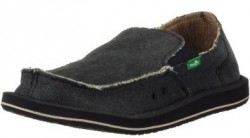
Sanuk Vagabond

These are the perfect camp shoes while backpacking. They are awesomely light and they flatten into almost nothing; you stick them in the side pockets of your bag. They are a total luxury comfort but also abreakthrough product for me because I’m really glad to stop and take my boots off to dry my socks and prevent blisters. With these on the trail I don’t have to cripple around barefoot.

-- Stewart Brand  

Sanuk Vagabond Slippers
$43+

Available from Amazon

Manufactured by Sanuk


Zip Kicker

When you are working in the special effects industry there’s never enough time. You have to make things — and make them work –  right now. One of the secrets of every special effects master is the use ofcyanoacrylate glue with an accelerator. The accelerator is called “Zip Kicker” and it makes super glue dry and cure instantly. You lay down the cyanoacrylate glue, and you put your piece of material in it, and then you lay down a little bit of the kicker right on top of it. The kicker increases the evaporative effect of the cyanoacrylate glue and it sets almost immediately. When you are making something complex with many parts, instant glue makes a HUGE difference.

-- Adam Savage  

Zip Kicker
$8

Available from Amazon

Manufactured by Zap


Doodle

Doodle is an excellent web app that allows a bunch of people with disparate and complicated schedules to determine the optimal meeting time or date among them. It is the easiest of these types of tools I have tried, and does not require people to register or do anything other than fill in their name and check off boxes. It is free. Doodle has advanced features that allow you to do “if this, then that” type of scheduling as well, but I have so far just used the basic set up.

-- Alexander Rose  

Doodle
Free
Available from http://doodle.com

Sample Excerpts: