Giveaway! 5 Rolls of Gorilla Tape Camo

Cool Tools is giving away 5 rolls of Camo Gorilla Tape to one person who signs up for the Cool Tools Twitter feed between now and Thursday, May 9 at 10pm PT. (Current Twitter followers are automatically included in the running.)

From the manufacturer’s description:

The toughest most rugged tape on planet Earth. Ideal for applications in the field including duck blinds, tree stands, tent repairs and so much more! All of the same attributes that make Gorilla Tape a must-have product around the house, make Gorilla Tape Camo a “Can’t Live Without” product in the field, along the trail and through the stream. No other camo duct tape on the market offers the pattern clarity, depth, and matte surface finish like Gorilla Tape Camo.

Matte Finish — for hunting, fishing, camping, and backpacking applications

9 yard roll — more than enough to get the job done, but light enough to carry into the field

Permanent adhesive layer — stands-up to rugged, all-terrain situations

Outer shell is both UV and and wate-resistant thick fabric layer– gives the tape strength and durability, yet easily tears by hand

Sticks to smooth, rough, and uneven surfaces — brick, stucco, concrete, metal, fabric and more Available in 9 yard rolls.

We’ll pick one Twitter follower at random to receive the giveaway. We hold giveaways every Friday, so if you aren’t selected this time, try again next week.

-- Mark Frauenfelder  

Gorilla Glue 601131B Extra Thick Camo Tape Roll, 12 yards Length, 1-7/8″ Width
$20/roll

Available from Amazon


Fanno Pole Saw

I have had this saw for at least six years and use it quite often clearing and maintaining trails for cross-country skiing and walking. The handle is plywood, nicely edge-rounded and fits my hands well. The hook on the top end of the blade near the handle is great for dragging cut vines and brambles out without losing blood.

-- David Wing  

Fanno Pole Saw RF-05
$35

Available from Amazon

Manufactured by Fanno Saw Works


Ultimate Tutorials: How to build a $30 photography softbox

(Cool Tools is interested in finding great online tutorials, like the one below. If you know of one, please tell us about it!)

If you want to take nice photos of objects that you’re selling on eBay or Etsy, of if you want to show off your art or other creation, consider making a softbox, which provides a soft light source that smooths out shadows and specular highlights. In this tutorial, Steve Hoefer (a frequent contributor to MAKE) shows how to make one for around $30.

-- Mark Frauenfelder  

Sample Excerpts:

A soft box is a must if you want to take nice subject photos without relying on fickle natural light. They soften shadows and provide a soft even light. They can hide blemishes and generally make things look more appealing. The different between a soft light and regular lamps is the difference between these two un-retouched photos. Left is not soft, right is with two soft boxes.

softbox_example

Left: Three bare bulbs with reflectors. Right: Two soft boxes.

Now the one on the left is not that bad of photo. (I’m not going to stage a bad one just for comparison.) The lighting is much more even on the right, bringing out the details in places that are murky at the left, like under the bed. The shadows at the left are much more noticeable. They’re big and hard, despite using more lights than the photo on the right. Probably the biggest difference is the background appears much smoother because the broader lighting smooths out shadows of the small wrinkles. (It also does the same to skin.)


More Cool Tools Wanted

We are still looking for great cool tools for categories that don’t get much coverage. I’ve put my request for suggestions onto the leaderboard of Ask Cool Tools. Please add your suggestions and answers there.

What’s the best newbie scuba gear? (Answer here)

Best way to get an online degree? (Answer here)

How to buy a car? (Answer here)

Do Outward Bound-like programs work? (Answer here)

What is the best small business accounting software? (Answer here)

Best tutorial for mastering Google maps/earth? (Answer here)

Best resources for organic gardening? (Answer here)

What paper magazines do you still subscribe to? (Answer here)

Advice for non-traditional pets? (Answer here)

Need some hospice wisdom (Answer here)

Good plastic canoe? (Answer here)

Best song-writing how-to book? (Answer here)


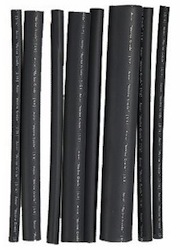
Adhesive Lined Shrink Tubing

Double-walled, or adhesive-lined, heat shrink tubing is how you make easy waterproof connections. As you heat the tube and it shrinks, it compresses a heat-sensitive adhesive inside the tube to melt into one waterproof seal. This sample set is a good place to start.

-- Alexander Rose  

Ancor Marine Grade Electrical Adhesive Lined Heat Shrink Tubing Kit
$12 for a pack of 8

Available from Amazon

Manufactured by Ancor


The Science of Good Cooking

I’ve learned more about cooking from this hefty volume than from reading or watching anything else.

There are other fine books about the science of cooking, including Harold McGee’s previously reviewed classic On Food and Cooking, but this big book is by far the most practical and helpful. While McGee’s is authoritative and complete, this one is better organized for your average cook. The science is condensed into 50 principles, and each easy-to-remember principle is illustrated by half a dozen tested recipes. If you can master these 50 you’ll have the equivalent of a culinary degree.

An example of a principle would be: Salting vegetables removes liquid. You’ll hear the evidence why this is true, what difference it makes in dishes, and how to apply it to any recipe in the future. Every claim is tested by experiments run by the nerd chefs at Cook’s Illustrated, so that you have full command of the idea and its exceptions. Although this book is jam packed with “best recipes” this is not a traditional cookbook: it is more of a cooking course. The teaching is a model of clarity and insight.

-- KK  

The Science of Good Cooking
The Editors of America’s Test Kitchen and Guy Crosby
2012, 504 pages
$26

Available from Amazon

Sample Excerpts:

The way you cut an onion affects its flavor. To prove the point, we took eight onions and cut each two different ways: pole to pole (with the grain) and parallel to the equator (against the grain). We then smelled and tasted pieces from each onion cut each way. The onions sliced pole to pole were clearly less pungent in taste and odor than those cut along the equator.

*

Perhaps just as important as cookware material is the pan shape and size. Crowd four chicken breasts into a 10-inch pan and they will steam; space them out in a 12-inch pan and they will brown.

*

Salty Marinades Work Best

Marinating is often regarded as a cure-all for bland, chewy meat. Years of testing have taught us that while many marinades can bump up flavor, most will never turn a rough cut tender. Well, not without the right ingredient. What’s the secret to a marinade that can add complexity to steak, chicken and pork and enhance juiciness? You guessed it: salt.

*

Gentle Folding Stops Tough Quick Breads

As we learned in concept 39, yeast breads depend on a well-developed gluten structure to rise properly. Gluten also gives bread its resilient, chewy texture. In contrast, quick breads (such as banana bread), as well as muffins and pancakes, can be ruined by excess development of gluten. That’s because tenderness–not chewiness–is the goal.

*

Two Leaveners Are Often Better than One

The advent of chemical leaveners, such as baking soda and baking powder, in the 19th century made it easier for cooks to bake at home. No need to rely on fickle yeast in order to make a cake. Chemical leaveners are quick and reliable. But they are also confusing. Some recipes rely on baking powder, some on baking soda, and many on both. Why do you need two leaveners in something as simple as a cookie that doesn’t even rise all that much?

*


Renovation

This is a book I wished I’d had when I started building, but it is also one that’s extraordinarily useful to more experienced builders. Mike Litchfield was the original editor of Fine Homebuilding; in 1982 he published the first version of Renovation, and it’s been updated periodically, this being the latest and 4th edition. Popular Science called it “The most comprehensive single volume on renovation ever” — which is totally true.

What differentiates this book from others of its ilk is that the author has gathered all this information in the field, interviewing carpenters, electricians, plumbers, and contractors, finding out what’s important, what works, what’s new. These guys love to talk about what they do well, and in this sense, the book is one of collective wisdom. It’s at the same time highly useful to professionals, but also one that’s invaluable for homeowners and people of the fixer-upper persuasion.

The chapter “Planning Your Renovation” is completely new, reflecting the current interest in smaller projects, spending wisely, and energy efficiency. The chapter on wiring covers code changes, and tells you things like how to fish wire, install wireless switches, or replace old incandescent ceiling lights with energy-efficient LEDs.

There’s a section on installing IKEA cabinets, tips and instructions on energy retrofits, working with paperless drywall (in wet areas), soundproofing, cutting into a concrete floor, working with PEX plumbing tubing, and installing engineered flooring. I found myself flipping through the book at random, and learning a lot.

-- Lloyd Kahn  

Renovation 4th Edition
Michael Litchfield
2012, 624 pages
$30

Available from Amazon

Sample Excerpts:

Trim on older buildings is rarely level or parallel. Thus new trim maybe look better if it’s installed slightly out of level so that it aligns with what’s already there. For example, when stretching a chalkline to indicate the bottom of the water table, start level and then raise or lower the line until it looks right in relation to nearby windowsills and the like. Once the chalkline looks more or less parallel to existing trim, snap it on the building paper, and extend it to corner boards.

*

PEX Advantages

It installs quickly. Because lengths of flexible tubing easily turn corners and snake through walls, PEX systems require far fewer connections and fittings than do rigid materials. For that reason, it’s particularly well suited to renovation work.

Fewer leaks. PEX tubing runs to fixtures from hot- and cold-water manifolds with multiple takeoffs. Most of the fitting is simple, consisting of crimping steel or copper rings onto tubing ends. Because most leaks occur at joints, fewer fittings also mean fewer leaks.

It’s quiet. The tubind expands slightly, minimizing air hammer–the banging that takes place in rigid piping when taps are turned off suddenly and running water stops abruptly. That ability to expand also means less-pronounced pressure drops (fewer scalding or freezing showers), and PEX tubing is less likely to rupture if water freezes in it.

The beauty of working with PEX is that is required relatively few specialized tools. Here, an inexpensive PEX-cutting tool with a replaceable blade produces a clean, squared-off end.

*


A smoke pencil helps make air leaks visible.

*

Cracked plaster often means that it has pulled free from its lath. Use screws and plaster washers to reattach it, countersinking them so they’ll be easier to patch.

*


 Avoid the sun around the house as you paint so that you apply paint in the shade if possible. Paint applied in full sunlight is more likely to blister later.

*

 
To insert a replacement board into an existing tongue-and-groove floor, use a tablesaw to remove the bottom of the groove. Slightly back-cut the ends of the new board so it will slide in easier.


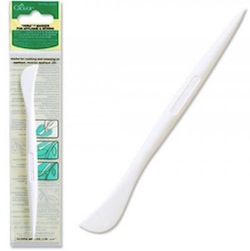
Hera Marker

The Hera marker is an ingenious little plastic marker that makes a shiny line on fabric, perfect for marking hand quilting lines that needs no removal. Technically this is called a “tracing spatula.” The shine on the line on the fabric is caused by the friction of the edge of the tool on the fabric fibers, and it makes a small crease in the fabric as well. The shine and crease will be covered by stitches or will be smoothed out when the item is washed, leaving no trace.

-- Lesley Creed  

Hera Marker
$6

Available from Sewing Machines Plus

Manufactured by Clover


Folkwear

Folkwear is a sewing pattern company that was founded in the 1970′s by Alexandra Jacopeti. Over the years they have built up a selection of patterns based on traditional folk clothes of the Middle East, Asia and Europe. Their first patterns were based on garments that worked with the full width of the woven fabric, using rectangles and squares. The old adage was to “cut my coat according to my cloth,” that is, cut with as little waste as possible. These clothes were frequently used for work and had to have enough ease to move in. One of the Folkwear patterns I’ve made is the Cheese-Maker’s smock. This is a pattern based on a classic French work-shirt. It has several sizes that fit both men and women. The small square gusset set under the arm makes for a complete range of movement and comfort. Wearing it I am covered from neck to wrist — perfect for garden work. I have made several in cotton and linen and could also see it in a fine cotton or silk. It is now my favorite hot weather work shirt. Folkwear has also recently added Victorian and 1930s’ designs.

-- Lesley Creed  

Sample Excerpts:

*

*


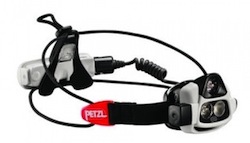
Petzl NAO

The Petzl NAO is the best headlamp I’ve ever worn. In the past I’ve used various models from Black Diamond, Petzl, and Fenix while camping and caving. Each one had it’s own quirks, but they all, at the end of the day, provided ample light in dark places. What the Petzl NAO does differently is provide a tremendous amount of light in an intelligent and usable manner that makes it easier to do things in the dark.

The stand out feature of the Petzl NAO is the reactive lighting. On top of the headlamp is a light meter that measures the amount of reflected light in order to adjust light output. When you, for example, need to read a map, it senses an increase in reflected light and simultaneously dims light output while switching from a spot-light to a more diffuse beam. This is all automated, and happens instantaneously. After wearing it for an evening, it became indispensable. It’s especially a boon when working with other cavers or campers because it automatically dims when looking at someone, preventing any unintentional blinding. The only downside I’ve read about is for bikers as the beams of an oncoming car can trigger the light to turn off (so bikers will want to turn this feature off).

Previous headlamps I’ve owned, especially those with battery packs, have been really uncomfortable after extended wear. The NAO, with it’s slightly smaller battery pack, only weighs 180 g, and has a really comfortable set of straps. I’ve worn it running and hiking and have found it to far comfier than the competition.

It also doesn’t hurt that the NAO produces an incredible amount of usable light. It’s rated at  a respectable 355 lumens produced by two LEDs. Unlike other mono-LED lamps (like my Fenix), the two LEDs act in concert to create both diffuse light and a beam with a powerful throw. WIth that being said, there are many headlamps that can do this, and the feature that really sets the NAO apart is the auto-dimming.

The last feature worth noting is that the NAO features a USB-rechargeable Li-ion battery pack that is programmable with software provided by Petzl. The software allows you to tweak how the headlamp responds in different environments and activities. I designed a profile for camping which features an ultra-low power mode for reading in the tent, and a much brighter mode with greater throw for trail-running in the dark. While it is a bit gimmicky, the profiles work well in use. The 2300 maH battery pack can be switched out for two AAAs, but it can be a bit tricky and they don’t last very long. While I have not had any problem with the batteries, those going on longer expeditions may want to hold off until the Li-ion packs are a bit cheaper.

There’s no getting past the fact that the NAO is an expensive light at $175. But to me, and I expect to many others who spend a fair bit of time in the dark, the fact that it intelligently responds to my lighting needs makes it well worth the cost.

-- Oliver Hulland  

Petzl NAO Headlamp
$175

Available from Amazon

Manufactured by Petzl