Day: January 28, 2014
 01/28/14
The Origins of Cool Tools
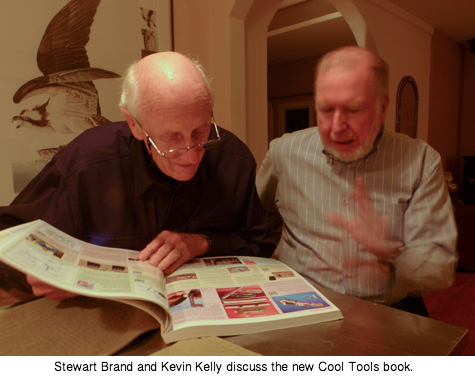
Next week (on February 5) I’m going to discuss the ancient origins of Cool Tools with Whole Earth Catalog founder Stewart Brand. …
 01/28/14
Next week (on February 5) I’m going to discuss the ancient origins of Cool Tools with Whole Earth Catalog founder Stewart Brand. …






Get Knowledge, Reality, and Value
University of Colorado philosopher Michael Huemer offers a refreshingly clear introduction to the big questions — knowledge, reality, ethics, free will, and more — defending the radical idea that common sense is usually right. Philosophy doesn’t have to overthrow everything you already believe; it can sharpen and deepen what you know.
Huemer’s central epistemological insight is “phenomenal conservatism”: if it seems to you that something is true, and you have no specific grounds for doubting that appearance, then you have at least some justification for believing it. This isn’t naive — it’s the only non-self-defeating starting point. Any theory that rejects appearances as evidence undermines itself, since we can only evaluate theories based on how things seem to us.
Just as courts presume innocence until guilt is proven, philosophy should presume common-sense beliefs are true until proven false. The burden of proof lies with the skeptic, not the believer. Most philosophical “problems” dissolve when we stop demanding impossible certainty and accept that reasonable belief doesn’t require bulletproof foundations.
Huemer defends ethical intuitionism: our basic moral intuitions — that cruelty is wrong, that fairness matters — provide genuine evidence about moral reality. Ethics isn’t a different kind of truth from other truths; moral facts are as real as mathematical or physical facts. We don’t need to derive ethics from something else; we can know some things directly.
Against skeptics who claim we’re trapped behind a “veil of perception,” Huemer argues for direct realism: when you see a tree, you’re aware of an actual tree, not a mental image of one. The external world isn’t hidden from us — we perceive it directly. Skeptical scenarios are possible but give us no positive reason to doubt what we plainly see.
“Having feelings does not make you irrational. Believing that the world must be a certain way because of your feelings does.”

© 2022
