Day: November 6, 2014
 11/6/14
FlexSMART Wireless In-Car Bluetooth FM Transmitter
Bluetooth to FM transmitter for car audio
 11/6/14
Bluetooth to FM transmitter for car audio




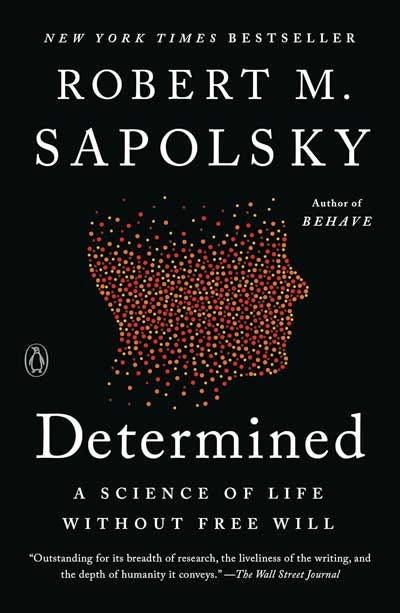
Stanford neuroscientist Robert Sapolsky mounts a full-frontal assault on free will, arguing that every choice you’ve ever made — from the mundane to the momentous — was the inevitable result of biology and experience you didn’t choose. Far from nihilistic, Sapolsky shows how accepting this reality could make the world more humane.
We are nothing more or less than the cumulative biological and environmental luck, over which we had no control, that has brought us to any moment. Your genes, your prenatal environment, your childhood, your hormones at breakfast, the neuron that fired a millisecond before your decision — none of it was chosen by some separate “you” standing outside the causal chain.
Neuroscience experiments show that brain activity precedes conscious awareness of decisions by hundreds of milliseconds. By the time you feel like you’re choosing, your neurons have already voted. What we call “free will” is just the biology that hasn’t been discovered yet — another way of stating that we’re biological organisms determined by physical laws.
Essentially every aspect of your childhood — good, bad, or in between — sculpted the adult brain you have. The person who exercises remarkable self-control and the person who can’t resist temptation aren’t making different choices with equal willpower. They have different brains, shaped by factors neither one selected. It’s impossible to successfully will yourself to have more willpower.
If behavior is determined by factors beyond our control, the concept of moral blame becomes questionable. There is no justifiable “deserve” — you are no more entitled to have your needs met than any other human. This doesn’t mean abandoning consequences, but it means rethinking punishment, praise, and the stories we tell about success and failure.
“We are nothing more or less than the cumulative biological and environmental luck, over which we had no control, that has brought us to any moment.”

© 2022
