Videos
Electrician’s Scissors
Comments (0)
C. K Tools 492001 Electrician's Scissors, 10-Inch OAL

C. K Tools 492001 Electrician's Scissors, 10-Inch OAL


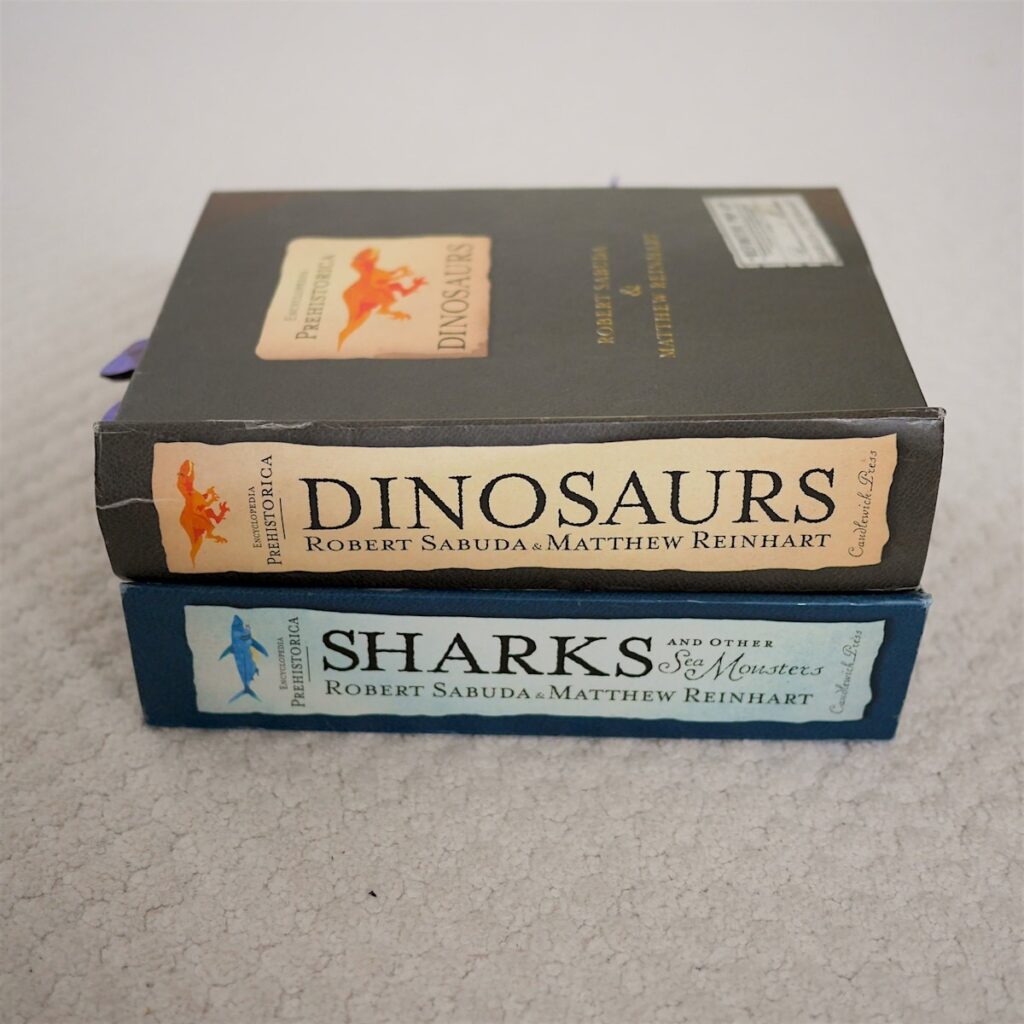
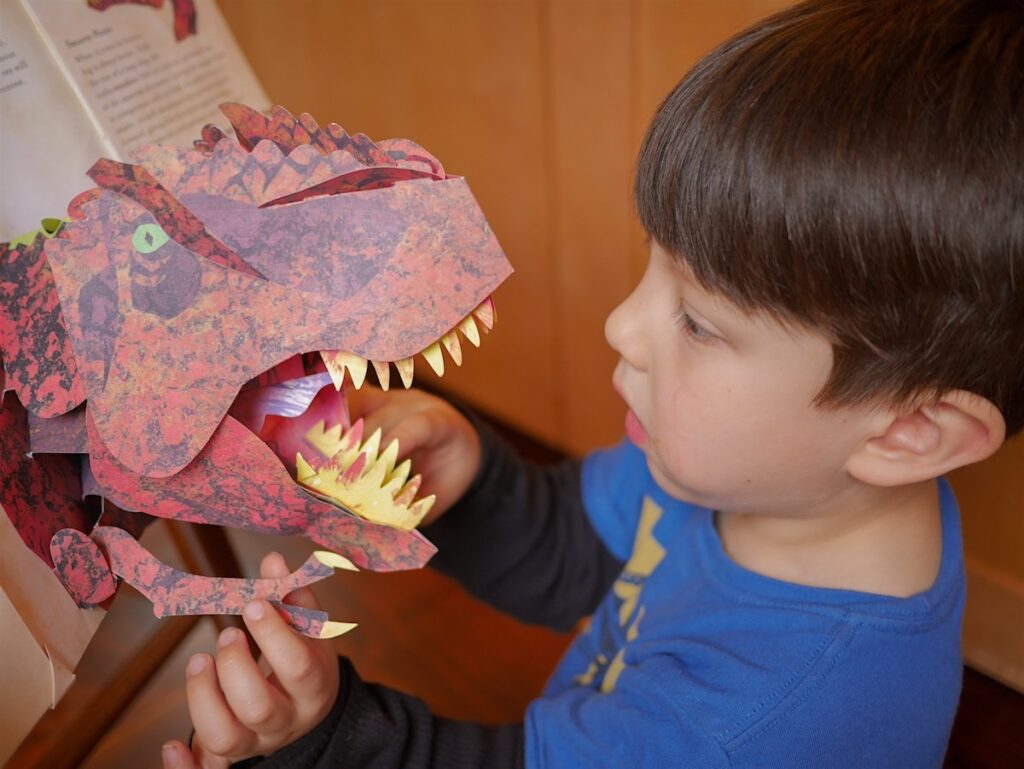
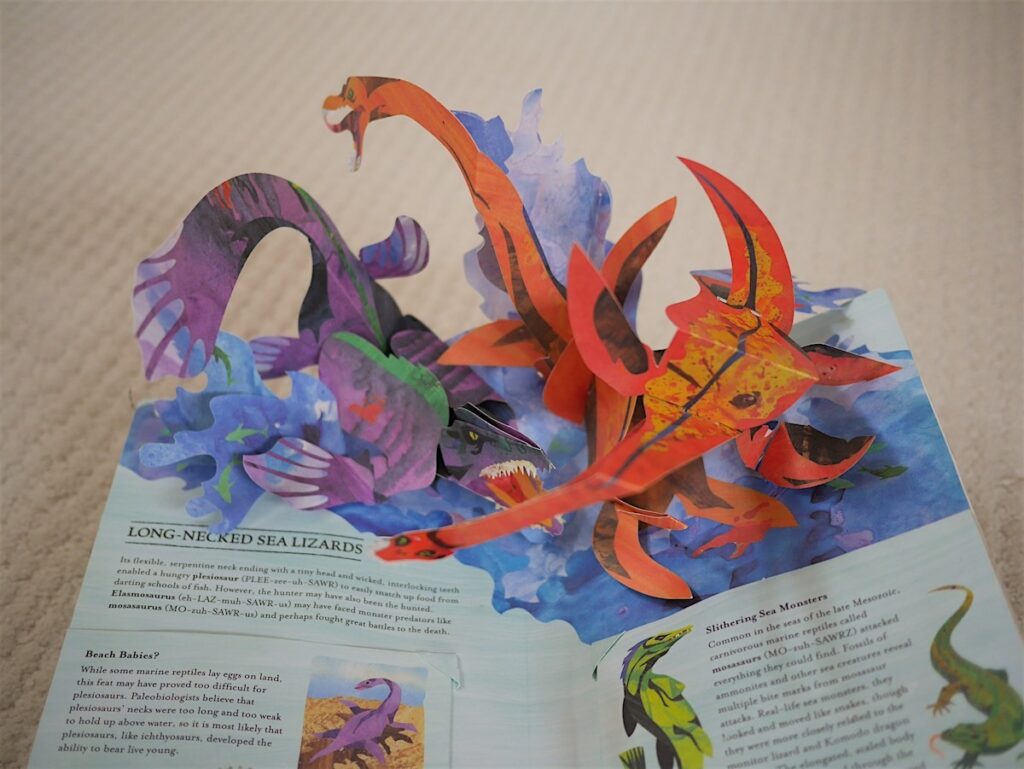
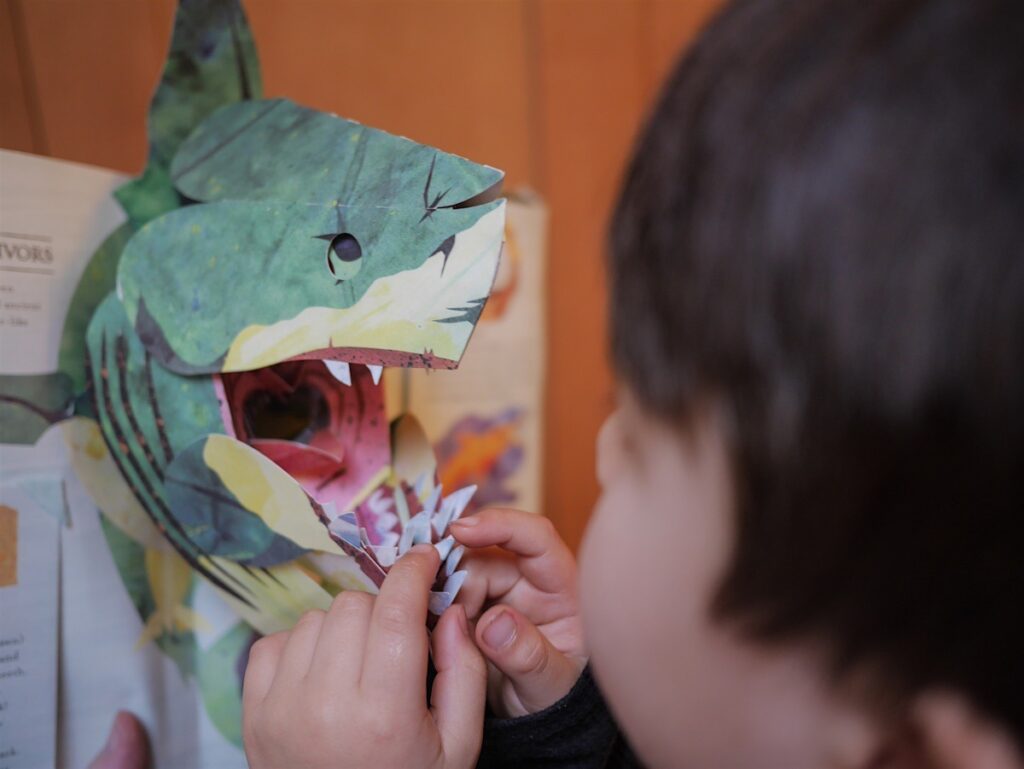
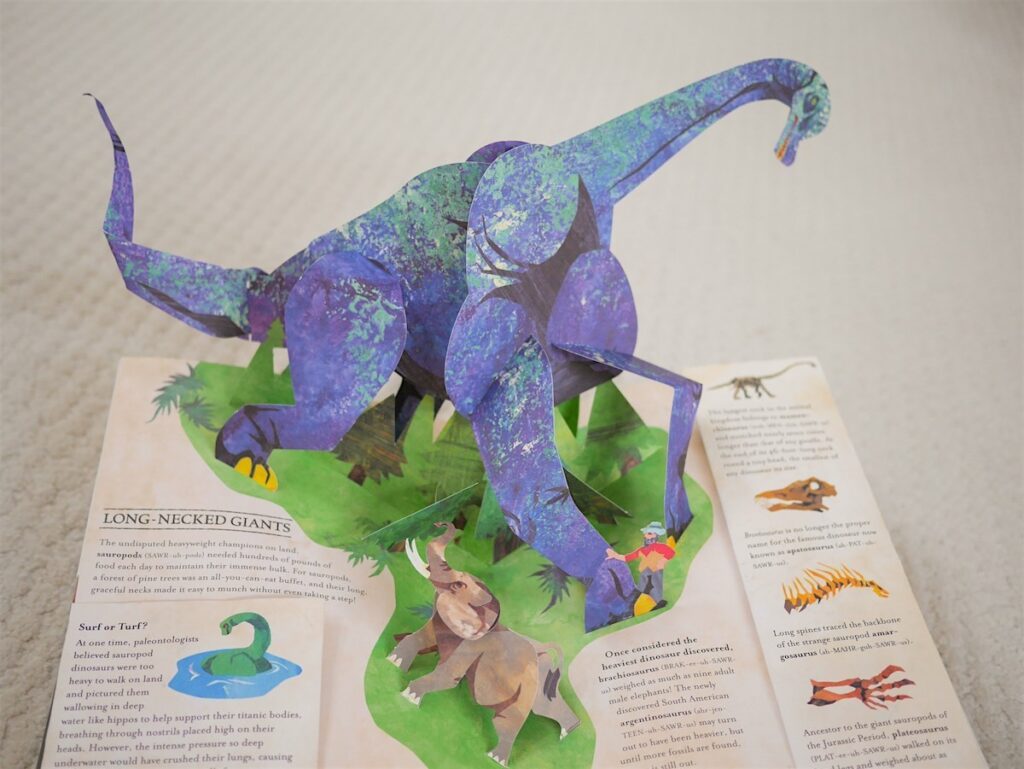
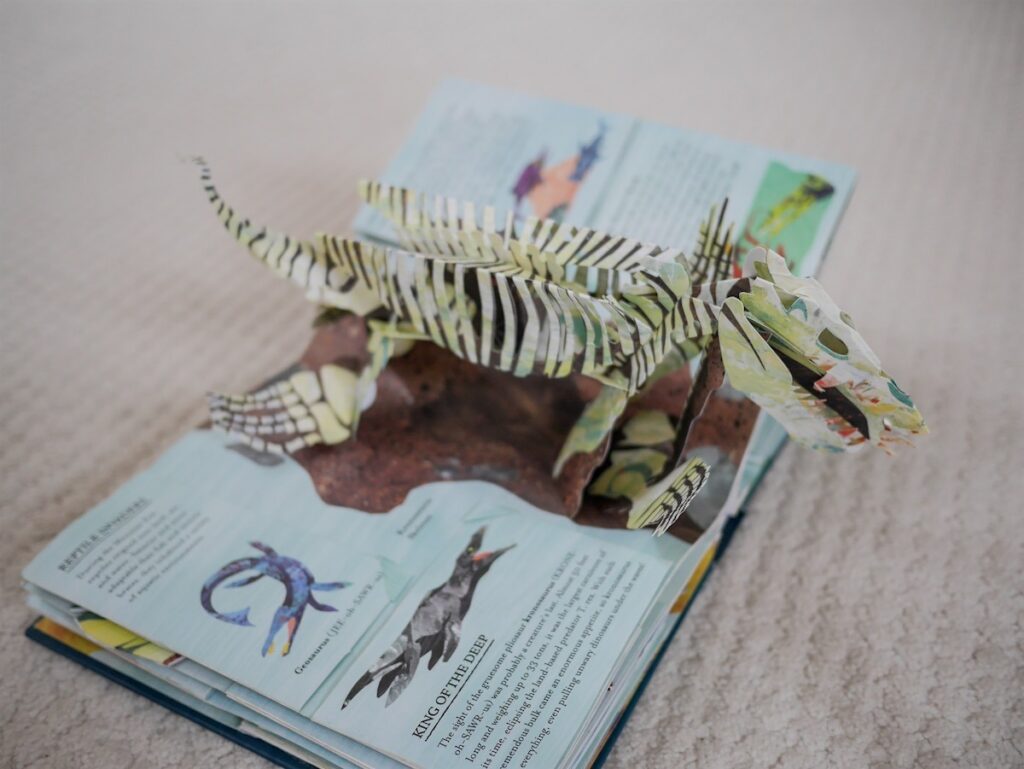
Encyclopedia Prehistorica: Sharks and Other Sea Monsters
by Robert Sabuda and Matthew Reinhart
Candlewick
2006, 12 pages, 7.8 x 9.9 x 2.1 inches
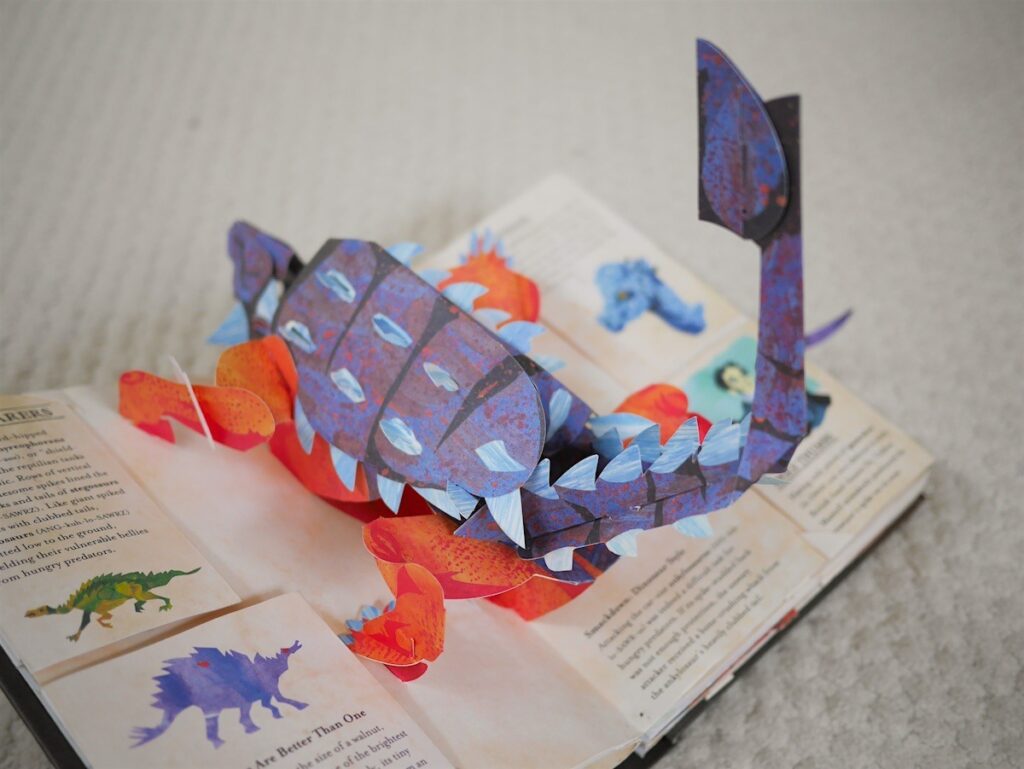
Encyclopedia Prehistorica: Dinosaurs
by Robert Sabuda and Matthew Reinhart
Candlewick
2005, 12 pages, 8 x 10 x 2.5 inches
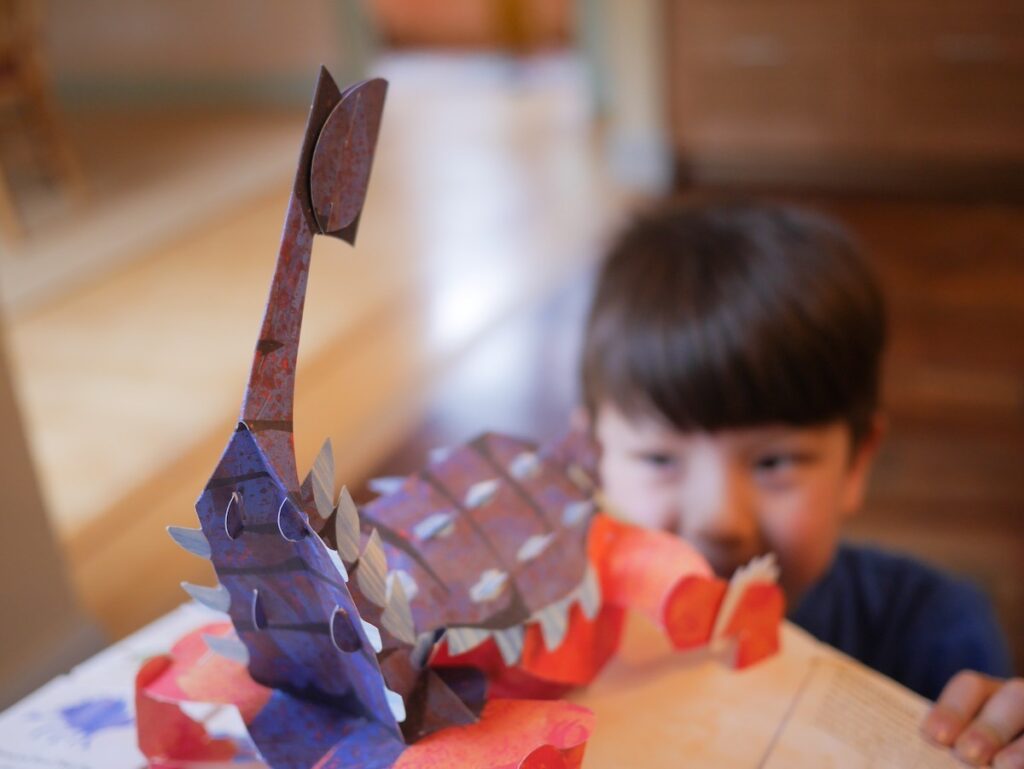
There are only five “pages” in each of these books despite their 3-inch thickness. That is because each page is stuffed with layers and layers of ingenious interacting bits of printed paper, which magically assemble themselves into an alternate reality when each page is opened. Yes, it is a pop-up book, but a pop-up raised to an exponential level. A pop-up on steroids, or acid. Pop-up as extreme sport. The engineering is astounding. As a page is opened a 3D apparition appears, often with its own narrative, first one part and then another. The resulting paper sculpture is the story made real. The textual story is minimal; all the action is in the structures. Kids love to see how they work. The only downside to these books that belong on paper is not letting children paws tear the mechanics. These two books feature all kinds of pre-historic dinosaurs, and sharks of all types. But the artist behind them, Robert Sabuda, has half a dozen other books with the same kind of extreme pop-up-ness. – Kevin Kelly
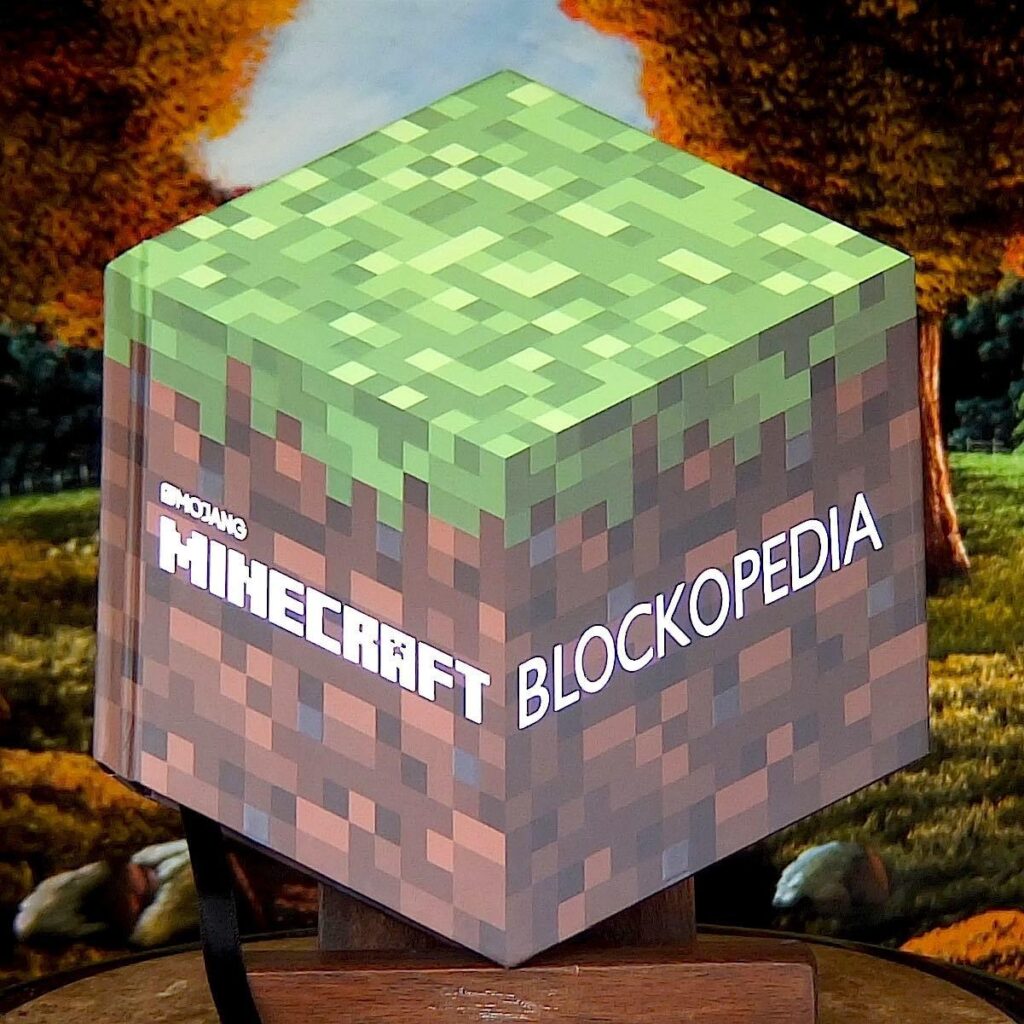
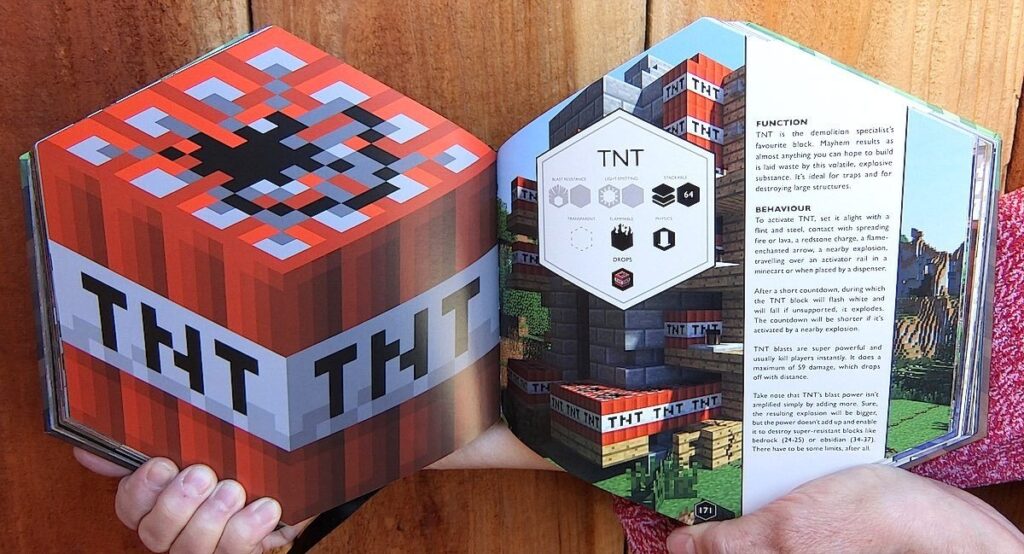
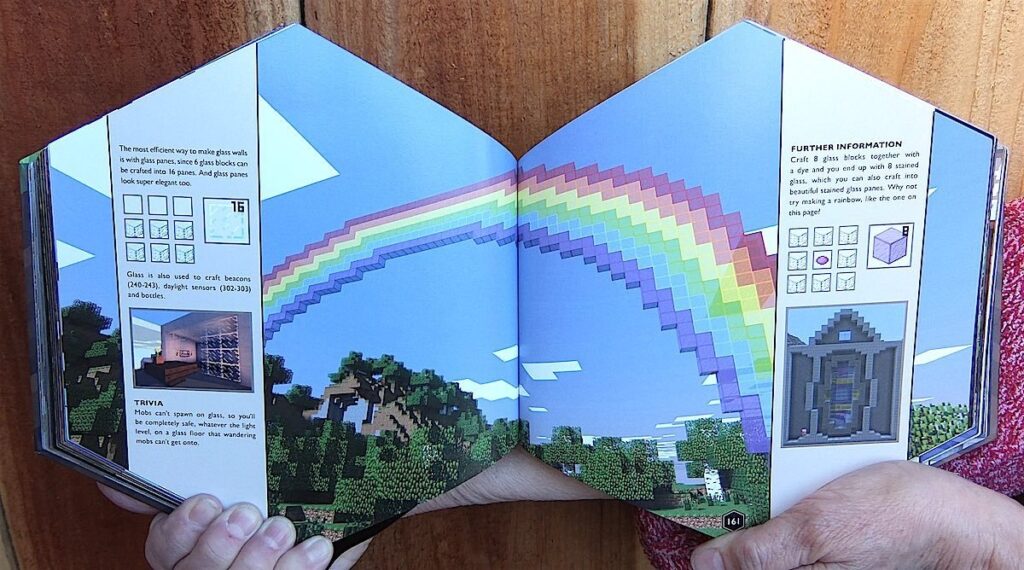
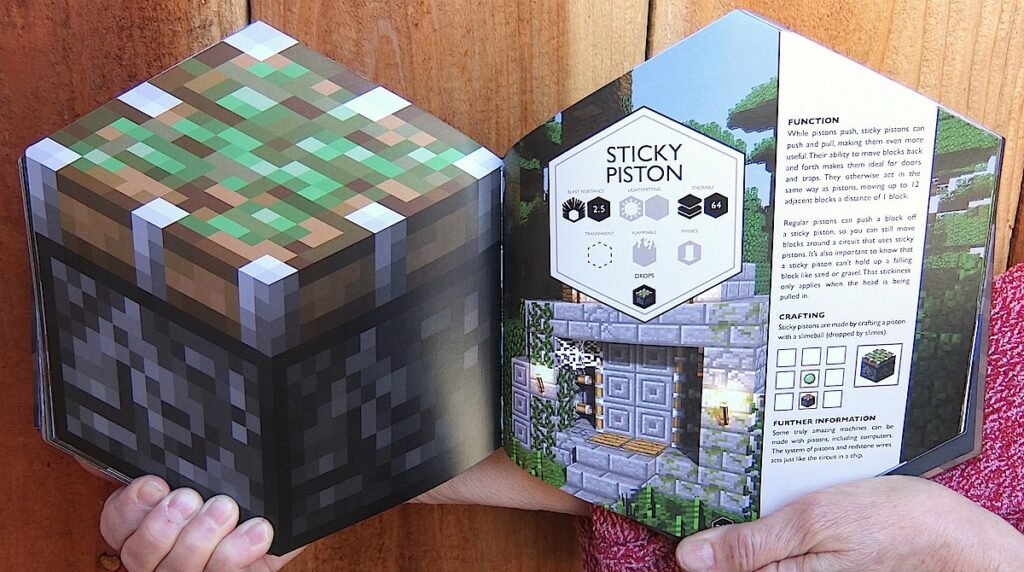
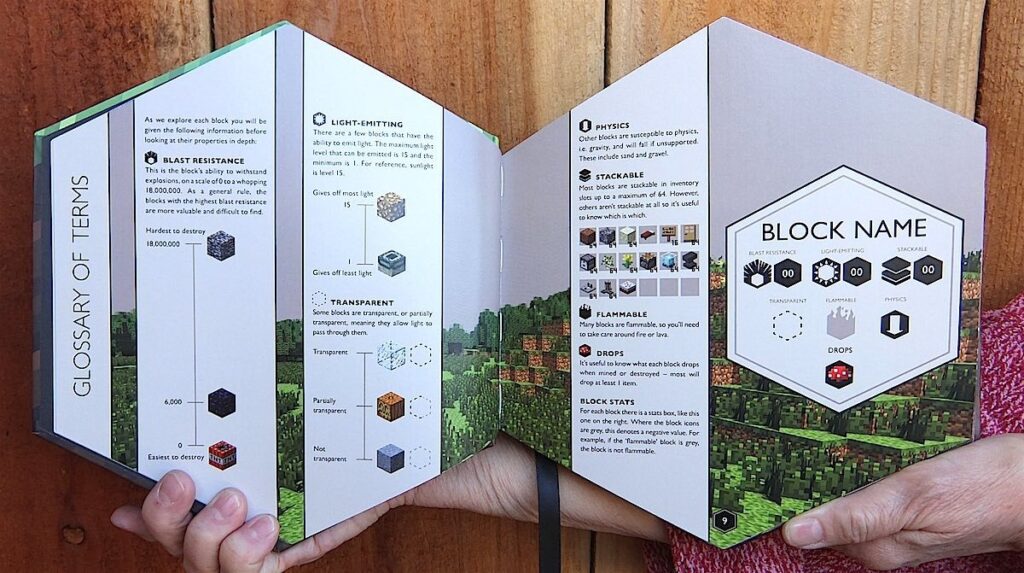
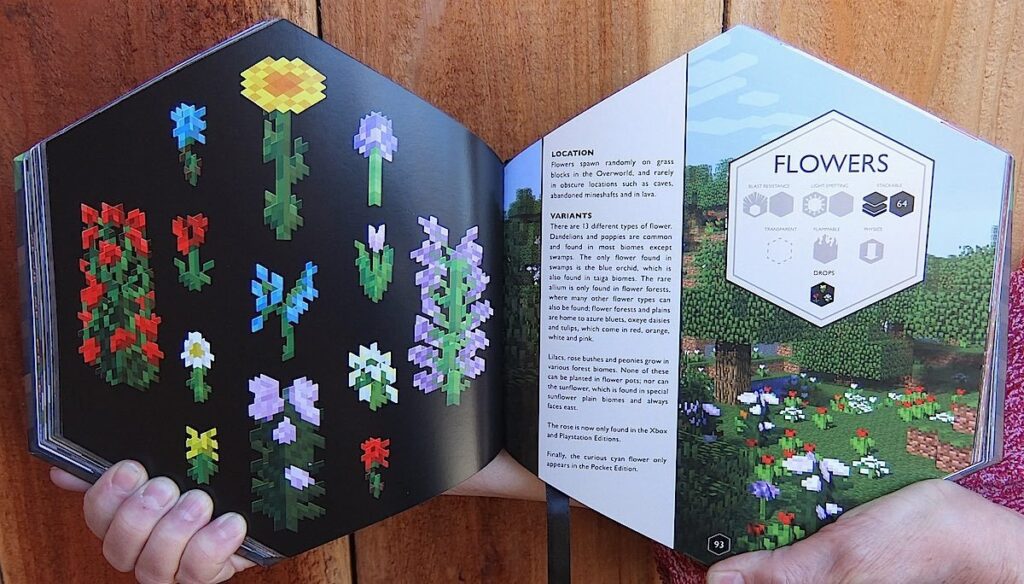
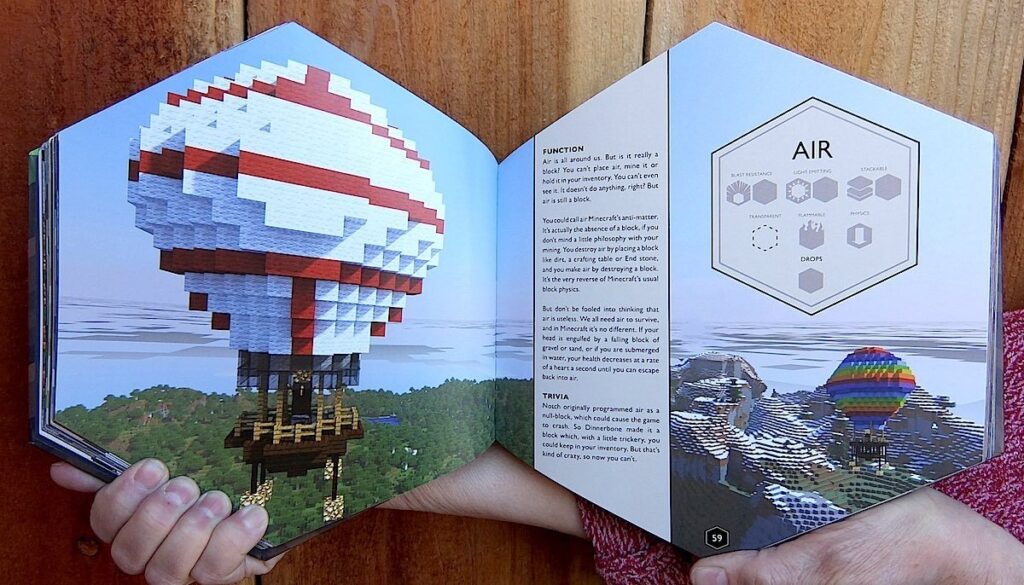
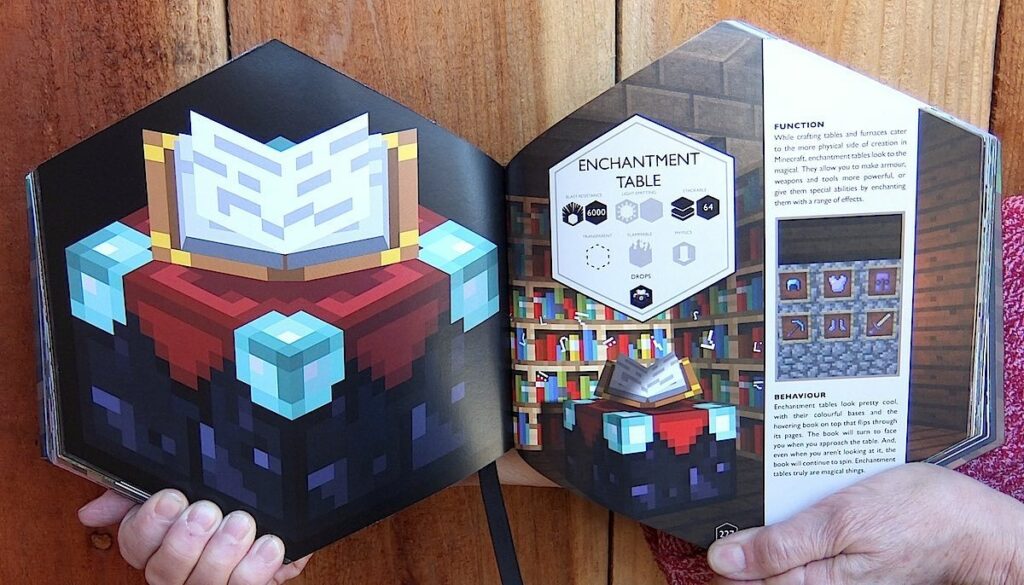
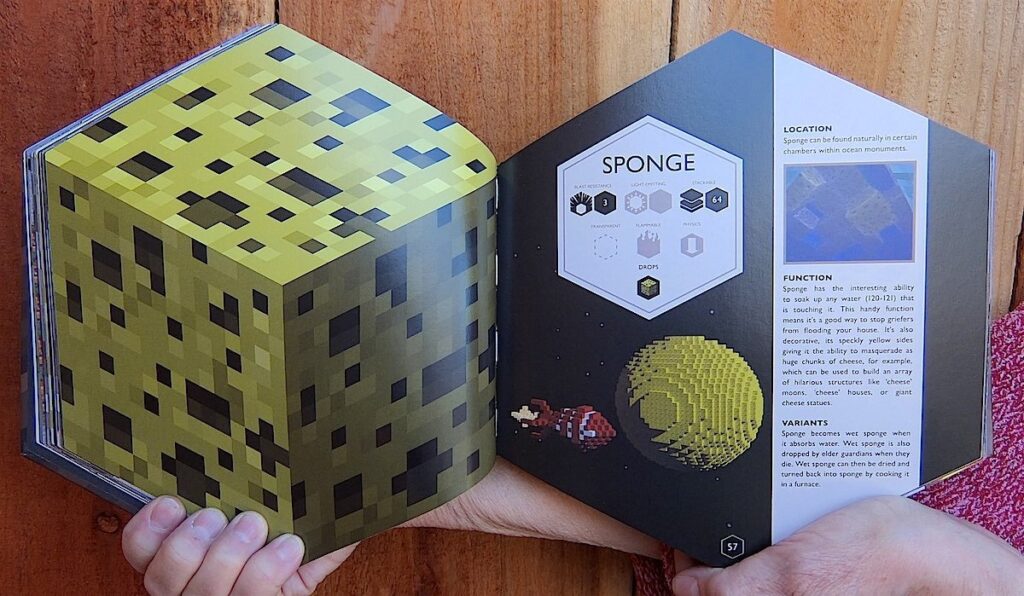
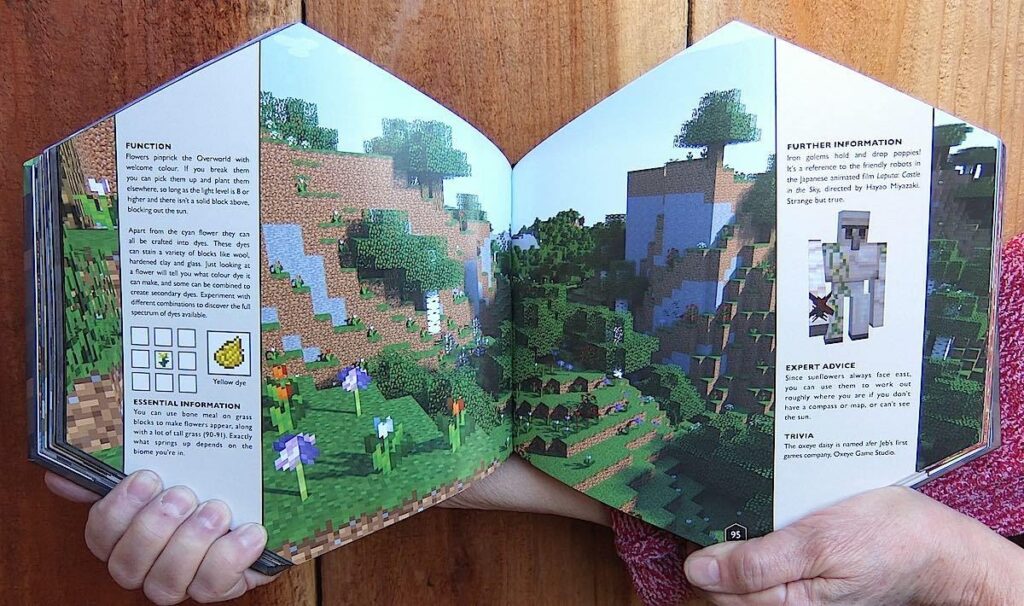
Minecraft: Blockopedia
by Alex Wiltshire
Scholastic Inc.
2015, 312 pages, 9.7 x 10.7 x 1.4 inches
Shaped like a hexagon to mimic the dimensions of a cube, Minecraft: Blockopedia is designed for full-on Minecraft geeks, although those of us who have only watched the game over the shoulders of children and loved ones will find plenty to admire here too. After the briefest of introductions and a quick glossary to help noobs make sense of the stats that accompany each block’s name, it’s off to the races, with page after page devoted to blocks made from rocks, blocks made from plants, blocks that serve particular functions (a ladder), and blocks that do particular things (acting as a switch).
One of the coolest characteristics about Minecraft is how it chooses to observe the laws of nature and physics, or ignore them. Sand, we are told, can be a cave-in hazard, but when it’s smelted in a furnace, it turns to glass. Both statements are true, but don’t go looking for glowstone the next time you’re spelunking – it is only found in a sinister dimension of Minecraft called the Nether. And while sugar cane in both the real world and the Overworld of Minecraft can be used to make sugar, guess where it can also be used to block flowing lava?
Though the format and illustrations in Minecraft: Blockopedia are the book’s most prominent features, it’s still a book filled with lots and lots of, you know, words. Writer Alex Wiltshire mostly plays it straight (“Water is incredibly useful.”), but often he lets the language and logic of Minecraft add color, as in “Sticky pistons are made by crafting a piston with a slimeball…” and “If you dig podzol without the silk touch enhancement it drops dirt.” Got that? – Ben Marks
Books That Belong On Paper first appeared on the web as Wink Books and was edited by Carla Sinclair. Sign up here to get the issues a week early in your inbox.

© 2022
