Why doubling down on your position never works — and what does
Book Freak #207: How to Get What You Want by Joshua Bandoch
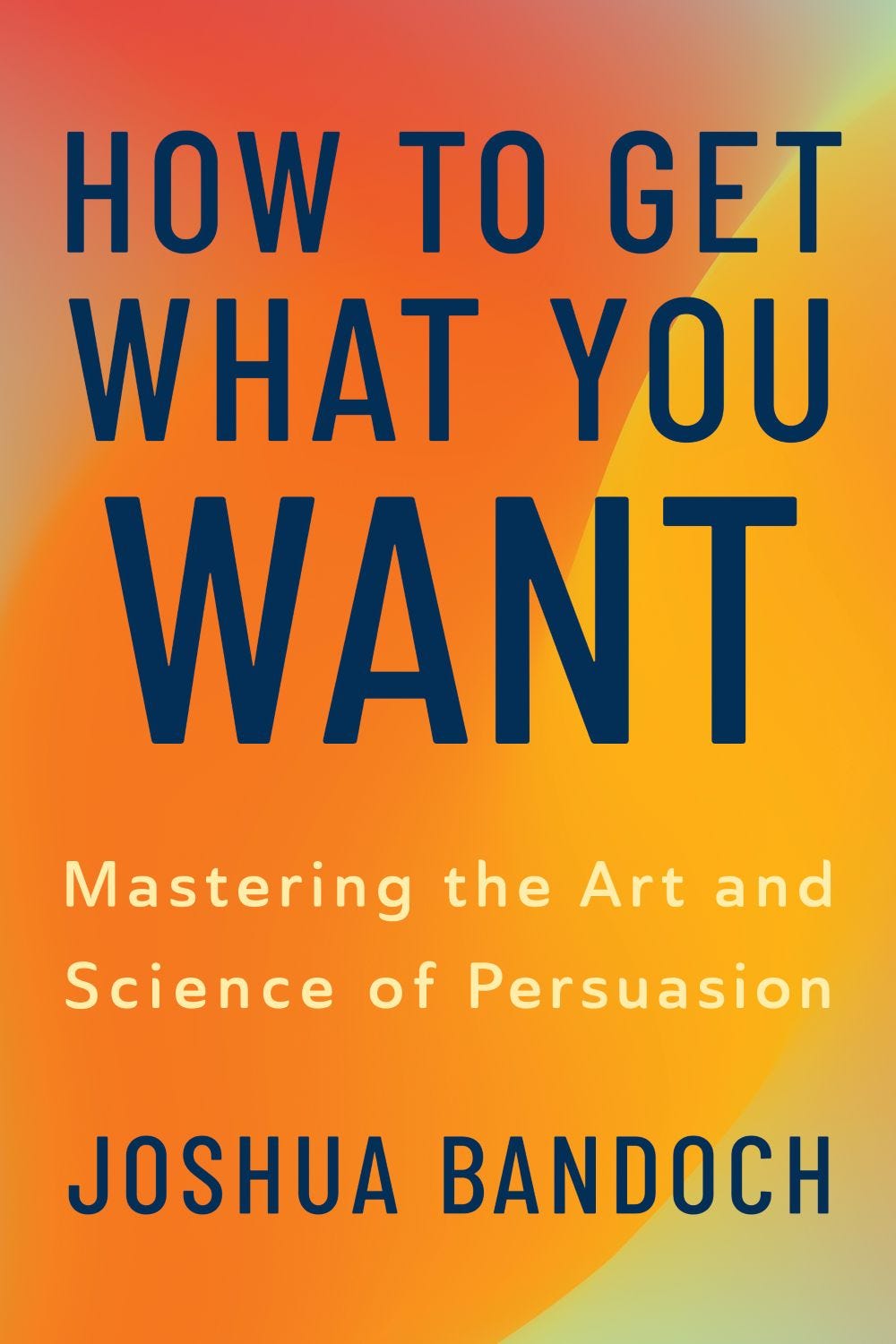
How to Get What You Want is a science-backed guide to persuasion that teaches you how to navigate any professional, political, or personal situation by working with how human minds actually change.
Core Principles
Adopt the Them-First Mindset
Most people approach persuasion by doubling down on their own position — marshaling more facts, repeating arguments louder, and making a stronger case for themselves. It has the opposite effect. Effective persuaders shift their orientation from “proving my point” to “finding a bridge.” The goal isn’t to win an argument but to create shared action — something people choose to do together.
Emotion Before Logic
Human beings feel first and reason second. The brain’s emotional systems process incoming information before the rational, analytical systems do — which means that leading with white papers, spreadsheets, and logical arguments actually runs counter to how the mind processes information. Skilled persuaders make an emotional connection before presenting evidence. They understand the values, fears, and aspirations of the person across the table, and they speak to those first.
Stories Beat Arguments
Stories are how the brain organizes and retains meaning. The most persuasive stories are morally motivating, emotionally intelligent, and built around heroes other than yourself. Telling a story in which you are the brilliant protagonist often triggers skepticism and defensiveness. Telling a story in which your listener’s values are vindicated invites identification and trust.
The Subconscious Signals
Tone, pacing, eye contact, and posture communicate before a single argument lands. Much of persuasion happens below the level of conscious reasoning — small adjustments in delivery, warmth, and presence can determine whether someone opens up or shuts down. Likability isn’t a soft skill; it is a primary mechanism of influence.
Try It Now
- Before your next important conversation, write down the other person’s top two priorities — not yours. Frame your opening around one of theirs.
- Replace your next logical argument with a brief story: someone who faced the same problem, what they tried, and what actually worked.
- In your next meeting, speak 10% more slowly and pause for two full seconds before responding. Notice what changes in the room.
Quote
“Persuasion is shared action. Shared, because it’s something we voluntarily do together with others. And it’s action, because it’s about getting things done, not about speaking pretty words.”
04/24/26