Book Freak #201: Indistractable
How to Control Your Attention and Choose Your Life
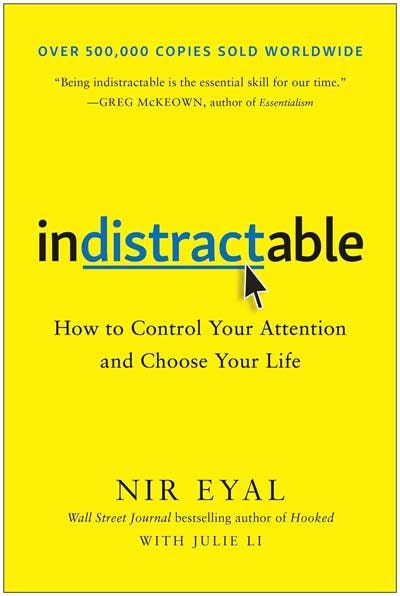
From the author of Hooked, Indistractable reveals that the real enemy of focus isn’t technology — it’s our inability to deal with discomfort. Nir Eyal offers a research-backed four-step model for becoming “indistractable” and reclaiming control over your attention and your life.
Core Principles
Distraction Is an Escape from Discomfort
Most people blame their phones for their distraction, but the root cause is internal. The drive to relieve discomfort is the root cause of all our behavior — including distraction. Boredom, loneliness, fatigue, uncertainty, and anxiety are the internal triggers that push us toward escape. Until you understand why you’re reaching for the distraction, you’ll keep finding new ones.
Traction vs. Distraction
Both words end in “action” — one pulls you toward your goals, the other pulls you away. Traction is any action that moves you toward what you really want. Distraction is any action that moves you away from it. The difference isn’t the activity itself but whether it aligns with your values and intentions. Scrolling social media can be traction if it’s what you planned to do; working on a project can be distraction if you’re using it to avoid something more important.
Master Internal Triggers
Being indistractable means learning to cope with discomfort rather than escaping it. When you feel the urge to distract yourself, pause and identify the internal trigger: What are you feeling? What discomfort are you trying to escape? Simply naming the sensation and surfing the urge — allowing it to crest and pass — builds your ability to stay focused when it matters.
Make Time for Traction
You can’t call something a distraction unless you know what it’s distracting you from. Being indistractable requires turning your values into time — literally scheduling what matters on your calendar. If you don’t plan your day, someone else will. The goal isn’t to finish everything you planned but to do what you said you would do when you said you would do it.
Try It Now
- The next time you feel the urge to check your phone or switch tabs, pause. Ask yourself: “What discomfort am I trying to escape right now?” Name the feeling before deciding what to do.
- Look at tomorrow’s calendar. Is there time blocked for your most important priorities, or just meetings and obligations? Schedule at least one block of “traction time.”
- Identify one external trigger you can eliminate today — a notification, an app on your home screen, or an open browser tab that constantly tempts you.
- Notice when you use busyness as distraction. Ask: “Am I doing this because it matters, or because it feels productive while avoiding something harder?”
- Try the ten-minute rule: When tempted by distraction, tell yourself you can give in — in ten minutes. Often the urge will pass.
Quote
“Being indistractable means striving to do what you say you will do.”
03/20/26