Fertilizer
Tools for Possibilities: issue no. 177
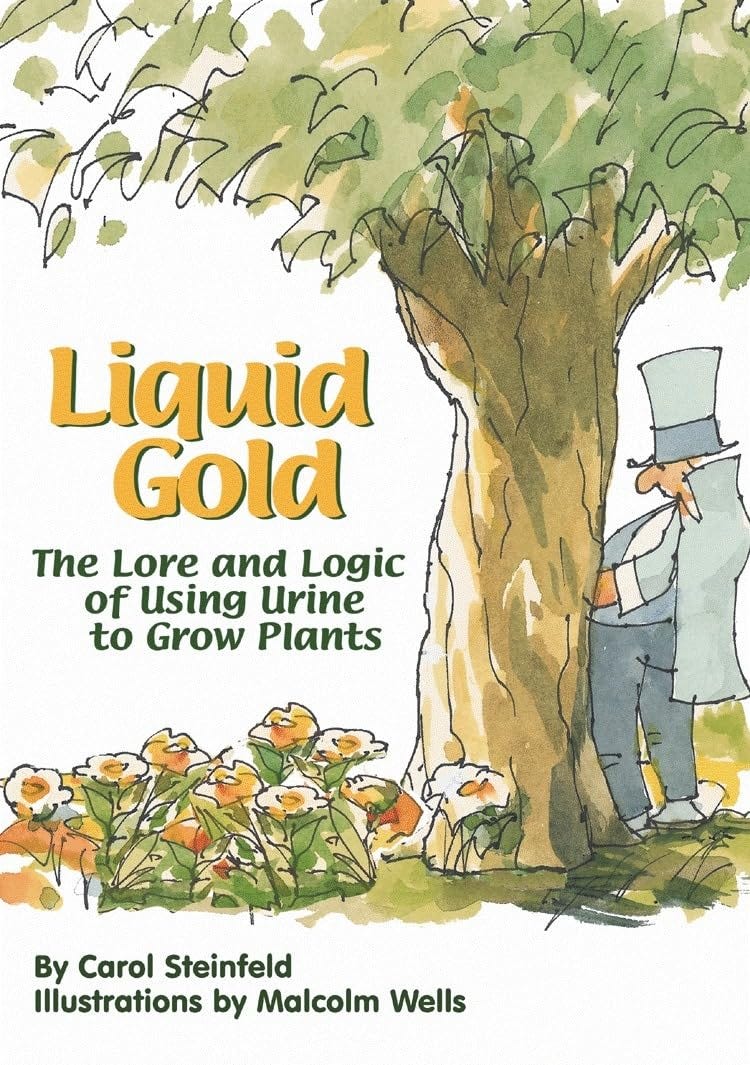
How to utilize urine
Logically, we should recycle our urine to capture its many nutrients for growing new food. Here’s a fuller case for that argument, and if you buy it, how to practically accomplish this export on the small scale of a homestead. Most likely you’ll be the only person in your neighborhood mining “liquid gold,” but you may also be an outlaw, two issues this book anticipates. The small book is also chock full of urine lore, including the historical medical, cooking (!), chemical, and agricultural roles urine has had. This small booklet changed my mind. — KK
- According to sanitation researcher Caroline Schonning of the Swedish Institute of Infectious Disease Control, humans rarely excrete disease-causing organisms, orpathogens, in urine. Also, most pathogens die when they leave their hosts, either immediately or shortly thereafter. The only significant urine-transmitted diseases are leptospirosis (usually transmitted by infected animals), schistosoma, and salmonella. The first two are rare–usually found only in tropical aquatic environments–and the last is typically inactivated shortly after excretion. The more likely health risk is urine contaminated by feces that were misplaced in a urine-diverting toilet.
- There are other ways to use liquid gold. For small amounts of urine, you can make a urine planter. Layer shredded cardboard or paper with chunky sand or peastone. Add more material when the contents shrink as the paper decomposes. Plant hearty nutrient-loving plants, shrubs, or small trees. Urine also works well in hydroponic planter systems.
Applying urine to leaves, not roots, is its most effective use, according to Paul William. “Foliar feeding is much more efficient at stimulating plant growth than fertilizing via the root system only,” he says. “The leaves respond within hours ofthe application.”
To determine the best dilution to prevent the mis from getting too salty, he uses a TDS (total dissolved solids) meter available from hydroponic garden supply stores. “My tap water has 600 ppm (pars per million) as a result of the chlorine salts before I add any urine. I add urine until I get around 1,700 ppm.” He also adds a bit of soap so the spray better penetrates the leaves.
“Urine foliar feeding is amazing,” he says. “My friends are having huge success growing all kinds of tropical plants doing it, and my temperate plants are so lushand green, it boggles the mind!”
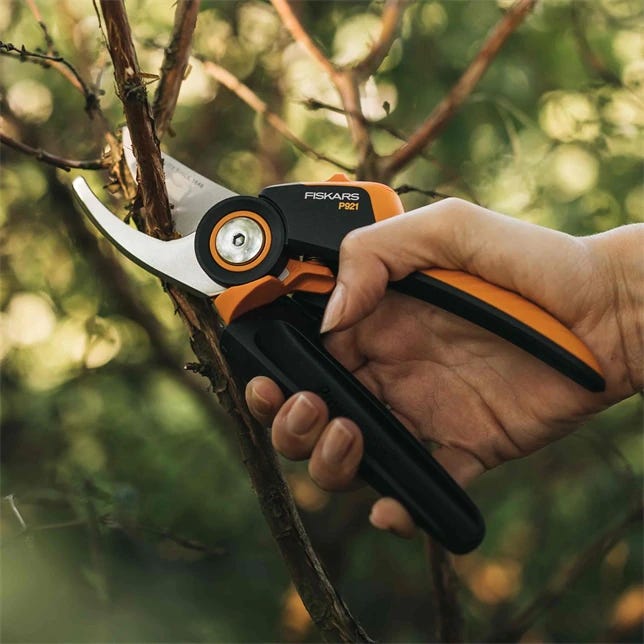
Amplified easy slicing
Fiskars PowerGear Bypass Pruner
This hand clipper is a really cool ergonomic innovation. It uses an ingenious gear design to easily slice off sticks that are 3/4 inch in diameter. As you squeeze, the bottom handle rolls slightly and this motion leverages the power in the scissor cut. I find I can now tackle stuff that ordinarily I would have had to run back to get the larger pruners for. Your Felco pruning clippers will last you a lifetime, but as my grip wanes, I find I this lightweight Fiskars pruner is the clipper I grab first. — KK
Precise garden snip
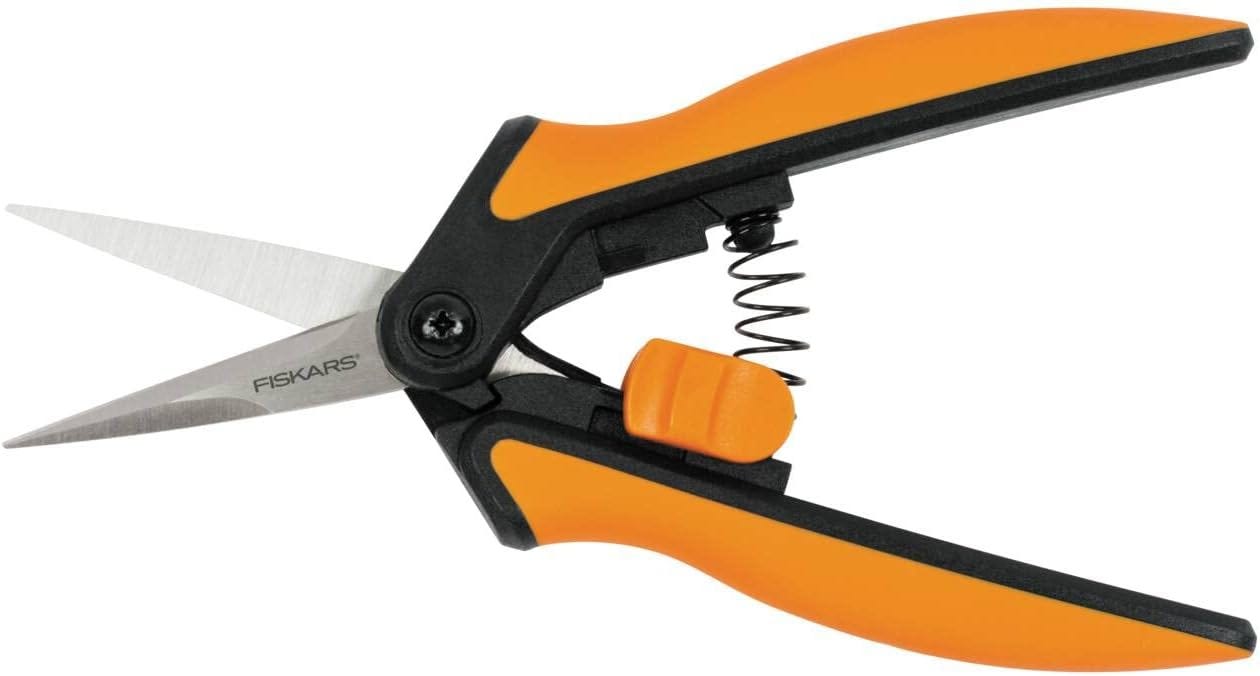
Fiskars Softouch Micro-Tip Pruning Snip
Fiskars’ PowerGear Bypass Pruner, previously reviewed, is the handiest, most used tool in my vegetable garden, but it’s too big and clunky for precision cutting of young salad greens and herbs. For that task, the company’s Pruning Snip is an outstanding and inexpensive tool.
Snipping action requires little effort because the short blades are quite sharp and a spring in the center of the handle returns the shear to its open position after each cut. A small garden scissors could work almost as well as this tool, but the spring-activated light-action cutting makes a big difference for ease of use. Like the larger pruner mentioned above, this model gives a lot of cutting output with disproportionately little input. This shear is also useful for carefully thinning densely grouped seedlings by cutting the excess plants at their bases. — Elon Schoenholz
Superb garden clippers
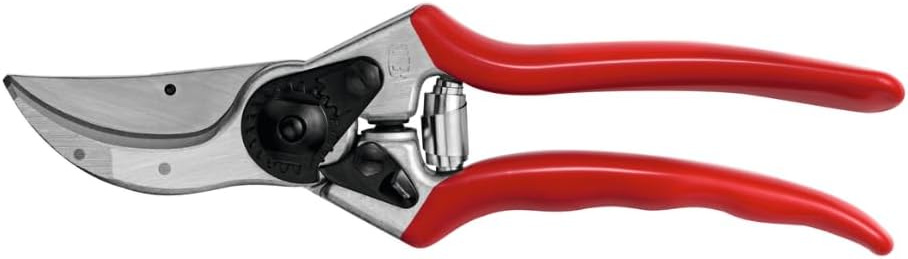
My garden includes roses, blackberry and ivy vines, five kinds of fruit trees — all plants that need constant pruning. So I carry my pruner on my belt. I probably use them a few dozen times every day. I have no idea why it took me so long to buy a pair of the best available — Felco. It’s got leverage! A handle shaped to the hand. If you prune a lot, you’ll know immediately by the feel that these are the best. You can buy models for small hands, ergonomic models for gardeners with arthritis, left-handed ones. Forty dollars seemed like a lot for clippers but after decades of using inferior pruners I get pleasure every time I snip the Felcos. — Howard Rheingold
Once a week we’ll send out a page from Cool Tools: A Catalog of Possibilities. The tools might be outdated or obsolete, and the links to them may or may not work. We present these vintage recommendations as is because the possibilities they inspire are new. Sign up here to get Tools for Possibilities a week early in your inbox.
02/16/26