Day: October 25, 2023
 10/25/23
Book Freak 142: How to Get Your Brain to Do Hard Things
Advice from Dopamine Detox by Thibaut Meurisse
 10/25/23
Advice from Dopamine Detox by Thibaut Meurisse





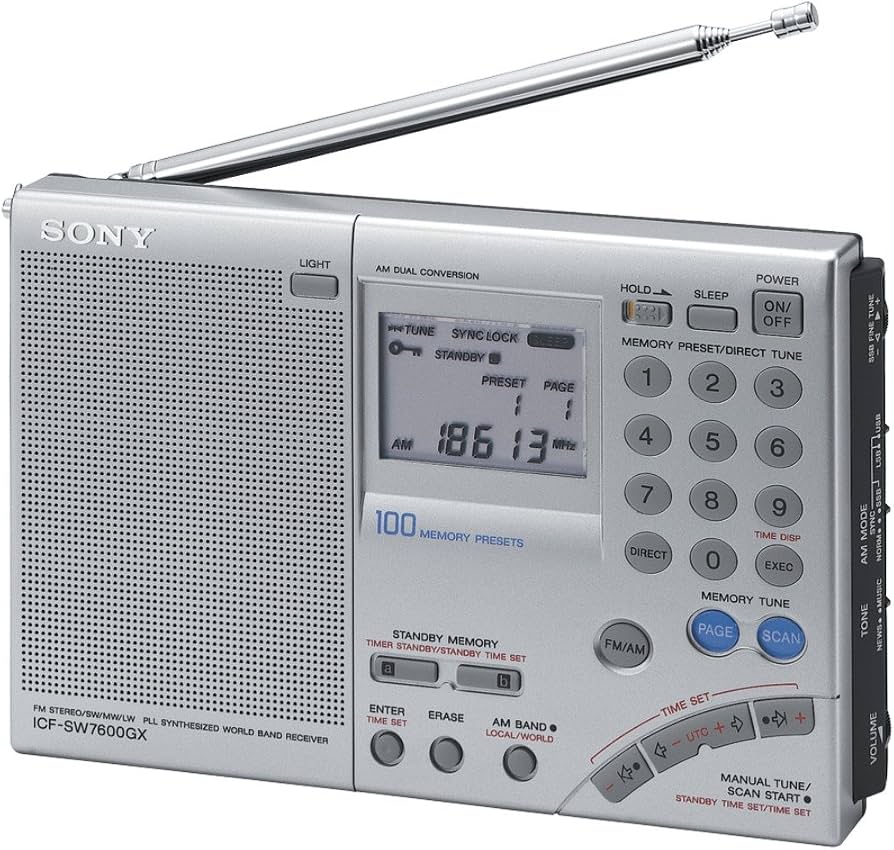
The previously-reviewed Sony ICF-2010 is undoubtedly the best portable shortwave radio ever made. It was built to perfection with synchronous detection, aircraft band and a lot of other bells and whistles. But unfortunately, it has long been discontinued. Likewise, the previously-reviewed Grundig YB-400 has also been discontinued.
Today, the two best portable shortwave receivers in the market are the Sony ICF-SW7600GR and the Grundig G5. Both are great radios, but the 7600GR triumphs over the Grundig because of its excellent build quality (still Japanese made!) and synchronous detection circuitry, which lets the user eliminate adjacent channel interference, fading and distortion on shortwave. Both are equally sensitive on shortwave but some argue that the G5 has better audio (i.e. the speaker). For listening to ham radio stations, though, the 7600GR is much better and, at least for the moment, it is the only portable receiver that features synchronous detection circuitry, technology usually found only on radios *ten times* the price!
Some background on synchronous detection: an Amplitude modulated (AM) signal has three components: the carrier signal which is flanked by upper and lower sidebands (USB and LSB). The sidebands carry the audio information and are prone to interference when a station from an adjacent frequency interferes with the sidebands. For example, if you are listening to BBC on 9500 KHz, a station at 9505 KHz might interfere with the upper sideband of 9500 KHz but not with the lower sideband. The lower sideband is vulnerable only to a frequency lower than BBC at 9500 KHz. A regular detector on a radio like G5 will take *both* sidebands and the carrier signal and generate an audio that will show signs of interference. A synchronous detector like the one on the Sony 7600GR eliminates the distorted sideband and uses the cleaner sideband (the one not affected by interference) and mixes it up with a new strong carrier signal, which it generates by itself. Thus, the 7600GR eliminates two problems: weak carrier signal and distortion of the sidebands due to adjacent channel interference.
For hams radio stations, single side band (SSB) capability is needed. Hams generally broadcast in the upper or the lower side band but not both. The Grundig G5 and the Sony 7600GR both have an SSB feature, but only Sony lets you manually select which of the two single side bands (upper or lower) to listen to. That USB/LSB selectable switch also comes in handy for the synchronous detection circuitry. For instance, if you know the interference is coming from a station broadcasting at a frequency higher than what you are listening to, choose LSB on the switch and the USB is eliminated and vice versa.
The 7600GR has been a great companion to me for the last five years. I listen to All India Radio to catch some news and music from home. I also love listening to voices from all over the world: BBC, Radio Netherlands, Radio China International, Radio Japan, and Radio Australia among many others. Beyond increasing my understanding of the world around me, the radio also helped me a lot with improving my spoken English. And due to its size, I’m able to take the radio pretty much everywhere I go. — Sam Ponissery
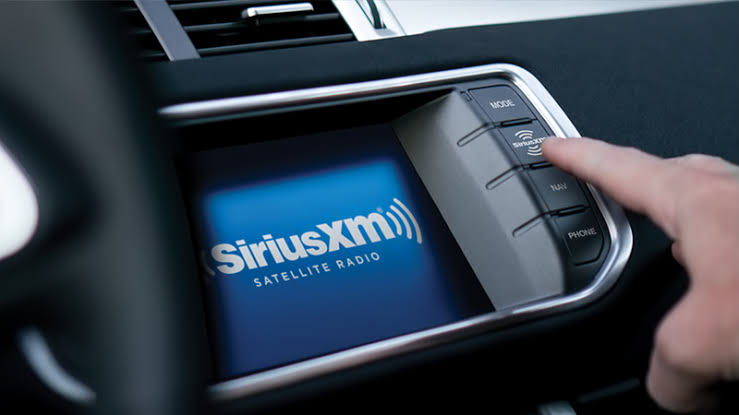
Satellite radio is for folks living in rural areas where local radio stations are scare, or not very good. Or livingon boats outside of local radio range, or driving long distances bored with talk radio, or for people who want a great selection of commercial-free stations that even the internet does not have. — KK
Because the satellites are so powerful, you don’t need a dish antenna; my Sony system uses an antenna the size of a travel iron. Supposedly you place it on the roof of your car (it has a magnetic base) but I find I get flawless reception if I place it inside the car, under the windshield. The Sony receiver can be moved in and out of various vehicles, or your home. The antenna *just* manages to pick up the satellite signal from inside a wooden-framed house.
You get 101 channels, many commercial-free. Highlights for me have included a 10-hour special on John Lennon (created by the BBC), the blues channel (amazingly wide ranging eclectic selection), and “Music Lab” which ranges from Phish to Frank Zappa. You also get news stations (audio versions of CNN and Bloomberg), CSPAN, BBC World Service, oldtime radio dramas, readings of classic novels (more BBC material, excellently produced), and E! stuff which can be entertaining (they specialize in chronicling troubled lives of celebs). Of course there is a full range of new rock/pop/country/hiphop/oldies. You can send email to the DJs and get intelligent replies.
My current job entails driving from my home in Northern Arizona to Phoenix and back, each week (150 miles each way). Headphones coupled with XM radio have erased the boredom and irritation of the journey, and I don’t find the headphone experience any more distracting than a regular car radio. It’s just more restful. —Charles Platt
I mainly got the Sirius XM satellite channel because I ride a lot in areas that don’t have terrestrial radio reception -- places like the wilds of central Nevada, northern British Columbia, the Yukon and Alaska. Even with a big library of MP3’s, I’d rather listen to curated music on a commercial-free XM station. On days I’m on a long ride (750+ miles), it’s nice to be able to listen to a baseball game, or an 80’s Alt station, or even ESPN Radio, just to have something different. — Brian Casey
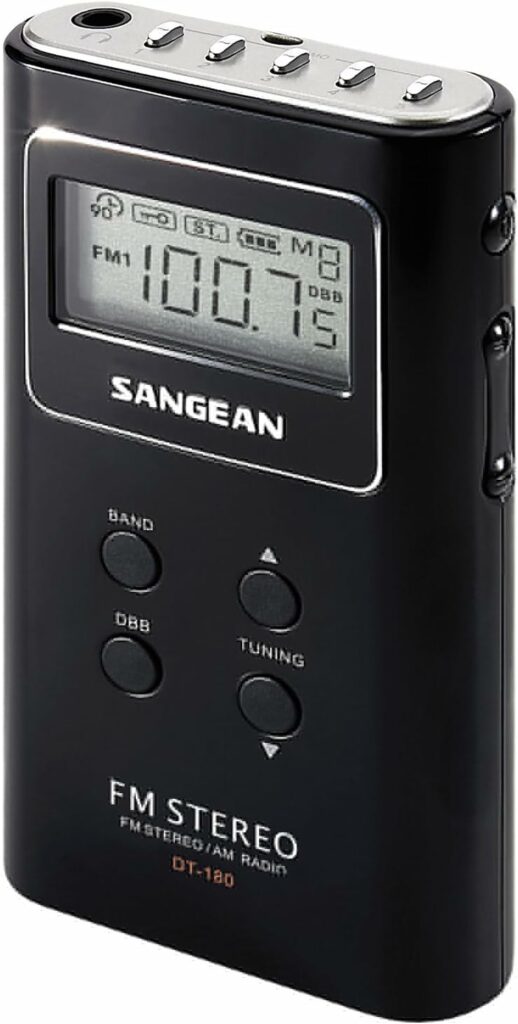
This Sangean pocket radio costs a lot more (4x) than the smallest available iterations from Sony and Panasonic, but it’s well worth the extra cash for two reasons. The first is that it picks up AM way better than anything in its size/weight class, both in terms of the number of stations and, equally important, the strength and clarity of the signals. And secondly, its size, 3.5″ x 2″ x 0.6″ (measured by me) and weight, 2.05 oz. on my postal scale.
Note that there’s no speaker so you have to use earphones (they come with a pair). Finally, its form factor is remarkably similar to that of the long defunct iPod mini. Now I can listen without static on AM as Larry, Sonny and Sam call the woeful Redskins’ games. — Joe Stirt
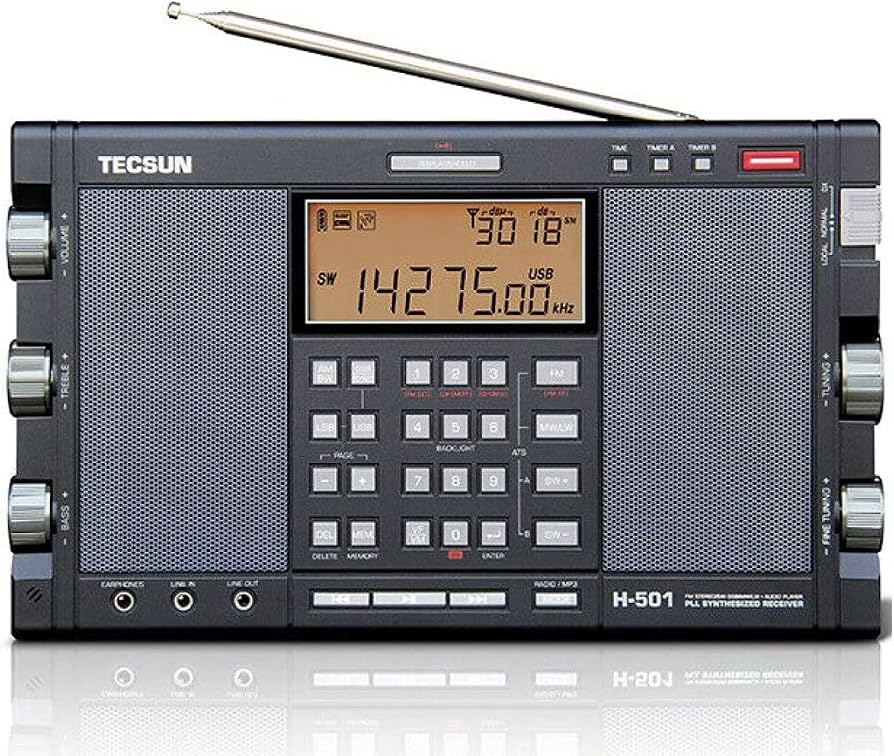
Tecsun Dual Speaker Digital Radio
While looking for an external set of speakers for my iPad, I rediscovered my Tecsun Pl-390 portable radio. Most of the external speakers I had seen were either without power of their own, or they ate batteries too fast to be of much use. Added to that is the fact that most of them were too bulky to haul around. It was then that I realized the Tecsun had a line-in jack and two perfectly sized speakers, and I had suddenly solved two problems: great stereo for my iPad and an excellent radio with great features.
This puppy hooks to the iPad with a standard stereo patch cord, one of those two-ended things with a miniature stereo headphone plug at each end.
In effect the Tecsun becomes a great pair of portable stereo speakers that also picks up AM, FM, shortwave, and (for anybody in Europe) longwave. It plays stereo on FM, too. It is the only portable shortwave radio I am aware of that plays in stereo, although I know of many others that will provide stereo through headphones. Not only does this radio pick up all those bands, it does so VERY well. While it only picks up standard radio signals (not “HD Radio”), it processes the signals digitally. This allows several performance advantages and interesting special features.
One of these special features is called “Easy Tuning Method.” Start an ETM scan and the radio will scan whatever band you’re listening to, or in the case of shortwave, it will scan all the SW broadcast bands at once. It makes note of all the listenable signals available. After that, when you turn the tuning knob, it jumps clear signal to clear signal, skipping all the spaces in between. Rescanning this when you’re in a different town, or when listening conditions change, is as simple as pushing the button again. Cool!
Tecsun also makes a smaller, single-speaker version of this radio. I got the larger stereo version because it has a longer case that gives space for a longer AM antenna- and, get ready for a miracle, they actually put a longer AM antenna in it. It makes for borderline amazing AM reception. Plus this set does all the things that have become usual for fancier portables in recent years. It works as an alarm clock, it has more memory presets than I can find use for, and so on.
Mine came with a manual, heavy cloth zipper case, rechargeable batteries, earbuds, fairly long external wire that acts as an antenna for FM and shortwave, and a USB cable for external power or charging. I don’t believe the USB cable can be used to move data to or from this radio in any way, I think it’s only used as a convenient “standard” power plug. Unfortunately, the radio did not come with a plug-in power supply. Any “wall wart” that outputs to a standard USB socket will work, though. — Bill Rogers
Once a week we’ll send out a page from Cool Tools: A Catalog of Possibilities. The tools might be outdated or obsolete, and the links to them may or may not work. We present these vintage recommendations as is because the possibilities they inspire are new. Sign up here to get Tools for Possibilities a week early in your inbox.

© 2022
