



WEIRD LOVE – THE WARM BLANKET OF HISTORY HAS SWADDLED THESE ROMANCE COMICS IN LUDICROUSNESS
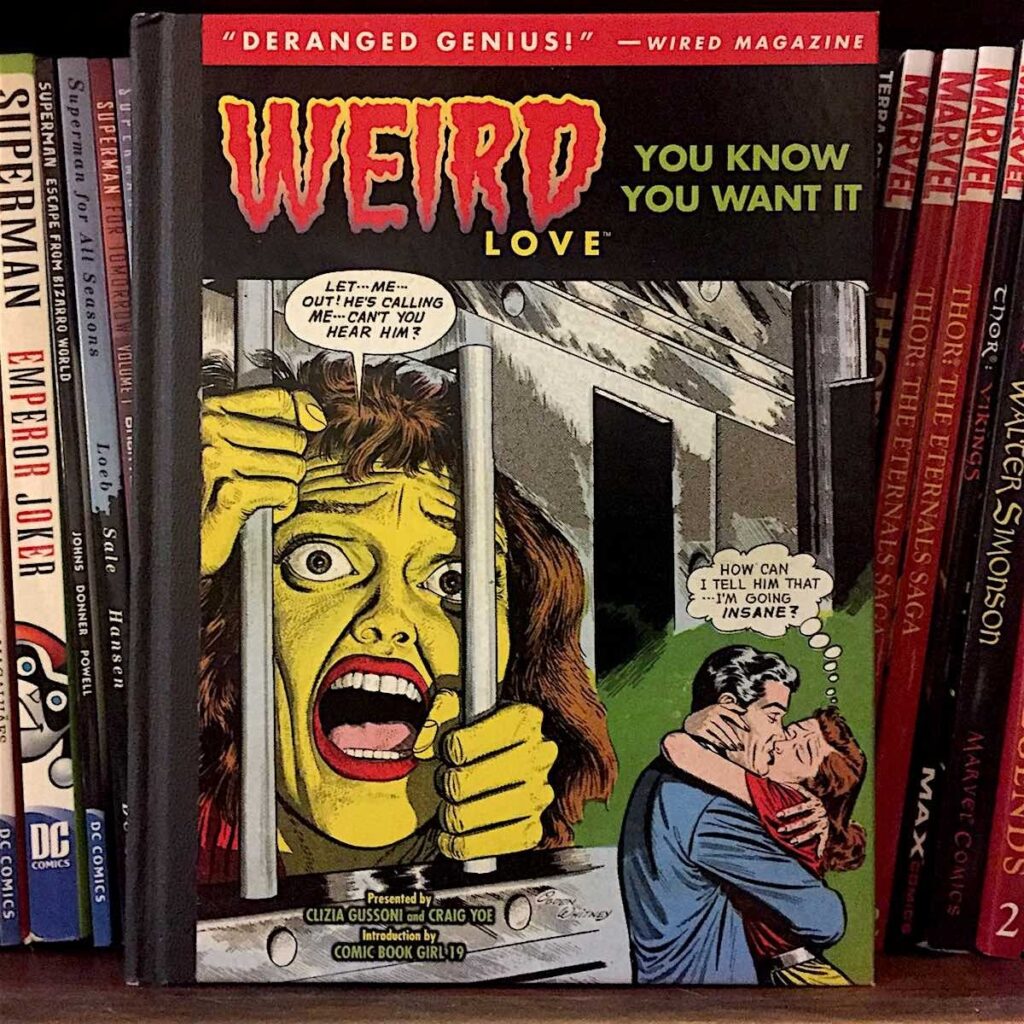
Weird Love
by Joe Gill (author) and various artists
IDW
2015, 160 pages, 7.6 x 9.9 x 0.9 inches
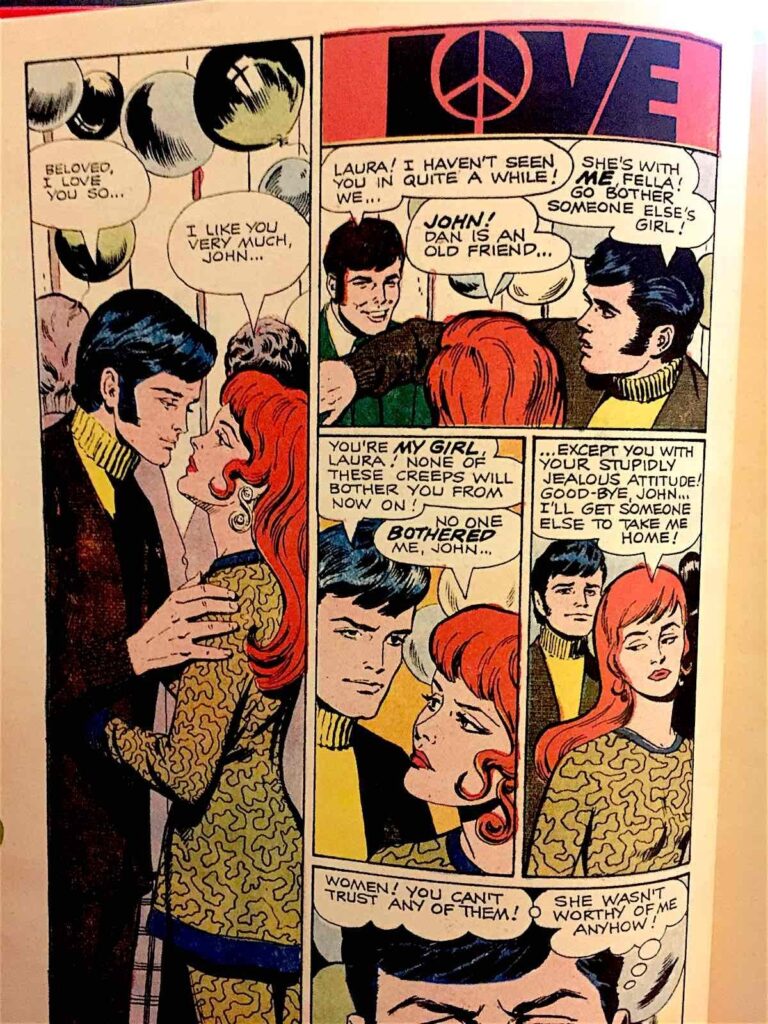
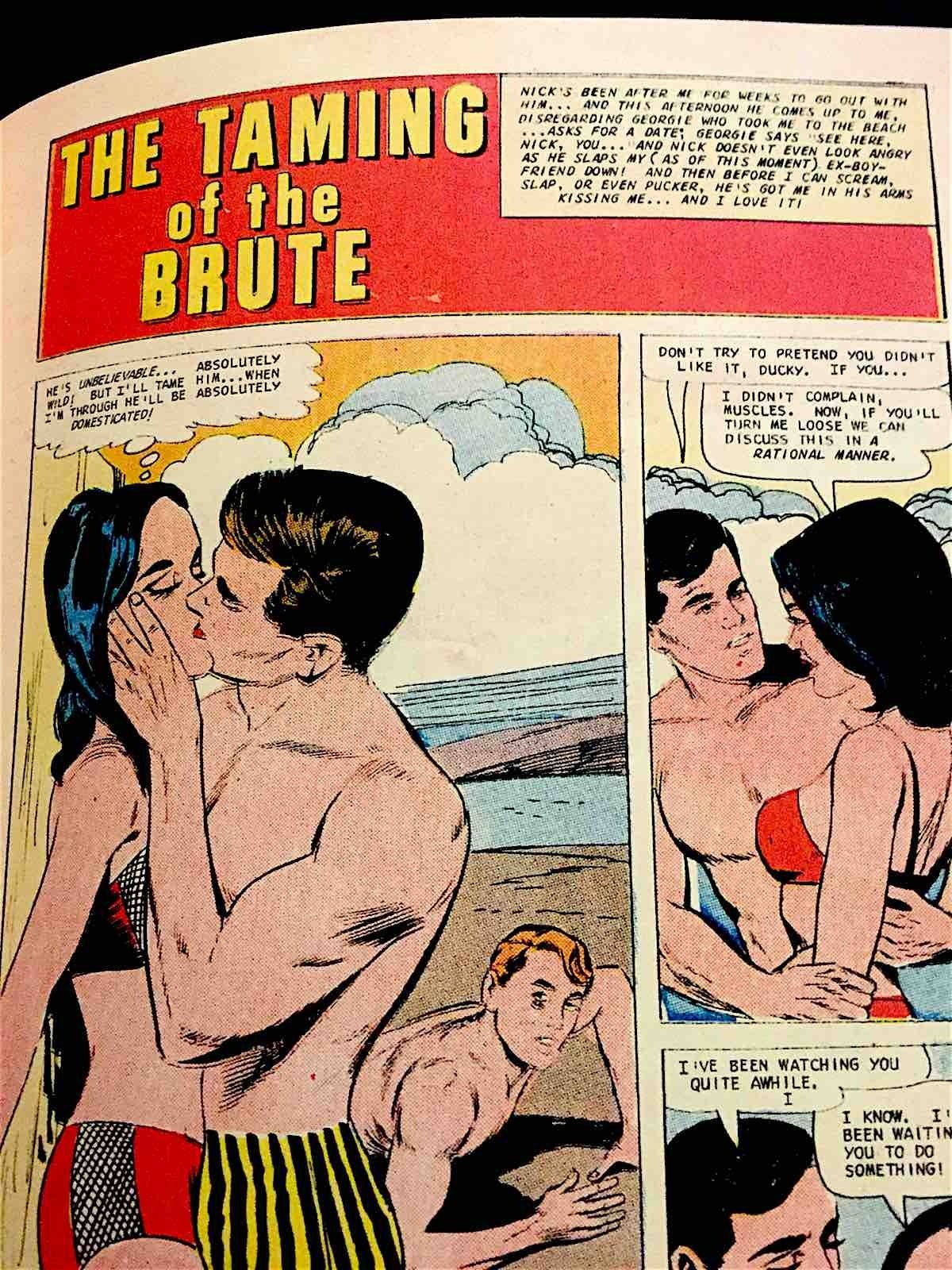
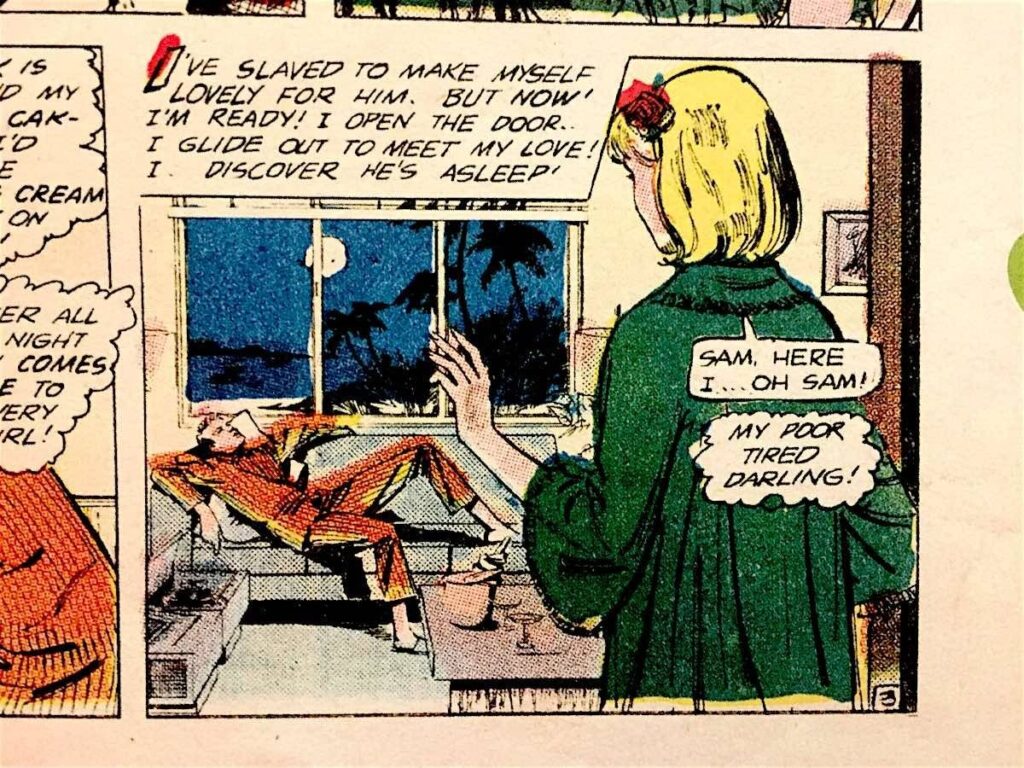
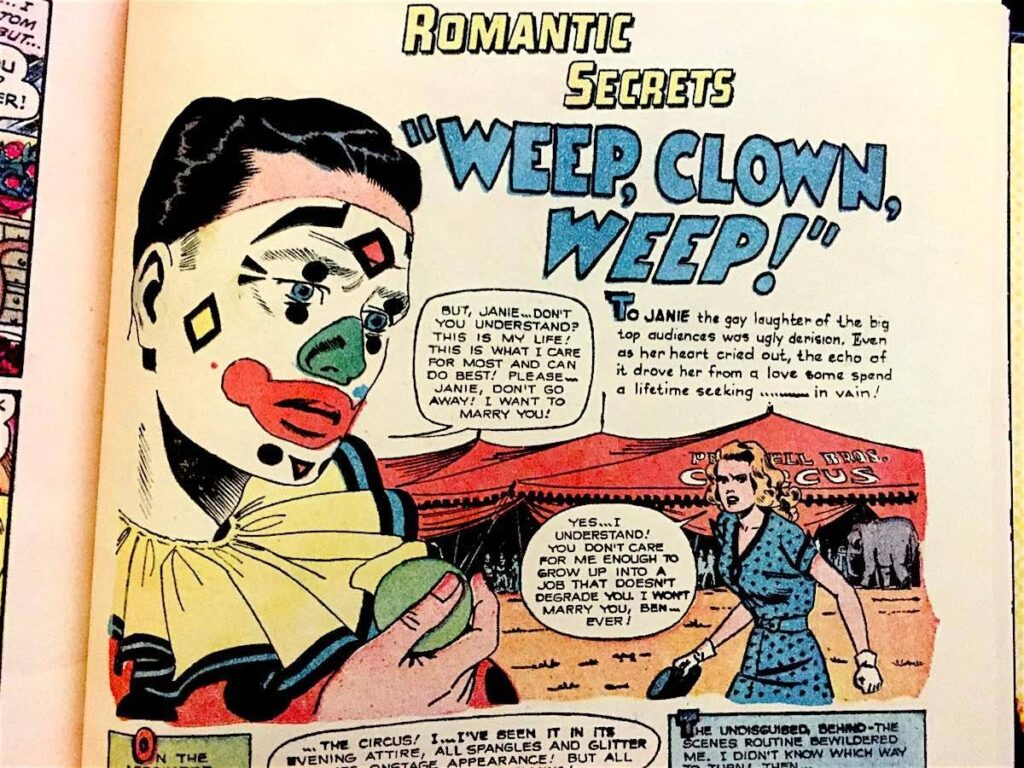
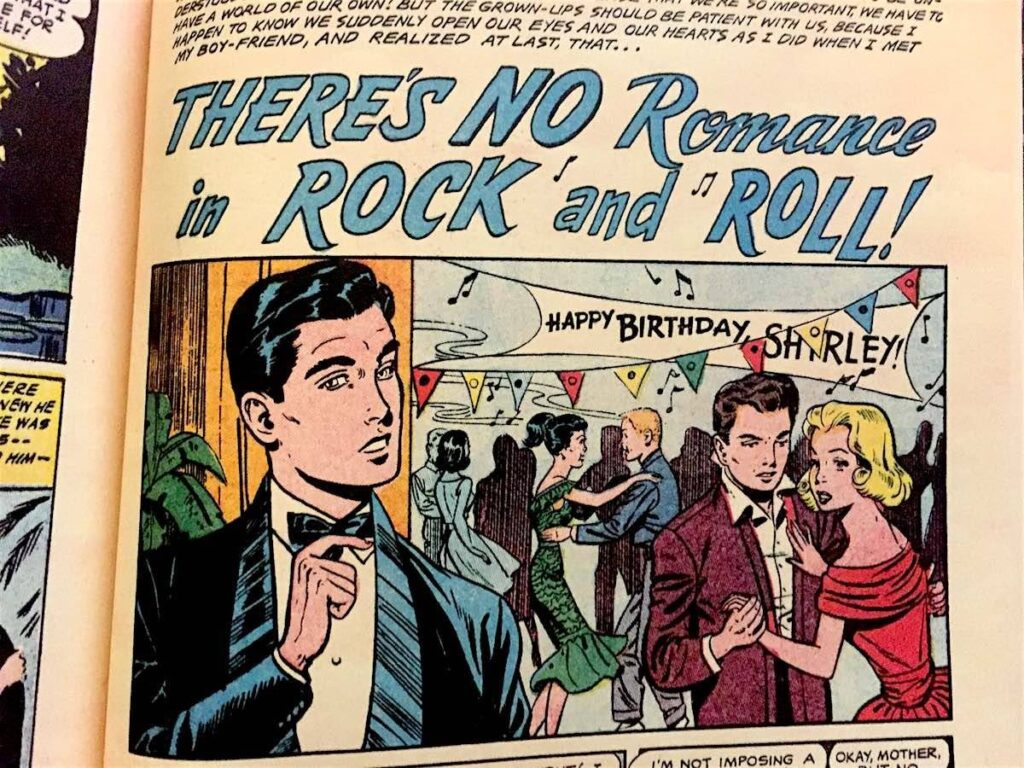
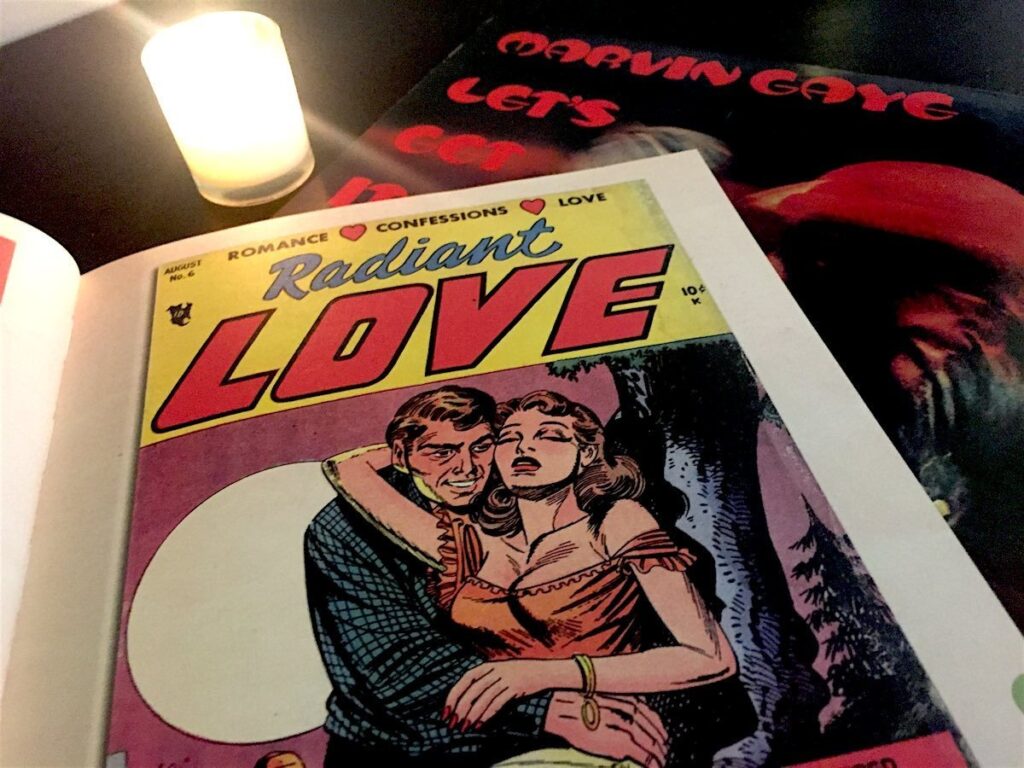
I’m willing to bet that your relationships with significant others aren’t as convoluted or mind-boggling as the ones you will find in this collection of love comics from decades past. I know that because I’m also willing to bet that you are more culturally evolved than your ancestral fictional characters that populated these four-color pages culled from the heyday of making women feel bad about pretty much everything. That’s what makes this collection so ridiculous. Weird Love gives us a glimpse into a time when the needle on the social gauge floated somewhere between “rampant sexism encouraged” and “casual sexism customary.”
While these stories probably weren’t intended to be comedic at the time, the warm blanket of history has swaddled them in ludicrousness. We have no analog for the petty, unflappable dickishness of the men, nor of the frank, almost callous lack of agency of the women depicted in the pages of Weird Love. Soap opera seems only a vague comparison, for soap opera tends to be at least a little self-aware. Nor can you compare it fairly to modern prose romance, for I would have to assume that modern romance writers likely enjoy what they do. The most important thing to remember about Weird Love is that literally all of these comics were written and drawn by middle-aged white men. They were either guys who typically wrote western, crime, horror, sci-fi, and superhero comics and liked doing those, or guys for whom creating comics was just kind of a job. Once you realize that, these stories start to make a kind of sense, in a middle-aged white-guy-from-the-50s kind of sense.
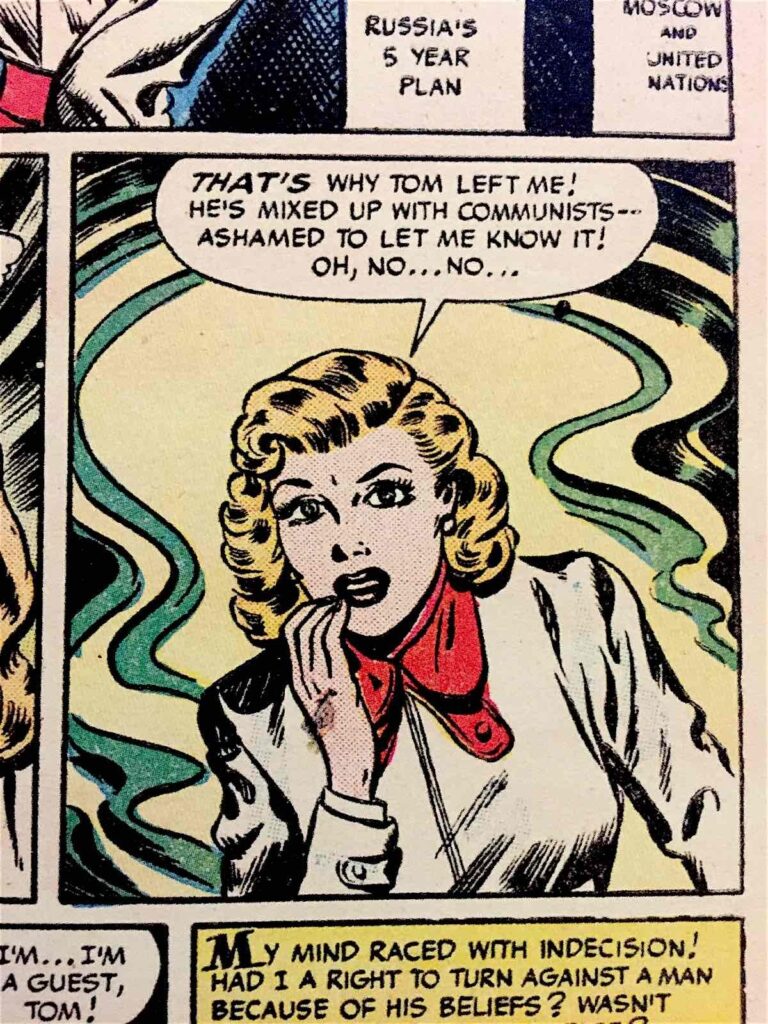
Another thing to keep in mind: these comics had only so many pages in which to lay down some groundwork, plow through some conflict, and happily resolve their various entanglements, sometimes in a bizarre turn of events but always with a moral takeaway. Once you know these things, Weird Love can be enjoyed as a rich, velvety farce, veritably stuffed with melodrama, and featuring selections such as “You Also Snore, Darling,” “Slave to Despair,” and “Weep Clown, Weep!” Despite the clown-based love story, the highlight of this book, for me, was the political drama, “I Fell for a Commie.” In this lovely little Red Scare of a tale, the heroine makes the decision to join up with a group of communist sympathizers because she’s fallen real hard for a guy in the group – hard enough to go through the motions of being indoctrinated just so she can spend more QT with her boo. I’m not sure that a rational actor would so quickly opt for the ideological cult when the love of an acquaintance she had only met a few days earlier was at stake, but maybe good men were as hard to come by in 1953 as they are now.
Surely, the faded, sepia newsprint of this fine collection will preserve for future generations the galling depths of what passed for mutual respect between man and woman during the 50s, 60s, and 70s (or, granted, some grizzled white guy’s interpretation thereof). I suggest the following for maximum enjoyment: snuggle up with your partner, crack open a bottle, and remind yourselves as you plumb the wacky depths of emotional infantilism that modern romance has come a long way indeed. – Garrett Gottschalk
THE MARVELS - A PLAYFUL NOVEL OF REAL LIFE LIVED ON A THEATER STAGE
The Marvels
by Brian Selznick
Scholastic Press
2015, 672 pages, 5.8 x 8.3 x 2.2 inches
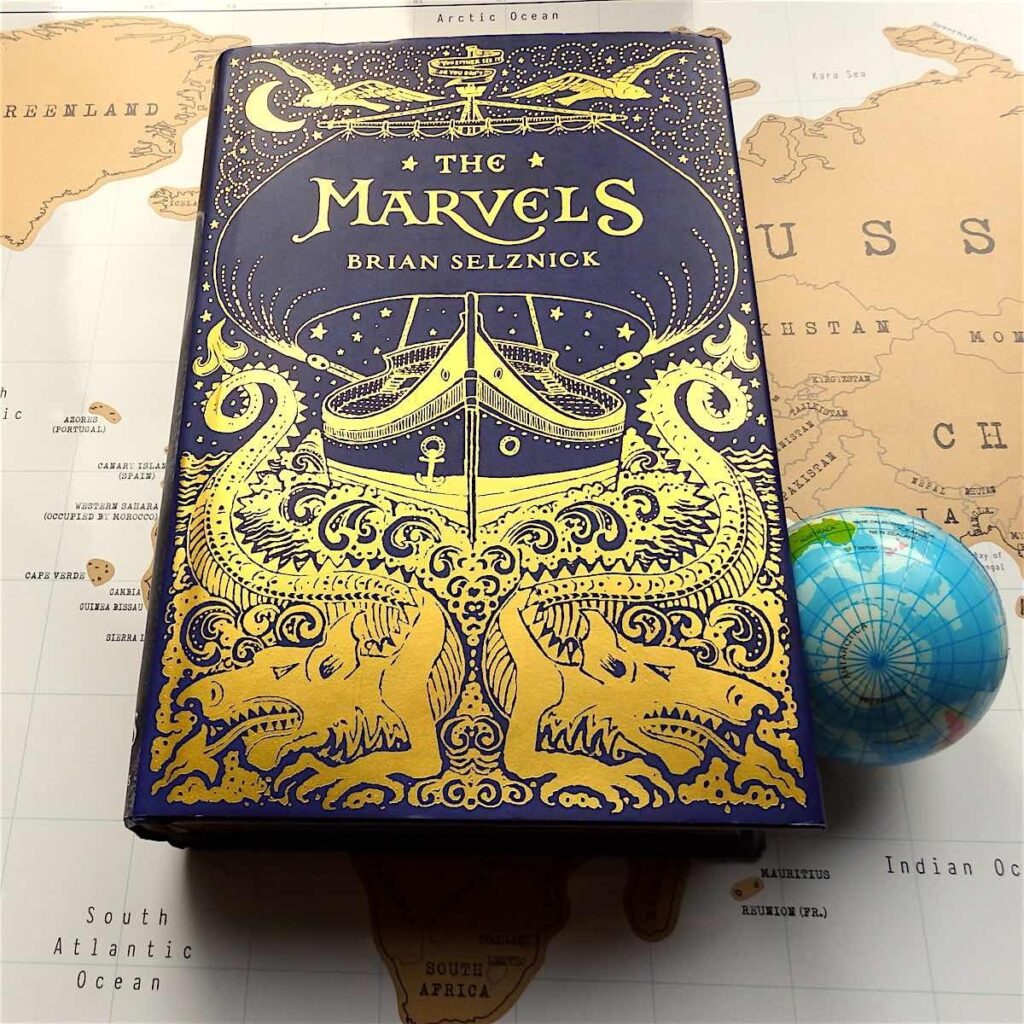
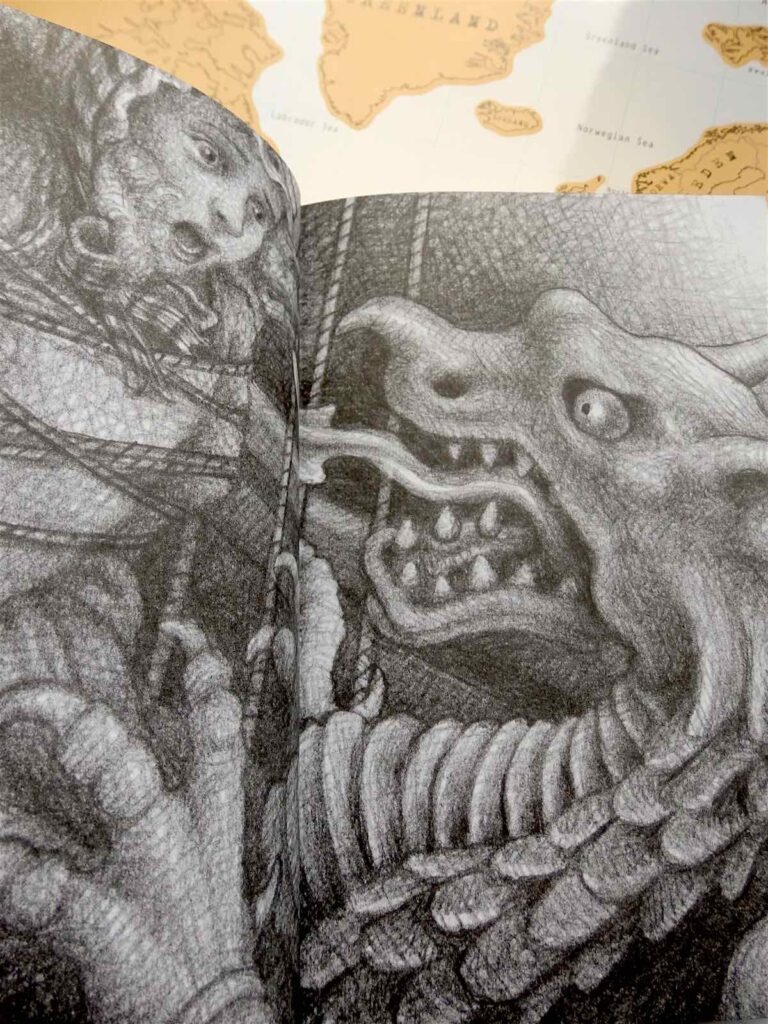
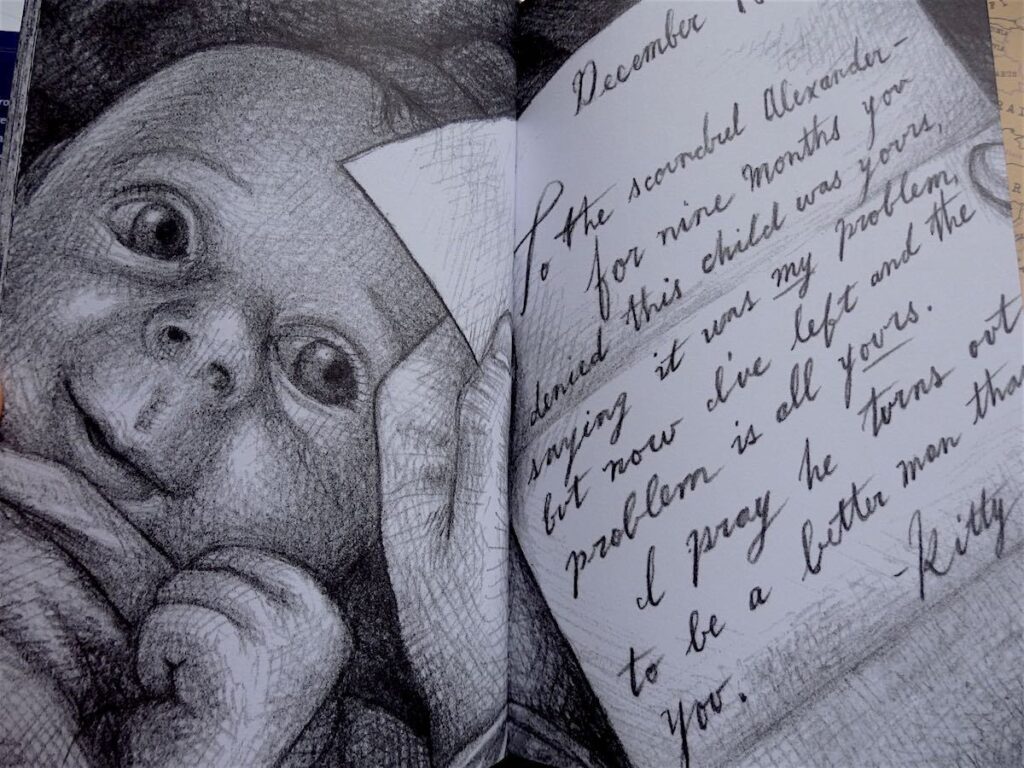
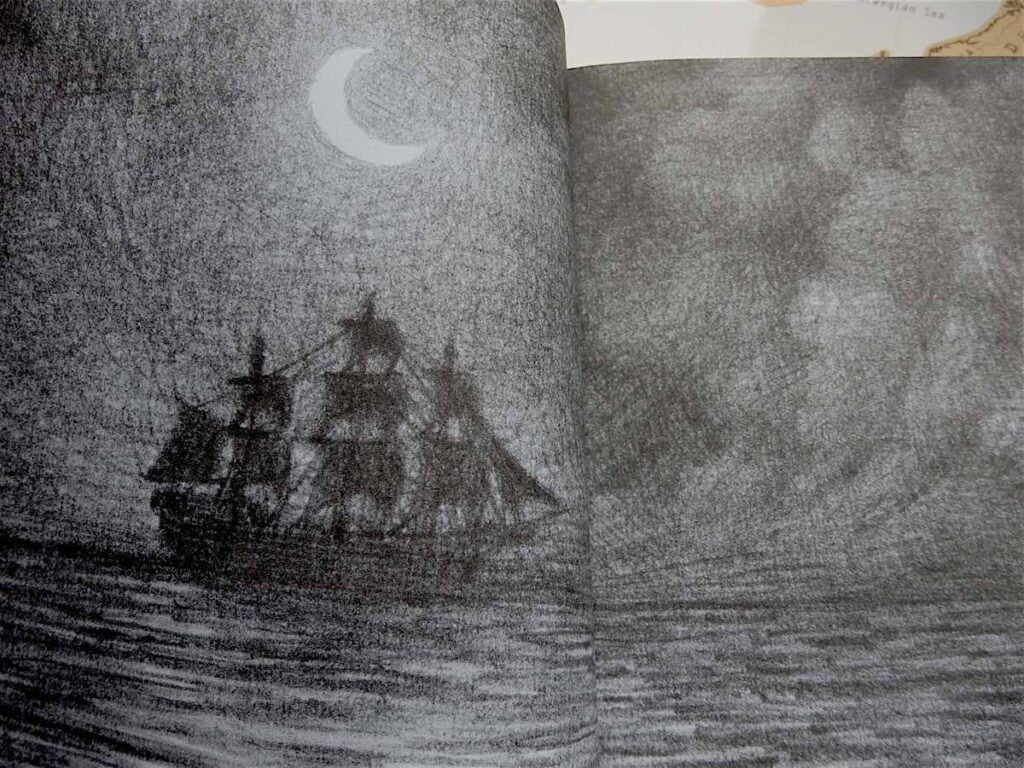
1766. A ship named the Kraken. A little girl tied to the mast, her face darkened by the shadow of a fearsome sea monster. It’s approaching, closer, closer, its teeth just inches from her face. But none of this is real.
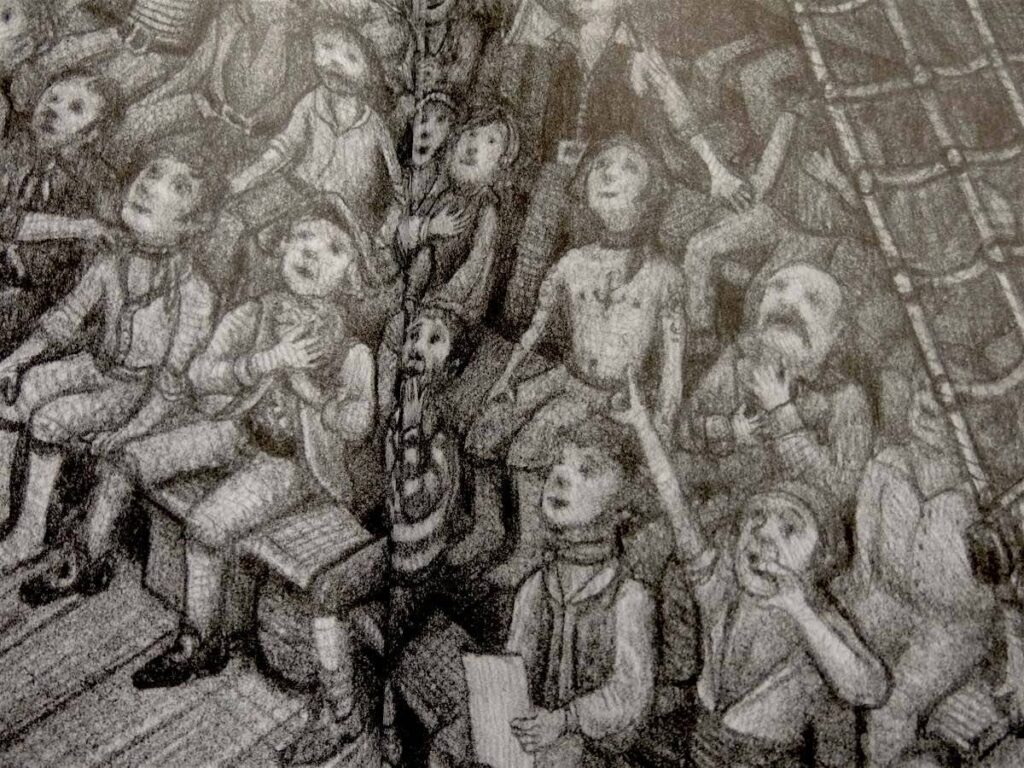
Pan back to reveal an audience – and that’s when we realise that we, like them, are being treated to a performance. All this comes in the first few pages of Brian Selznick’s The Marvels and it sets the tone for everything after. Stories within stories, books inside plays, real life lived out on a theatre stage.
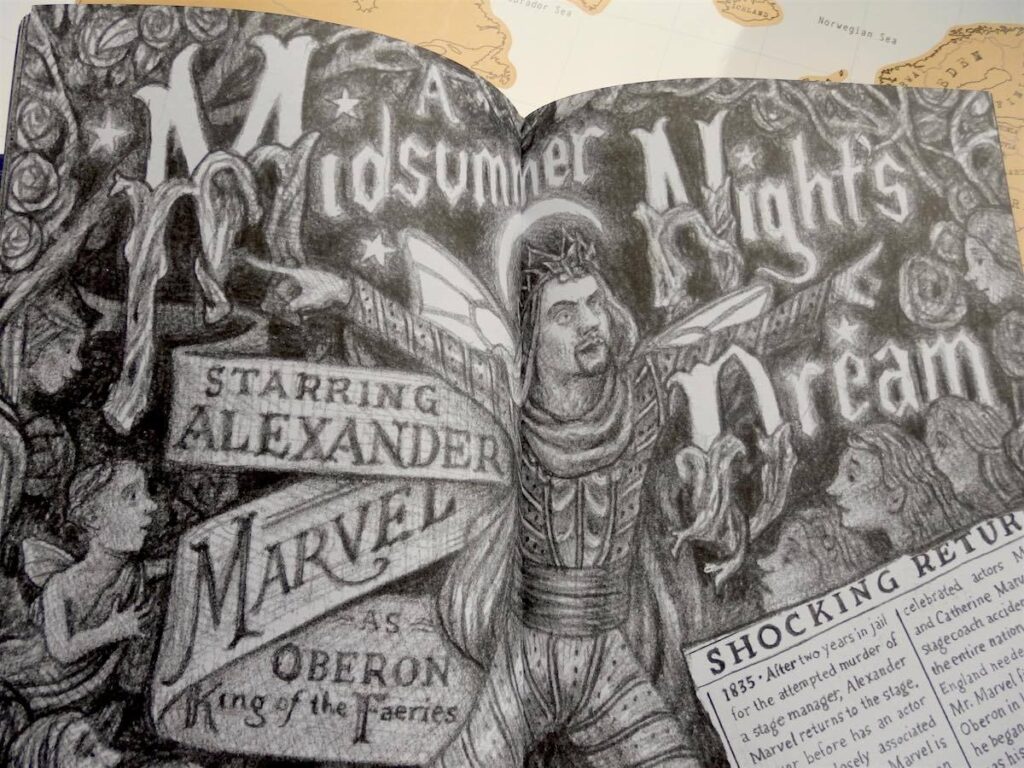
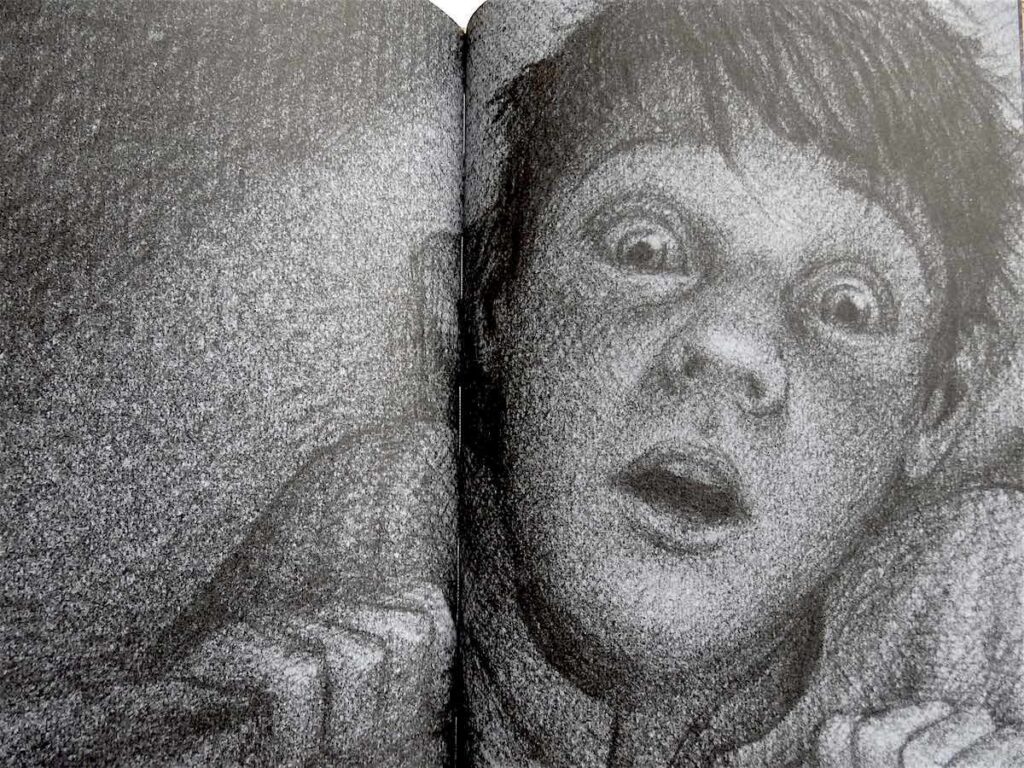
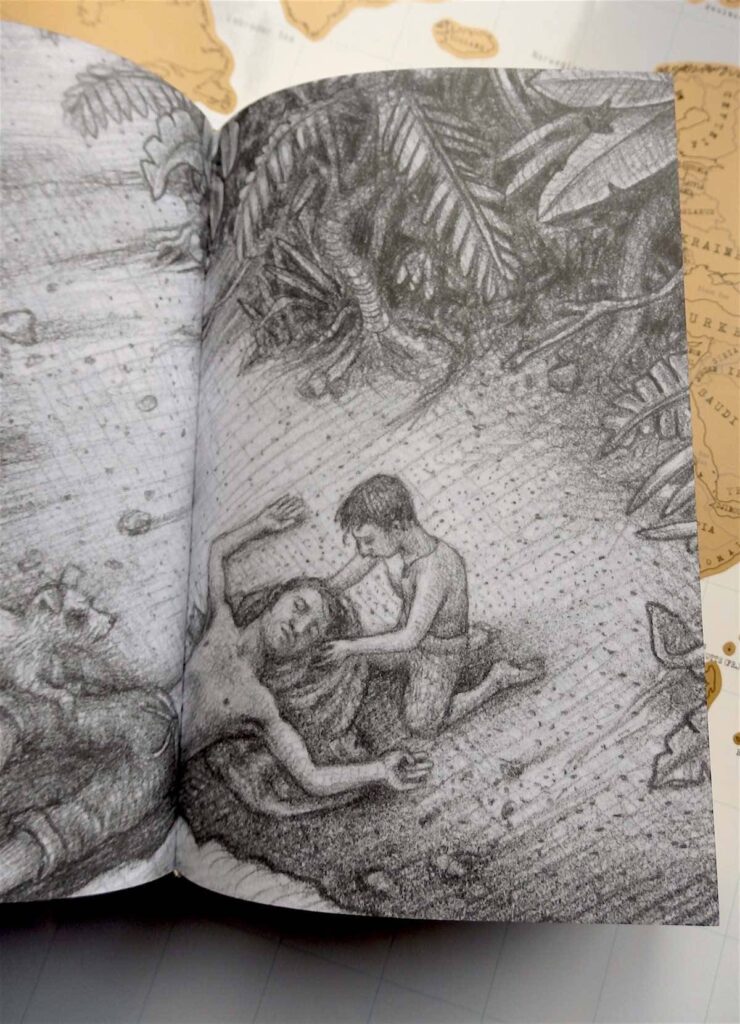
The Marvels is a novel of two halves. Part one consists of a 400-page collection of immersive black-and-white pencil drawings that tell the story of the Marvel family. From modest roots to fame and fortune, from lucky escapes to fiery ends. Part two is a short novel in itself, picking up in 1990 with young runaway Joseph Jervis absconding from boarding school in order to search out his enigmatic uncle, Mr A. Nightingale, and then discovering the history of the Marvel family for himself.
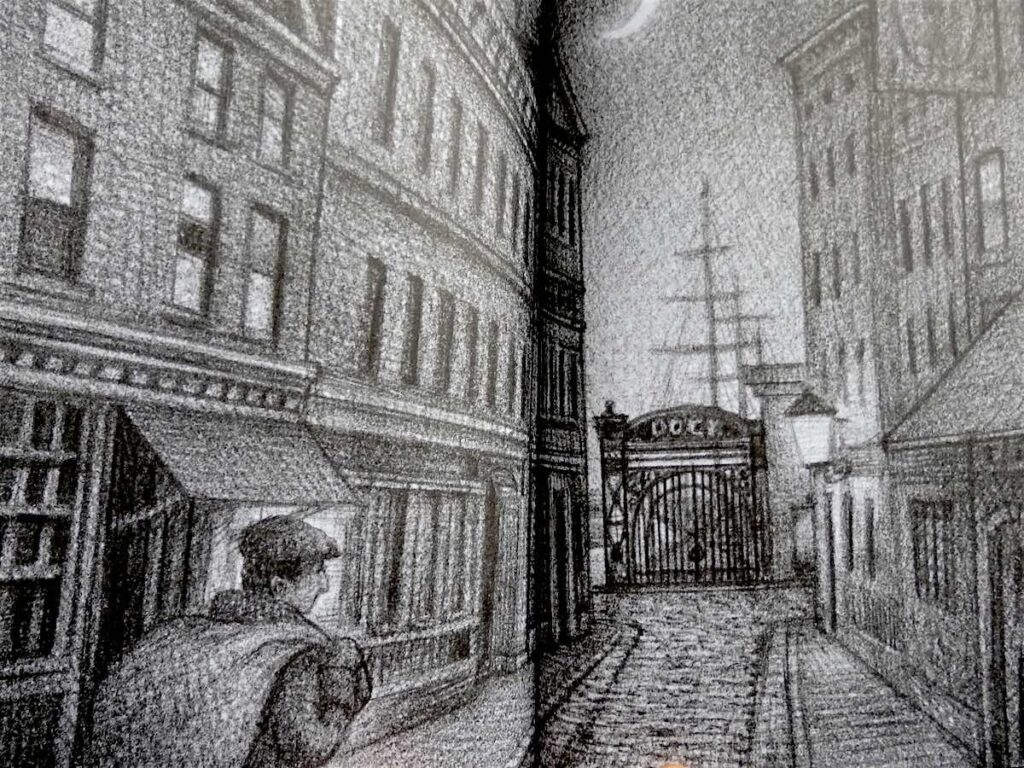
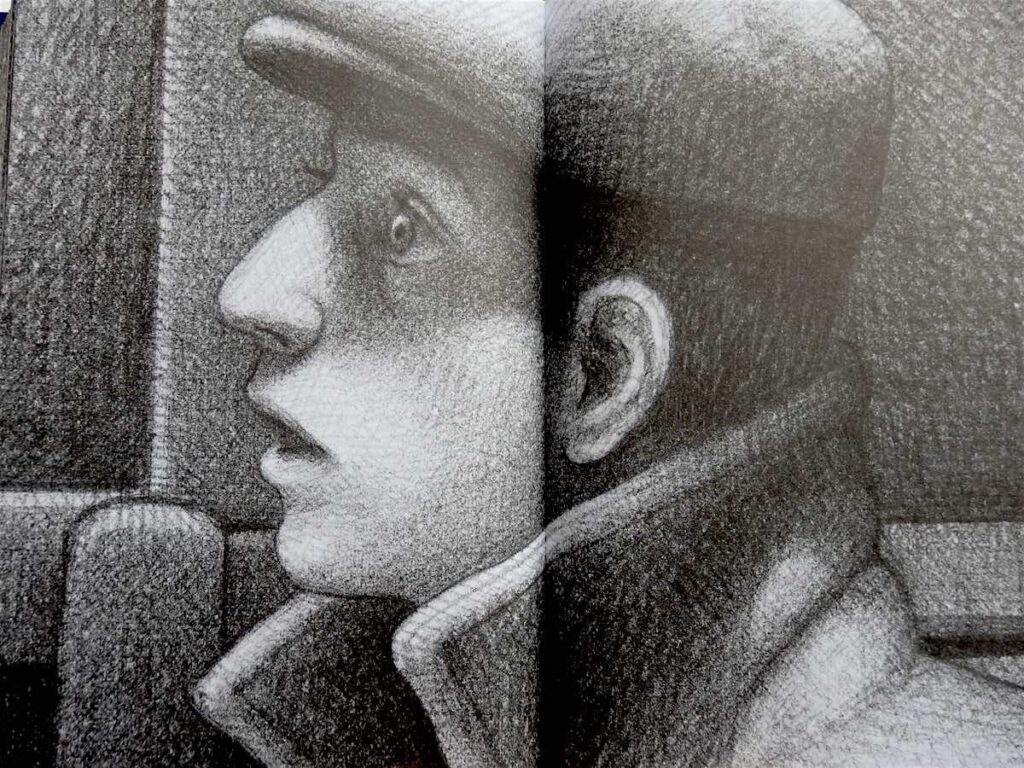
The illustrations of part one are a real pleasure and very manageable in one sitting. With every image realized on a two-page spread, there are layers and intimate details to get lost in. A range of pencil techniques capture the story’s varied landscapes, which switch from brooding oceans to tropical forests to cobblestoned alleyways. Selznick obviously doesn’t believe in white space. He doesn’t even believe in margins. Every page is decorated to its very edge and the print quality is top-class. It all may look freshly drawn, but don’t worry about wiping your fingers, there’s no risk of smudging here.
The Marvels’ story begins in classic adventure territory, then stands back and acknowledges its influences with pleasing allusions to Tintin, Robert Louis Stevenson and a healthy sprinkling of Shakespeare. When the story gets up to date in part two, however, it carries an emotional heft and grounds itself very much in the real world. This is a children’s book that is admirably progressive in its depictions of non-nuclear families – which is a bone of contention for some Amazon reviewers but gets a huge thumbs-up from me. Selznick’s Afterword is an interesting read in itself, citing his inspirations and adding a layer of non-fiction to this story about stories.
Full of reversals and inversions, The Marvels is a work that is playful, inventive and has a few good surprises up its sleeve. Like the preface says, You either see it or you don’t. – Damien McLaughlin
Books That Belong On Paper first appeared on the web as Wink Books and was edited by Carla Sinclair. Sign up here to get the issues a week early in your inbox.
