Gareth’s Tips, Tools, and Shop Tales is published by Cool Tools Lab. To receive the newsletter a week early, sign up here.
I got a phenomenal response to my request for input on this newsletter. Thanks to all who messaged me. Turns out, an overwhelming number of you like the newsletter the way it is and simply offered encouragement. I also got several excellent suggestions for new features which I’ll be rolling out in the coming weeks. Keep those cards and letters coming!
How to Restore Yellowed Clear Plastic
In this quick Tested video, Adam Savage sets out to restore the lid of a gorgeous vintage Nagra IV-S audio recorder he recently acquired. The machine is in surprisingly good condition, but the clear plastic cover was scratched and badly yellowed. Doing research, he found many recommendations for using 12% hydrogen peroxide. He tried it with partial success. He discovered that finishing it up with plastic polishing compound returned it to something close it is original glory.
Making a Cheap, Simple Air Cleaner for a Small Shop
In this I Build It video, John shows how he made a simple and inexpensive air cleaner for his small woodshop. The air cleaner was made from little more than a small fan, a piece of duct piping, some scrap ply, and a several shop vac air filters. I love the way it can be expanded (with additional filters) via a threaded rod that holds the filters in place.
IKEA Wrenches on Your Pegboard
I just discovered a use for all of those hex wrenches that come with IKEA and other flat-pack furniture. They make perfect pegboard pegs!
Oil Can!
The tin man in dire need of maintenance.
The other day, while oiling a squeaky hinge with some lithium grease, I flashed on my granddad. A consummate tinkerer and inventor, Gramps was obsessed with maintenance. He frequently had his spring-bottom oiler in hand, blue shop rag tangling from his back pocket, going around the house, the yard, his backyard workshop, the car, lovingly maintaining the machinery of his life. I decided in that moment to try and be better at doing the same. Moments later, on Twitter, I saw this Kurt Vonnegut quote: “Another flaw in the human character is that everybody wants to build and nobody wants to do maintenance.” Exactly. OIL CAN!
Maker Slang
Slang, jargon, and technical terms for the realms of making things.
Crown pulley – A pulley designwhere the center has a larger diameter than the outer edges, thus a “crown.” Perhaps counter-intuitively, the belt on the pulley will always seek the area of highest tension, returning it to the crown. Via Maker Update.
Promptcrafting – In AI art, it’s all about the quality of the prompts you craft. The better your invocation, the better the magic that gets returned.
Rewilding your attention – Writer Clive Thompson has been promoting the creative benefits of exposing yourself to the novel, the offbeat, the serendipitous. Look beyond what the online algorithms feed you – rewild your attention!
Shop Talk
As stated in the intro, I received many fabulous emails from you, dear readers. Here is one from Paul Cryan. Look for some tips from Paul in a coming issue!
“Thanks for doing all you do. Your tip books [Ed: Vol 1, Vol 2.] are great and I’m really enjoying the newsletter. I bought and devoured both of your books, in Kindle and PDF formats. I refer to them often and having the search function (via either the Kindle app or iBooks, respectively) is really handy. Every few days, I find myself looking at objects in new ways and going back to your references. This past Friday, I didn’t have a clamp within getting-up-from-my-chair distance at my office desk, so I ended up using a pair of pliers and a rubber band to hold together a plastic part I was gluing. Thanks for putting that seed in my head.
“The only problem I have with the weekly newsletter is that it gives me way too many things to think about and try per unit of time!
“With your tips books, I’ve got months to read through them and try things out. This week, I experimented with the lanolin mineral oil mixture to rustproof tools out of your latest tips book and it seems to hold much more promise than Johnson’s Paste Wax for keeping my old restored Shopsmiths looking and working great. I still need to test whether the stickiness can be buffed sufficiently off the power-tool surfaces to avoid particles grabbing, but so far so good. And who doesn’t like that faint smell of ungulates on their metal? 😉
“With the newsletter, I’m interested in just about everything you cover, which leads me to a weekly frenzy of investigation and implementation. Within the past month I’ve upgraded our broken sink strainers to the OXO type (love them), picked up a Williams ratcheting screwdriver (my new favorite ‘good enough’ tool), and bought Fat Boy pencils and FastCap markers that have me wondering how I didn’t know about these things before. And now I’m browsing saw blades!”
Become a Patron!Support our reviews, videos, and podcasts on Patreon!
Cool tools really work.
A cool tool can be any book, gadget, software, video, map, hardware, material, or website that is tried and true. All reviews on this site are written by readers who have actually used the tool and others like it. Items can be either old or new as long as they are wonderful. We post things we like and ignore the rest. Suggestions for tools much better than what is recommended here are always wanted.
Every tool has two functions. One is the job it was designed to do (aka the business end). The other is how it interacts with you, the user. Manufacturers optimize the first and often don’t give enough thought to the second. For those with ability issues, it’s often on you to buy or DIY a better human interface.
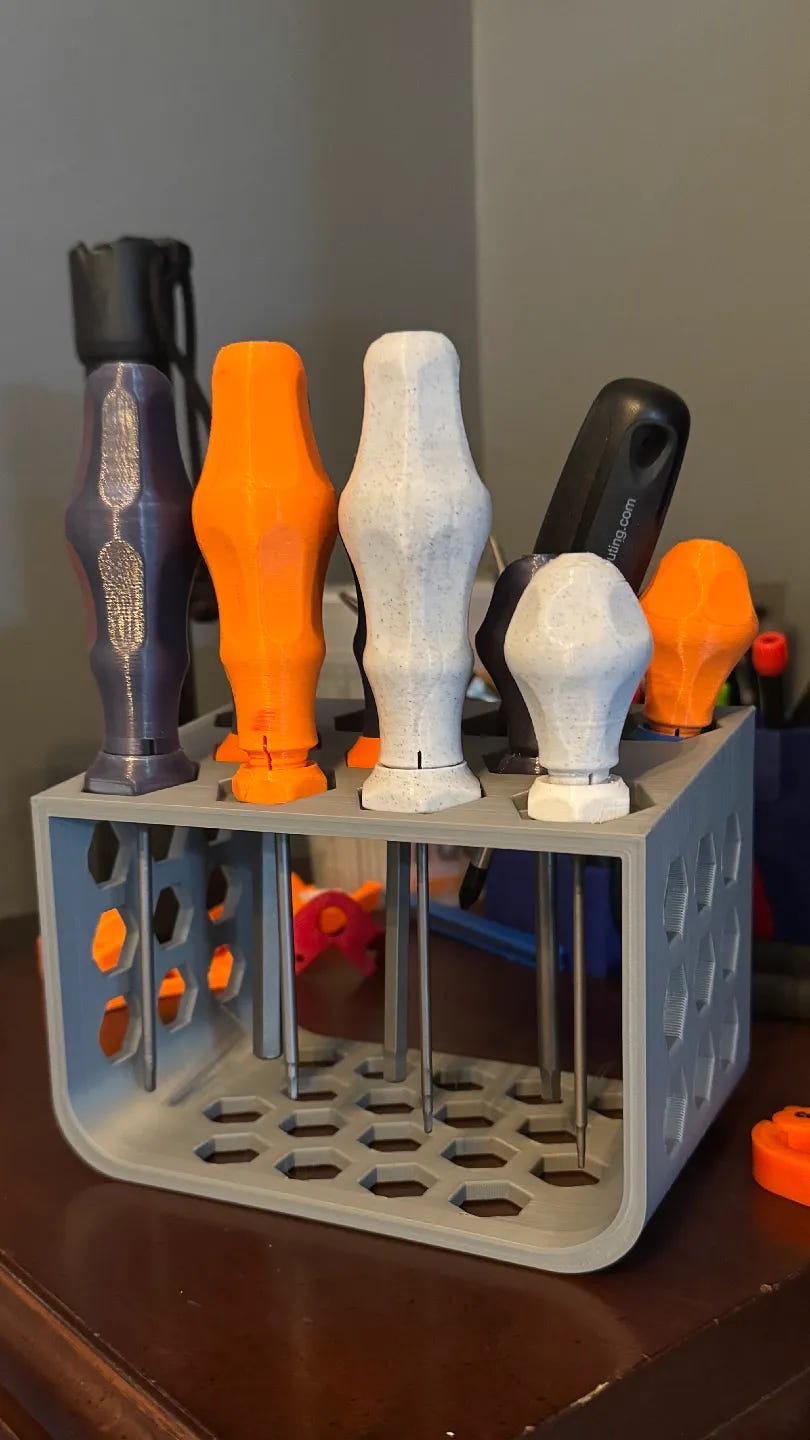
The goal isn’t just comfort. A larger, softer handle spreads the force across more of your hand, reducing the amount of squeezing your fingers have to do. That means less pain, less fatigue, and, perhaps most importantly, more time spent making things than recovering from making things.
There are all sorts of ways you can create custom, ergonomic handles. Here are a few approaches worth exploring.
Foam Grip Tubing
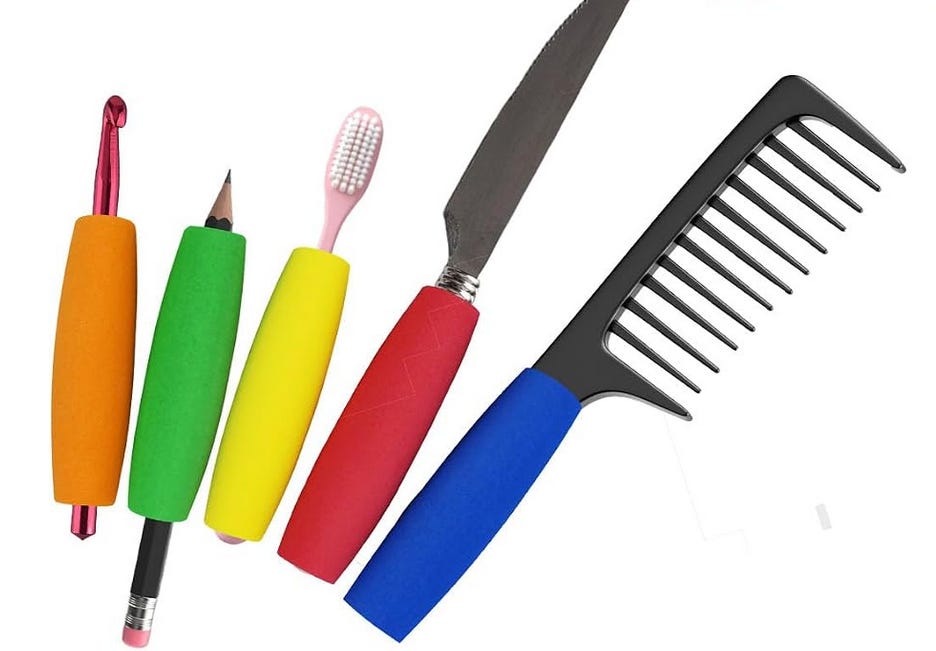
This is the simplest place to start. Occupational therapists have been recommending foam tubing for years. The tubing slips over existing handles, instantly increasing their diameter while adding a layer of cushioning. It’s inexpensive, easy to cut with scissors, and available in different sizes and colors. It works on everything from screwdrivers and paintbrushes to knitting needles, gardening tools, kitchen utensils, and pens. It isn’t glamorous, but offers a real comfort upgrade for only a few bucks.
Self-Adhering Wrap
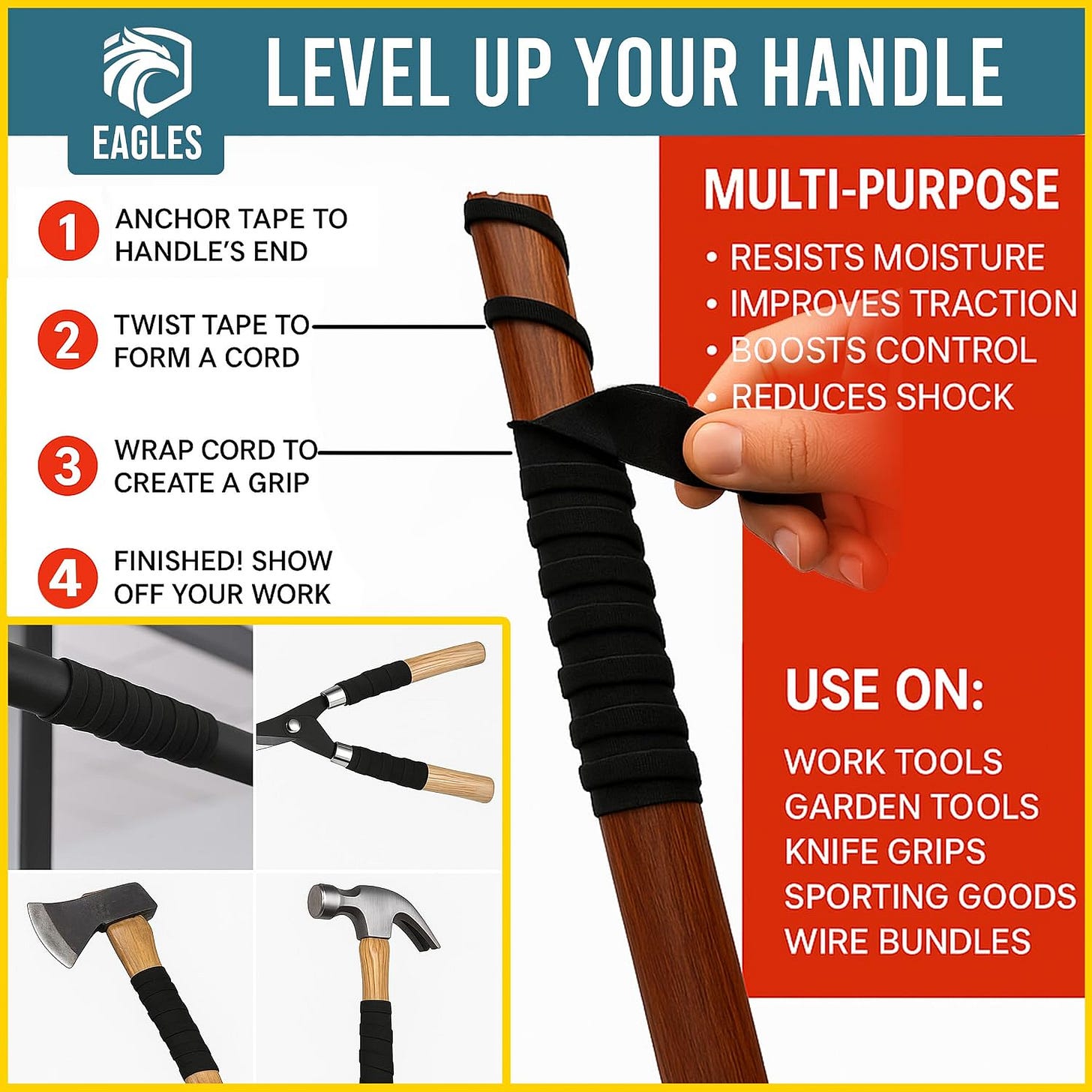
You’ve probably seen the stretchy wrap used to wrap hockey sticks and other sporting equipment. That same material makes an excellent custom tool grips. Add layers until the handle feels right to you. It’s inexpensive, washable, and gives you complete control over the final shape. And when it wears out, you just remove and re-wrap. Self-stick bandage tape also works. Here’s a video of that approach in action.
Heat-Shrink Tubing
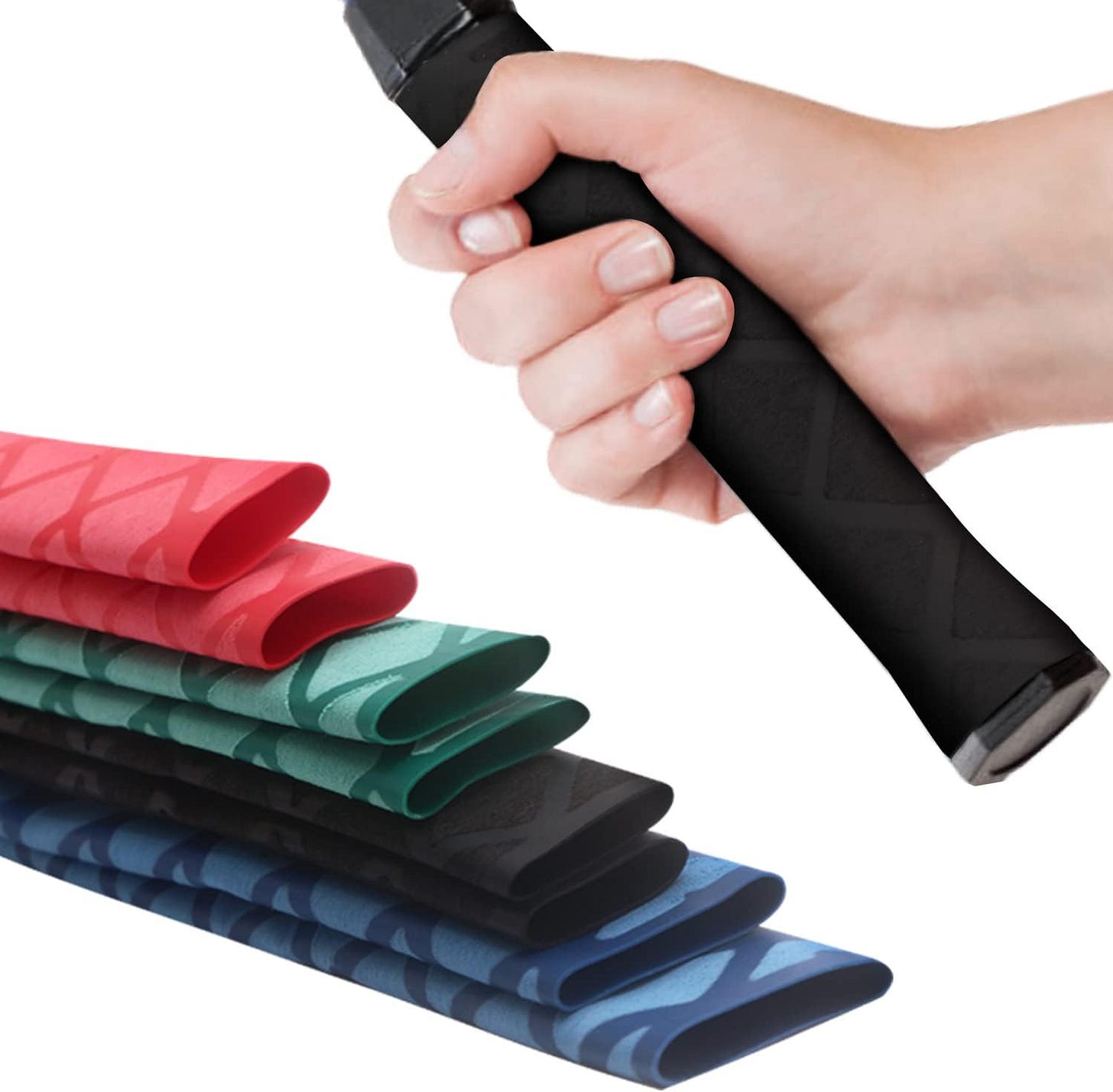
For a cleaner, more permanent solution, consider heat-shrink grip tubing. Slide it over the handle, warm it with a heat gun, and it contracts into a snug, durable covering. It looks surprisingly close to a factory-installed comfort grip and stands up well to regular shop use and abuse.
Mold Your Handle to YOU
This is where things get truly personal. Several products let you create a grip that’s custom-shaped to your own hand.
Sugru is a moldable silicone putty that stays workable for about half an hour before curing into flexible rubber. Wrap it around a handle, grip the tool naturally, and your fingers create a perfectly fitted handle. The next day, you’ve got something that feels as though it came from a custom orthopedic workshop.
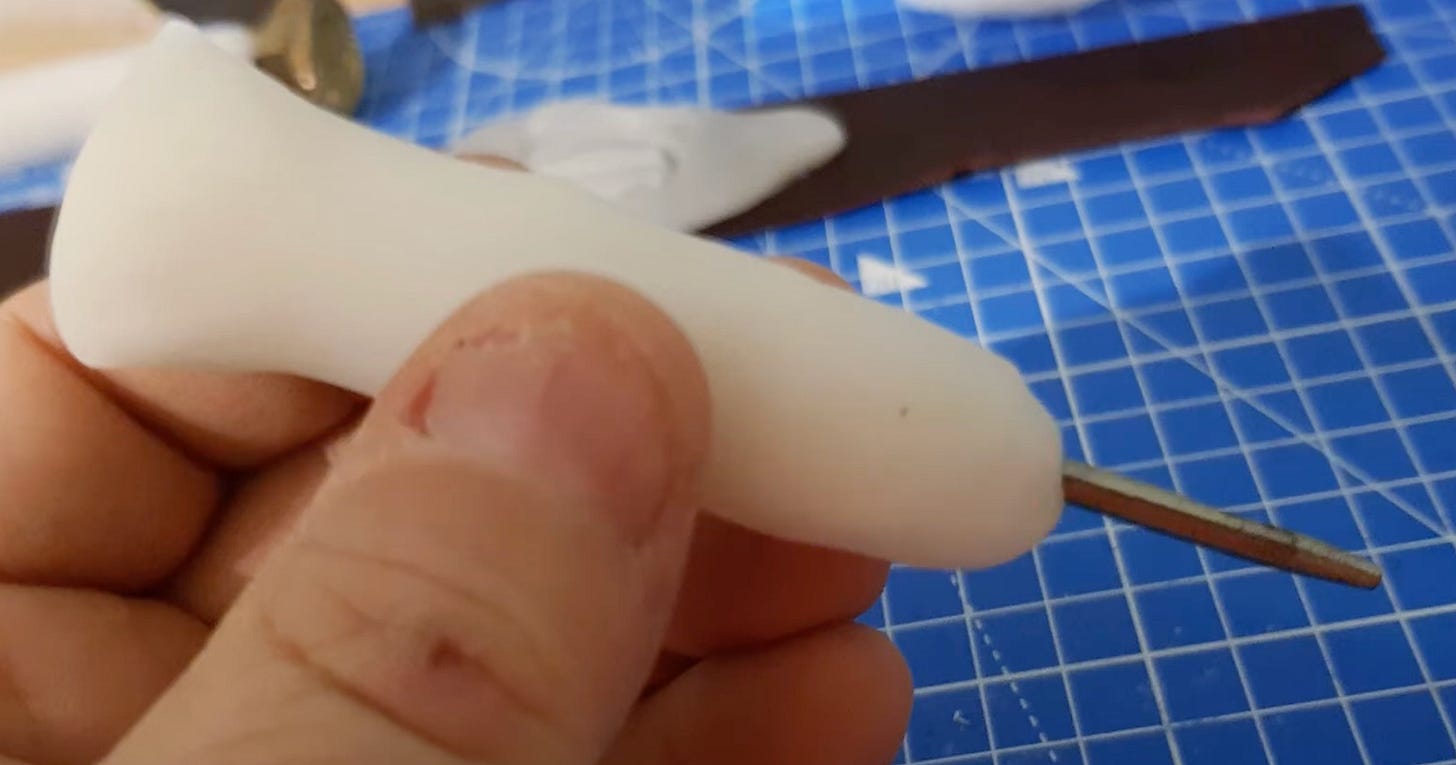
Another option is moldable thermoplastic pellets, sold under names like Polymorph, InstaMorph, and Polly Plastics. You just drop the pellets into hot water and they become soft enough to mold like clay. Here’s a quick video on making a basic handle with Polymorph.
One of the great joys of being makers is that we have the knowledge and wherewithal to modify our environment to fit our needs. Our tools deserve the same attention. If a handle hurts, don’t assume you’re the problem. Redesign the handle.
Have you modified a favorite tool to make it easier for you to hold? Did you invent a grip using something unexpected? Send me a photo and tell me what worked. I’d love to see your solution.
DiResta’s CNC Tips
I always love when JimmyDiResta does these tips videos and he hasn’t done one in a while, so I was thrilled to see this latest installment on CNC Tips. In it, he covers a broad range of tips, from the basic to “woah!”-level ideas. Some of what he covers: Cutting a shallow placement outline into the spoilboard first, drawing the cutter diameter into your CAD drawing before machining to check for clearance, modifying the Z-zero plate with multiple stepped reference depths, using wedges for work-holding instead of elaborate fixtures, inspecting V-bits with a cheap digital microscope, and raising or lowering Z-zero by a business-card thickness rather than immediately changing toolpaths.
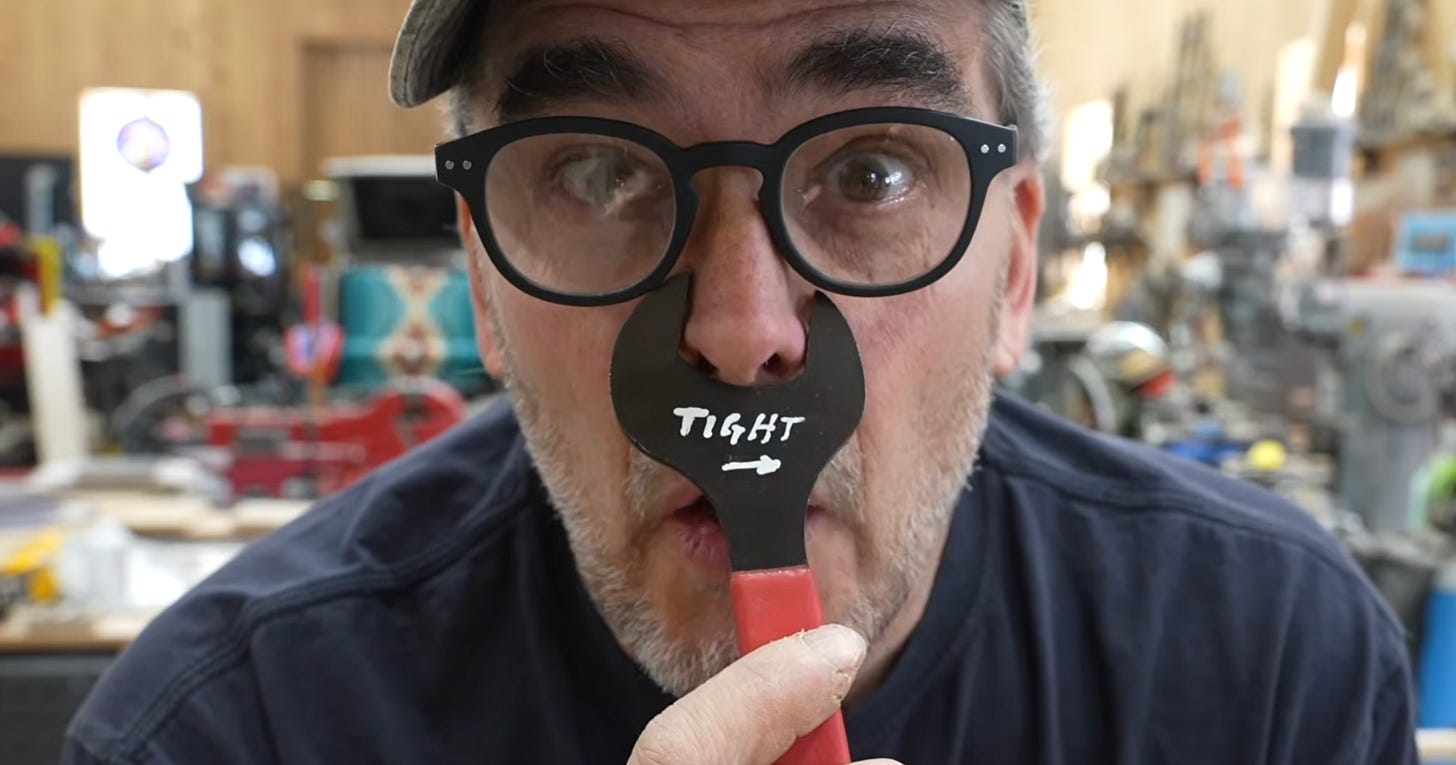
And my favorite of the video, a real “Why didn’t I think of that?,” marking “TIGHT —>” on your collet wrench.
https://www.youtube.com/watch?v=SNsoRWza7G4
Building a Dream Desk
https://www.youtube.com/watch?v=R1ul9iBhpVM
Most of us electron wranglers spend the majority of our waking lives at a desk, our eyeballs glued to a screen, our fingertips softwired to a keyboard. Like when you realize that you spend a third of your life in bed and decide to invest real money in a great bed and bedding, Morley Kert, in this video, realizes that, given all the time he spends at a computer desk, it’s worth building himself the ultimate workspace. And for him, besides a generous L-shaped desk, that meant drawers, drawers, and more drawers.
The video walks through every step of his process, from planning and building the desk to constructing over 80 drawers (he built the cabinet bodies and then 3D printed the drawers themselves), through the final finishing and assembly.
My biggest takeaway from this video was the inspiration to seriously rethink my own work desk setup and to not be afraid to invest real time and money in my desk’s comfort, convenience, and usefulness.
I now have well over 10,000 subscribers to this humble little newsletter. And 50 paid subscribers. A million thanks to all of you. Doing this newsletters is a true joy for me and I especially like feeling like I’m connected to a community of fellow makers. Thanks to everyone who’s sent me an email, made a comment, shared a tip or tool. Let’s keep the ball rolling for another 200 issues!
If you want to financially support this work, please consider a paid subscription. It helps keep me in Pocket Notebooks. I appreciate you.
A very special thanks to Hero of the Realm subscribers: Moses Hawk, Jim Coraci, Donobster, Peter Sugarman, and Will Phillips for your generous support.



 The tin man in dire need of maintenance.