06 May 2026
What’s in my NOW? — Erik Schneider
issue #253
Erik is founder of the Referee Project to add nuance and quality to the scholarly record. In his spare time he writes screenplays about giant pugs intent on world domination, among other things.
PHYSICAL
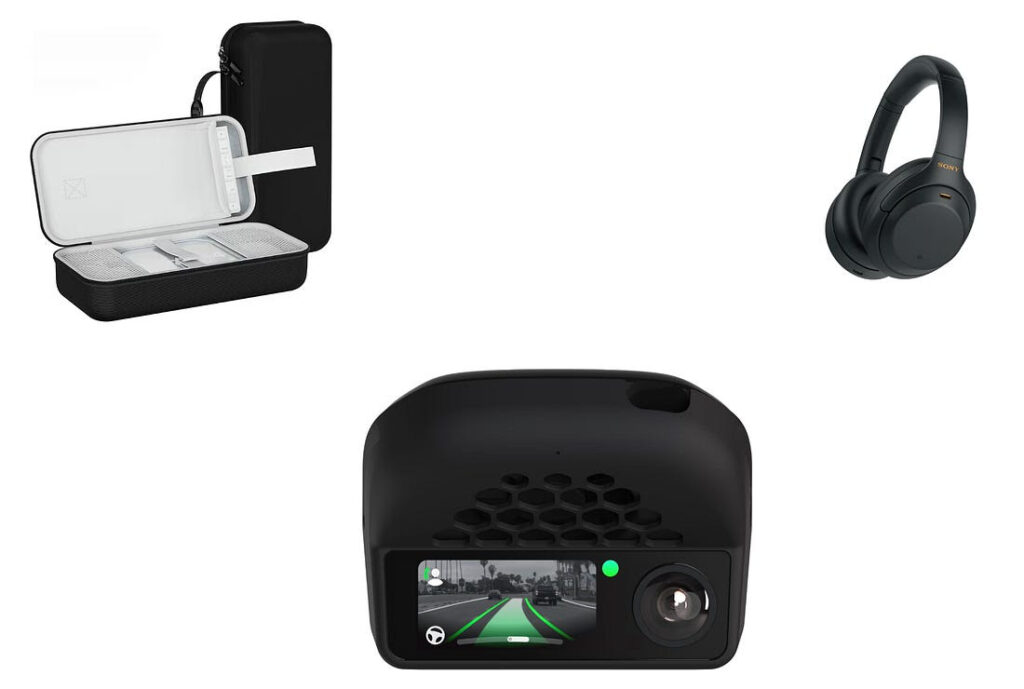
- Mac mini travel case: Once upon a time, EE nerds walked the Earth with geek boxes containing wires, transistors and stuff. Now you can LARP that lifestyle with a Mac Mini travel case. Need to add a custom shoulder strap for the full effect but the ability to take my powerful mini anywhere two legs can walk is worth every strange look.
- Comma 4/sunnypilot: Upgrade your car with an advanced, open source driver assistance system. Comma 4 is hardware that easily plugs into over 300+ cars while sunnypilot is a community project upgrade that offers more features than the base software. You may need to grab a tech friend but the ability to put in a destination and have the car drive there (with vigilance) is more widely available than most people think.
- Sony WH-1000XM4 headset. I loved these when I first got them. After 2 years of nearly constant use, I upgraded to the XM5. After another two years of heavy use, the XM6 came out. After testing those I ‘downgraded’ back to the XM4, and have no regrets. You won’t either. The noise cancelling is strong and it switches to ambient on a guess, a problem with the XM5.
DIGITAL
- Caveman (Claude Code skill). Yes, it writes output like a caveman. Yes, that’s funny. But guess what? Caveman save tokens (~65% avg). Three levels: lite, full grunt, ultra (almost alien-speak). Not just for code, either. After having Caveman rewrite Mark Antony’s speech in Julius Caesar, I was convinced of its potential in other domains, and I’m trying to port it to Claude Desktop with the intent of writing all emails in full grunt mode. The world would be a better place if you joined me on that mission.
- Repoprompt. This is a context management tool for AI. Ignore the advertised token windows, the rot starts hard after 128-256K, if that. Repoprompt has AI scan the codebase, codeslice files to fit set token budgets and improves prompts. Oh, it also enables AI pair programming between models, with review gates, plan checks, the works. Only for MacOS at the moment but Windows is on the roadmap (for a year now…). Also on the roadmap: PDF text splicing. The result? Stronger output responses, less energy burn, earlier bedtimes.
INVISIBLE
“In the cellars of the night, when the mind starts moving around old trunks of bad times, the pain of this and the shame of that, the memory of a small boldness is a hand to hold.” — John Leonard.
I don’t need this quote at the moment, but maybe someone does. It’s been helpful in the past. Record your bold, authentic acts. Collect more. Revisit them.
Sign up here to get What’s in my NOW? a week early in your inbox.
05/6/2605 May 2026
Mick Rock: The Rise of David Bowie / Horrorstör
Issue No. 116
MICK ROCK: THE RISE OF DAVID BOWIE, 1972-1973 – AN AMAZINGLY IMPRESSIVE OBJECT, EVEN BY TASCHEN STANDARDS









Mick Rock: The Rise of David Bowie, 1972-1973
by Mick Rock (photographer)
Taschen
2016, 300 pages, 10.8 x 15 x 1.2 inches
When I asked Taschen’s PR person for a review copy of the hardback edition of Mick Rock: The Rise of David Bowie, 1972-1973 (after sheepishly asking in vein for the $800 Limited Edition), she warned me that it was an amazingly impressive object, even by Taschen standards. Don’t laugh, but this intimidated me to the point where, after receiving the book, I waited over a week to look inside. I had damn-near passed out while first perusing the uncompromising art publisher’s recent Blake book.
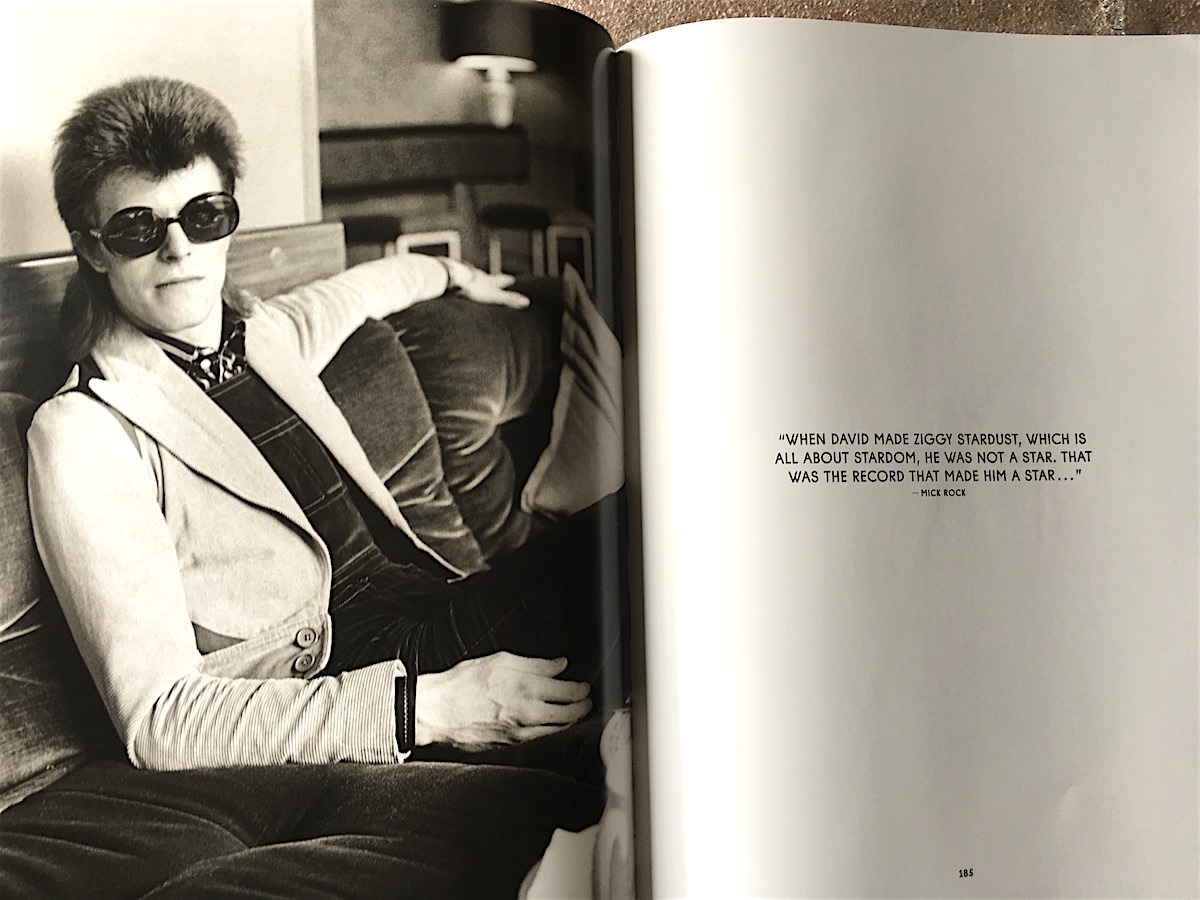
Mick Rock: The Rise of David Bowie, 1972-1973 is about as woozying of a tome as you’re ever going to stick your nose into. And this “regular” edition, available at Amazon for the remainder-bin price of under $45, is anything but regular. Every single aspect of this book is elevated. The cover sports a lenticular panel which contains five iconic Mick Rock images of everyone’s favorite glam commander. This could have gone horribly wrong, too gimmicky or tacky, but this technology seems to have been invented to flash the ever-changing personas of David Bowie at the height of his (and Rock’s) artistic powers. There is no more perfect cover for this book.
And that’s just the cover. I was right to psych myself up. The first time I went through it, I got about 20 pages in and had to stop. The book is a sensual flood of uncompromising print materials, meticulous photographic reproductions, and state-of-the-art printing and binding. The smell of the this book is also worth noting (if you’re into that sort of thing). It’s intoxicating.
The content of Mick Rock: The Rise of David Bowie, 1972-1973 is almost entirely photographs. There is an essay on Bowie’s rise in the early ‘70s and an interview with Mick Rock on working with Bowie, but otherwise, the majority of the 300 outsized pages are devoted to full-bleed photos, often paired with a Bowie quote, lyric, or statement about him. Nearly half of the images are rare or never before seen.
Bowie once said that Mick Rock could “see him.” I found the clarity of that vision, captured here in such a high-energy, high-definition presentation, to be literally breathtaking. You really do get the feeling that you are seeing a very rare and intimate relationship between an artist and his muse, chronicled by perhaps the one person who could see actually see and understand that relationship as it was unfolding. – Gareth Branwyn
HORRORSTÖR – A TWIST ON A HAUNTED HOUSE STORY SET IN A MODERN IKEA-LIKE MEGASTORE






Horrorstör
by Grady Hendrix
Quirk Books
2014, 240 pages, 7.4 x 8.8 x 0.6 inches (softcover)
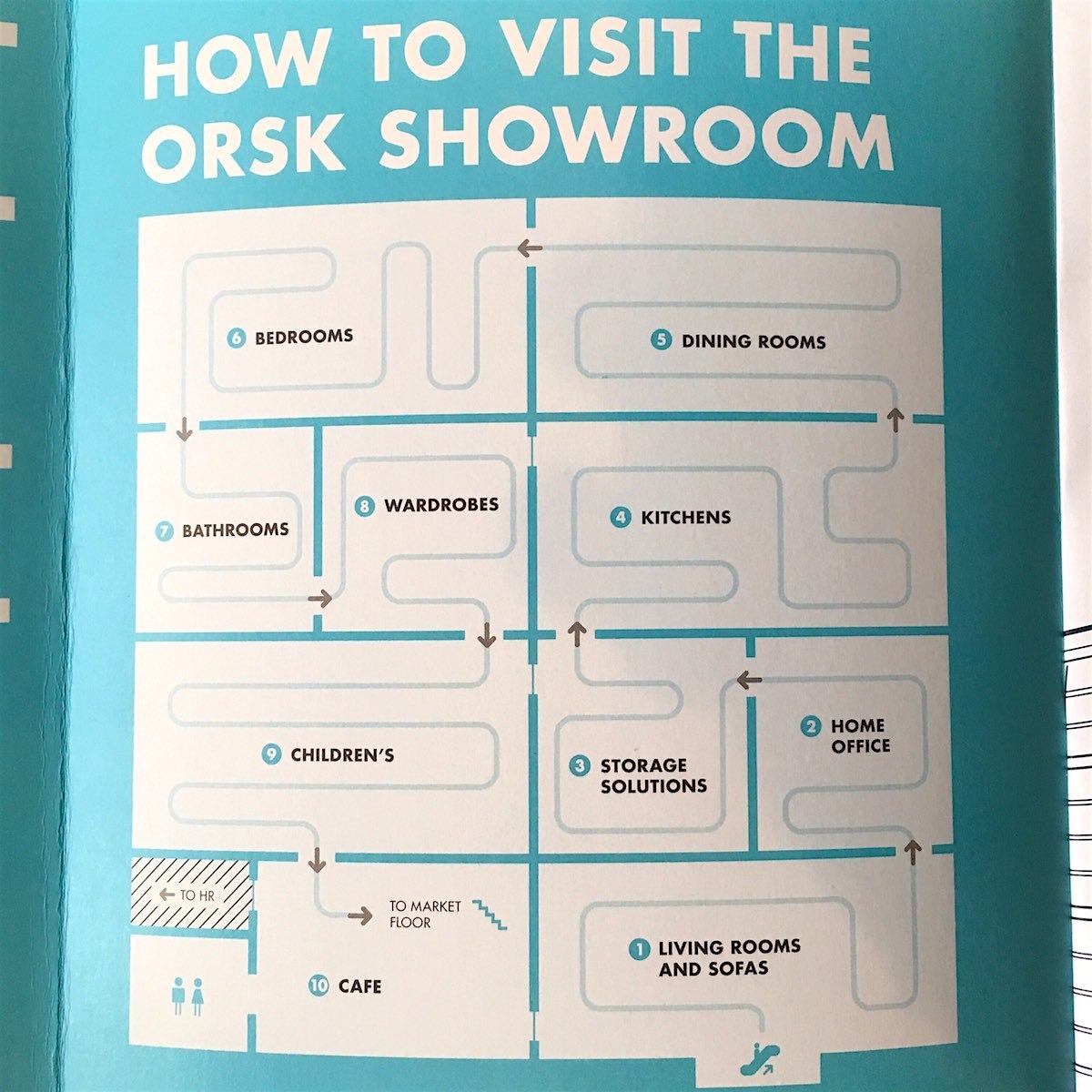
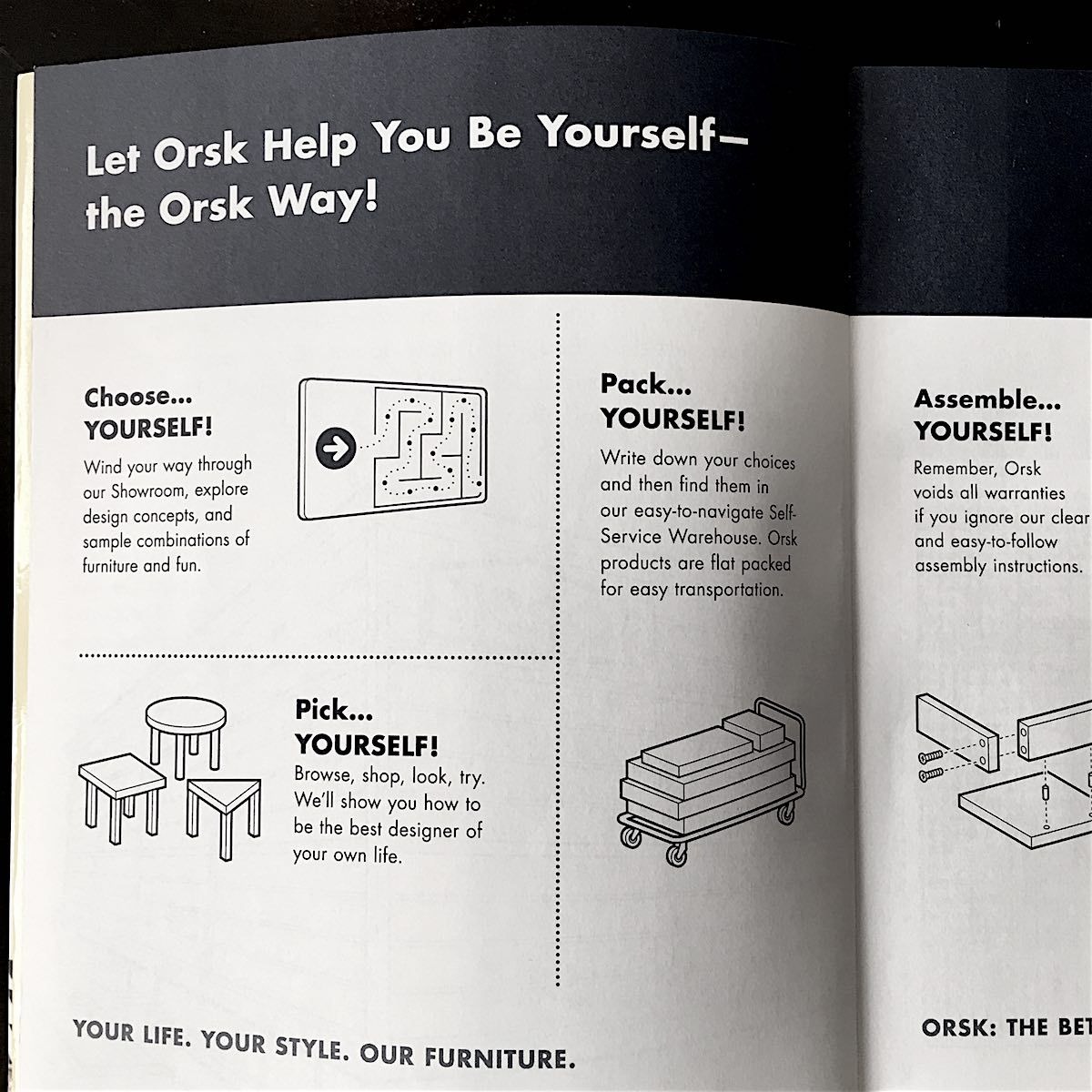
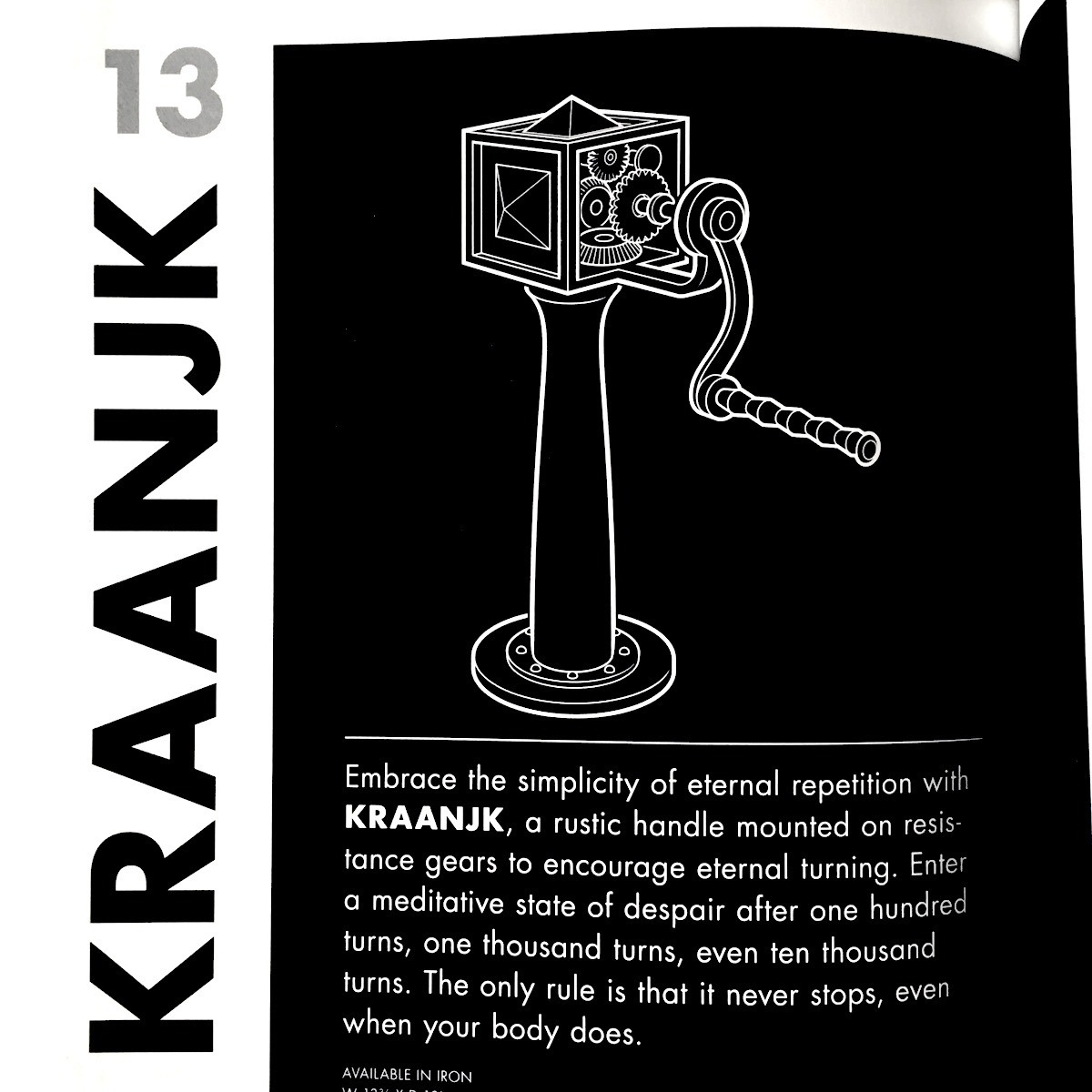
Imagine a store much like Ikea, but not quite up to Ikea’s standards. In the book Horrorstör, Orsk is a shabby copy of the Scandinavian warehouse we all know, and maybe even love, right down to the incomprehensible product names (Frȧnjk, for example) and a Bright and Shining Path that guides shoppers through the showroom floor maze. But something about Orsk is different. And very, very wrong.
Amy works at the Orsk in Cleveland, Ohio. Caught in a spiral of student debt and unable to support herself, she moves into her mom’s trailer and wonders if she’ll ever dig herself out of retail. That’s when things change. Resigned to working at Orsk for the rest of their lives, Amy and her co-workers arrive every morning to find broken wardrobes, shattered glassware and vandalized sofas. Convinced someone is hiding out in the store and up to no good, they agree to spend the night in the store with their manager to unravel the mystery. Little do they know that tonight is their final shift.
Horrorstör is a clever twist on a traditional haunted house story that takes place in a modern consumerist setting. The symbolism and criticism of consumer culture and the nature of work are there if you look for them, but it’s light, and pretty funny, and doesn’t get in the way of the story. The catalog-style furniture pages in Horrorstör — complete with enthusiastic but meaningless descriptions – grow increasingly dark as the story, and Amy’s situation, become dire. Consider this catalog page for a chair:
“Boasting several advantages over traditional forms of restraint, BODAVEST confines the penitent and opposes the agitated movement of blood toward the brain, forcing the subject into a state of total immobility, conducive to self-reflection and free of stressful outside stimuli.”
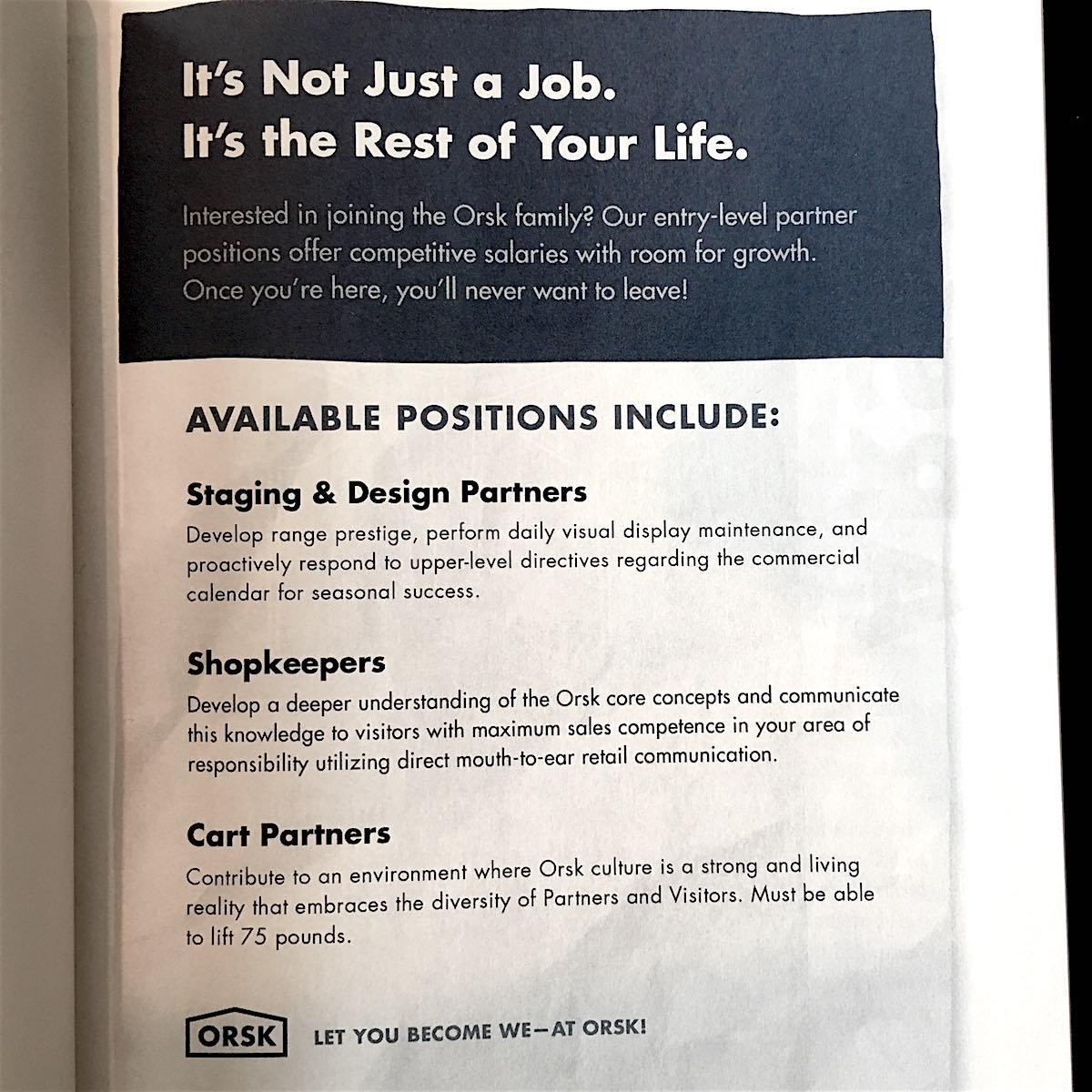
The book also includes humorously grim versions of Orsk employee evaluations, order forms, and pages from the Orsk Leadership Handbook. They really add to the enjoyment of the story. I found myself eagerly looking forward to them, trying to decipher which twist in the story they alluded to. Surprisingly, the last pages of the book took the story from hilariously gruesome to “Oh, heck yes!” in the last few paragraphs. I won’t ruin it for you, but they left me wanting to read more stories set in the wild and outrageous world of Orsk.
“Orsk. It’s not just a job. It’s the rest of your life.” – Keith Monaghan
Books That Belong On Paper first appeared on the web as Wink Books and was edited by Carla Sinclair. Sign up here to get the issues a week early in your inbox.
05/5/2604 May 2026
Frequent Fliers
Tools for Possibilities: issue no. 188
Cheap European flights
Ryan Air & Cheap European Airlines
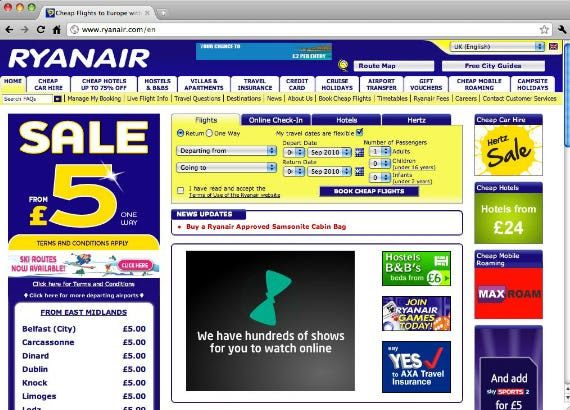
There are half a dozen or so low-cost inter-European-city airlines. RyanAir is the largest. I recently got a round trip on them from Frankfurt to Pescara, Italy for about $90 — and this is one of their more expensive destinations. Other flights are ridiculously cheap. If I’d wanted to go to say Pisa or Stockholm from Frankfurt, the one way ticket would be 10-12 euros. London (Stansted) to Rome is 10 euros. These are ultra non-frill flights, and they all offer one-way trips without jacking up prices. One major disadvantage is that the airports can be out of the way. For instance, the Franfurt one is actually 62 miles from the city, but for these rates I’ll take a train or bus to the airport.
Ad from RyanAir website advertising limited come-on flights to the above cities for 99 pence ($1.80) one way, starting next year. On many flights the taxes will cost more than the fare.
In addition to Ryanair, there are others with the same idea, with less extensive routes: Easy Jet, EuropeByAir, Air Berlin, Transavia. — Lloyd Kahn
Cheapo airlines in Europe don’t all go to secondary airports, although they often do. However they often service secondary destinations. For example, we flew Basiqair to Bordeaux last year from Amsterdam. Not exactly Nice. To get to Milano, some of the low costs fly to Bergamo instead, which is on the Venice side of Milan. Their fares were a fraction of the majors — Air France and KLM. In addition to the airlines you mentioned last time, here are some more choices. — Louis Rossetto
Ground-truthing exotic travel destinations
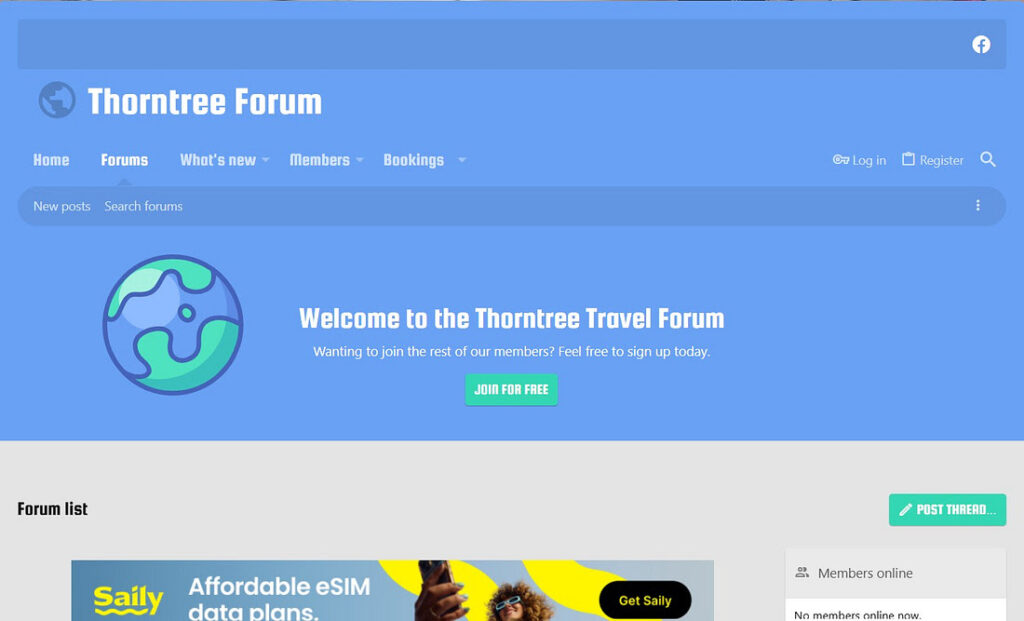
The most savvy travellers I know log onto Thorn Tree as they vagabond. Thorn Tree Travel Forum is where you get the latest, greatest, most dependable travel advice for exotic destinations. Originally set up by Lonely Planet as an online way for readers to update their guidebooks, this bulletin board now bypasses and surpasses the guidebooks altogether. Reliable travel info has been completely revolutionized by the ubiquity of internet cafes around the globe.
Let’s say you want to know whether the border between China and Kazakhstan is open this October, or whether its safe to visit Katmandu, Nepal, or where the newest climbing spots in the Peru Andes are. You log on to the appropriate Thorn Tree “branch” where a traveler who is in Katmandu, or who has just arrived in Almaty yesterday after a harrowing 11 hour border crossing from China can tell you all the specific details of what is true and what is not. Someone else might post that the popular beach shack on Lombok island, Indonesia you were headed for is now closed. And, to complete the circuit, you may be on the road yourself, at a dusty internet cafe in Morocco, when you read this. It’s true real-time advice, from real folks who’ve done it. Thorn Tree is a remarkably efficient way to score hard-to-get facts from and to the field. And for armchair planners at home, the sheer details available at a distance is heavenly.
I’ve found that the third world locations, rather than Europe and the US, are best served by the forums; but these after all are the very places instant ground-truthing is so badly needed. Thorn Tree is also a great place to connect up with others bent on long-term Around the World tours, and up-to-the-latest tips on long haul travel. —KK

Maximum free miles
There’s a small cottage industry of avid travelers exploiting loyalty and frequent flier programs to earn maximum free “miles.” The best moderated forum I’ve found for their tricks, tips, and hacks on how best to fly free, or almost free, is a group of bloggers called Boarding Area. They all share great stuff but I am particularly fond of Gary Leff’s blog, View from the Wing. He specializes in maximizing miles for free trips. — KK
- Here’s what I believe to be the current 10 best credit card signup bonuses on offer: 1 Chase Sapphire Preferred offers no fee the first year, 40,000 points after $3000 in spend within 3 months, no foreign currency conversion fees, double points on travel and dining, points transfers to United, Hyatt, Southwest, Amtrak, British Airways, Korean Airlines, Marriott Priority Club, and Ritz-Carlton. Probably the best all-around credit card, and with a great signup bonus. There was for a few days a similar offer with just $2000 rather than $3000 as the required spending, but that was pulled rather quickly.
- Six tips for folks just getting started with miles and points. The basics are:
Start with a goal, that motivates you and also helps your choice of program. Nothing worse than finding out you want to go to French Polynesia, but United miles only let you get there flying to New Zealand first.
Never pass up miles, always sign up for frequent flyer programs even when it’s not your primary program. The miles add up eventually. Lots of programs become easily manageable at a site likeAwardWallet.com. - This is the second set of major devaluations for a program that is only two and a half years old. And both times the changes were implemented with no notice whatsoever. Programs that simply make your points worth less one day are not to be trusted. Programs that let you earn with a redemption goal in mind andthen change the earning rules after you’ve invested time and money in their program are like Lucy, Charlie Brown and the football… keeping the goal forever just out of reach.
I’ve now concluded that Expedia Rewards is a program that I believe is not to be trusted, and also is no longer worth bothering with, since the cuts to the value proposition are actually worse than I reported yesterday.
Travel plans automatically generated
Keeping track of travel arrangements — hotels, flight schedules, rental car reservations — is a problem for me. I make mistakes writing down the information, I lose printouts, I resent the time it takes to stay on top of everything. That all changed a few years ago when I started using TripIt, an online travel organizer that keeps all my trip plans in one place.
Here’s how I typically use it: I purchase a flight on Southwest’s website. I reserve a rental car on Hertz’s website. I book a hotel through hotels.com. When I get the confirmation emails I forward them to plans@tripit.com. TripIt parses the information and produces an easy-to-read itinerary. It’s easy to add meeting and other plans. I can email the itinerary to other people and refer to it while I’m traveling, via the TripIt’s free mobile app. TripIt also adds the information to my calendar (I use iCal but it works with everything else, too).
TripIt is free, but I pay for TripIt Pro because I like getting text messages about canceled or delayed flights and gate changes. This feature makes it worth $49 a year for the pro account. — Mark Frauenfelder
Once a week we’ll send out a page from Cool Tools: A Catalog of Possibilities. The tools might be outdated or obsolete, and the links to them may or may not work. We present these vintage recommendations as is because the possibilities they inspire are new. Sign up here to get Tools for Possibilities a week early in your inbox.
05/4/2603 May 2026
Embassy of the Free Mind / Easy search on phone / Free wireless speaker
Recomendo - issue #512
Embassy of the Free Mind
Recently when I was in Amsterdam, I went on a private rare book tour at the Embassy of the Free Mind. The embassy houses one of the world’s largest collections of Hermetic and occult books, and they’ve digitized thousands of manuscripts that you can read online for free. But if you’re in Amsterdam, I definitely recommend booking a guided tour. I chose the tour that focuses on alchemical texts, but they have others on magic, witchcraft, and Rosicrucianism. I didn’t get to touch any of the books, which is understandable, but I did get to smell one that was hundreds of years old and it was glorious. — CD
Easy search on phone
Recomendo is biased toward iPhones because the three of us use one. So here is a tip for Android users: Enable Google’s Circle to Search on your phone. You can then use your finger to circle any image, part of an image, product in an image, word, phrase, text – anything on the screen and it will search what you circle. You don’t have to take a screenshot. It works inside of any app. Hit the bottom navigation bar or home button and then use your finger to circle the part you want more information about. It instantly can identify products in a picture, or check to see if a message is spam, or translate text, or supply more information about a comment. Be sure the function is enabled in the Settings > Display or Navigation Mode. (I am hoping this function comes to native iPhone soon.) — KK
Use your TV as a Bluetooth speaker
I use a small JBL Go 4 Bluetooth speaker for podcasts and music around the house. But when I’m in the living room, I’ve started streaming phone audio to my smart TV instead. Most TVs have bigger, better speakers than any portable Bluetooth speaker — the sound is fuller, with more low end and a wider stereo image. Whether it’s AirPlay, Chromecast, or Bluetooth, almost every smart TV supports it. — MF
Best open source library
Shadow libraries disregard copyright law, and contain digital copies of just about every book ever published. A number of these open source libraries (such as Sci-Hub) have been shut down; the current best one up and running is Anna’s Archive, hosted offshore somewhere. I am slowly turning my physical library into a digital library. From Anna’s Archive I have been downloading digital copies of any book I have purchased to create a working digital library I can use, search, apply to AI, and build upon. You can’t do that with Kindle books. Anna’s Archive also has 95 million scientific and scholarly journal articles, which is especially handy when publishers make getting a copy difficult. (Be wary: if you google Anna’s Archive you get malware sites; best to go to the links listed in the Anna’s Archive Wikipedia entry.) If a digital copy of something exists, Anna’s Archive will have it. — KK
Company Retreat
Kevin previously recommended Jury Duty on Prime, and if you haven’t watched it you should, then immediately watch the new season called Company Retreat. It follows a temp worker hired to help run a company retreat for a fake company, called Rockin’ Grandma’s Hot Sauce, surrounded entirely by actors playing coworkers. He has no idea he’s the only real person navigating these increasingly ridiculous situations. Right after binging I rewatched each episode with the behind-the-scenes audio commentary tracks. It’s fascinating how the actors navigate multiple layers of story and reality, and how the “hero’s” genuine goodness keeps him ahead of a script he doesn’t even know exists. It makes me think about the power of suggestion, authenticity versus programming, and how heartening it is to witness someone naturally driven by values that prioritize community over self. It is equally uplifting as it is hilarious. — CD
USB-C to USB-A adapter
The world seems to be converging on USB-C as the universal standard, and I hope nobody invents a replacement once we get there. For now, I live in a mixed world of USB-C and USB-A gear. These tiny, inexpensive Syntech adapters are how I connect the two: a male USB-C plug on one end, a female USB-A port on the other. I keep them on my desk and in my travel bag for flash drives, charging cables, wired mice, and other older peripherals. I’ve tried a few brands; this one is the most reliable, with nearly 189,000 reviews and a 4.7-star average. — MF
Sign up here to get Recomendo a week early in your inbox.
05/3/2630 April 2026
More Bad Flight News/Little-known Search Hacks/City Bike Tours
Nomadico issue #204
More Bad Flight News
Since this newsletter comes out weekly, lately I feel like each issue has worse airline industry news. After rising flight prices, fuel charges, and baggage fees, now we’ve got the EU warning they’ll run out of jet fuel before the summer and airlines are canceling flights to conserve what they have. If you can postpone a long trip abroad until after this war is over, that might not be a bad idea. Otherwise, 1) book asap before prices go up again, 2) always pay with a credit card so you have recourse and 3) don’t even think of heading to an airport without having good travel insurance in place that covers delays and cancellations. Oh, and avoid Spirit Airlines.
Not Too Cool for Compression Socks
If you are taking a long flight soon, don’t forget your compression socks. While there are plenty of health claims out there that seem overblown or unsubstantiated, that’s not the case with the risk of deep vein thrombosis on long flights. Compression socks can make a big difference in ensuring that you don’t walk off with swollen ankles or far worse, like blood clots. Mine are from Under Armour, but I doubt the particular brand matters much if they work. Go to this Amazon page and you’ll find 100+ choices in different materials, styles, and colors.
Google Search Hacks for Pros
The average person probably only knows one or two of the tricks for better internet searches outlined in this excellent Secret Reference Desk article from Card Catalog (on Substack). Did you know you can just type “run speed test” in the search bar instead of opening an app to check the Wi-Fi speed? Or that you can just enter a flight number to see the status? Some of the others aren’t so easy to remember, but you can use a minus sign (as in “-AI” to get results not scraped from working writers’ works or an asterisk when you’re not sure what a missing word should be). To get exact results instead of what Google thinks you want, use the verbatim pull-down or put it in quotation marks. Found via Curious About Everything.
In Praise of City Bike Tours
I do a lot of walking tours in city centers, the “free” ones and the paid kind, but there’s a limit to how much you can cover on foot and some cities are too spread-out for this to be ideal. It’s often preferable to take a bike or e-bike tour in order to cover more ground and get more variety in the stops. I’ve done these in locations as diverse as Buenos Aires, Paris, Rome, Lima, and Quebec City. I recently added stateside Richmond, Virginia to my experiences. To see my article on getting around this important historic city (with two craft beer stops in the mix), see my biking article here on the Perceptive Travel blog.
A weekly newsletter with four quick bites, edited by Tim Leffel, author of A Better Life for Half the Price and The World’s Cheapest Destinations. See past editions here, where your like-minded friends can subscribe and join you.
04/30/2629 April 2026
What’s in my NOW? — Jolyon Patten
issue #252
Jolyon is a retired City of London litigation lawyer who has lived on Mount Pelion in Greece since 2022. He practises Rinzai Zen, plays guitar across several traditions including Congolese rumba and 1930s jazz, and is writing The Stars of Samarkand, a historical novel set in Timurid Central Asia. He documents its making at The Stars of Samarkand on Substack.

PHYSICAL
- Spyderco Dragonfly 2 penknife Non-locking, featherlight, legal to carry in most European countries, and the steel takes an edge beautifully. At tavernas in Greece, my friends always turn to me the moment something needs cutting: come on, where’s the knife? The rare object that manages to be both entirely practical and quietly perfect.
- Collings OM2H-T guitar I own twenty-three guitars, so nominating one is not a trivial act. Julian Lage was among the first high-profile players associated with this model — which is how I heard of it — and when I found this particular example in London, even the staff said there was something unusually good about it. There still is.
- Chuang Tzu: Inner Chapters (trans. Gia-fu Feng & Jane English) I’ve read the Inner Chapters almost every week since I was seventeen — I’m now in my mid-sixties. I own six or seven translations; this one earns its place through Jane English’s photographs, which capture the spirit of the Tao in a way I’ve never found elsewhere.
DIGITAL
- Claude Code (via Visual Studio Code) I’m a retired English lawyer on a mountainside in Greece, writing a historical novel set in 1445 Samarkand. Through Claude Code I run an AI-powered publishing operation: a chief of staff called Archie coordinates specialists covering research, editing, marketing, and law. None of them exist in the conventional sense. All of them are indispensable. Full story on my Substack.
- Lost and Savage An Italian rides a Kawasaki W650 across Central Asia — the W650 was my first serious motorcycle, and the Silk Roads are my obsession. Quieter, stranger, and considerably more interesting than the usual motorcycle travel content.
INVISIBLE
The chief element of happiness is this: to want to be what you are. — Erasmus
You could attribute this to Marcus Aurelius or Chuang Tzu and nobody would blink. Its universality is the point — not a cultural artefact but a simple, portable truth.
Sign up here to get What’s in my NOW? a week early in your inbox.
04/29/26ALL REVIEWS

 04/24/26
Why doubling down on your position never works — and what does
Book Freak #207: How to Get What You Want by Joshua Bandoch

EDITOR'S FAVORITES
COOL TOOLS SHOW PODCAST
WHAT'S IN MY BAG?
06 May 2026

ABOUT COOL TOOLS
Cool Tools is a web site which recommends the best/cheapest tools available. Tools are defined broadly as anything that can be useful. This includes hand tools, machines, books, software, gadgets, websites, maps, and even ideas. All reviews are positive raves written by real users. We don’t bother with negative reviews because our intent is to only offer the best.
One new tool is posted each weekday. Cool Tools does NOT sell anything. The site provides prices and convenient sources for readers to purchase items.
When Amazon.com is listed as a source (which it often is because of its prices and convenience) Cool Tools receives a fractional fee from Amazon if items are purchased at Amazon on that visit. Cool Tools also earns revenue from Google ads, although we have no foreknowledge nor much control of which ads will appear.
We recently posted a short history of Cool Tools which included current stats as of April 2008. This explains both the genesis of this site, and the tools we use to operate it.
 Kevin Kelly started Cool Tools in 2000 as an email list, then as a blog since 2003. He edited all reviews through 2006. He writes the occasional review, oversees the design and editorial direction of this site, and made a book version of Cool Tools. If you have a question about the website in general his email is kk {at} kk.org.
 Mark Frauenfelder edits Cool Tools and develops editorial projects for Cool Tools Lab, LLC. If you’d like to submit a review, email him at editor {at} cool-tools.org (or use the Submit a Tool form).
 Claudia Dawson runs the Cool Tool website, posting items daily, maintaining software, measuring analytics, managing ads, and in general keeping the site alive. If you have a concern about the operation or status of this site contact her email is claudia {at} cool-tools.org.