29 September 2026
Encyclopedia Prehistorica / Minecraft: Blockopedia
Issue No. 137
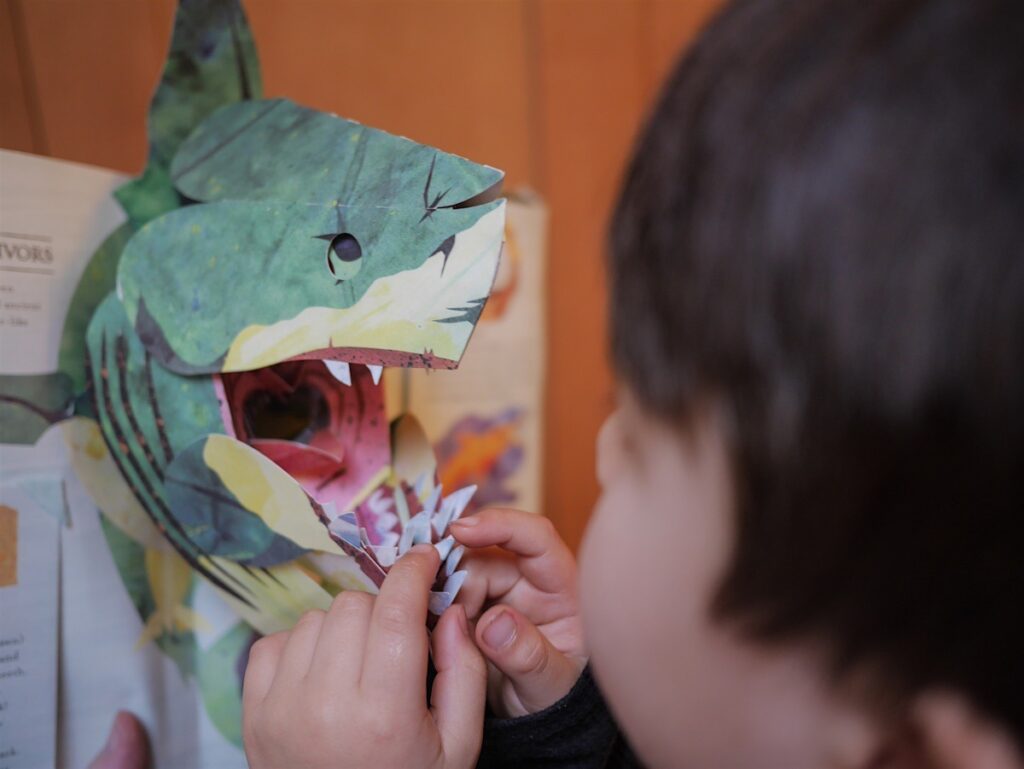
SHARKS AND DINOSAURS – POP-UP BOOKS ON STEROIDS
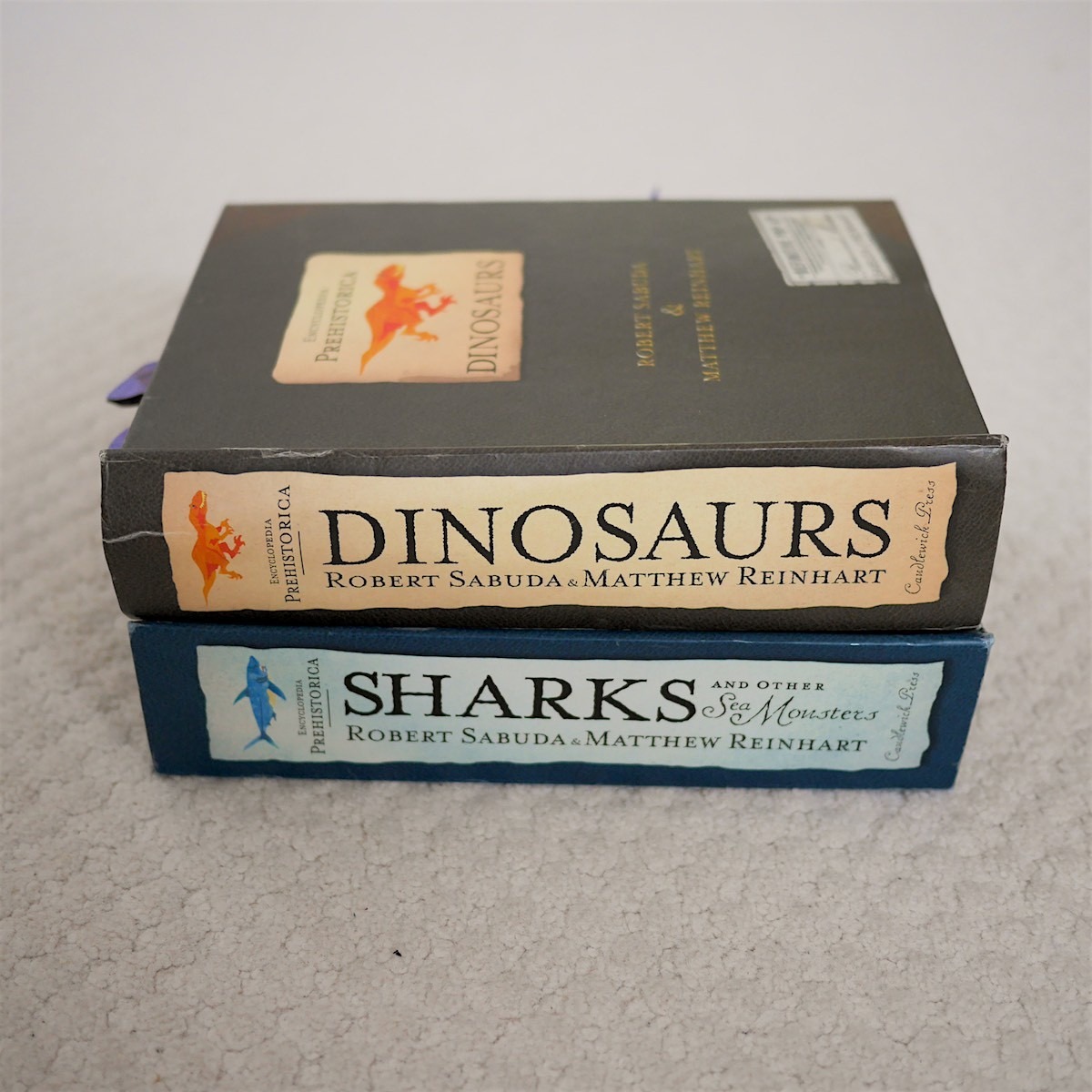
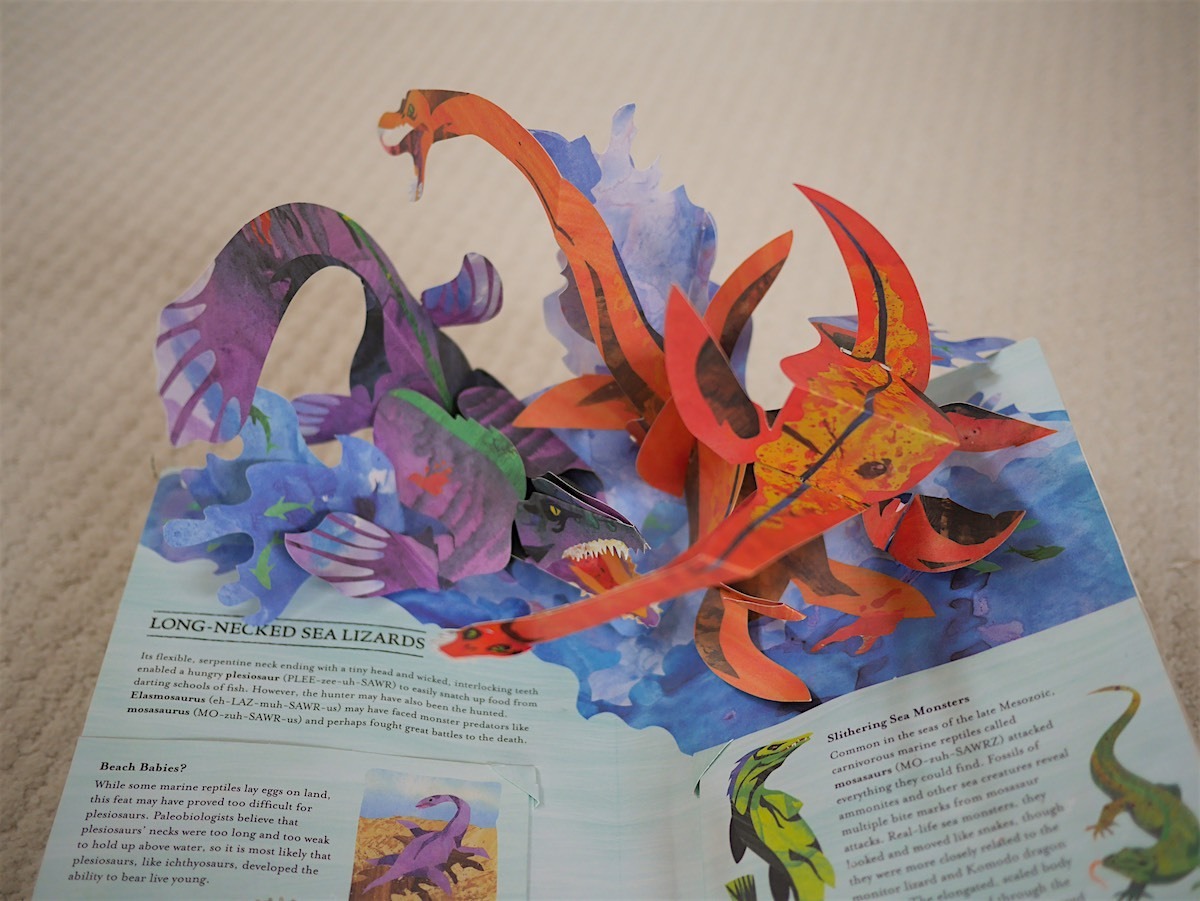
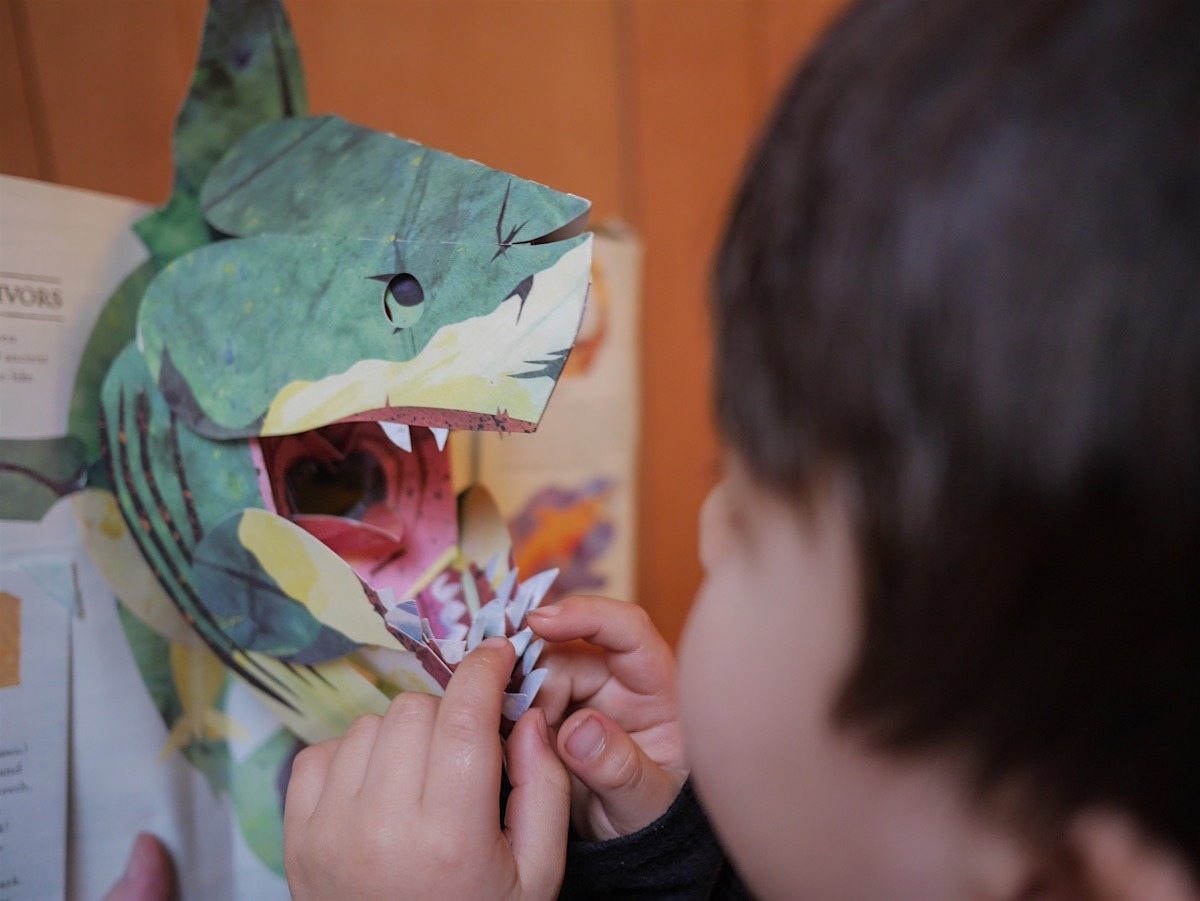
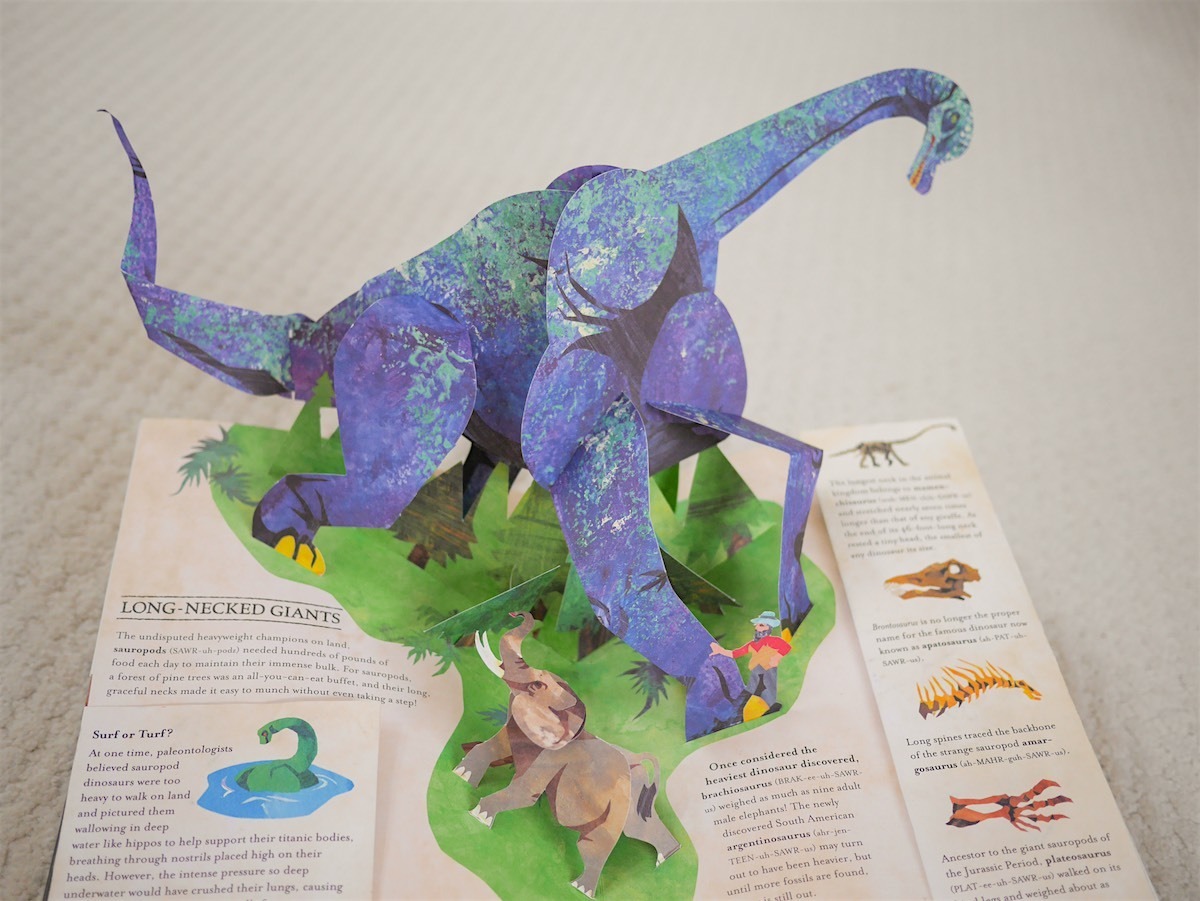
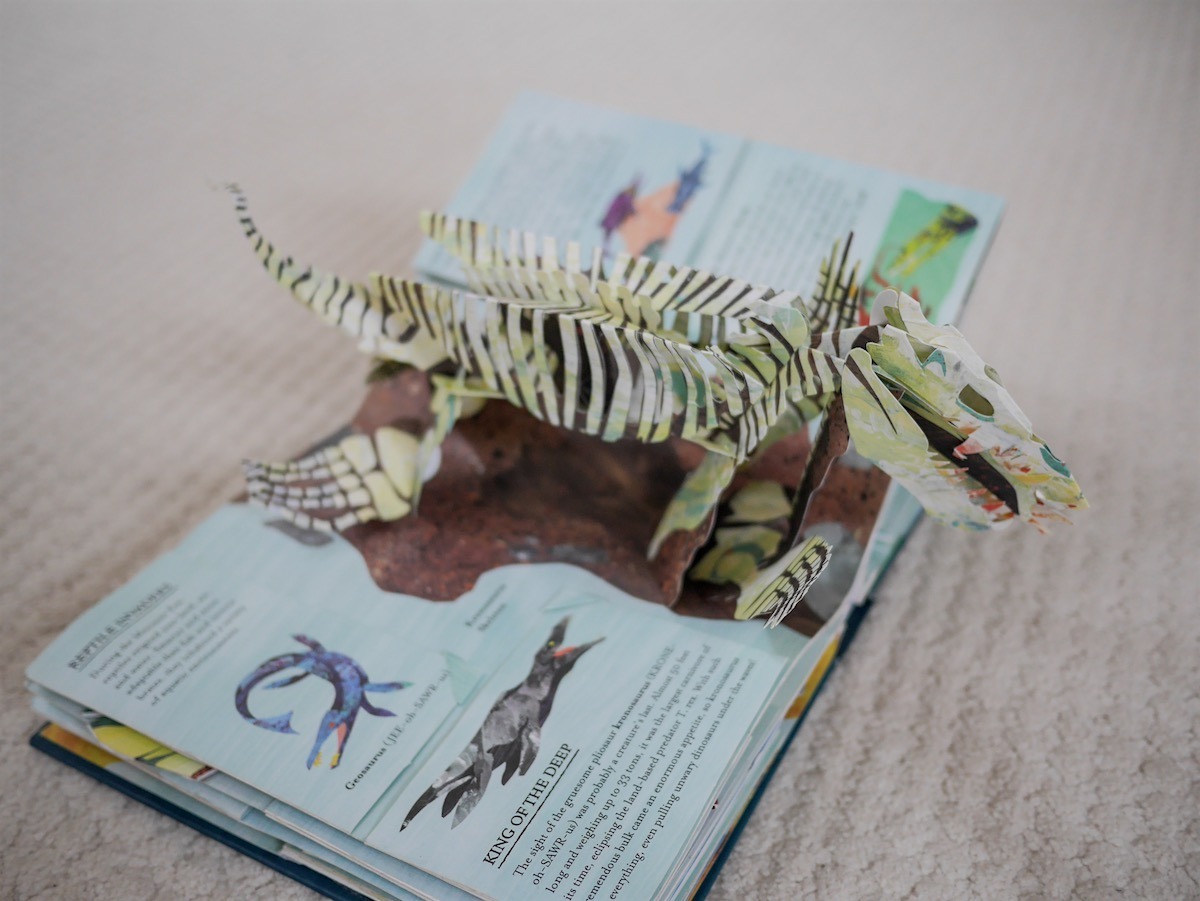
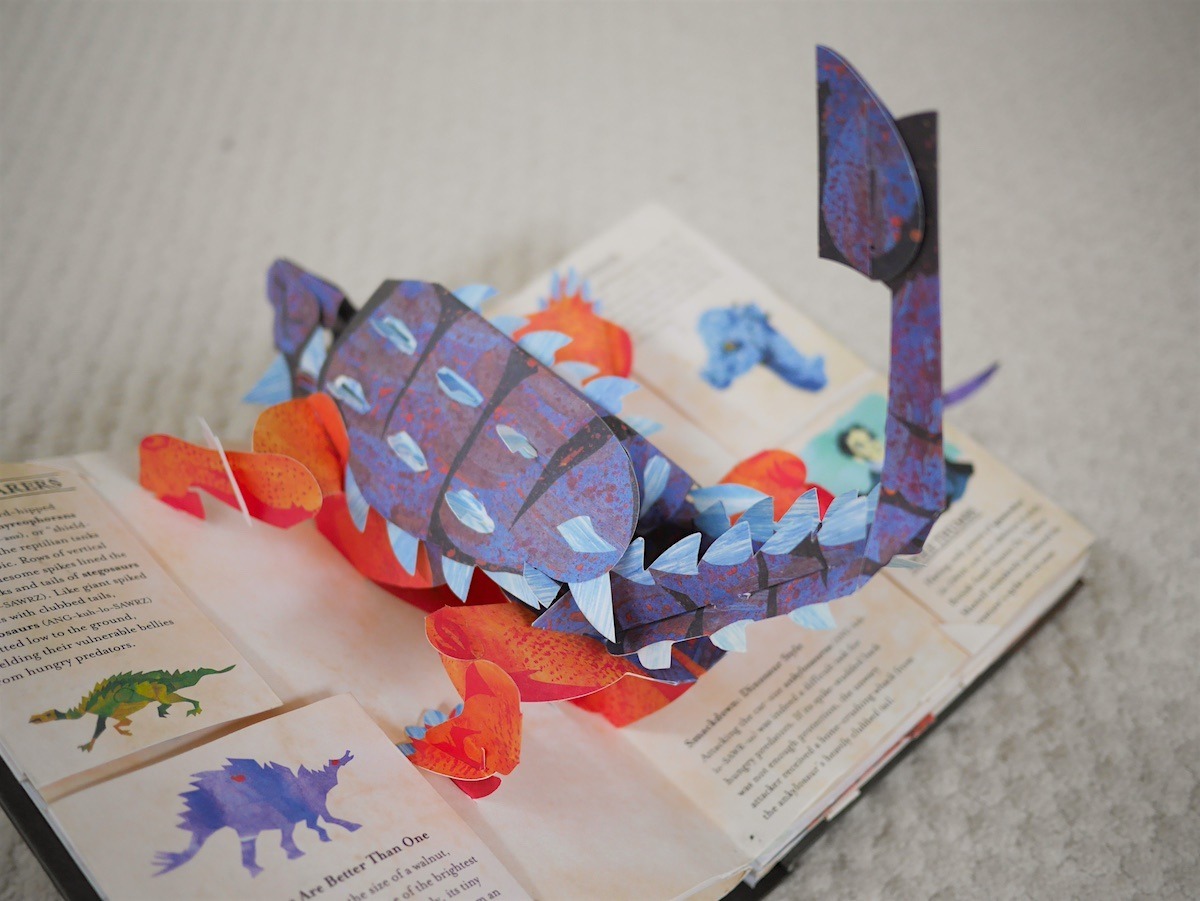

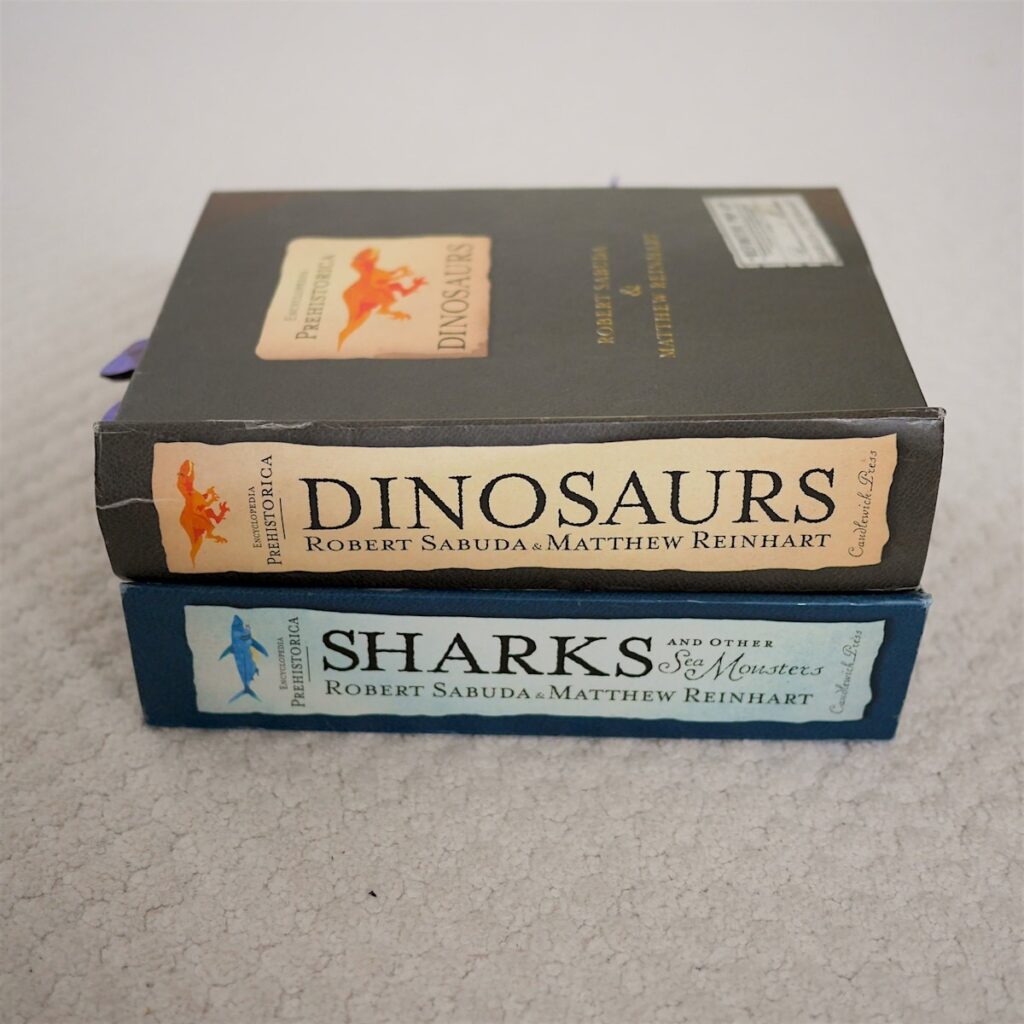
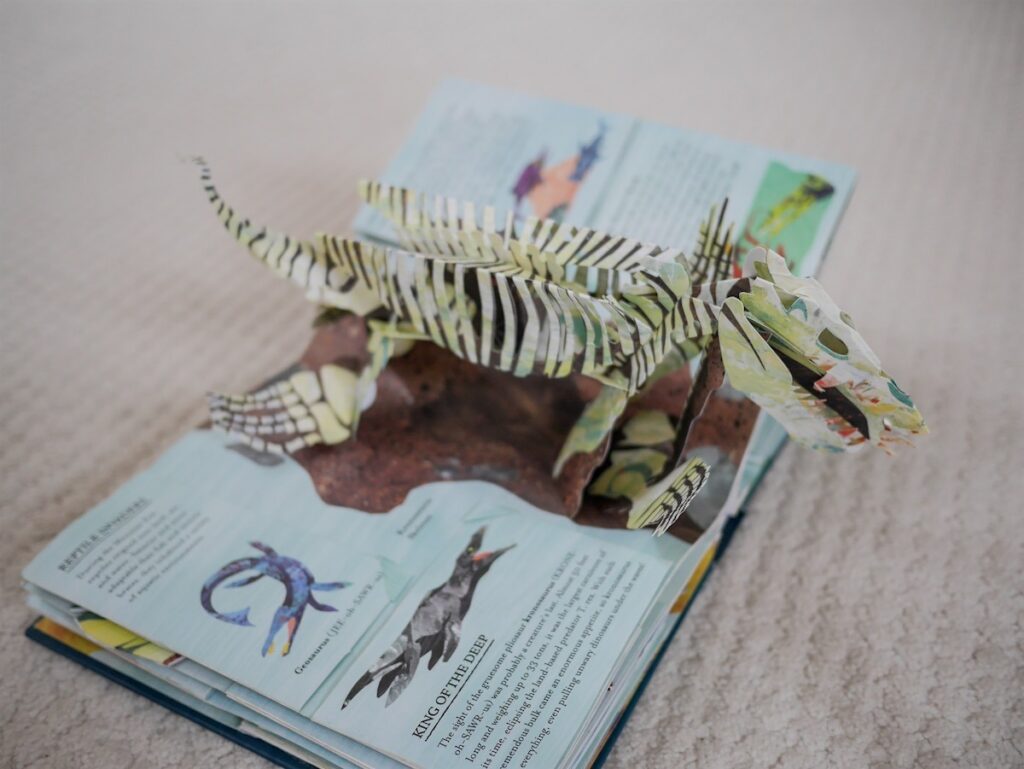
Encyclopedia Prehistorica: Sharks and Other Sea Monsters
by Robert Sabuda and Matthew Reinhart
Candlewick
2006, 12 pages, 7.8 x 9.9 x 2.1 inches
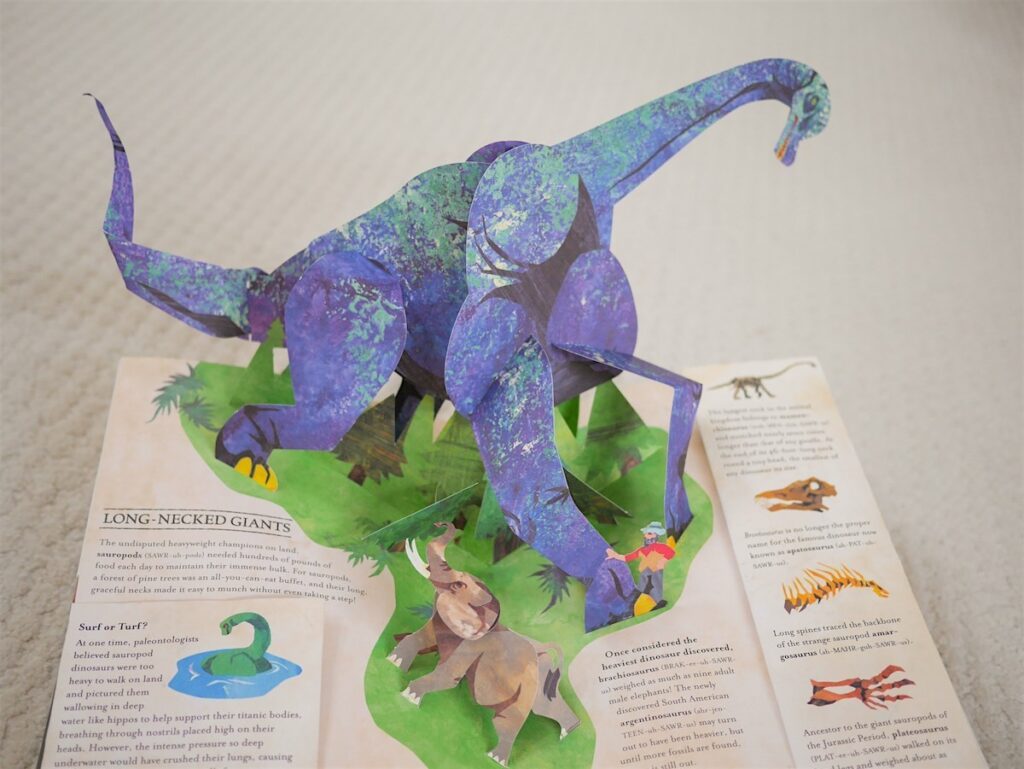
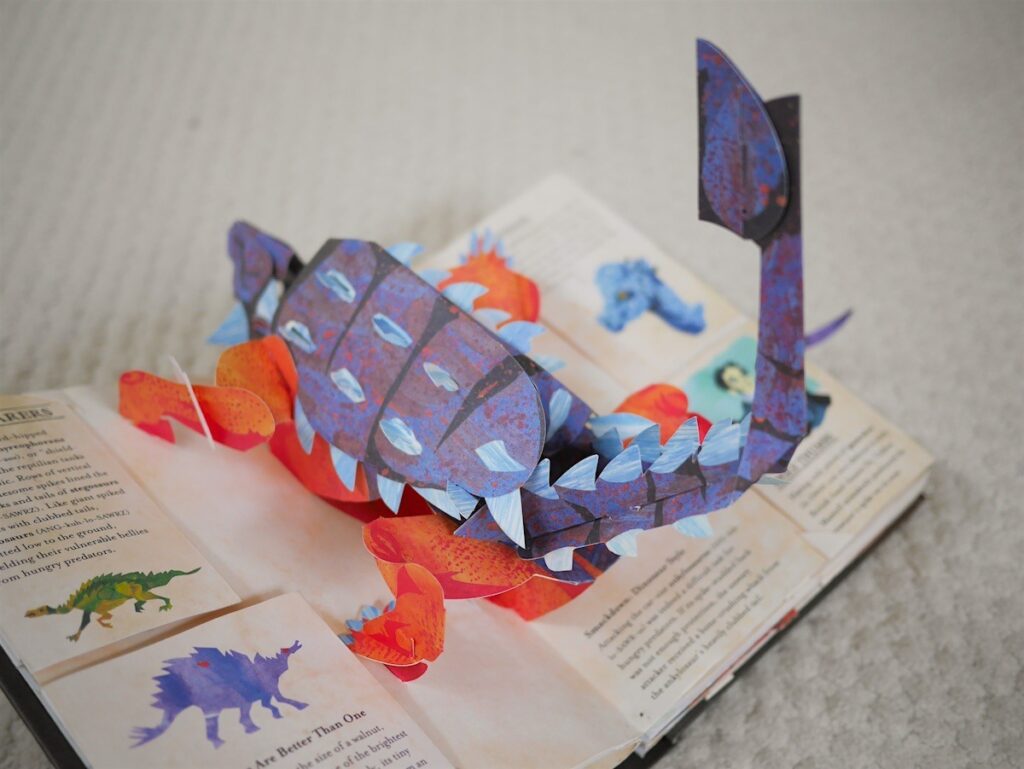
Encyclopedia Prehistorica: Dinosaurs
by Robert Sabuda and Matthew Reinhart
Candlewick
2005, 12 pages, 8 x 10 x 2.5 inches
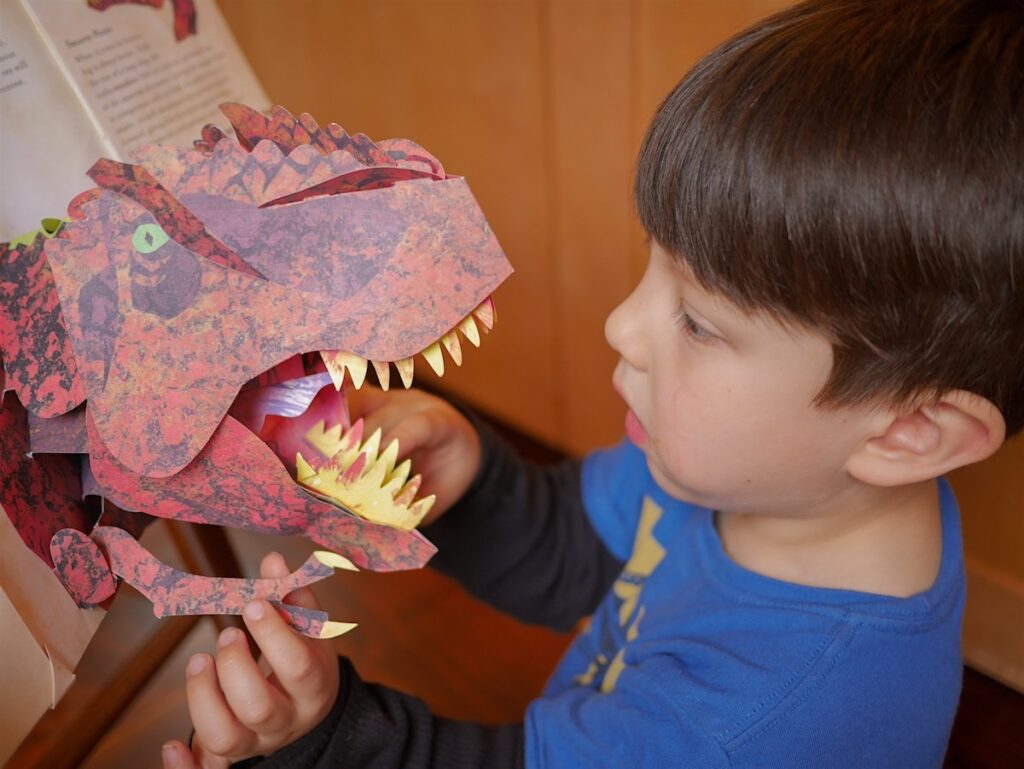
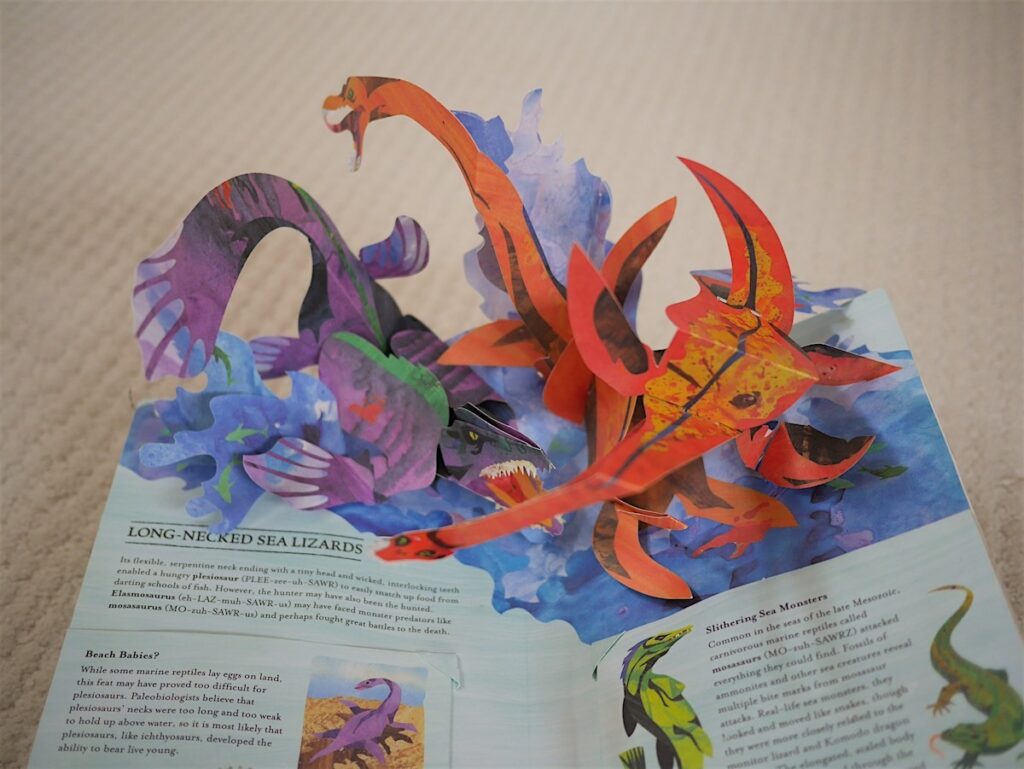
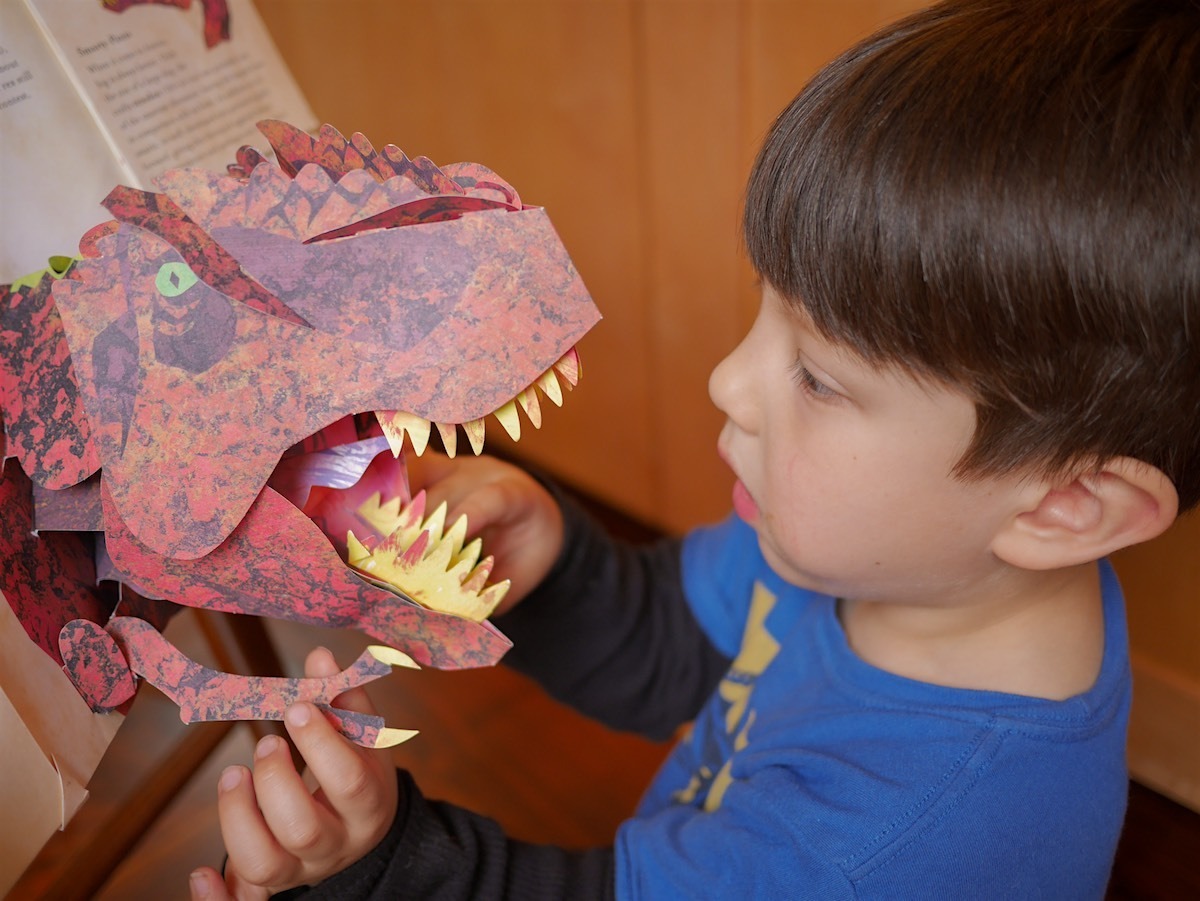
There are only five “pages” in each of these books despite their 3-inch thickness. That is because each page is stuffed with layers and layers of ingenious interacting bits of printed paper, which magically assemble themselves into an alternate reality when each page is opened. Yes, it is a pop-up book, but a pop-up raised to an exponential level. A pop-up on steroids, or acid. Pop-up as extreme sport. The engineering is astounding. As a page is opened a 3D apparition appears, often with its own narrative, first one part and then another. The resulting paper sculpture is the story made real. The textual story is minimal; all the action is in the structures. Kids love to see how they work. The only downside to these books that belong on paper is not letting children paws tear the mechanics. These two books feature all kinds of pre-historic dinosaurs, and sharks of all types. But the artist behind them, Robert Sabuda, has half a dozen other books with the same kind of extreme pop-up-ness. – Kevin Kelly
MINECRAFT: BLOCKOPEDIA – FOR FULL-ON MINECRAFT GEEKS, AS WELL AS OVER-THE-SHOULDER ADMIRERS
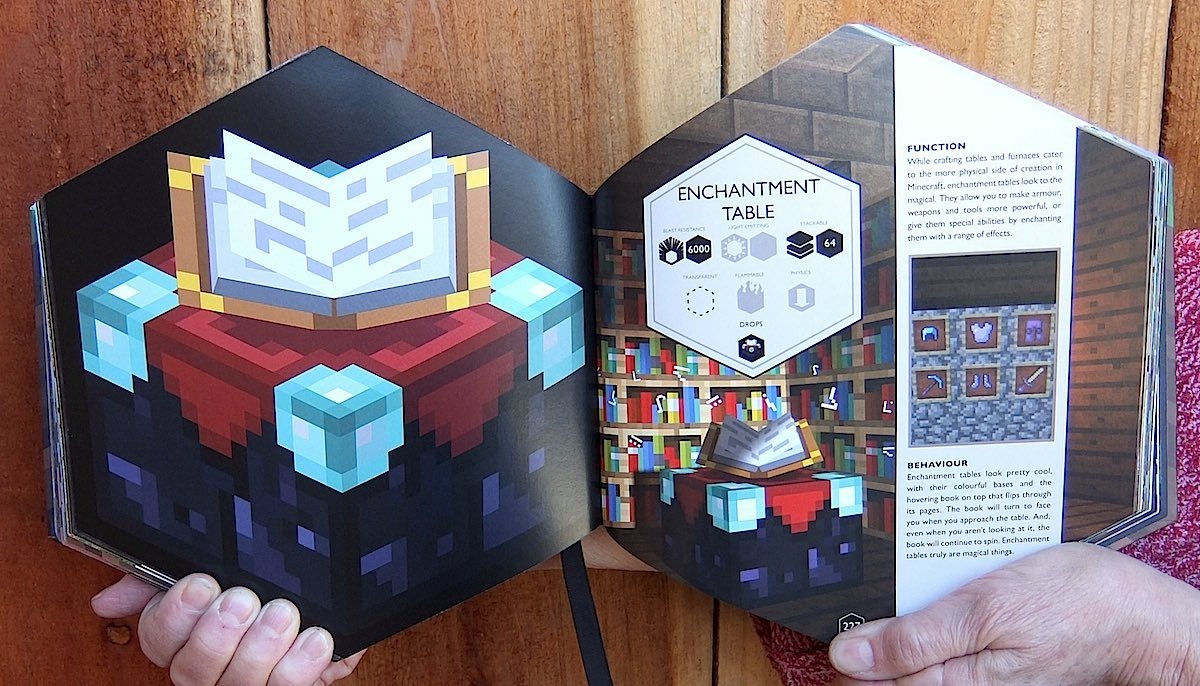
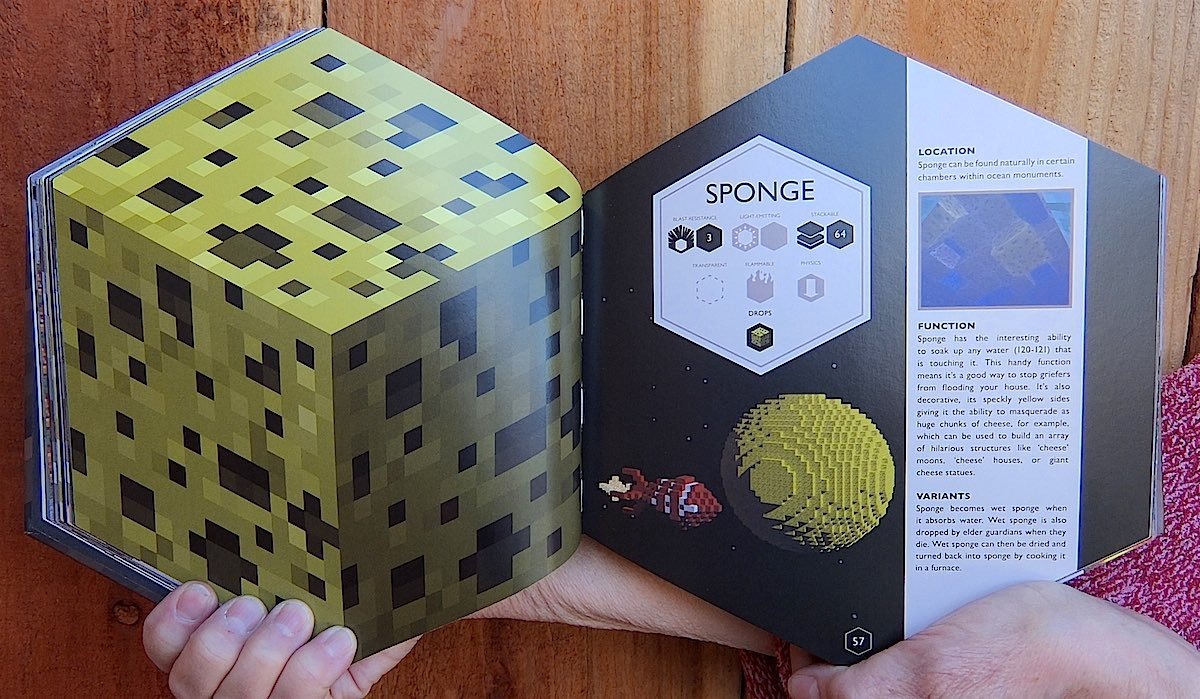
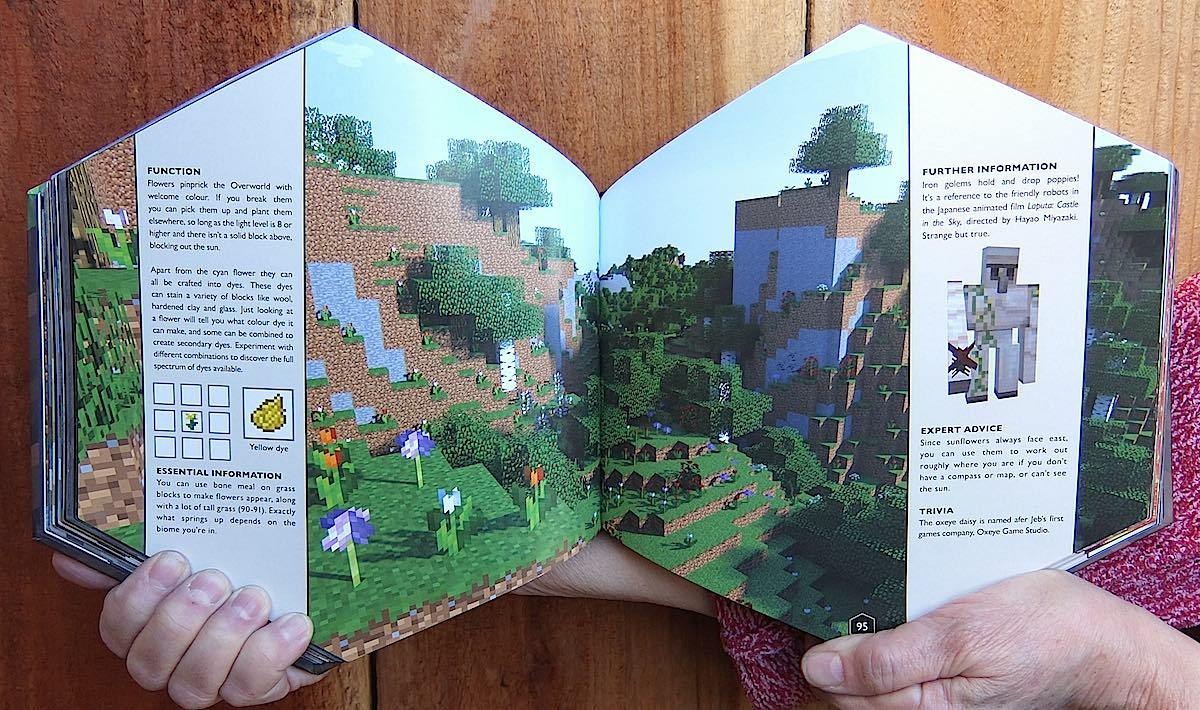
Minecraft: Blockopedia
by Alex Wiltshire
Scholastic Inc.
2015, 312 pages, 9.7 x 10.7 x 1.4 inches
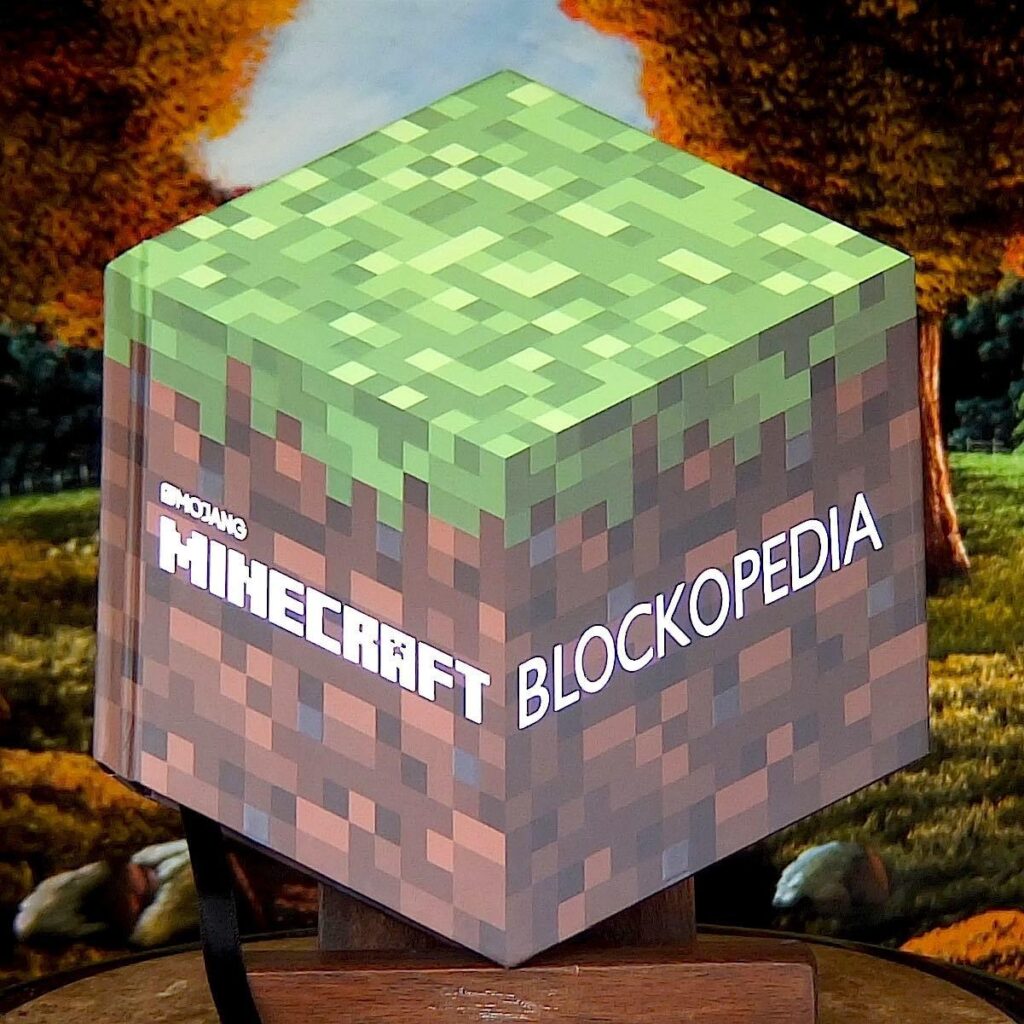
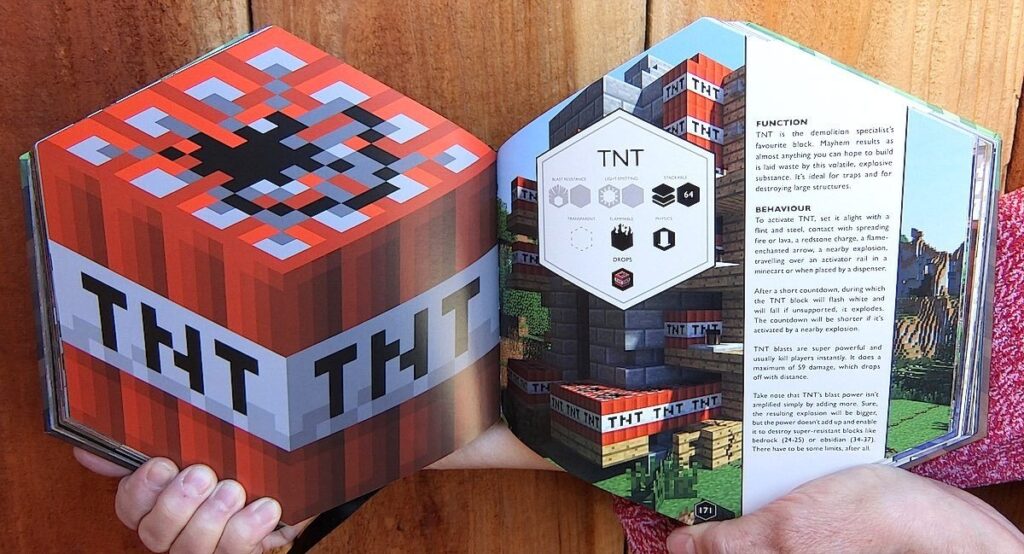
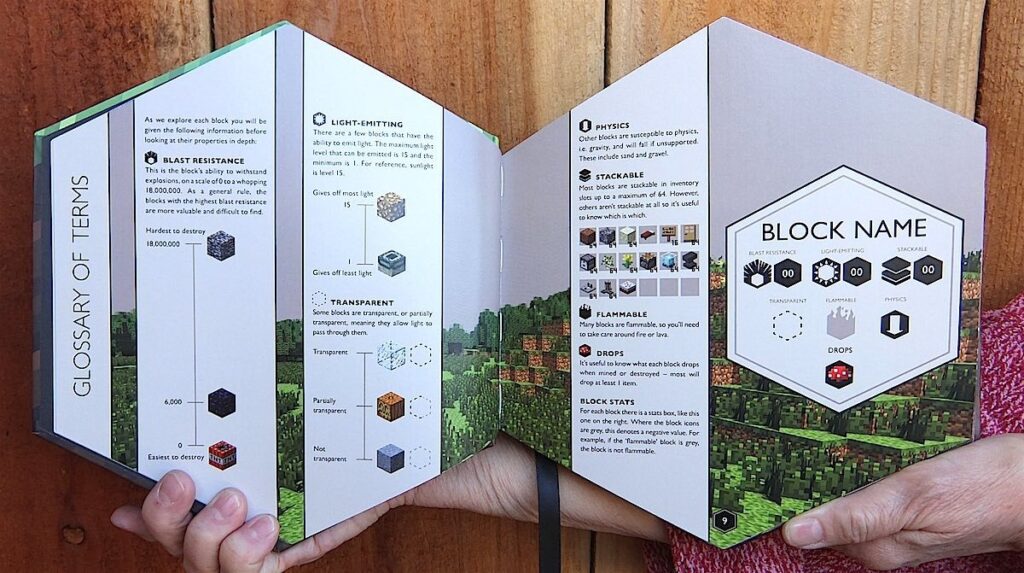
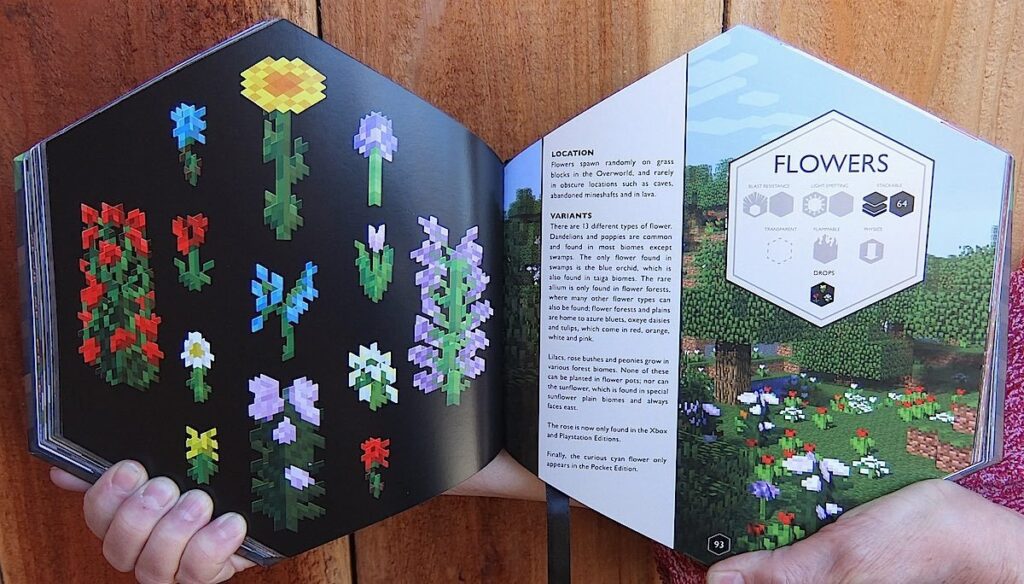
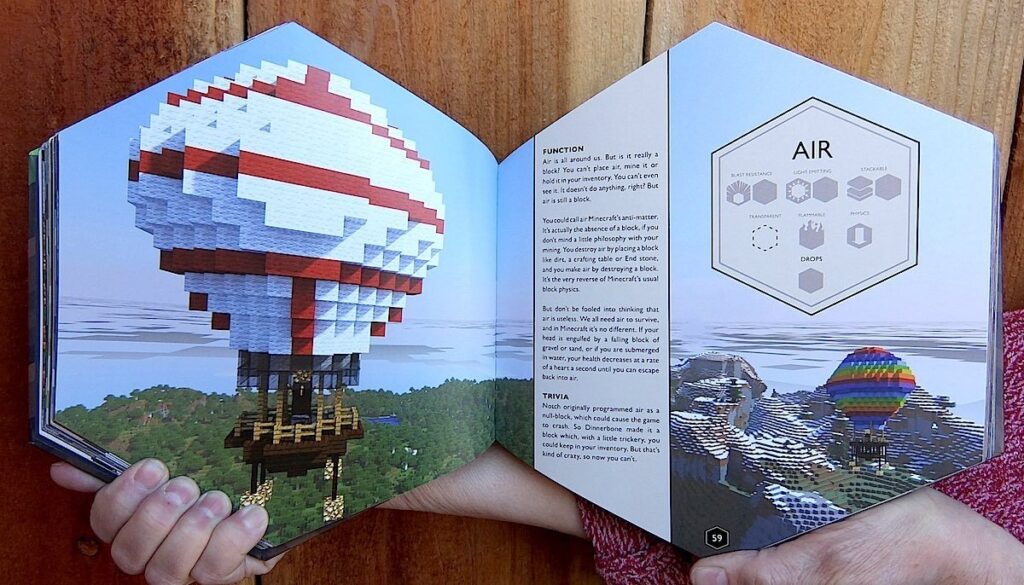
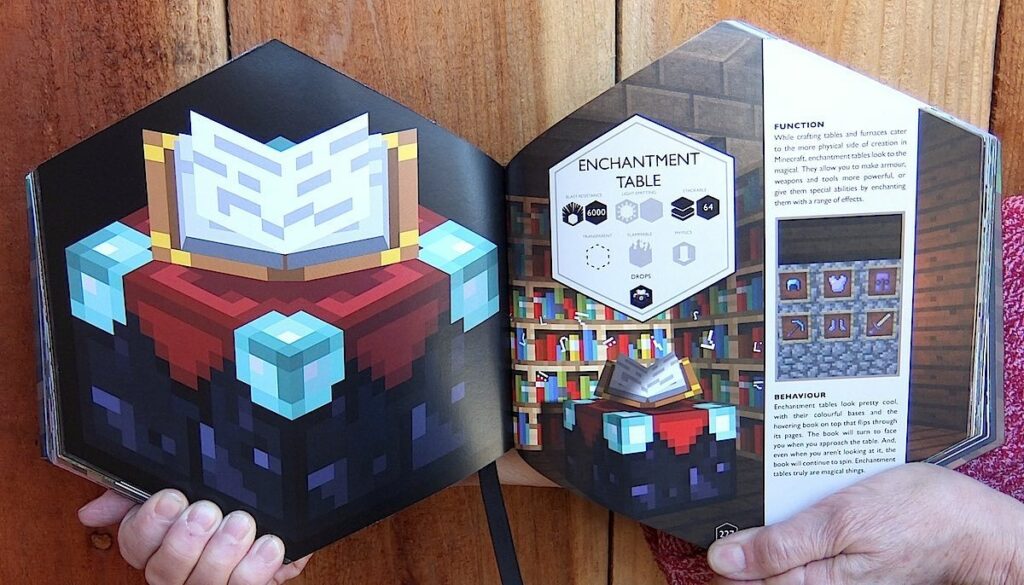
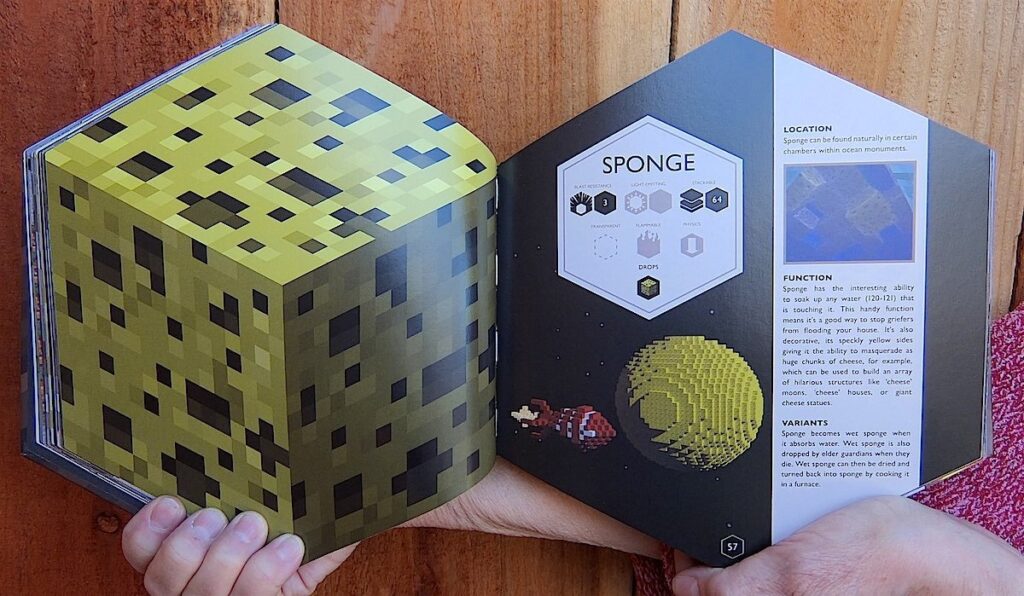
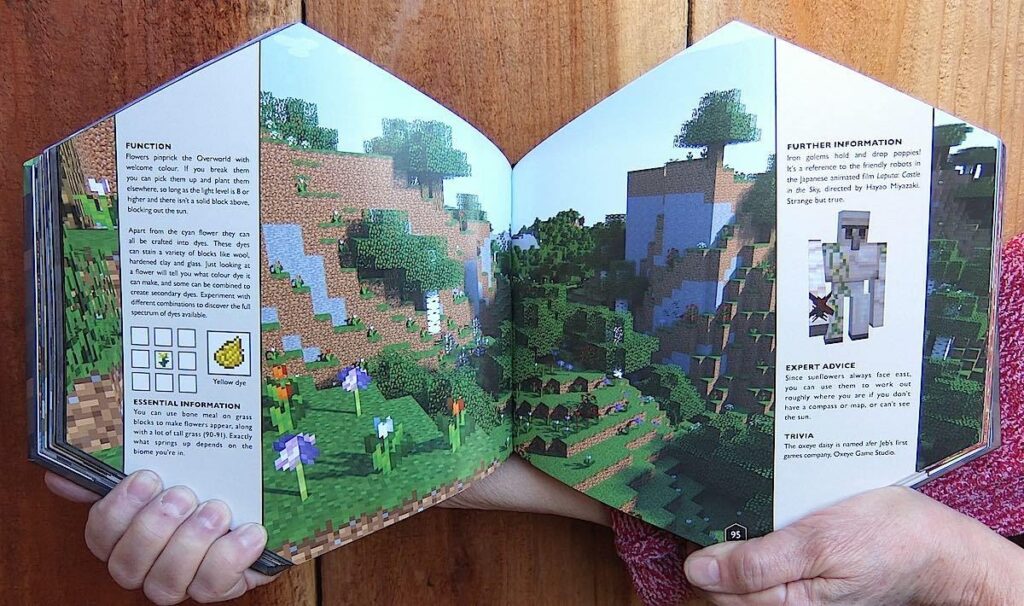
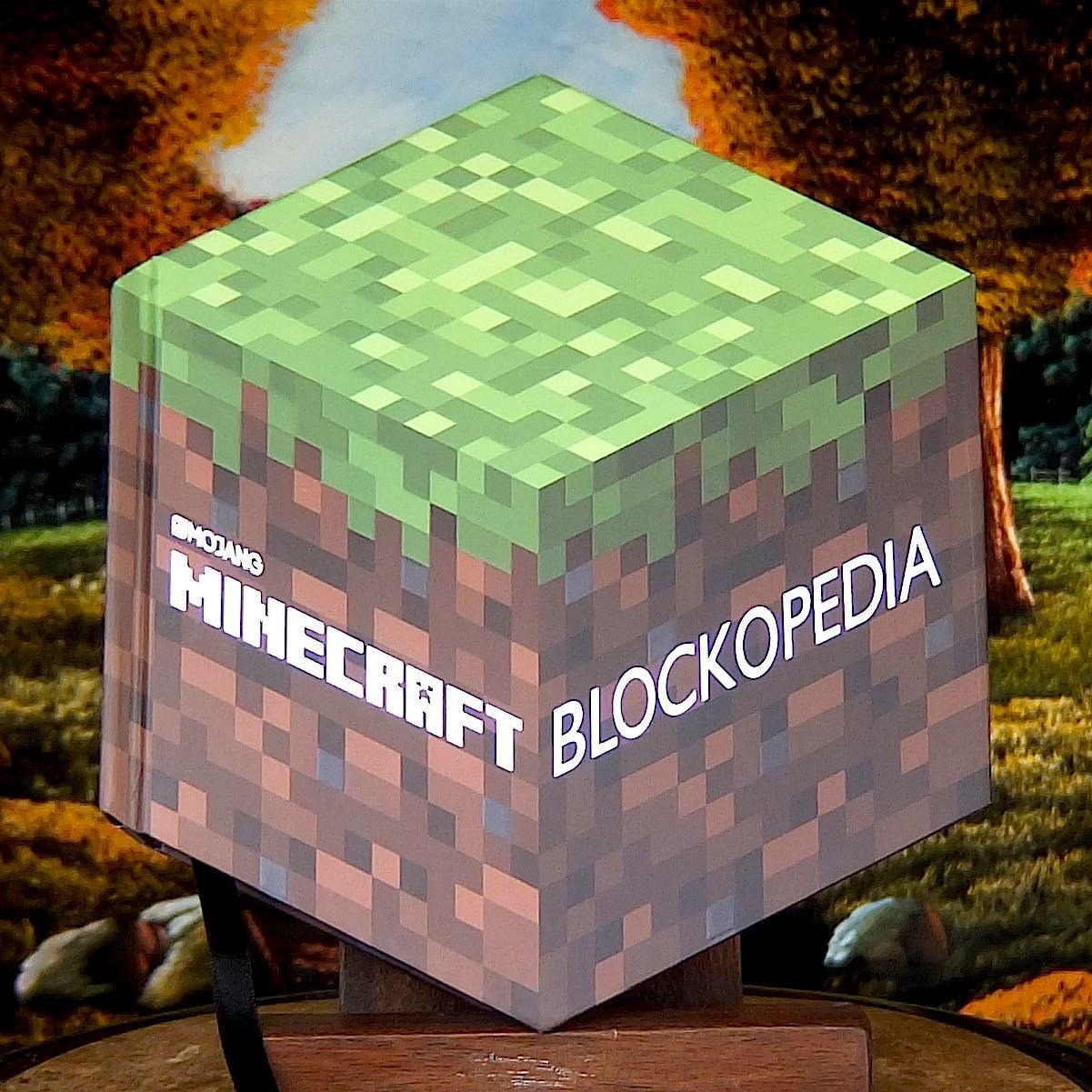
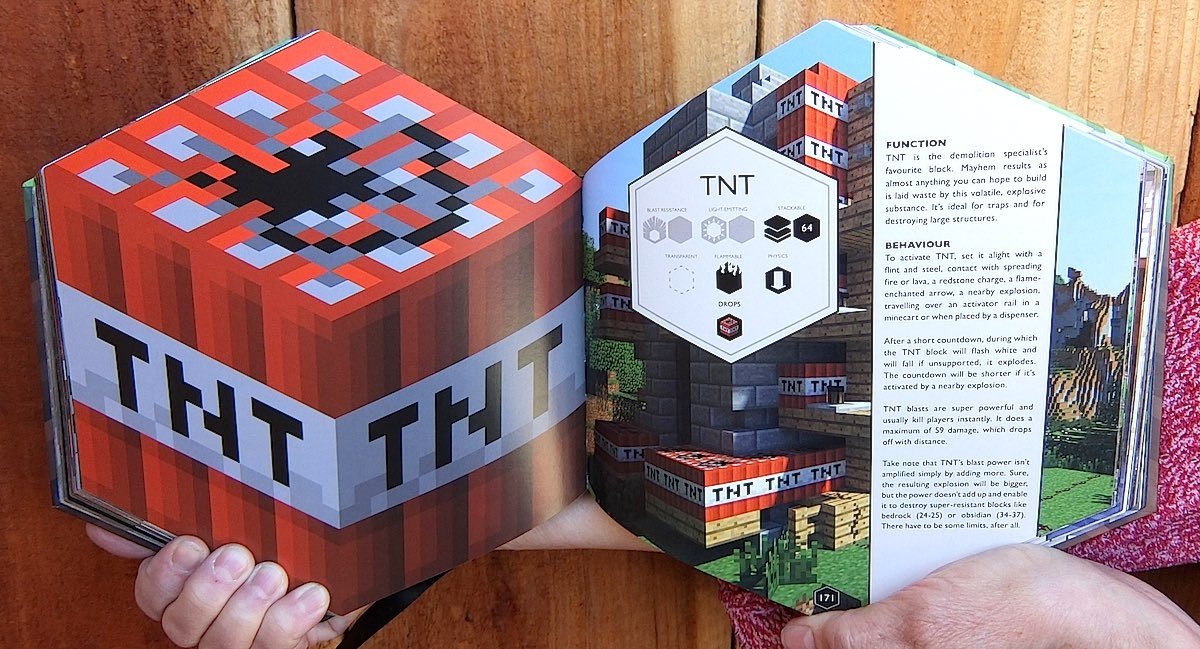
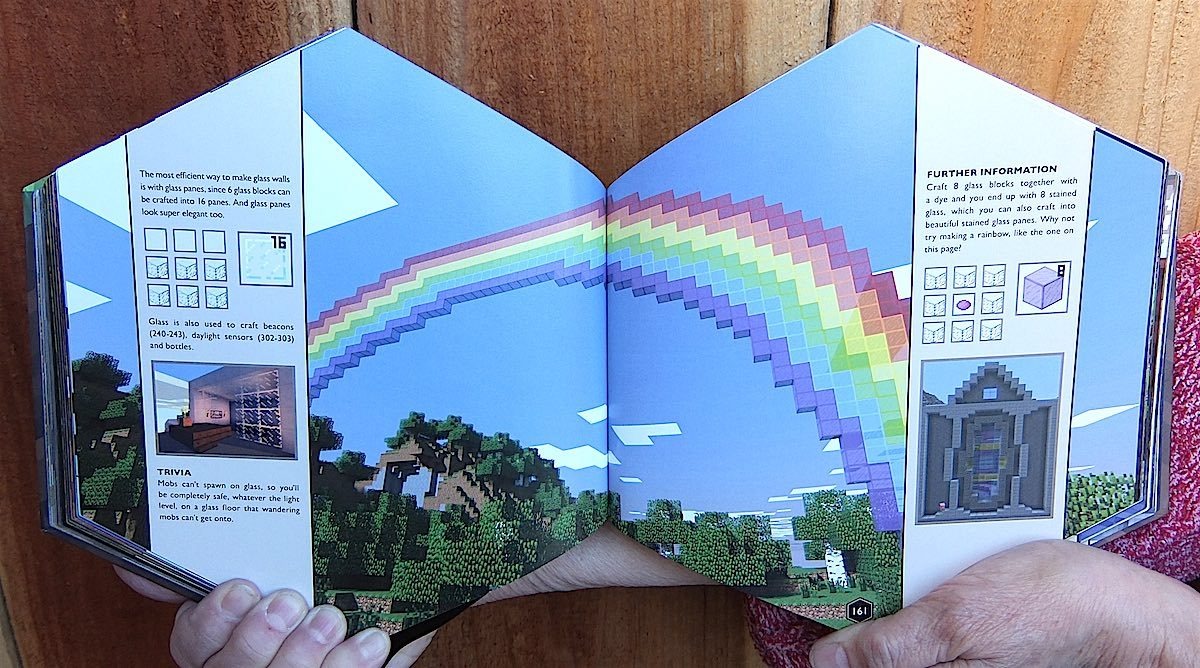
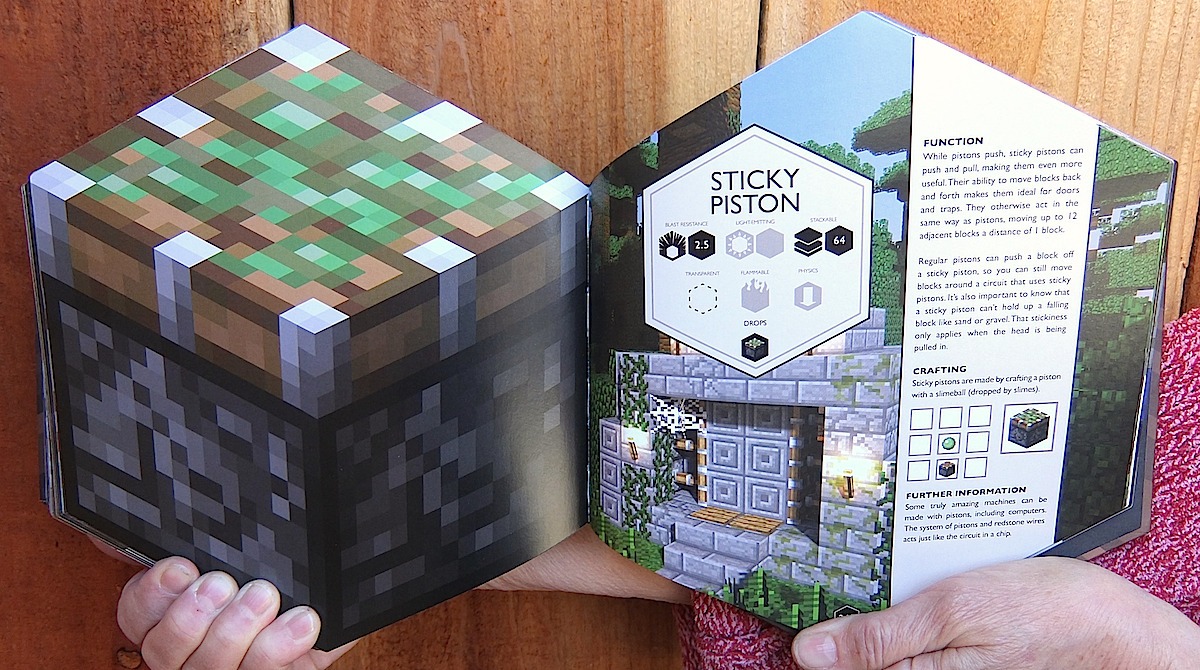
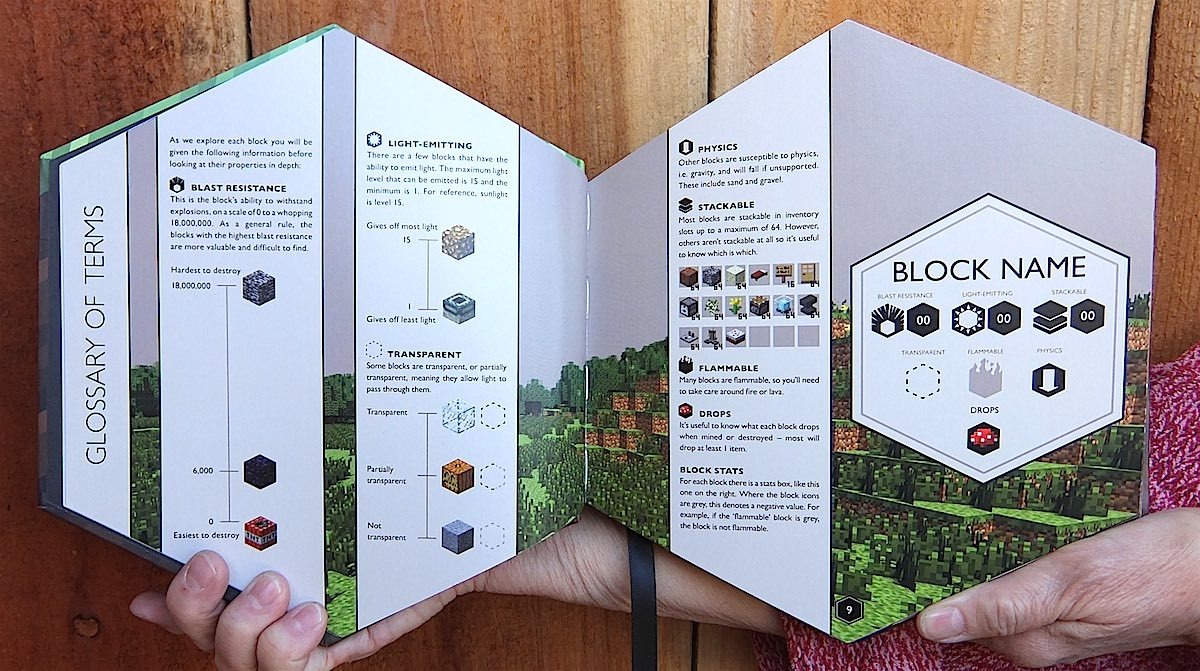
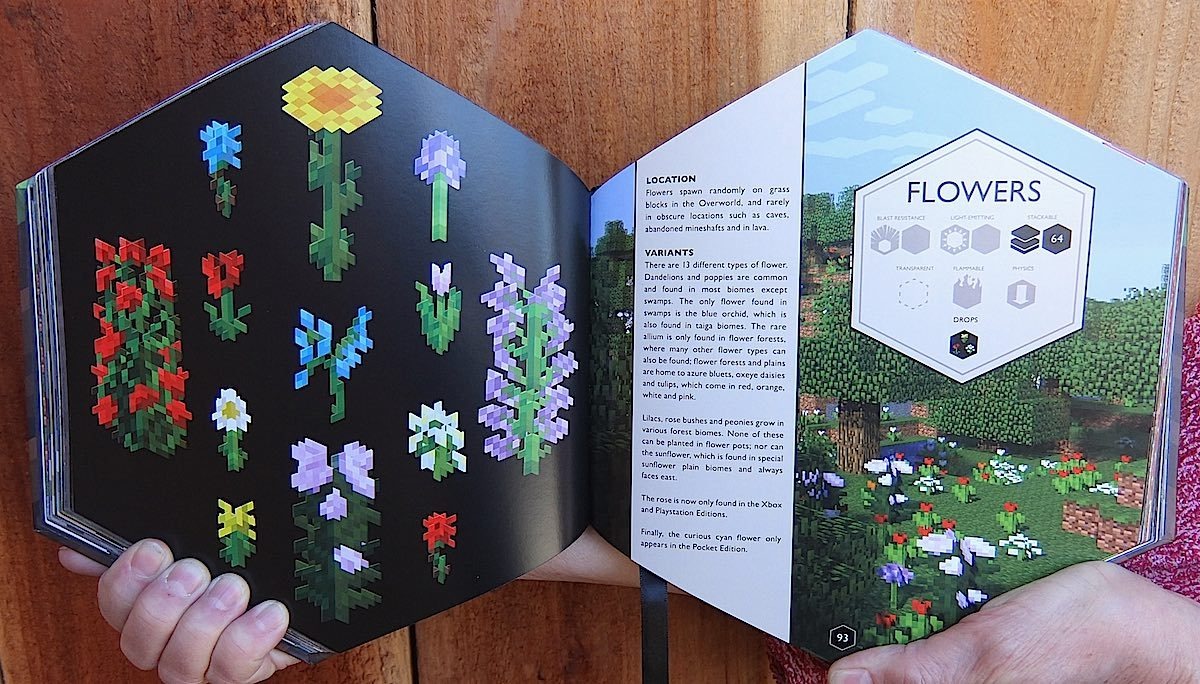
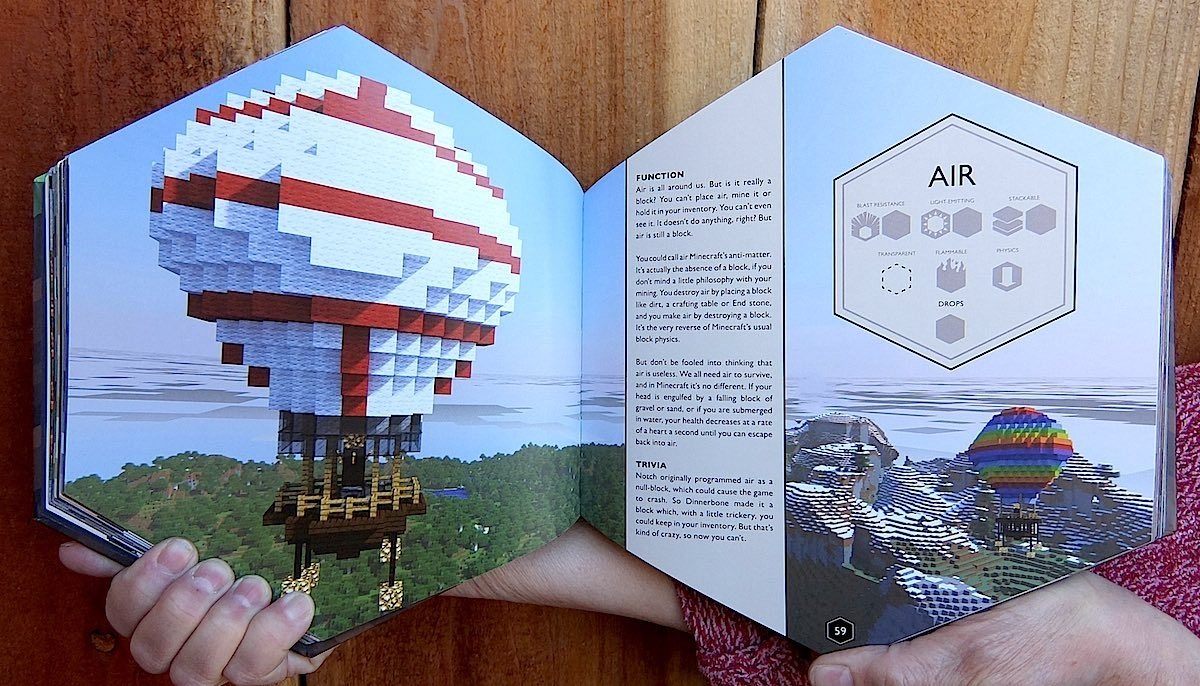
Shaped like a hexagon to mimic the dimensions of a cube, Minecraft: Blockopedia is designed for full-on Minecraft geeks, although those of us who have only watched the game over the shoulders of children and loved ones will find plenty to admire here too. After the briefest of introductions and a quick glossary to help noobs make sense of the stats that accompany each block’s name, it’s off to the races, with page after page devoted to blocks made from rocks, blocks made from plants, blocks that serve particular functions (a ladder), and blocks that do particular things (acting as a switch).
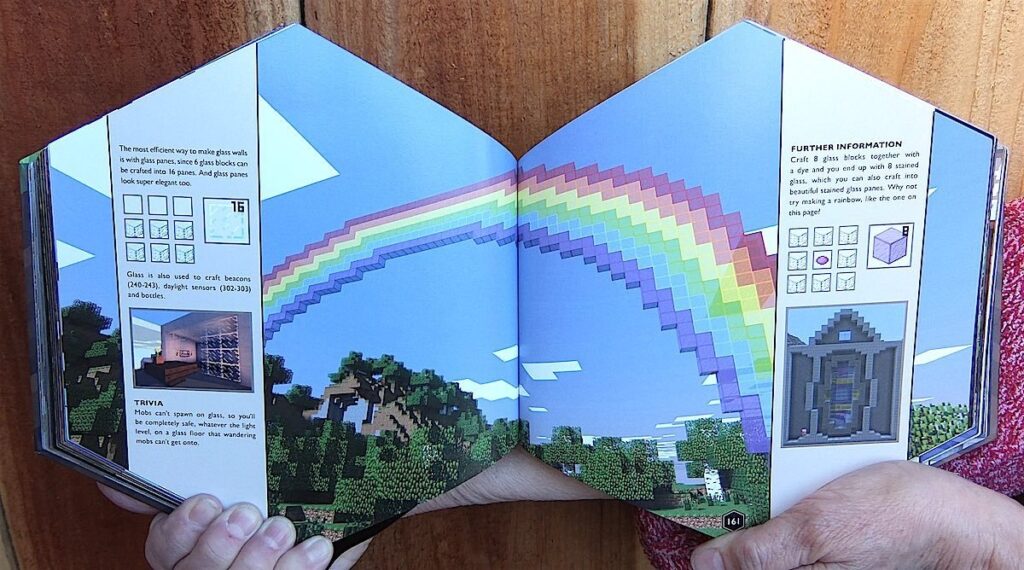
One of the coolest characteristics about Minecraft is how it chooses to observe the laws of nature and physics, or ignore them. Sand, we are told, can be a cave-in hazard, but when it’s smelted in a furnace, it turns to glass. Both statements are true, but don’t go looking for glowstone the next time you’re spelunking – it is only found in a sinister dimension of Minecraft called the Nether. And while sugar cane in both the real world and the Overworld of Minecraft can be used to make sugar, guess where it can also be used to block flowing lava?
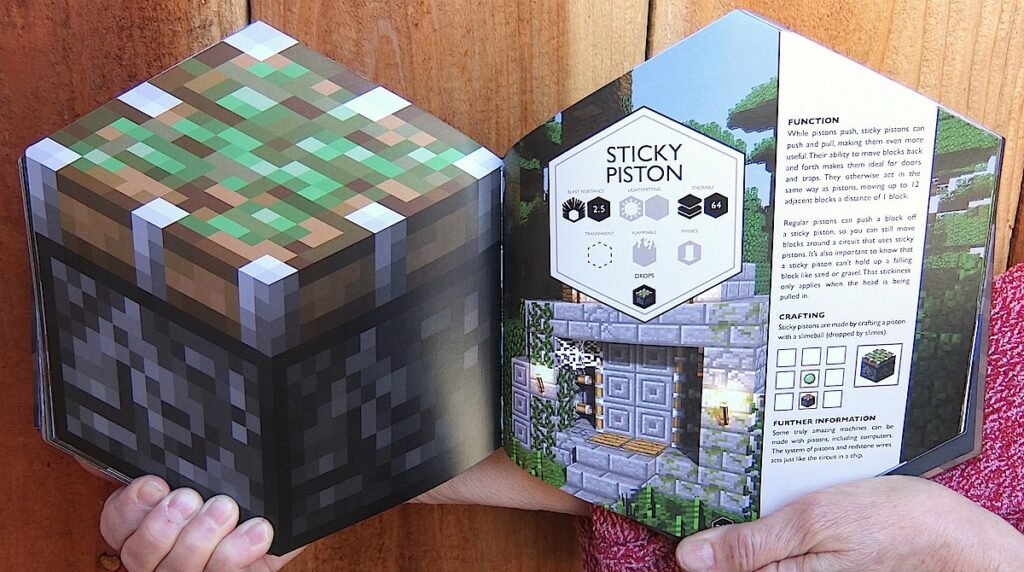
Though the format and illustrations in Minecraft: Blockopedia are the book’s most prominent features, it’s still a book filled with lots and lots of, you know, words. Writer Alex Wiltshire mostly plays it straight (“Water is incredibly useful.”), but often he lets the language and logic of Minecraft add color, as in “Sticky pistons are made by crafting a piston with a slimeball…” and “If you dig podzol without the silk touch enhancement it drops dirt.” Got that? – Ben Marks
Books That Belong On Paper first appeared on the web as Wink Books and was edited by Carla Sinclair. Sign up here to get the issues a week early in your inbox.
09/29/2628 September 2026
Thinking Games
Tools for Possibilities: issue no. 209
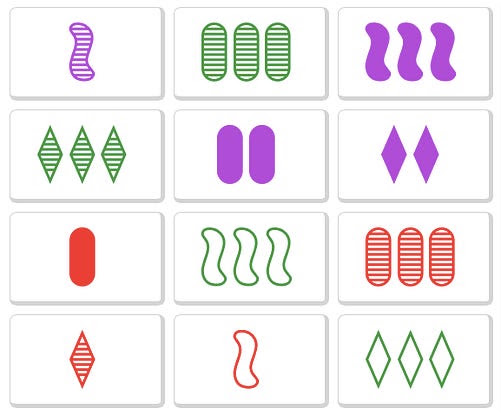
Pattern recognition competition
A simple game in a class by itself. You get a deck of cards with colored symbols. These are laid out, face up. To play the game you need to organize the symbols into sets of three “un-alikes” — but they can be grouped in more ways than one. Many more ways. Everyone else is trying to group them into sets faster than you. This game exercises a unique part of your brain that few other activities do. Half math, half intuition, all concentration. It’s fun, loud, fast-moving, and very challenging to do well, yet easy enough for small kids to join in meaningfully (that is, do better than you). After several years of playing the game, here is what I’ve observed:
1) It can’t be explained; it has to be shown.
2) Some folks are more gifted than others at finding patterns fast.
3) But *everyone* improves, often within the span of a game.
I hear that many schools use this game to teach sets and logic in math class, and that’s great. We use it as a raucous parlor game. Like the game Go, Set possesses the kind of simplicity which keeps expanding, never growing old. And as far as games go these days, it’s cheap.— KK
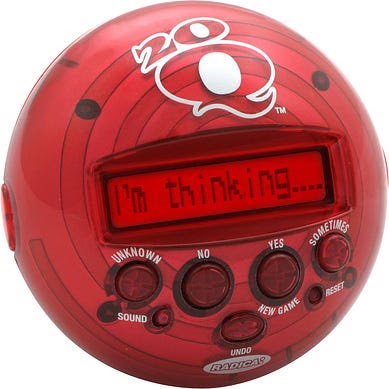
Twenty-dollar AI
This tennis ball-size orb knows what you are thinking. Most of the time it will guess what you have in mind after asking you twenty yes/no questions. It is eerily smart, and slightly addictive.
The toy is remarkable. Because it is so small, so autonomous, its intelligence is shocking to the unprepared. Most children can’t stump it, and if you stick to objects it will stump smart adults about 80% of the time with 20 questions and most of the time with an additional 5 questions. I love to watch people’s reactions when they think of a “hard” thing, and after a seemingly irrational set of questions you are convinced are dumb, the sly ball tells you what you had in mind. (For instance, it can correctly guess “flying squirrel”without asking “does it fly?”) People who play chess machines won’t be surprised, but just about everyone else is tickled. It feels like the future.
But right now, for ten bucks, you can get an amazing little artificial intelligence, about as smart as an insect — but an insect which specializes in guessing what object you are thinking of. And in that part of the brain, it’s smarter than you are. — KK

Funnest parlor game
No recent game has given me as much pleasure as the parlor game known as Werewolf.* Whenever my extended family gathers for holidays, we play Werewolf over and over. I’ve played the game on company retreats, at tech gatherings, on group vacations. At Foo Camp, a rendevouz for nerds, epic sessions of Werewolf will run all night long till dawn. It is that addictive.
Werewolf can be played with as few as 6-8 folks and as many as 30 or more. A game can last 30 minutes to an hour, and even very young kids can play. It’s a game of bluff and deduction. Think of poker, but without any cards or money. Some fans call it a “mind game.” In brief, the game assigns roles to players at random and in secret. One emergent group — the werewolves — must kill the innocent villagers, but no one knows who is who because the deed is done “at night” in a secret way. On each round of the game, the innocents will lynch a supposed werewolf as voted by the group after accusations and debate but they are never sure they have the right person. Maybe it’s the werewolfs leading the pitchforks!? Both the best and worst of human behavior is activated: lying, leadership, mob psychology, democracy, persuasion, deception, deduction logic, and imagination.
Because of the intense social dynamics, the game is eternally surprising and addictive. Werewolf is the only non-sport game I know of that is as much fun to watch as to play. Players who die early in the game will always stick around till the end, watching in fascination.
Like Charades, you don’t need any equipment, other than some index cards, or a deck of playing cards to distribute in order to assign roles in secret. But over years of playing we’ve found this dedicated deck of cards by Ted Alspach makes it much easier to introduce newbies, and to remember roles. The deck contains 40 or so cards printed with Werewolf roles and instructions. It also contains about 25 additional roles that can be added to the typical 5 main roles, which is why Alspach calls it Ultimate. As you play more often or the groups get bigger, you can keep the game exciting by experimenting with these additional roles.
A pretty good free rule set for Werewolf can be found online here. Grab a regular deck of cards, assign different picture cards to roles, and you are off. If you want a bit more help this Ultimate Werewolf deck includes a fantastic sheet of very clear rules and instructions (the best I’ve seen), with great tips on how to be a good moderator. And the rules stay handy with the ready-made cards. We’ve found that having the roles explained on each card is really helpful for new players. — KK

Game of semantic predictions
We’ve been playing this word-based card game for the last three years and it continues to be an enlightening ice breaker. There are two types of cards: nouns (red) and adjectives (green). Each player is given a small stack of nouns. The game begins when one player (the judge) draws an adjective. Each player then anonymously lays down one noun he/she believes the judge will associate with the adjective. Players can try to sway the decision, but ultimately, the judge’s power is absolute. Some people are inherently literal, sarcastic, wishy-washy, optimistic, stubborn or dryly humorous. The challenge lies in figuring out what type(s) of judges surround you and what kind of judge you want to be. Discovering who’s on the same wave length is always interesting. What’s more “magical” — a sunset, Thomas Edison, the Pyramids, surfing the net, or Barney the dinosaur? Subjectivity rules! — Steven Leckart

Evergreen strategy video game
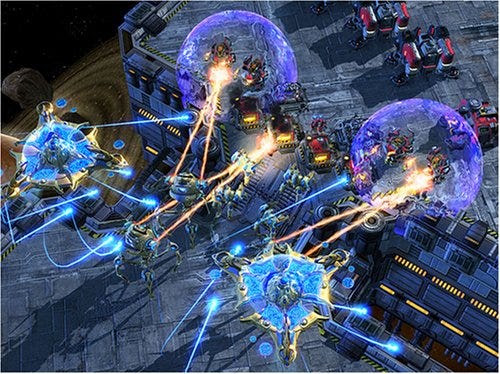
It’s best to think of StarCraft as more of a sport than a game. It’s played professionally, with televised matches, in Korea. The goal in StarCraft is to build a base, in order to create an army, which you then send over to destroy the opponent’s base. Your opponent, of course, is trying to do the same thing to you — like chess. Besides athletic reflexes you also need lots of experience to know which strategies to use immediately. For newbies the nice thing is that as you get better, the server dutifully serves up better opponents. StarCraft is probably the most popular game in the “real time strategy” (RTS) genre; it is far more strategic than just a shoot-em up game but it is much faster than any strategy board game. A typical game duration is like chess — most games probably last 30 to 45 minutes, with outliers that last more than an hour. It is so well-designed, and fast-paced that it is possibly the first real “digital sport.” It’s one of the few games I can imagine someone still playing in 5 years. Runs on Windows or Mac; requires internet connection. — Mark Hurst
Once a week we’ll send out a page from Cool Tools: A Catalog of Possibilities. The tools might be outdated or obsolete, and the links to them may or may not work. We present these vintage recommendations as is because the possibilities they inspire are new. Sign up here to get Tools for Possibilities a week early in your inbox.
09/28/2627 September 2026
Retro Recomendo: Pets
Recomendo - issue #533
Our subscriber base has grown so much since we first started nine years ago that most of you have missed all our earliest recommendations. The best of these are still valid and useful, so we’re trying out something new — Retro Recomendo. Once every 6 weeks, we’ll send out a throwback issue of evergreen recommendations focused on one theme from the past 10 years.
Teaching a dog to speak
I don’t have a dog, but if I did I would be trying to get it to talk. At They Can Talk there’s a bunch of researchers training dogs to use cheap electronic devices to “say” words. Some dog-owners claim to be able to train their dogs to chain together a string of spoken words into something like a sentence. There’s a whole community of folks trying it, and recordable buttons sold on Amazon, and a good book on it, How Stella Learned to Talk. — KK
Pet-friendly duvet cover
My dog is trained not to jump on the bed or couch unless his special blanket is laid out first. However, we recently discovered that our microfiber duvet cover ($30) repels dog hair, so our house rules have changed. We no longer lay out the blanket and we just invite him up, which he, of course, quickly adjusted to. I’m not sure where all his dog hair goes, but it definitely does not stick to our bedding. Another reason I’m happy with our duvet cover is that it’s made of seersucker, which means it never looks wrinkly. — CD
Cat donut cushion
Our cats spend a lot of time nestled in their Love’s Cabin Donut Cushions. We have one for each of them, but they often snuggle together in one. It makes me happy to see them sleeping in them. — MF
Find the perfect pet bird
I’ve owned birds in the past, and I’m not in the market for one now, but my daughter showed me this fun quiz that matches you up with the perfect type of pet bird and points you to rescue centers near you so you can adopt one. The quiz result said my kind of bird is the lineolated parakeet, and I agree. — MF
Squirrel-proof bird feed
The only reliable way to deter squirrels from bird feeders is to use hot peppered bird seed. Squirrels (and other rodents) hate the taste of capsaicin, but birds are immune and happily chow it down. Train your neighborhood squirrels by starting out with 100% of hot peppered seed like Wild Delight Sizzle N Heat Bird Food and then gradually dilute this expensive seed with regular stuff. I have not tried this, but you can make your own by mixing a cayenne oil like Flaming Squirrel Sauce with your usual seed. — KK
Potty training app for puppies
I was immediately overwhelmed when we brought our new puppy home two weeks ago. Puddle & Pile was a mind saver. I log when my pup eats, drinks, pees and poops and the app will predict when he’ll need to potty next and alert me. The more I log the more it learns about his habits and becomes more accurate. It’s not perfect, but it’s prevented a lot of accidents and I can’t find a better app for the job. Suggestions welcome! — CD
THIS ISSUE OF RECOMENDO IS SPONSORED BY INCOGNI
Searching yourself on Google or ChatGPT exposes shocking details like your address, SSN, and financial records. Incogni’s Unlimited plan automatically erases your sensitive data from online brokers, protecting you from identity theft and fraud. Get 55% off with code RECOMENDO
Sign up here to get Recomendo a week early in your inbox.
09/27/2624 September 2026
Easy Silk Road Tour/Another Bankrupt Airline/Key to Happiness
Nomadico issue #225
Easy Touring With G Adventures
In my young backpacker days, I was staunchly an anti-tours person, but as I started to have more money to solve problems or save time, I started seeing the advantage of sometimes handing the planning to someone else. I recently went on a terrific tour of Uzbekistan with G Adventures and it would have taken many more hours than I had available to make all those bookings for transportation, hotels, and guides. Some friends who tried to do it on their own the same month had a tough time getting transportation between cities too, while ours was all set and easy. You can see the “Highlights of Uzbekistan” tour we took on this page, as well as options some in our group were taking to extend it to the other Stans like Kyrgyzstan and Turkmenistan.
An Airline Bankruptcy in Europe
In more fallout from the drawn-out war in Iran, airBaltic of Lithuania went bankrupt this past week, the second after Spirit Air to fall apart as jet fuel prices doubled. While airBaltic was a small carrier, it was majority owned by a national government and what comes next could get worse. This travel trade article says that EasyJet is trying to sell to a U.S. investor savior and AirAsia—the largest budget airline in that part of the world—is looking for money to keep it afloat as well.
Nomadico is a reader-supported publication. To receive new posts and support my work, consider becoming a free or paid subscriber.Upgrade to paid
Free Travel Insurance in Panama
You don’t need to scramble to set up basic travel insurance if you’re heading to Panama on vacation. The country is offering it for free to any traveler arriving by air, with a max of $15,000 for emergency medical treatment up to $50,000 for repatriation as needed, as well as coverage for emergency dental, lost medicines, or legal assistance for a stay of up to 10 days. No application is required; it’s automatic for anyone up to age 86. Keep in mind too that Copa Airlines (a Star Alliance partner) has a free stopover program, so you could head onward to South America or stop on the way back.
Nomads vs. the Key to Happiness
Do you know any long-term nomads who eventually settled into a base? Or ones who mainly stopped moving because they got lonely? This article on the key to happiness across all cultures might explain why. The very act of being constantly on the move makes it difficult to maintain lasting friendships, spend time with family, and stay in a meaningful couple’s relationship. All of these challenges have solutions that nomadic types have figured out, but only if the challenges are recognized, addressed, and worked on regularly. “Social capital’s importance to well-being cannot be overstated.”
A weekly newsletter with four quick bites, edited by Tim Leffel, author of A Better Life for Half the Price and The World’s Cheapest Destinations. See past editions here, where your like-minded friends can subscribe and join you.
09/24/2623 September 2026
What’s in my NOW? — Martynas Sagaitis
issue #272
My name is Martynas Sagaitis. I live in Lithuania and work as a courier. I have many interests, and I’ve shared a few of them here. That’s a little bit about me, for now.


PHYSICAL
- Raymon Tourray Select 27.5” 2025 (Anthracite Black) — This is my latest addition — and my everyday means of transportation. With a fully charged battery, I can ride up to 113 km. It has been a fun change from a regular bicycle. Although I still ride my ordinary bikes too. What surprises me most is the power of an electric bike. It simply launches from a standstill, thanks to the mid-drive motor. No wind or hill feels intimidating anymore. This bike is German-made.
- LEGO Bonsai Tree — A lovely little decoration — and something that gives you about an hour of fun while putting it together. 🙂 You can swap the leaves for flowers depending on the season or your mood. I don’t own much LEGO, but I really liked this particular set. It now lives on my bookshelf. It’s beautiful to look at — and, honestly, fun to pick up and play with.
- The Soul of Money — An inspiring non-fiction book about philanthropy, told through real and vivid stories. The author has raised a significant amount of money for charitable causes and shares what she has learned along the way. The way we think about and handle money can tell us a lot about who we are. In a way, this is also a book about the soul — and how it can change. Above all, we need to remain human.
DIGITAL
- Linux Mint 22.3 — Switching to Linux has been an amazing experience. Before that, Linux was surrounded by all kinds of myths and legends in my mind — that it was mainly for hackers, programmers, and people who spend their lives staring at terminals. But after installing it, I realized that almost everything I used to do on Windows could also be done on Linux. You just need to learn a little. Now Linux Mint is my main operating system. I’ve even become friends with the terminal. And I have to admit — I kind of enjoy watching all those numbers and letters scrolling across the screen.
- Claude Code — I started using Claude Code recently, and I’m still enjoying it. You simply tell it what you want to do in your project, and Claude Code does it. As a beginner, I find that incredibly exciting. I don’t need to know every detail of programming — Claude can write the code for me. It’s a great way to get started when you want to learn programming and actually build something.
INVISIBLE
Psalm 23:1
The LORD is my shepherd; I shall not want.
Sign up here to get What’s in my NOW? a week early in your inbox.
09/23/2622 September 2026
Inside the Artist’s Studio / Attack of the Journal
Issue No. 136
AN ARTIST TOURS THE SPACES OF 24 FELLOW ARTISTS, THEN MAKES ART INSPIRED BY HIS VISITS


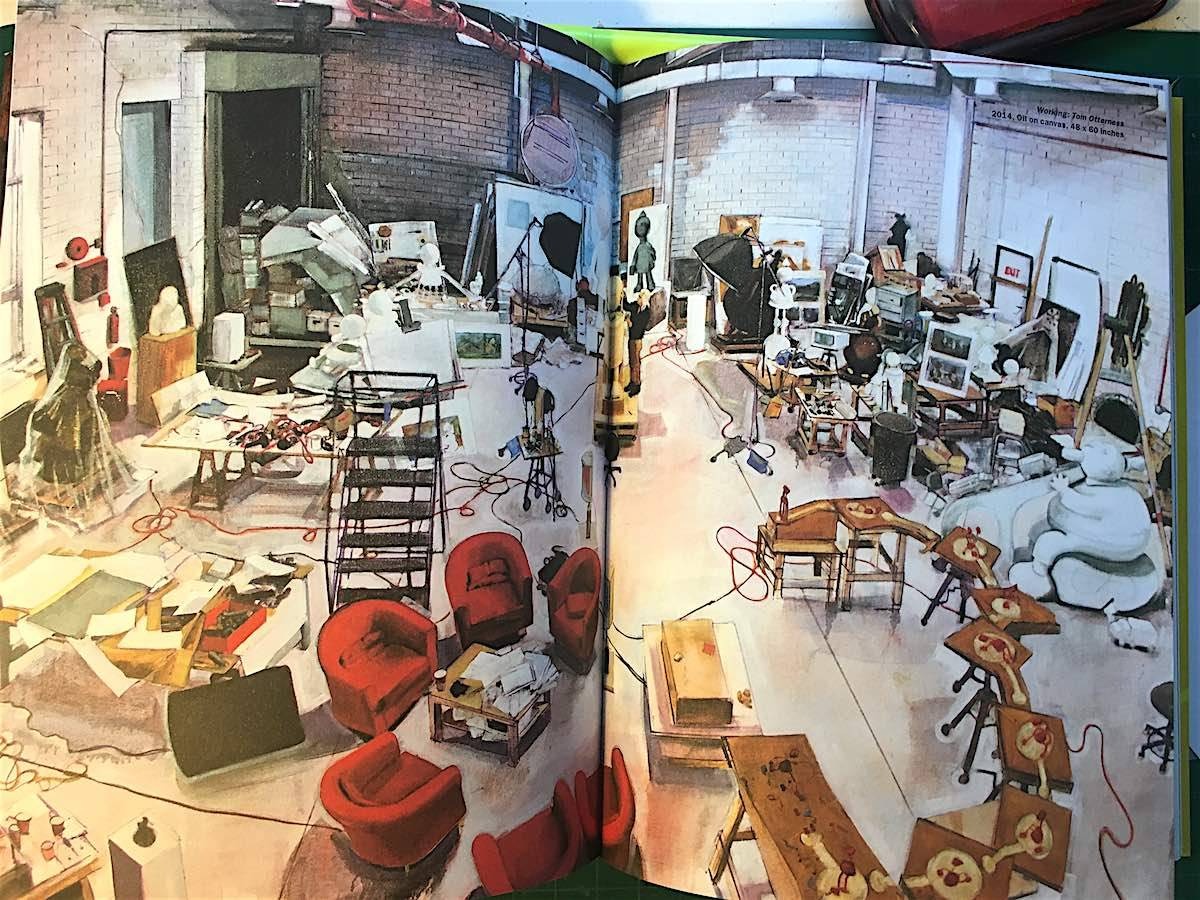
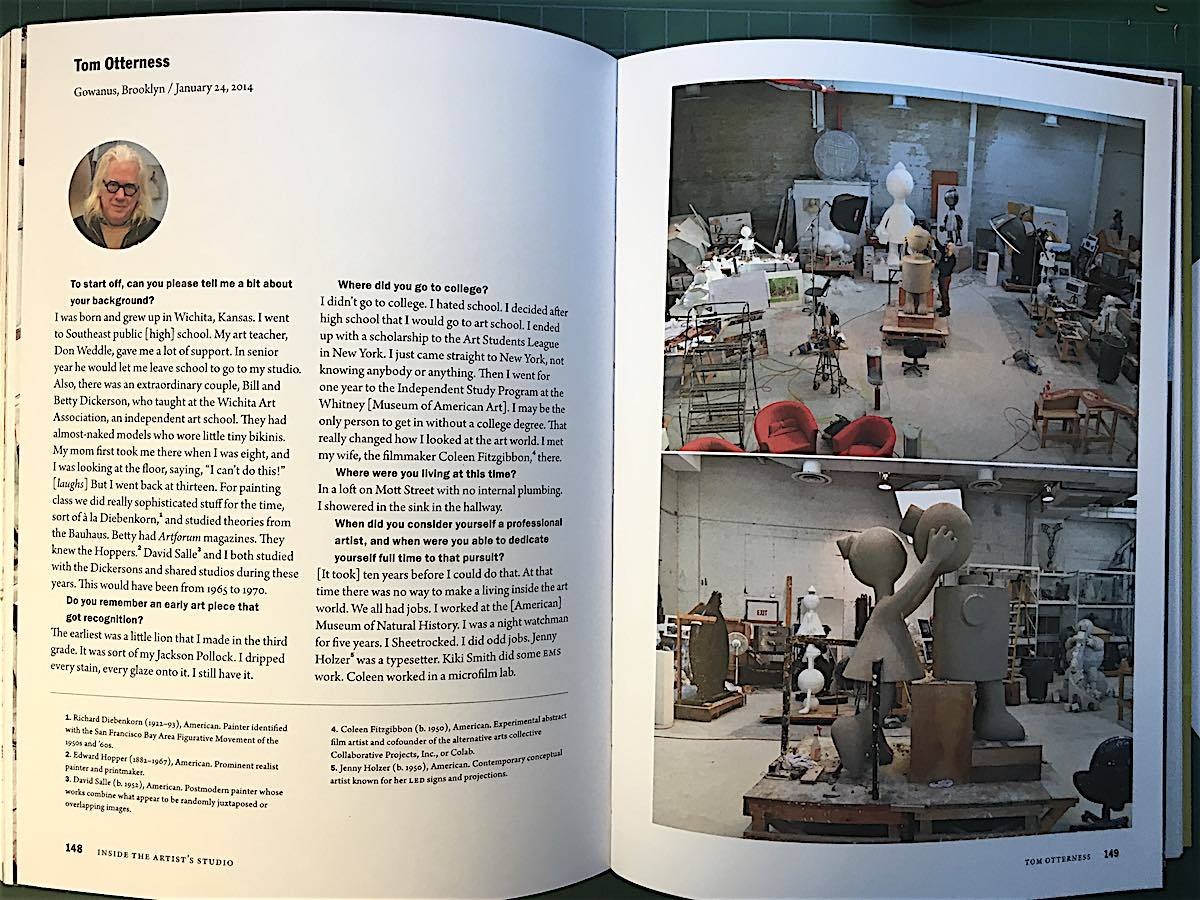

Inside the Artist’s Studio
by Joe Fig
Princeton Architectural Press
2015, 256 pages, 7.2 x 9.5 x 1 inches (softcover)
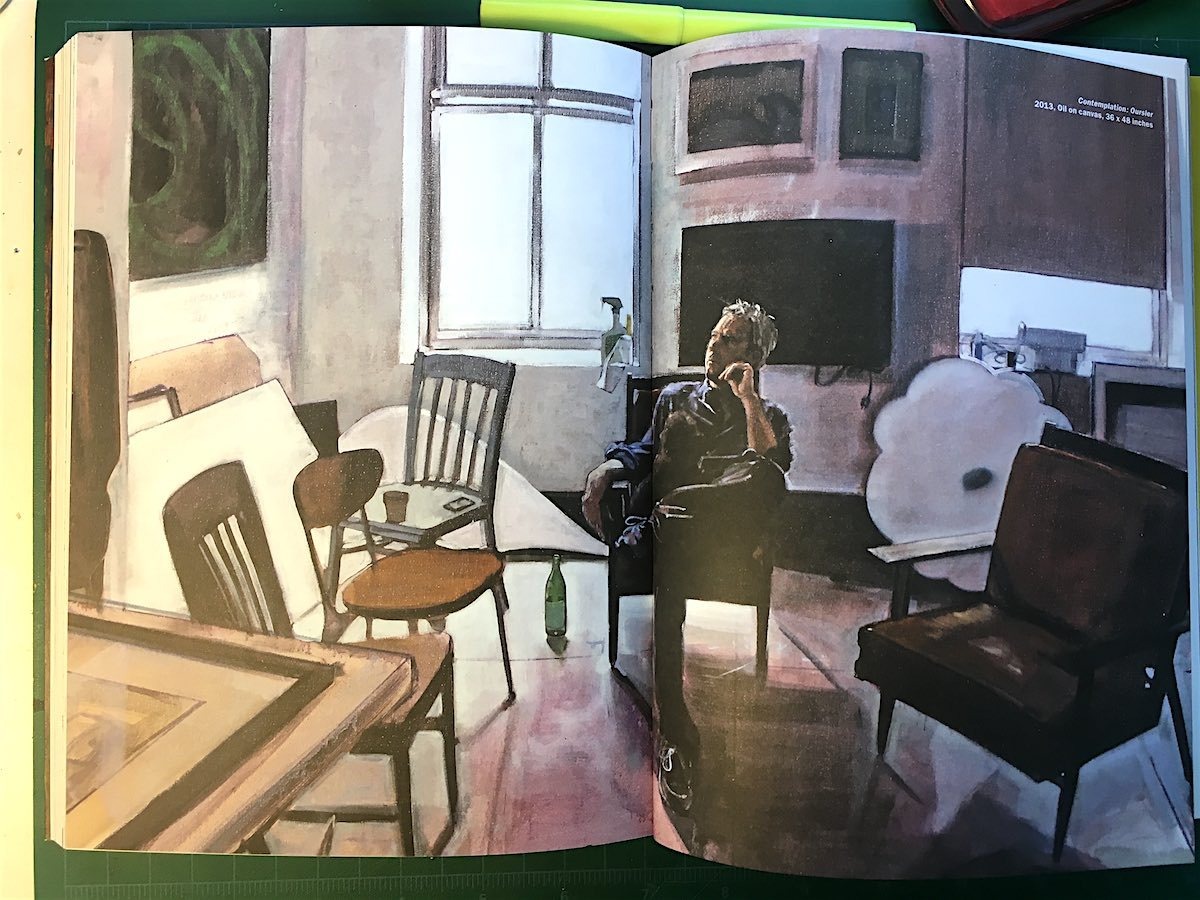
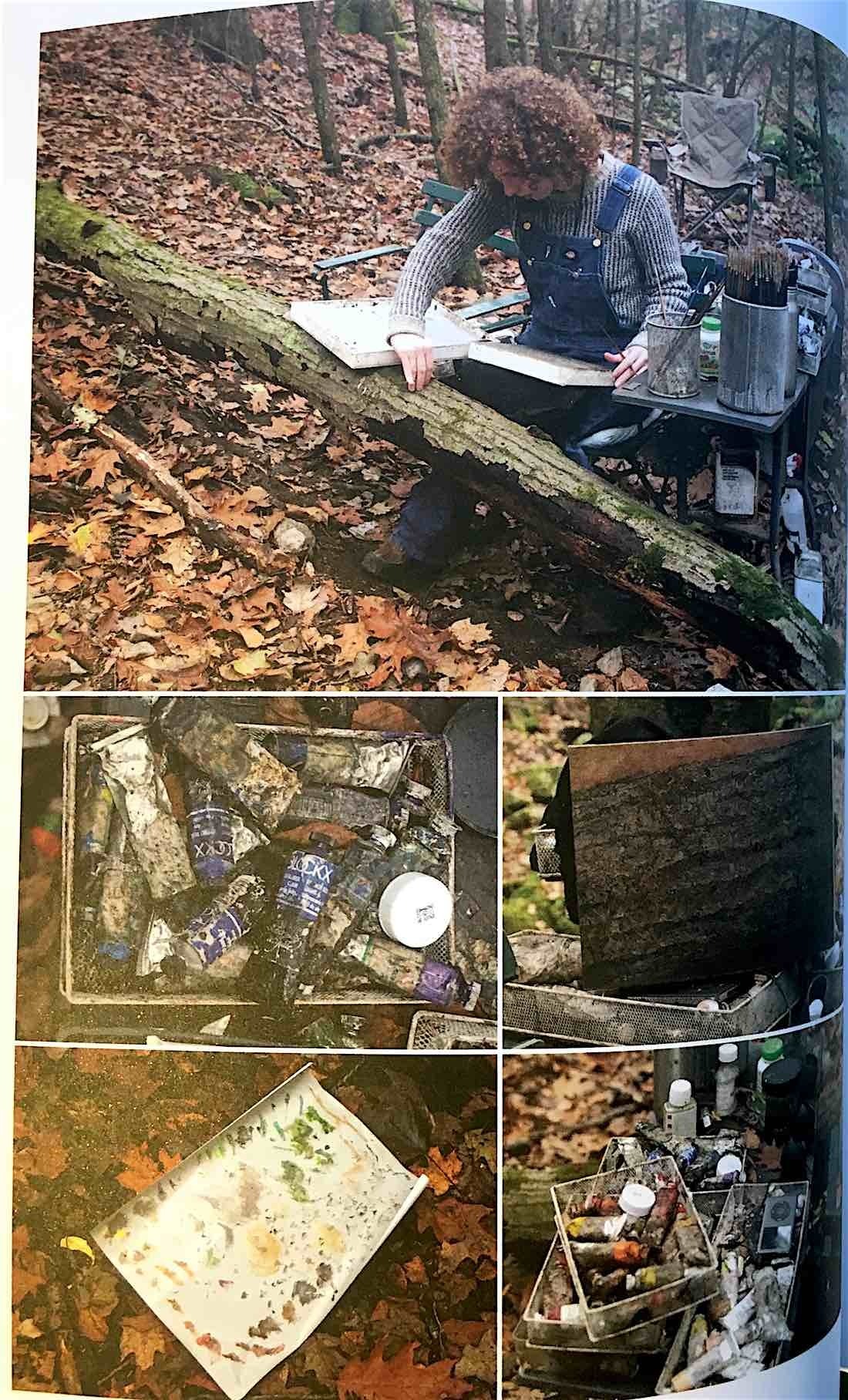
I’m a gigantic snoop. I love to peruse people’s bookshelves, rifle through the magazines on their toilet tank, look at their media Likes on Facebook, etc. I am endlessly fascinated by people and the media, tools, and ideas that inspire them. I also like workshops and the unique way in which people set up and use their spaces. These interests converge to great effect in artist and author Joe Fig’s Inside the Artist’s Studio.
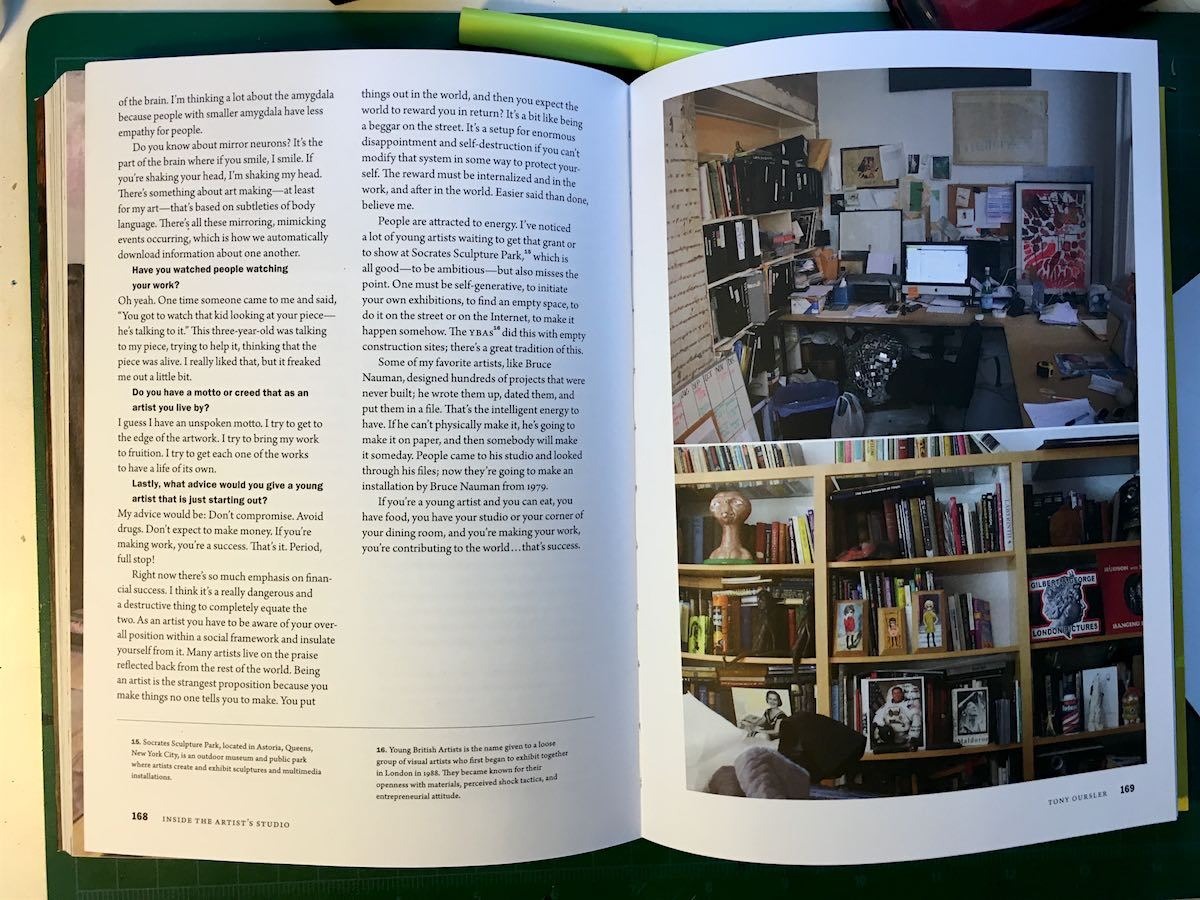
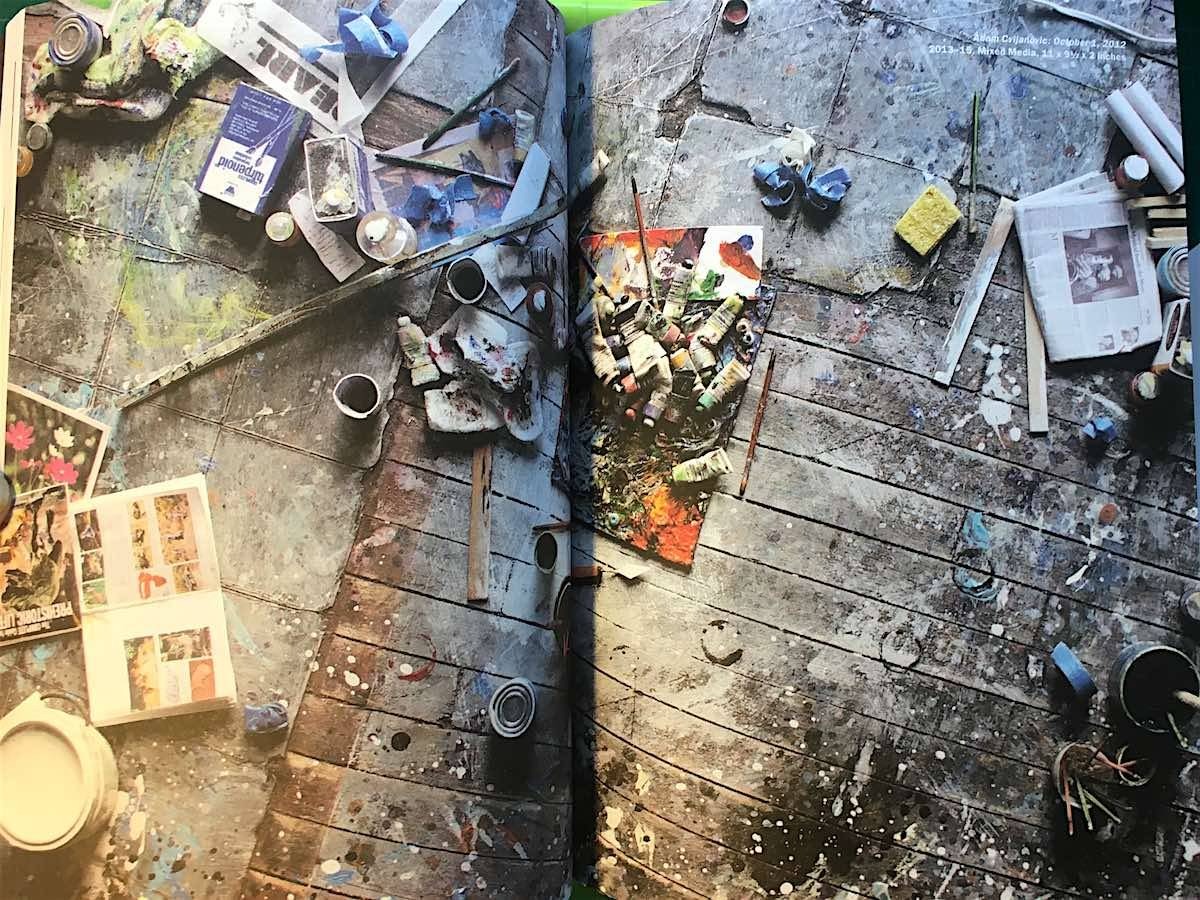
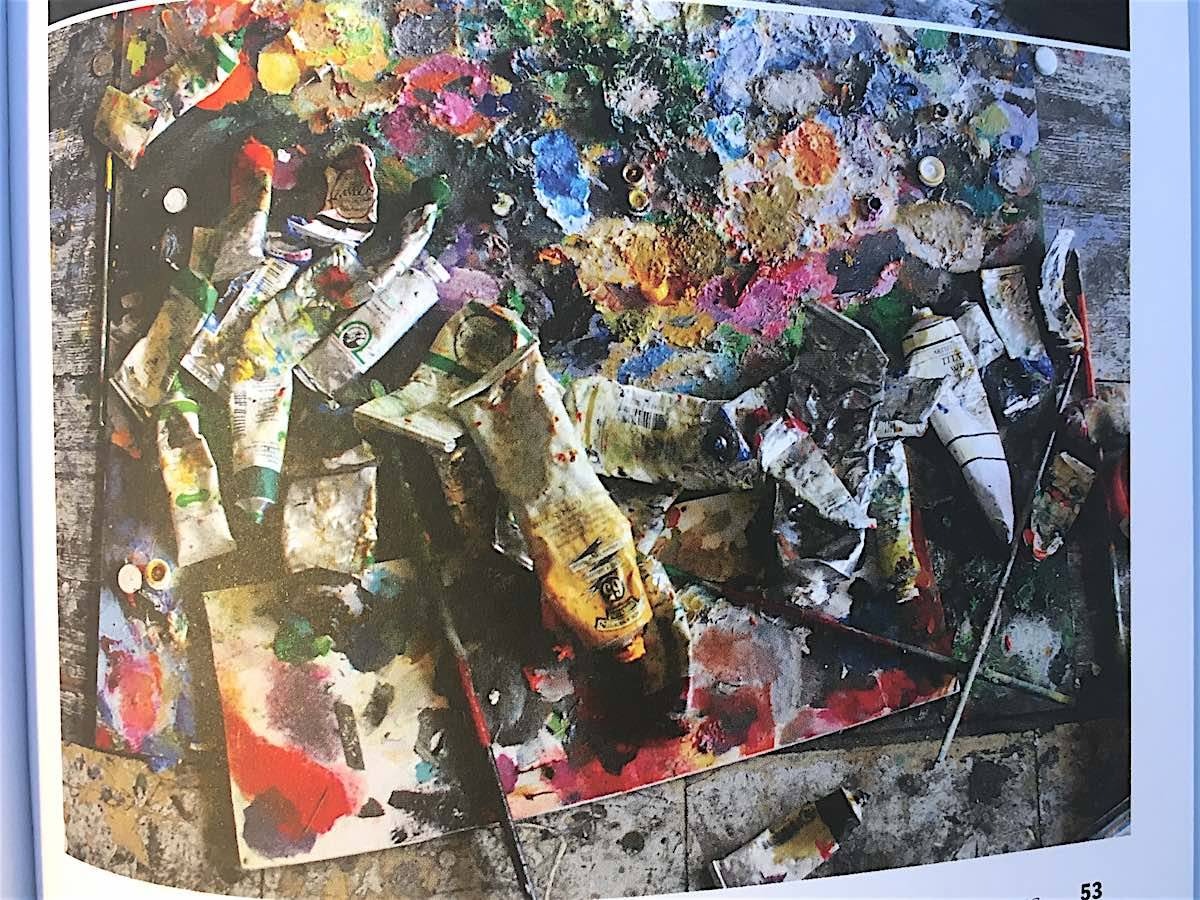
Given my nosey proclivities, I have read a number of similar collections of artist studio tour books. This book has a slightly more satisfying weight to it. The questions Fig asks are more interesting and far ranging, from childhood memories to working techniques to each artist’s working “creed.” And the photographs he takes are especially lovely, artful, and create a distinct mood that reflects each artist.
The really special dimension to this book is Joe Fig’s artwork. Fig is known for being an artist whose subjects are often art, artists, and art spaces. In this book, after interviewing and photographing such artists as Ellen Altfest, Byron Kim, Laurie Simmons, Adam Cvijanovic, Tara Donovan, and Roxy Paine (24 artists in all), Fig creates a piece of art inspired by that artist, their studio, and their work. The subject of each piece is the artist’s studio. All of this works to create a surprisingly rich, intimate, and informative collection. – Gareth Branwyn
ATTACK OF THE JOURNAL – PART JOURNAL PART SKETCHBOOK AND A GREAT COMPANION TO THE STAR WARS JEDI ACADEMY SERIES

Attack of the Journal (Star Wars: Jedi Academy)
by Jeffrey Brown
Scholastic Inc.
2015, 112 pages, 5.8 x 8.4 x 0.6 inches
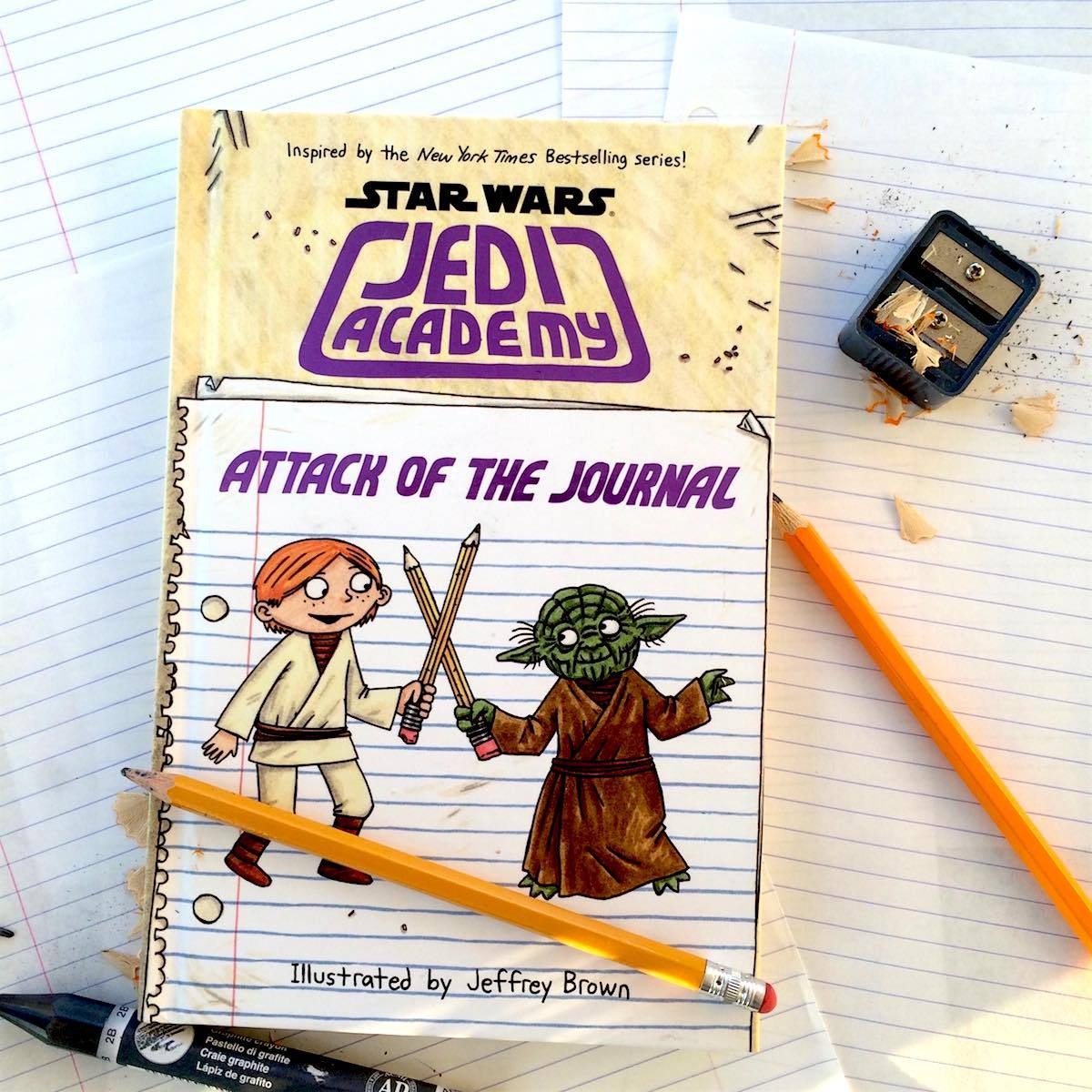
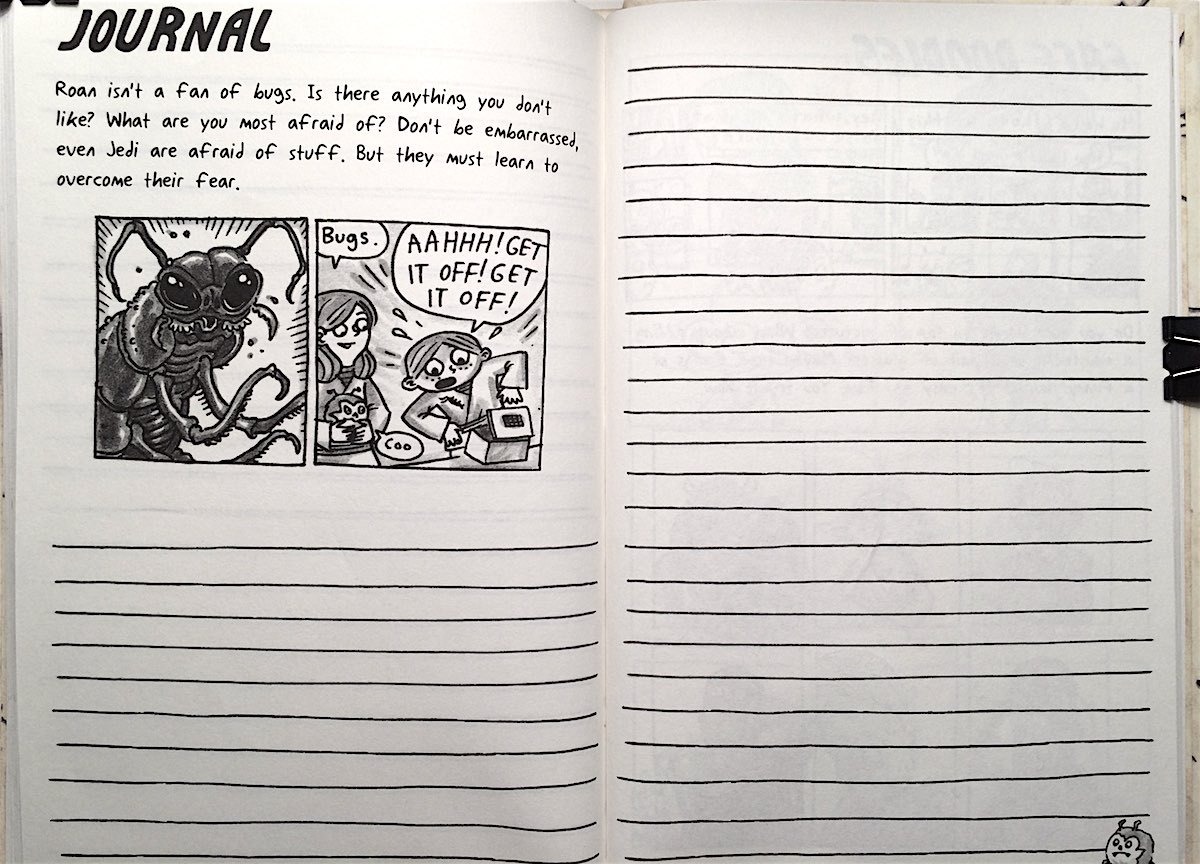
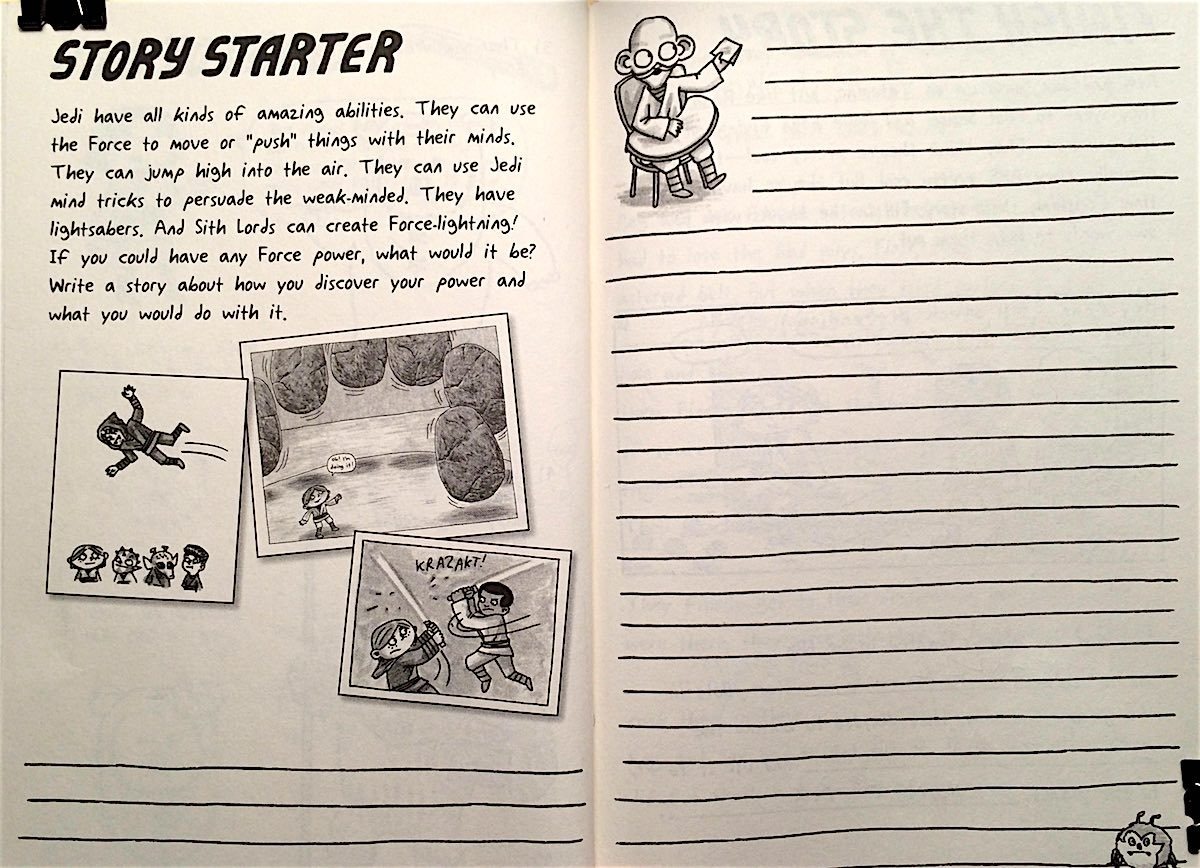
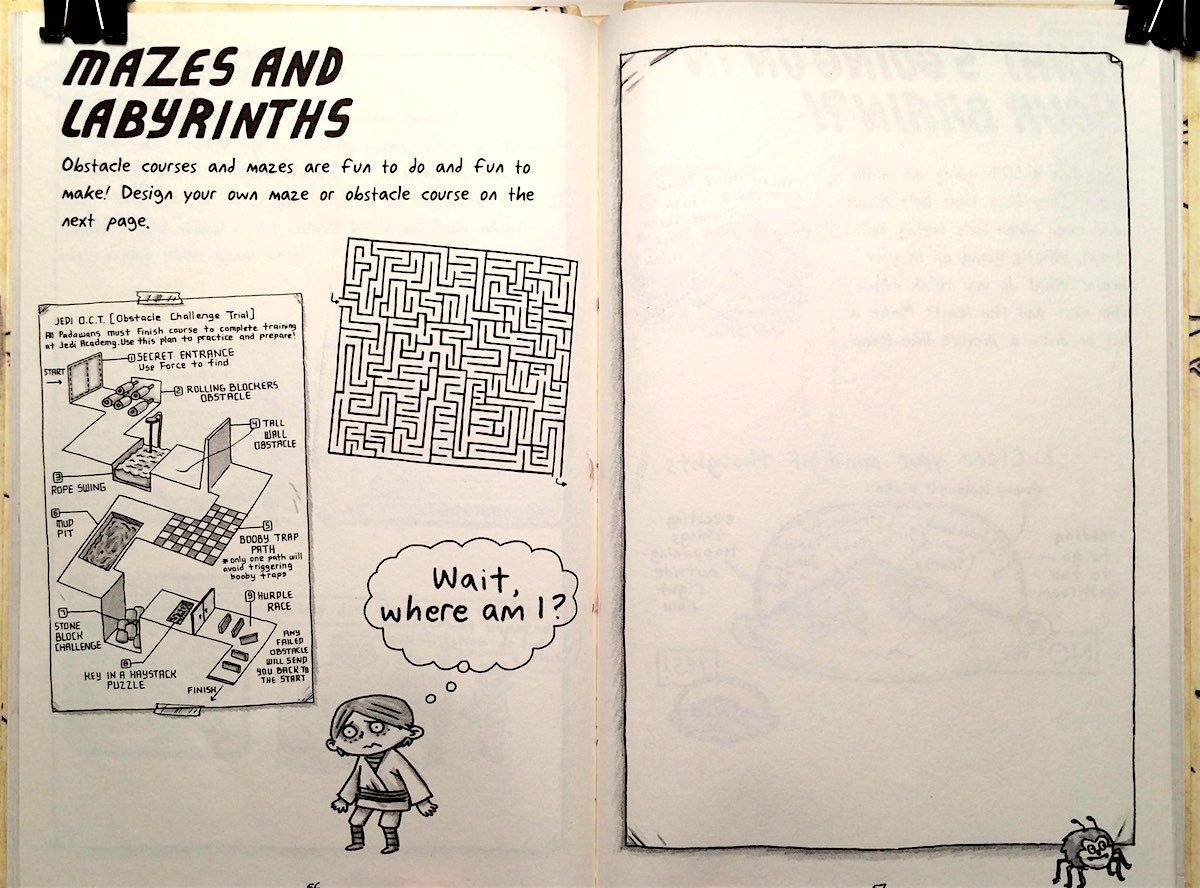
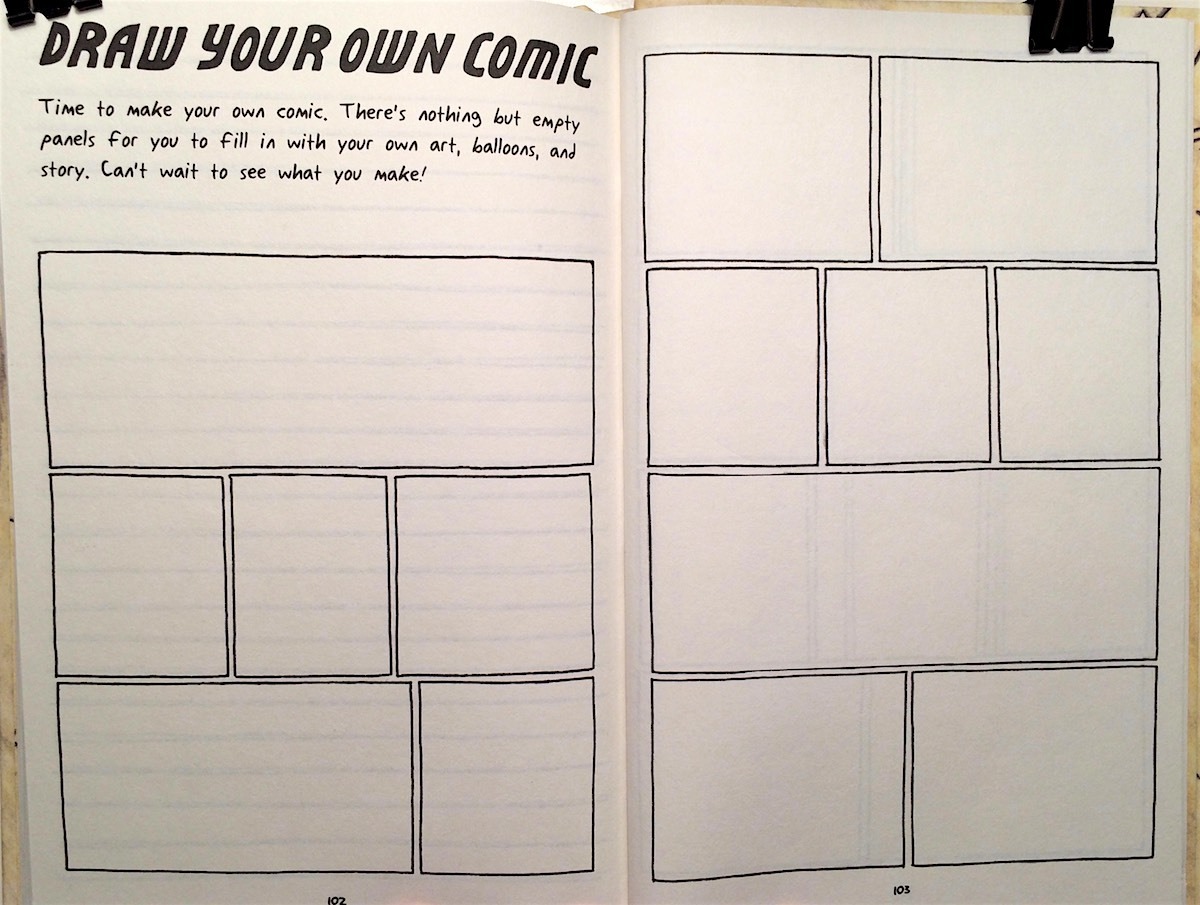
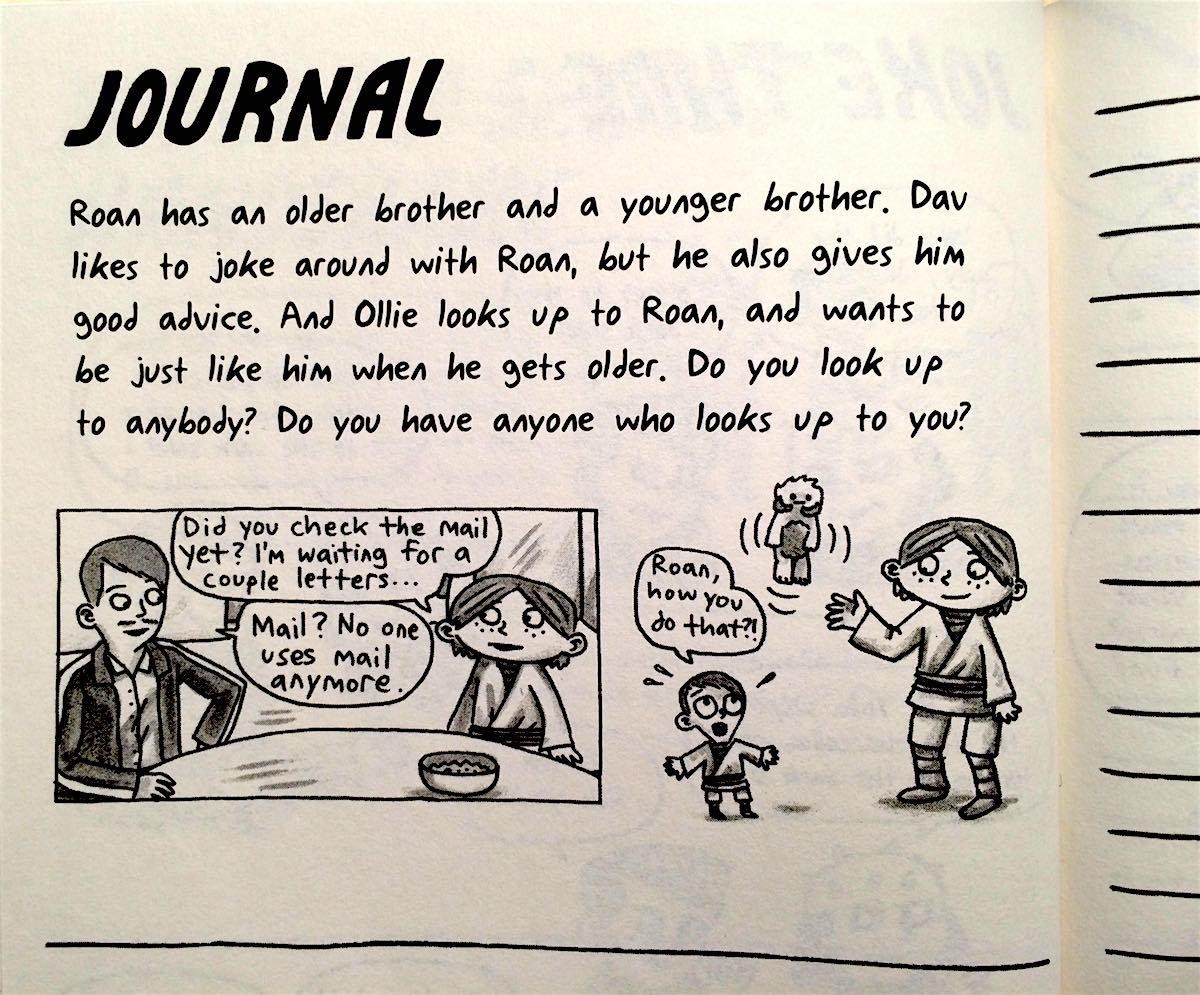
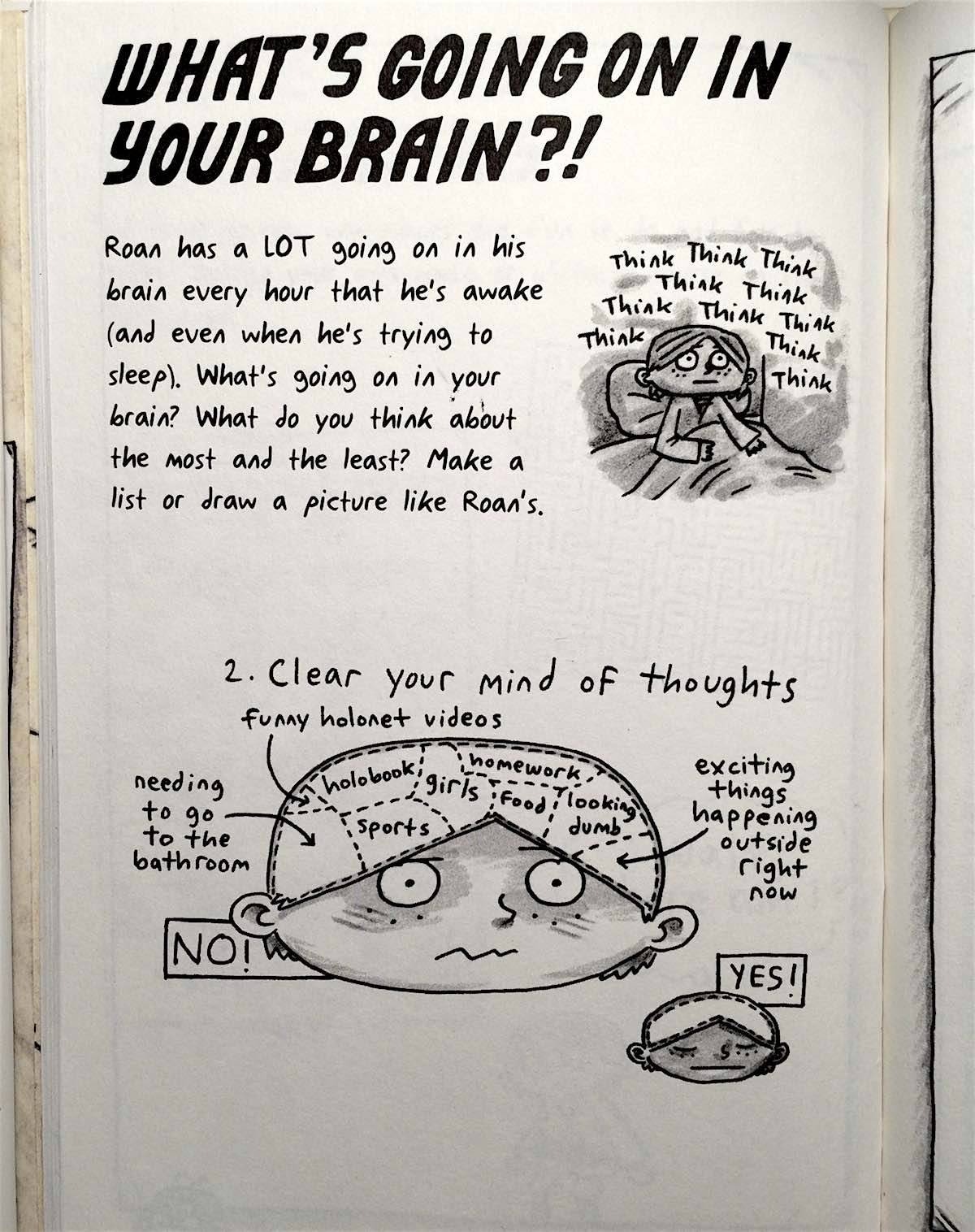
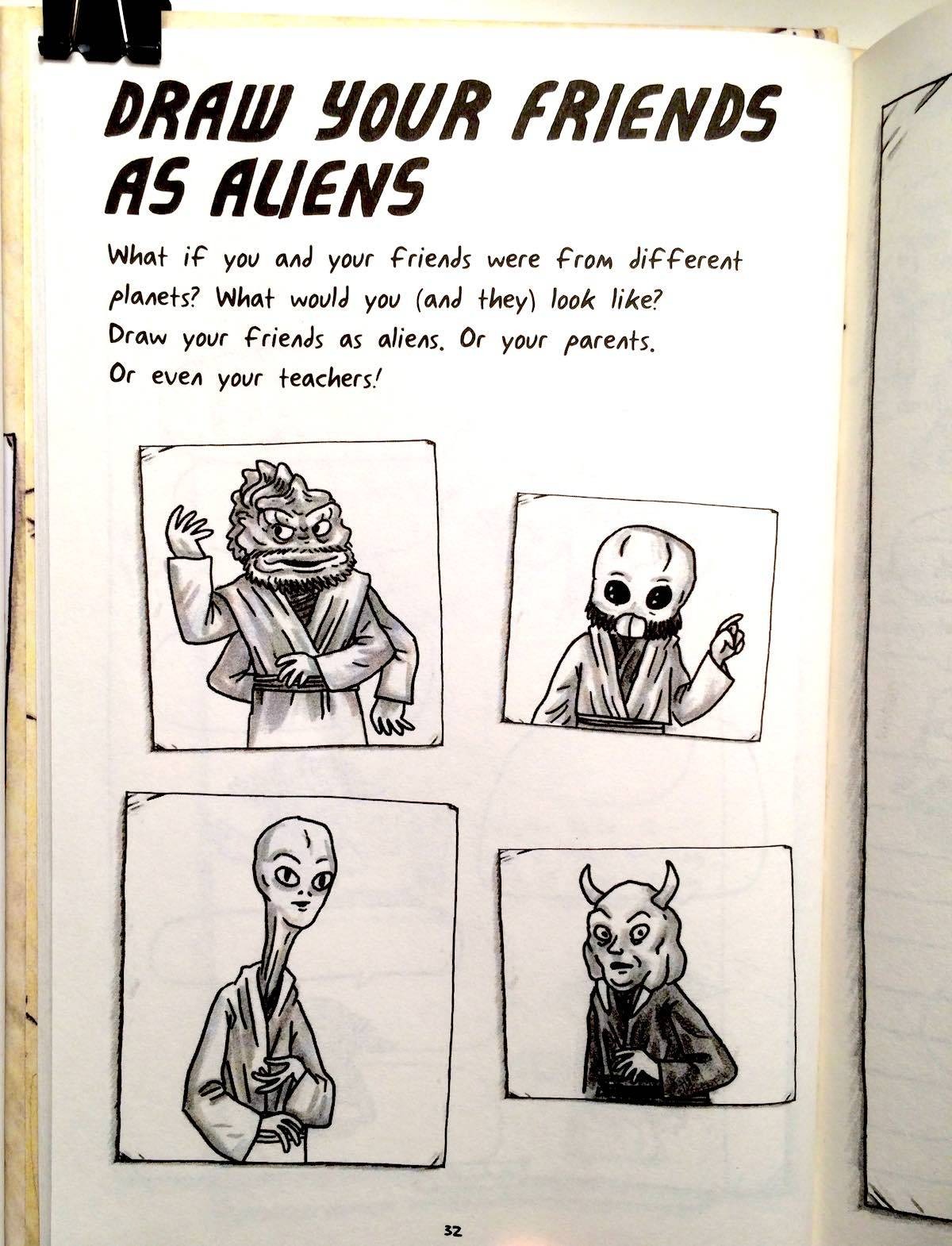
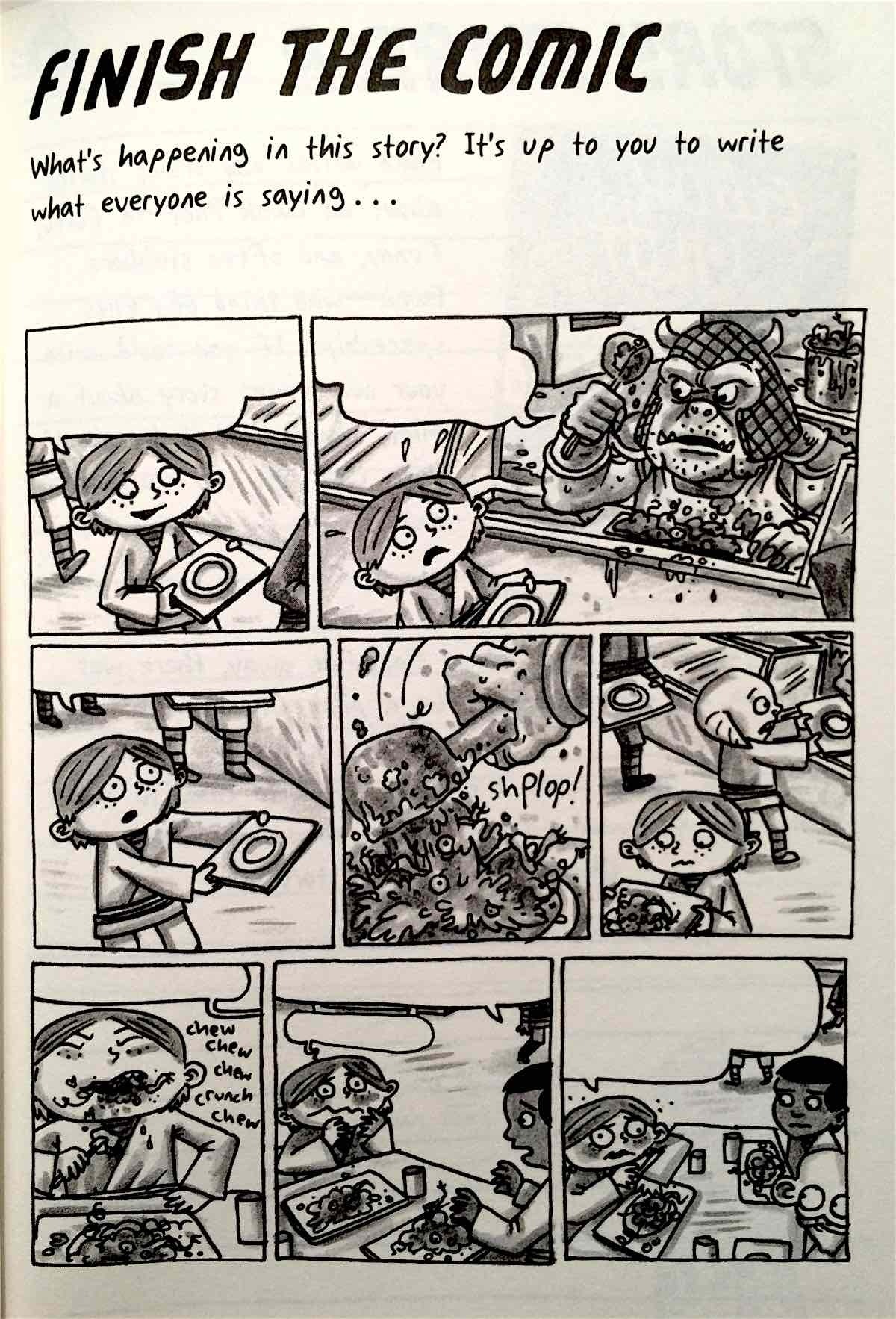
When an author who writes books for grown-ups is successful at translating his voice into books for kids it’s a win-win. Jeffrey Brown, author of graphic novels such as Clumsy and Funny Misshapen Body has done just that with his series Star Wars Jedi Academy. These graphic novels follow Roan, a young Jedi fumbling his way through middle school’s version of the Jedi Arts. This latest installation, Attack of the Journal, is part activity book part sketchbook and a great accompaniment to the series. It features familiar characters from the books, but you don’t need to have read the actual novels to enjoy the journal. Unlike many character-based activity books for children, Attack of the Journal gives the reins over to the reader. Instead of preprinted mazes and simple seek and finds, Brown’s activities are open-ended and challenge readers to try drawing new things and to write their own stories.
The book is great for elementary-aged kids, but even younger can have fun with the “Draw Your Friends As Aliens” page or attempt a self-portrait. I found it’s a great way to practice letters and words with kids in a way that is fun for everyone. Even the fact that it’s a hardback makes whatever you create inside feel more important. Jeffrey Brown’s sense of humor and kind encouragement are felt in the journal activities, helping young authors and illustrators not take it too seriously if their “Create your own Lightsaber” page looks more like a Wookie. And be prepared to grab some extra paper – because I guarantee big kids (aka grown-ups) will want to take a crack at drawing the “Ewok pilot.” – Amy Lackpour
Books That Belong On Paper first appeared on the web as Wink Books and was edited by Carla Sinclair. Sign up here to get the issues a week early in your inbox.
09/22/26ALL REVIEWS

 09/18/26
Book Freak #219: Aretha: From These Roots
Aretha Franklin on Faith, Music, and the Universal Need for Respect

EDITOR'S FAVORITES

COOL TOOLS SHOW PODCAST
WHAT'S IN MY BAG?
23 September 2026

ABOUT COOL TOOLS
Cool Tools is a web site which recommends the best/cheapest tools available. Tools are defined broadly as anything that can be useful. This includes hand tools, machines, books, software, gadgets, websites, maps, and even ideas. All reviews are positive raves written by real users. We don’t bother with negative reviews because our intent is to only offer the best.
One new tool is posted each weekday. Cool Tools does NOT sell anything. The site provides prices and convenient sources for readers to purchase items.
When Amazon.com is listed as a source (which it often is because of its prices and convenience) Cool Tools receives a fractional fee from Amazon if items are purchased at Amazon on that visit. Cool Tools also earns revenue from Google ads, although we have no foreknowledge nor much control of which ads will appear.
We recently posted a short history of Cool Tools which included current stats as of April 2008. This explains both the genesis of this site, and the tools we use to operate it.
 Kevin Kelly started Cool Tools in 2000 as an email list, then as a blog since 2003. He edited all reviews through 2006. He writes the occasional review, oversees the design and editorial direction of this site, and made a book version of Cool Tools. If you have a question about the website in general his email is kk {at} kk.org.
 Mark Frauenfelder edits Cool Tools and develops editorial projects for Cool Tools Lab, LLC. If you’d like to submit a review, email him at editor {at} cool-tools.org (or use the Submit a Tool form).
 Claudia Dawson runs the Cool Tool website, posting items daily, maintaining software, measuring analytics, managing ads, and in general keeping the site alive. If you have a concern about the operation or status of this site contact her email is claudia {at} cool-tools.org.