* Talk to me. Tell me a story. Share me a tip. A tool. * Support my work by buying my tips books (Vol. 1, Vol. 2). * Take out an Unclassified in this newsletter to reach fellow makers.
A Master Class in Prototype Making
In response to John Baglio’s search for a series of prototyping videos he’d run across, Talon Chandler immediately responded with:
“He’s probably talking aboutDan Gelbart. Dan is a local legend among engineers in Vancouver, BC. He founded Creo, a printing technology company that sold to Kodak circa 2005, and several other companies including Kardium, a growing healthcare company. I’ve had the pleasure of meeting Dan once (I interned at Kardium close to 10 years ago), although I haven’t had the pleasure of visiting his extraordinary shop.”
Others also messaged me and told stories about the impact of Dan’s videos on them. They are amazing. I haven’t found a treasure trove like this since discovering TubalCain/MrPete222 some 15 years ago. Anyone interested in precision machining, prototyping, water jet cutting, and a wealth of general machine shop wisdom should check out this channel.
Expanding the Usefulness of 1-2-3 Blocks with a Hardware Kit
I’ve long been a fan of 1-2-3 blocks and always have them handy when doing a host of different projects. They’re great for quick measuring, aligning, holding parts together for gluing/ fastening, as shop weights, and countless other applications. One of the features that few people outside of machining use are the holes drilled into the blocks. These are not just there to keep the overall weight down. They are threaded and non-threaded holes designed for attaching the blocks in various configurations (such as for making right-angle or T-shaped jigs).
In this Stumpy Nubs video, James introduces a clever little hardware kit for easily attaching blocks – and attaching them with nothing proud of the surfaces. As he points out, you can source these screws and through-hole fasteners yourself, but why not support the guy who came up with the idea for this kit? That guy, Mike Taylor, sells a kit of 6 hex-head screws, sized for 1″, 2″, and 3″ attachment, 4 threaded through-hole dowels, a hex key, and a slotted driver head – all housed in a handy little plastic box. I immediately bought a kit (only $10) and I love it. Mike also makes really high-quality blocks at an affordable price ($20/pair). I snagged a pair of those, too. It always feels good to support a maker small business.
Using Finger Pressure to Match Hex Head to Wrench
On the Twitter account of software engineer Roach, he posted this clever way of matching a hex head to a hex wrench. Pressing your finger into the head will leave a dimple that you can use to size the appropriate wrench.
A Prompt Book for Better AI Art Generation
If you’ve spent any time on social media lately, you’ve likely seen some of your acquaintances go down the rabbit hole of artificial intelligence image generators like Midjourney, DALL-E, and Google’s Imagen. These programs take descriptions that you feed them and return AI- generated art interpretations of that input. It’s very addictive and fun and has huge disruptive potential. My wife Angela and I were joking a few weeks ago that in the future, art will be nothing more than the ability to input the most fulsome description of what you want. And then, just a few days later, Recomendo shared a link to The Prompt Book, a free PDF of instructions, examples, and tips for refining your input commands. It’s directed at the DALL-E program, but its ideas can be applied to any of these art generators. In the future, art will be incantation.
Making a Shop Paper Roll Dispenser
Poking around on the ‘Tubes, I came across a series of DIY videos, called Try, that Kevin Kelly did on Cool Tools in 2020-21. How did I miss these? Here’s one on building a kraft paper roll cutter for your shop and a really charming one about the sign that he made for the Kelly compound in Pacifica, CA.I hope he gets inspired to do more of these.
Maker Slang
Jargon, slang, and tech terms from the many realms of making.
FEP – (Fluorinated Ethylene Propylene) A tough, no-stick plastic material commonly found in the bottoms of resin vat 3D printers. Its translucence allows the light source beneath it to shine through the vat, curing the resin onto the build plate.
Holidays – A term used by professional painters and gilders/gold leafers to refer to gaps in coverage. It derives from the joke that a painter must have taken some time off, a little holiday, by not covering an area they should have. [Hat tip to gilder Michael Kramer]
Minimal viable product – A phrase used by Italian maker and product developer, Giaco Whatever. In creating a product, you want to pare your idea down to its minimum possible components. See also: KISS (keep it simple, stupid)
Real job – A project that’s a series of tasks and challenges that imply significant time and effort – as opposed to a task which can be quickly accomplished. “That’s a real job. I need to set aside an afternoon for that.”
Resilient idiot – A self-deprecating admission that sometimes knowledge and skills seemingly won’t stick, not matter how hard you try and learn them. Coined by Donald Bell. Not to be confused with Andy Birkey’s similar: actual moron.
“This is a very common tool for locksmiths when dealing with vehicle lockouts. The inflatable pry bar can generally create enough space for the locksmith to drop a loop down to grab the lock pin from the interior of the door frame and gain entry without having to damage or possibly ruin the actual lockset on the car door. But don’t underestimate their power. I used one on an old car when I locked my keys in and it bent the door to the point that it never fully aligned to the door frame gasket again.”
Become a Patron!Support our reviews, videos, and podcasts on Patreon!
Cool tools really work.
A cool tool can be any book, gadget, software, video, map, hardware, material, or website that is tried and true. All reviews on this site are written by readers who have actually used the tool and others like it. Items can be either old or new as long as they are wonderful. We post things we like and ignore the rest. Suggestions for tools much better than what is recommended here are always wanted.
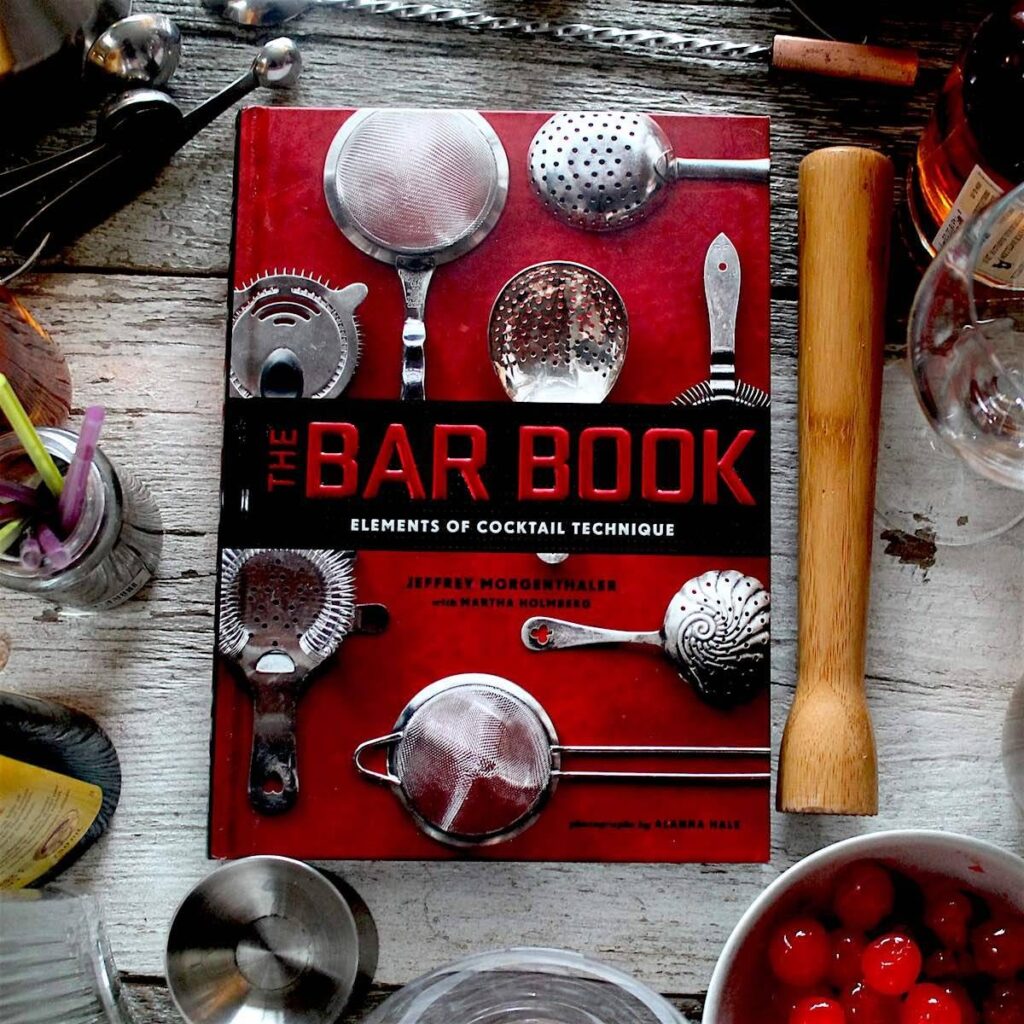
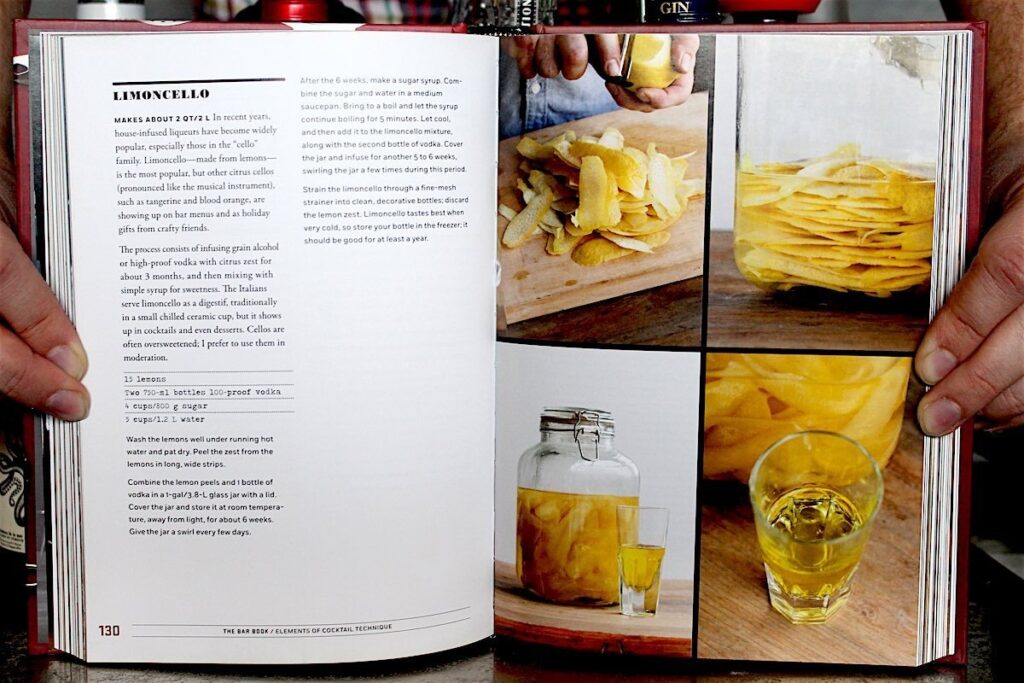
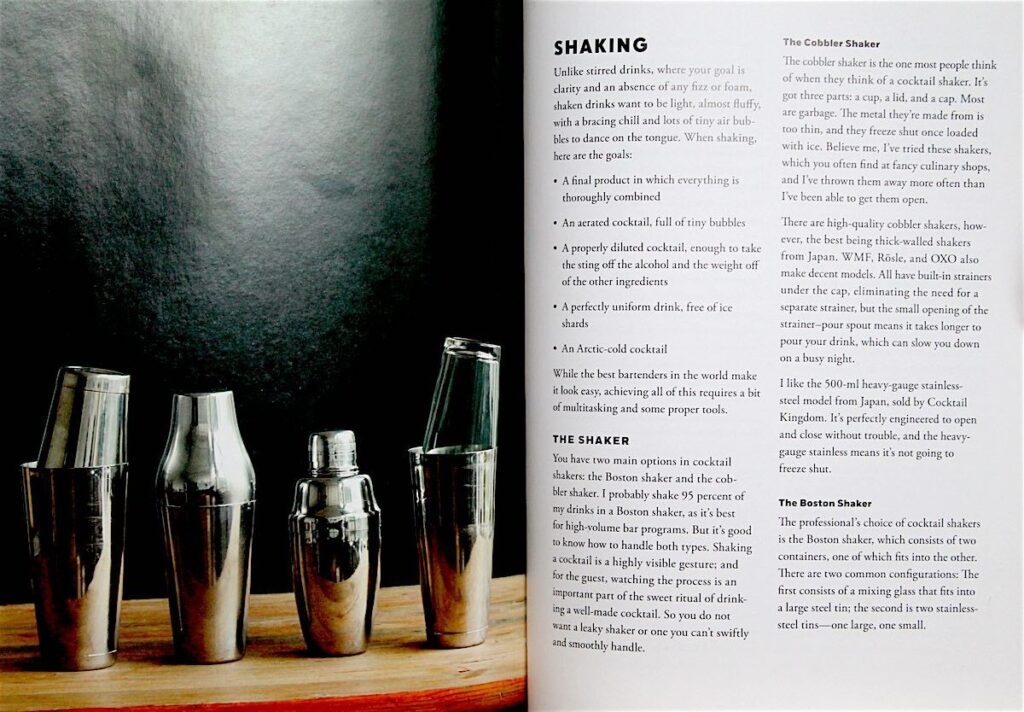
The Bar Book: Elements of Cocktail Technique by Jeffrey Morgenthaler (author) and Alanna Hale (photographer) Chronicle Books 2014, 288 pages, 7 x 9.5 x 1 inches
As someone who spent many misguided years of my youth drinking poorly-eyeballed gin and tonics out of coffee mugs, I never really understood: How exactly can you make cocktails “well” or “poorly”? Isn’t it a simple matter of ratios – of pouring the right amount of the right things into a glass, chucking in an ice cube or two and calling it a day? Where is the mysterious opportunity in that simple process to either mess it up or do it exceptionally well? Jeffrey Morgenthaler’s The Bar Book is a masterclass on that very subject.
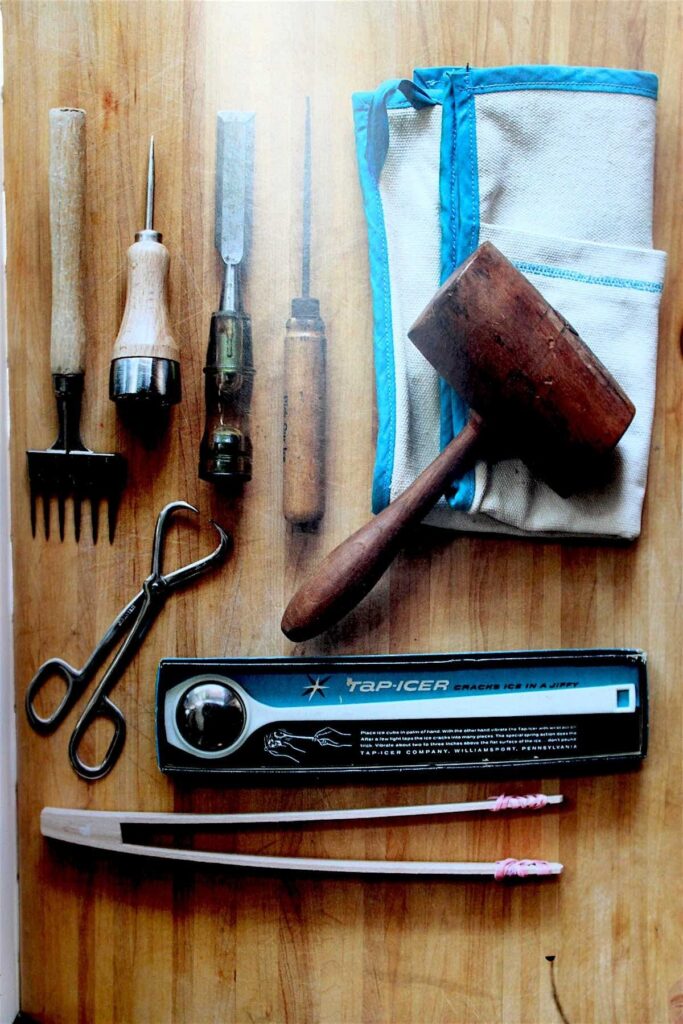
The Bar Book is not a recipe book. Instead, it is a techniques book. Morgenthaler elevates making cocktails into a craft, focusing on finding the right recipe, using the best ingredients, and executing it all using effective techniques. While the author does include expertly curated recipes for some must-know cocktails, instead of focusing on what to mix (which can always be found with a quick Google of “how to make a Cosmopolitan”), it focuses on how, why, and when to mix it. He gives you a 360-degree education in barcraft, from what shapes cocktail shakers come in and what the differences mean to why the shape and size of your ice is important and how to make it so that it comes out of the tray clear and beautiful. He’s a big proponent of making things like mixers, garnishes and even liqueurs from scratch, so the book offers up recipes for making things like flavored syrups, infusions, and even tonic water. Even if you’re not the type who relishes taking the time to create something you can easily buy from a store, seeing and understanding the DIY processes behind these ingredients is fascinating and demystifying.
The book is peppered with stories, some steeped in niche-y barcraft history and delightful tradition, some from Morgenthaler’s own bartending days. Striking, minimalist photography guides you from the easiest recipes to the most hardcore. A perfect blend of science, theory, philosophy, history, and personality, The Bar Book is a must-read material for anyone who wants a deeper look at what exactly it means to be a good bartender. – Michelle Kaatz
THE VERY PERSISTENT GAPPERS OF FRIP – CREEPY MULTI-EYED CREATURES TORMENT A VILLAGE
The Very Persistent Gappers of Frip by George Saunders (author) and Lane Smith (illustrator) Random House 2015, 96 pages, 5.8 x 9.6 x 0.5 inches
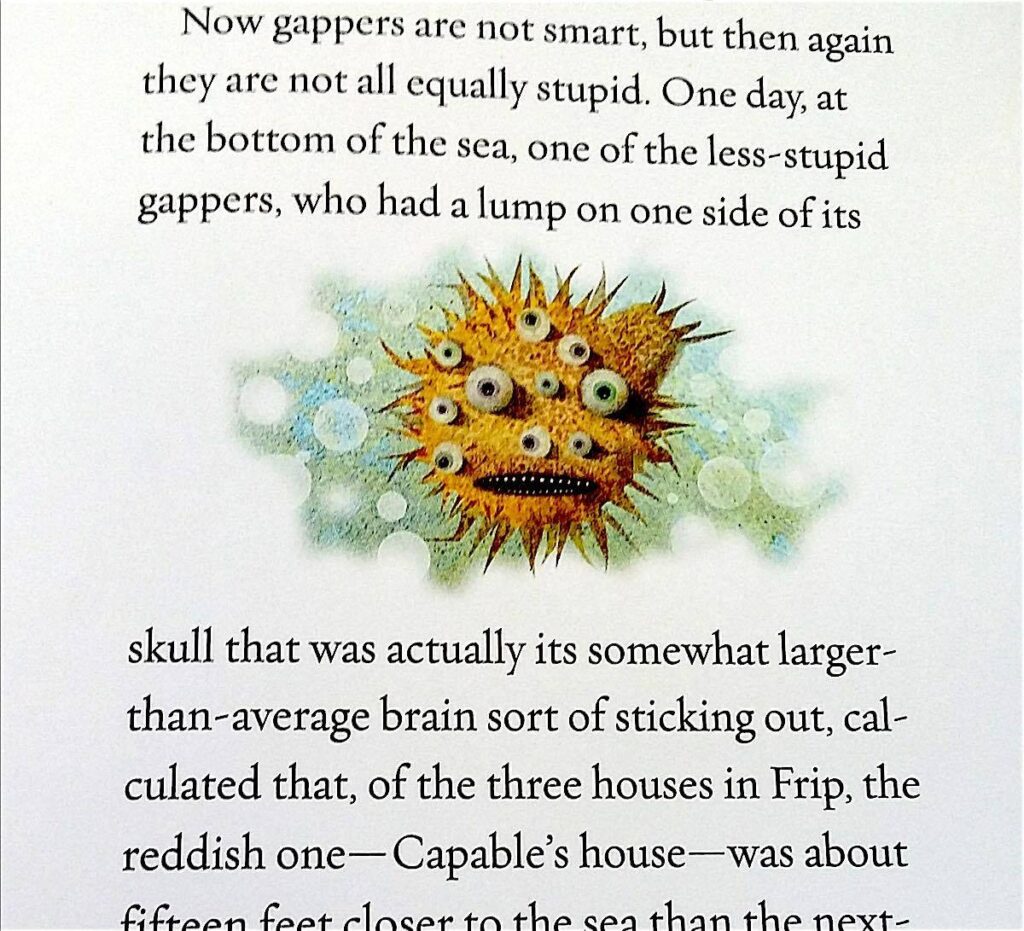
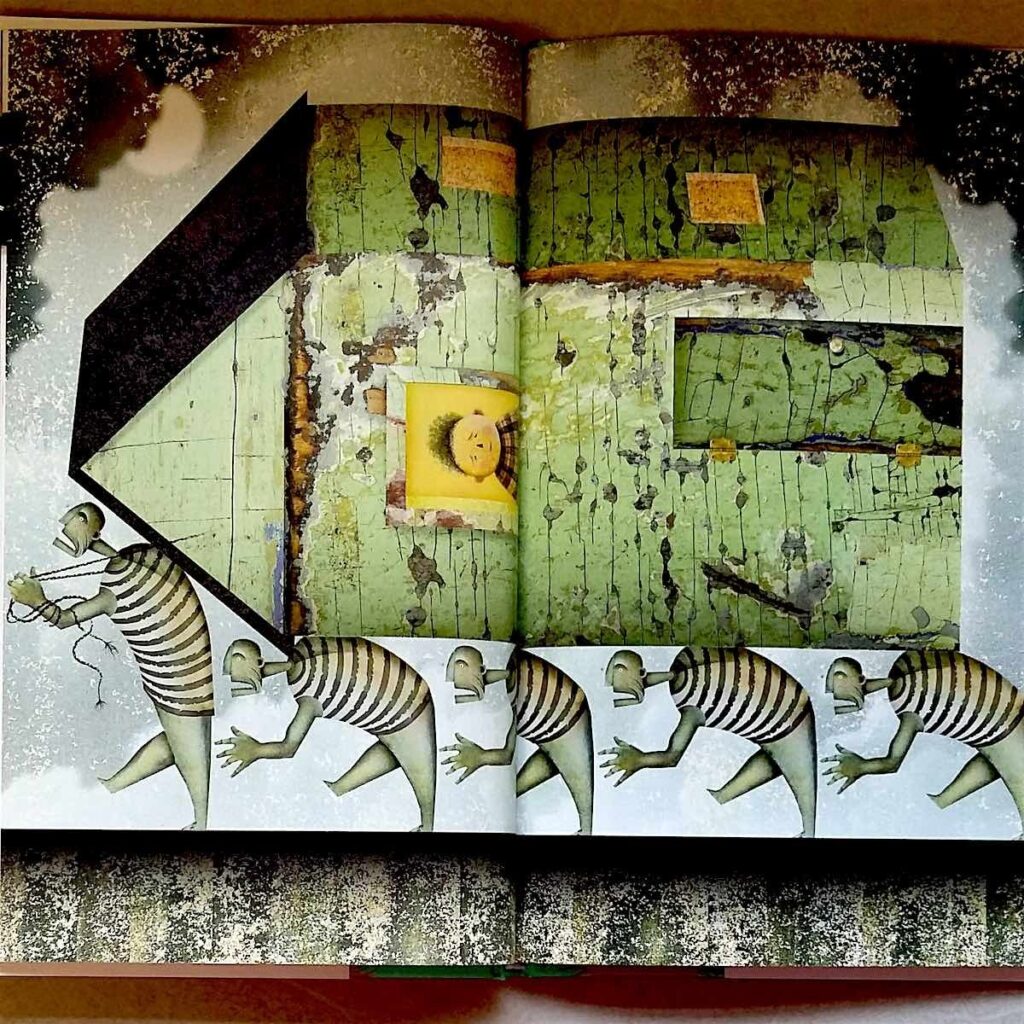
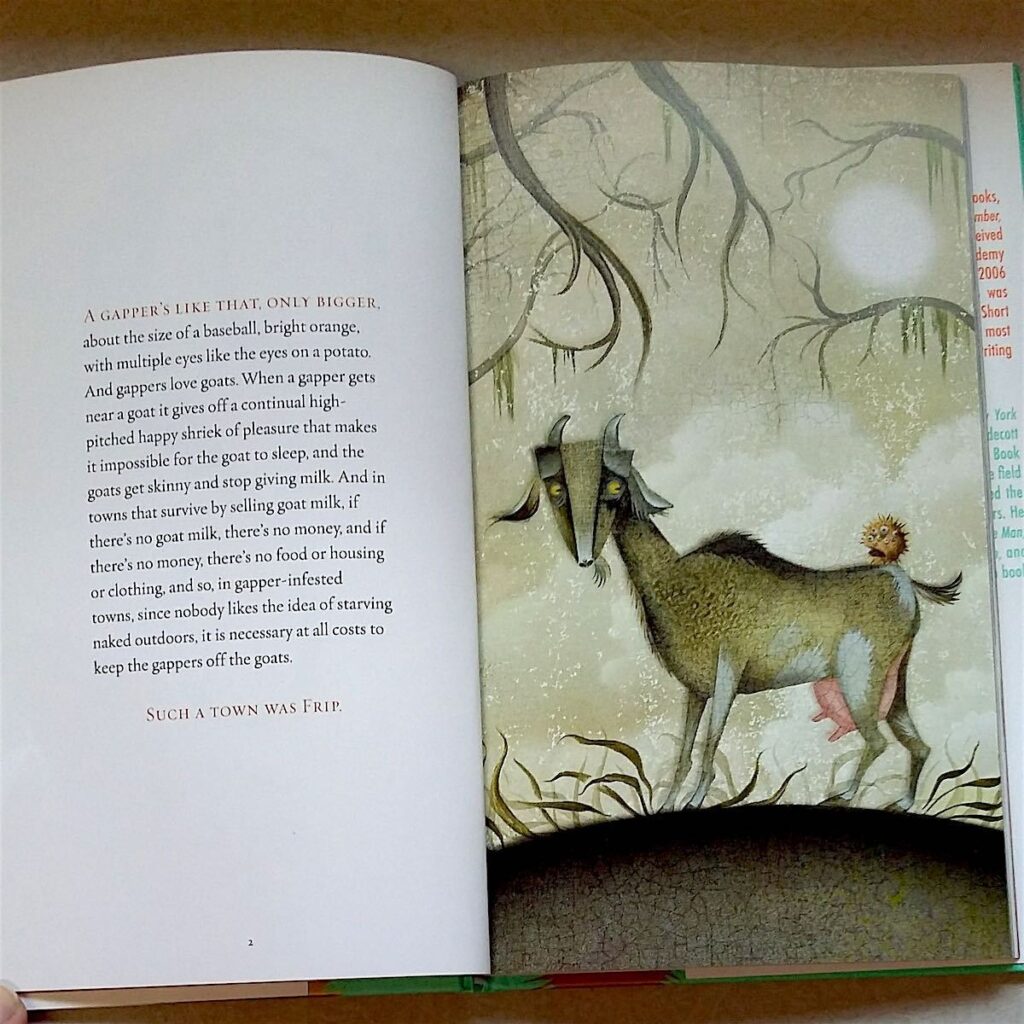
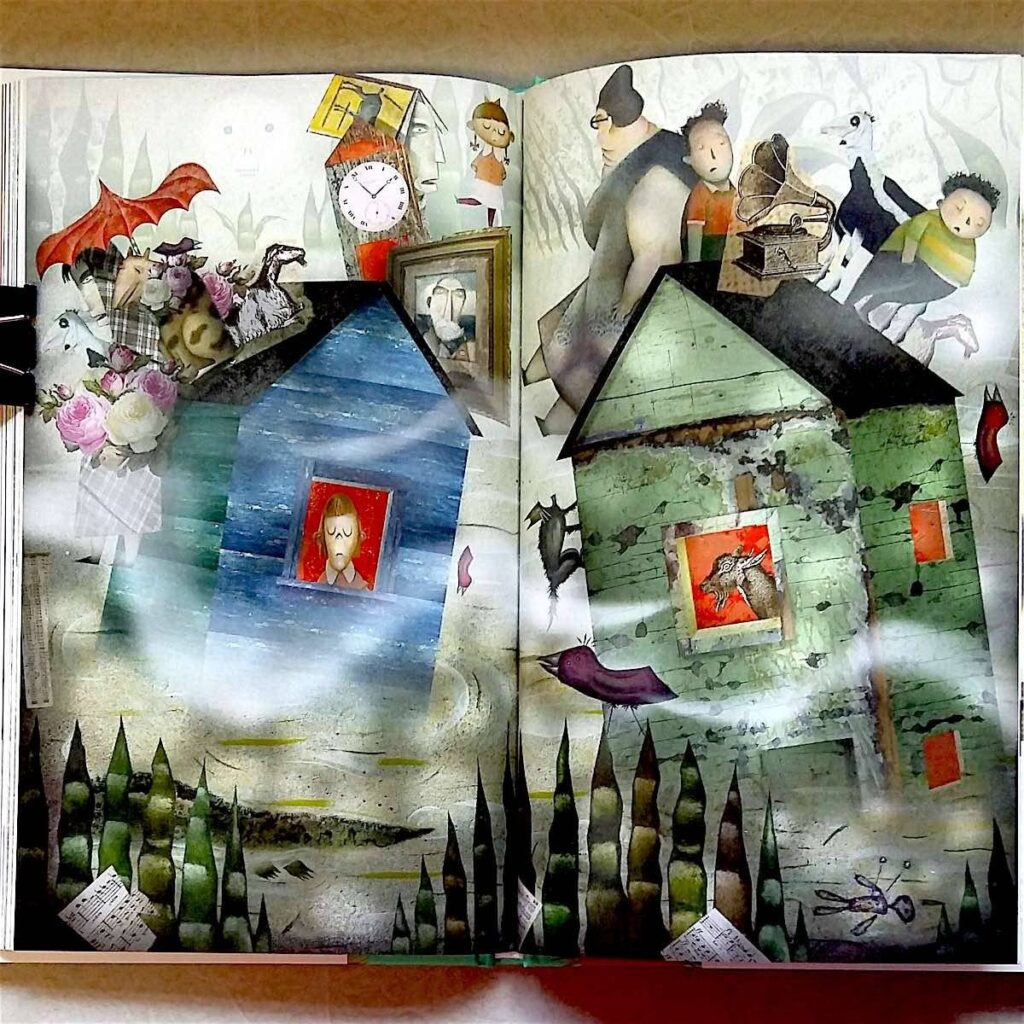
Gappers are creepy little orange, multi-eyed, round creatures that love nothing more than to hang out on or near goats, shrieking all the while. As you might imagine, this is very stressful to the goats. They stop eating; they stop giving milk. If your family gets its livelihood from that milk, you’re in bad shape when the gappers are around. They emerge from the ocean, find the goats, and wreak their shrieking havoc.
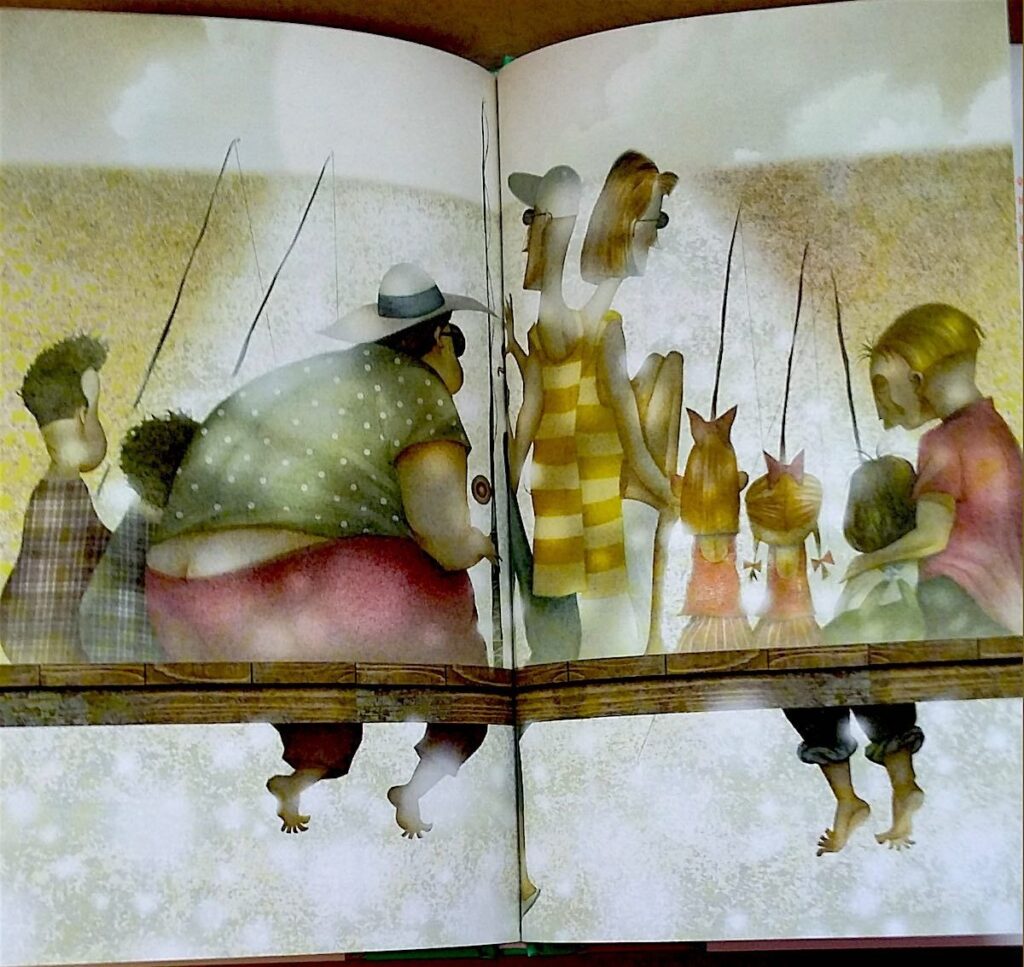
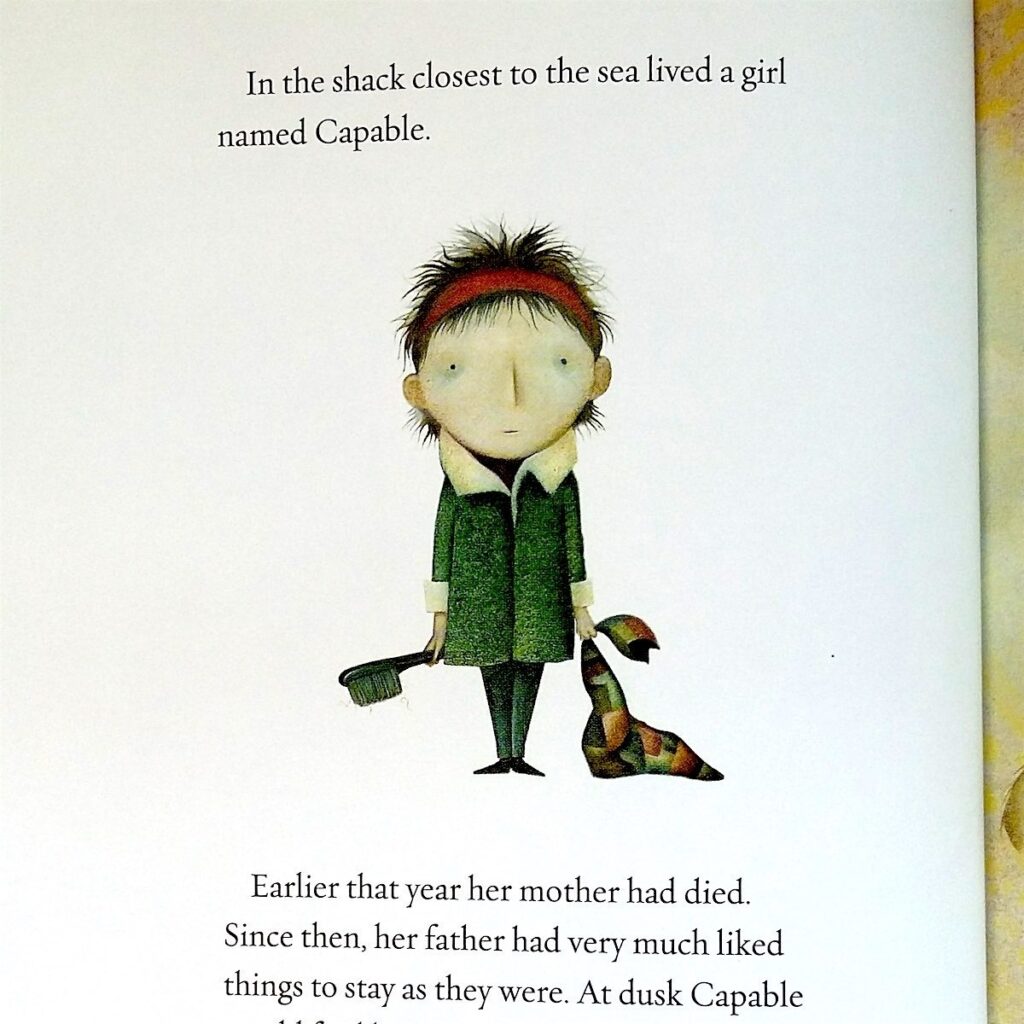
The village of Frip is made up of three ocean-side shacks. The girl Capable and her widowed father live in one. Mrs. Romo and her sons live in the second. Sid and Carol Ronson and their daughters (who “sometimes stood completely motionless in order to look somewhat pretty”) lived in the third. In Frip, the children must check on the goats eight times per day in order to remove the gappers and return them to the sea (from which they will reemerge again and again).
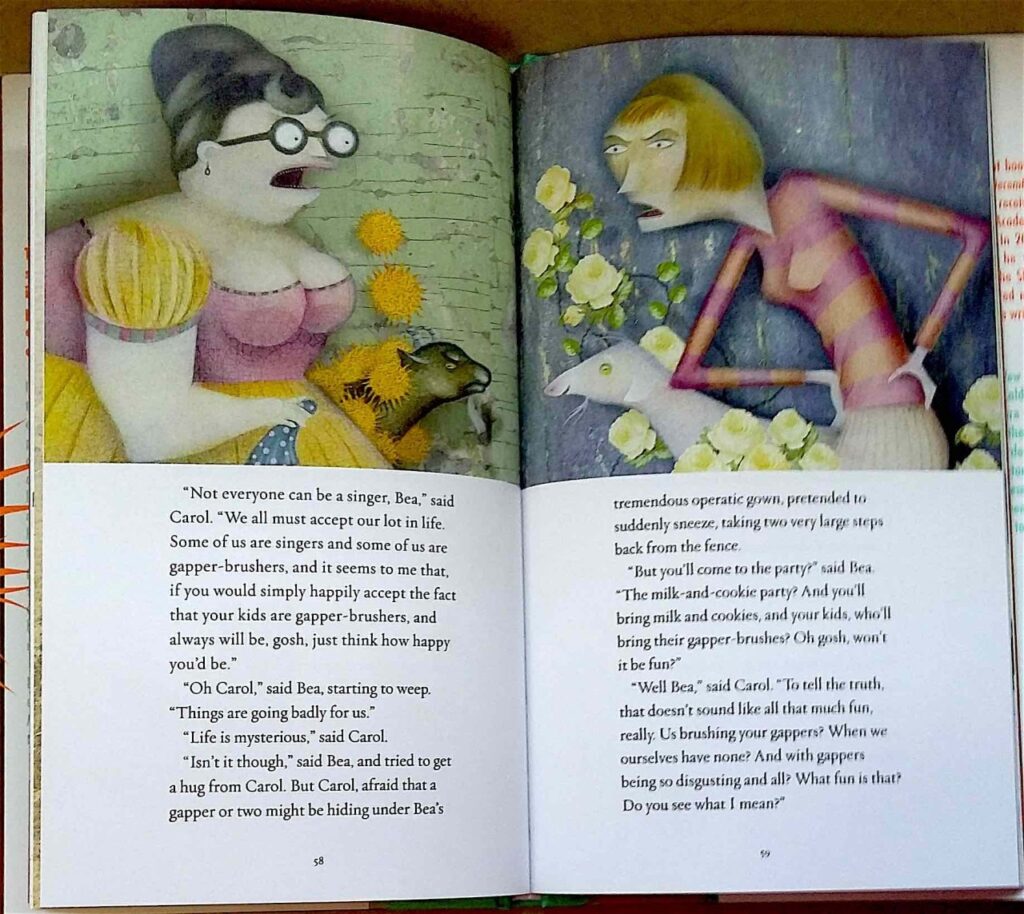
The Very Persistent Gappers of Frip is a fable about the perils of putting oneself before the community and the ultimate merits of sharing amongst a community. The gappers have bothered the three families’ goats equally for ages, until one of the smarter gappers realizes that Capable’s goats are slightly closer than the others. Once the gappers converge, Capable is unable to keep them away. She asks for help, but she is refused:
“We feel strongly that, once you rid your goats of gappers, as we have, you will feel better about yourself, and also, we will feel better about you. Not that we’re saying we’re better than you, necessarily, it’s just that, since gappers are bad, and since you alone now have them, it only stands to reason that you are not, perhaps, quite as good as us.”
Capable is, in fact, quite capable – she takes care of those around her and solves problems for herself. The illustrations are lush and whimsical. The book is a lovely parable for children, but the tale and visuals are engaging for readers of any age. – Meagan Rodgers
Books That Belong On Paper first appeared on the web as Wink Books and was edited by Carla Sinclair.Sign up here to get the issues a week early in your inbox.