Book Freak #205: Mindset
The New Psychology of Success
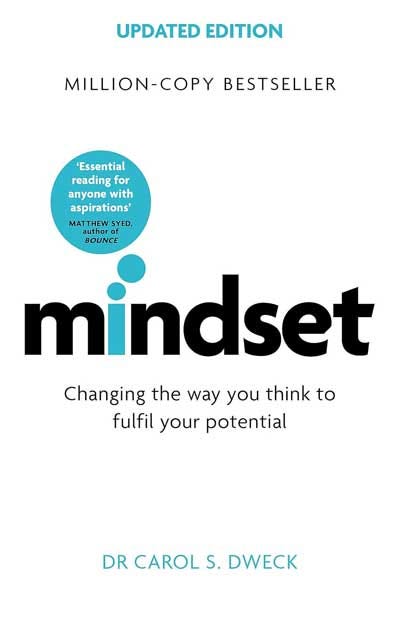
Stanford psychologist Carol Dweck spent decades studying why some people bounce back from failure while others crumble. Her answer comes down to belief. People who see their abilities as developable (a “growth mindset”) consistently outperform those who see talent as something you’re born with or without (a “fixed mindset”).
Core Principles
Fixed Mindset Traps You
A fixed mindset assumes intelligence and talent are carved in stone. When you believe your qualities can’t change, success becomes about proving you’re smart, and failure becomes a verdict on your worth. You avoid challenges that might expose you. You get defensive about criticism. You start to see effort as a sign you don’t have natural ability. Every situation becomes a test of who you are.
Growth Mindset Liberates You
A growth mindset sees abilities as developable through effort, good strategy, and help from others. Failure isn’t a verdict. It’s information. People with this mindset don’t just seek challenge; they get energized by it, because struggle means they’re learning. Dweck’s key point: a person’s true potential is unknown and unknowable. You can’t predict what someone will accomplish with years of dedicated practice.
The Power of “Yet”
A growth mindset turns “I can’t do this” into “I can’t do this yet.” One word, but it changes your whole relationship to difficulty. When students learn they can strengthen their brains through effort, their performance improves. And there’s a physical difference: brain scans show that growth-mindset brains light up when reviewing errors, while fixed-mindset brains show no activity at all. One brain is engaging with the mistake. The other is ignoring it.
Praise Effort, Not Intelligence
Praising children’s intelligence backfires. They stop wanting challenges because they don’t want to look stupid. Praising effort and strategy does the opposite. If you want to give kids a gift, teach them to love challenges and be curious about their mistakes. This applies to how you talk to yourself, too.
Try It Now
- The next time you avoid a challenge because you might fail, stop and ask: am I protecting my self-image, or am I learning?
- When you catch yourself thinking “I’m not good at this,” add “yet.” Notice how one word changes the feeling.
- Listen to how you praise others. Are you praising talent (”You’re so smart!”) or effort (”You worked hard and tried a new approach”)? Shift toward the second one, including when you talk to yourself.
Quote
“The view you adopt for yourself profoundly affects the way you lead your life.”
04/10/26