Book Freak #209: Science and Sanity
Why your words are lying to you about reality
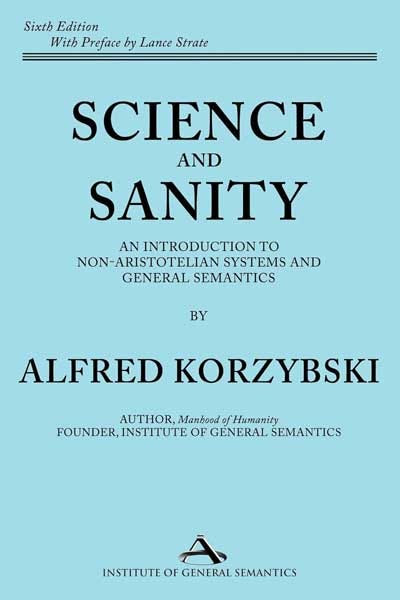
Science and Sanity argues that most human problems stem from confusing our words and mental models with reality itself, and offers a system for thinking more clearly by recognizing that the map is not the territory.
Core Principles
1. The Map Is Not the Territory
Our words, thoughts, and beliefs are maps of reality — not reality itself. When we forget this distinction, we react to our mental representations as if they were the actual world. A map can be useful if its structure resembles the territory, but no map captures everything. The menu is not the meal. The name is not the thing named.
2. Whatever You Say a Thing “Is,” It Is Not
The word “water” is not wet. The label we put on something never captures its full reality. Korzybski warns against the “is” of identity — statements like “he is a failure” or “this is impossible” that freeze dynamic reality into static categories. Reality is always more complex than any description of it.
3. Who Rules the Symbols Rules Us
Humans are uniquely symbolic creatures. Our achievements rest on our ability to use language and pass knowledge across generations. But this power cuts both ways: those who control the symbols — the words, the categories, the frames — shape how we perceive reality. Awareness of this influence is the first step to freedom from it.
4. Two Ways to Avoid Thinking
There are two ways to slide easily through life: believe everything or doubt everything. Both save us from the hard work of actually thinking. Korzybski advocates for a middle path — holding our mental maps tentatively, always ready to revise them when they no longer match the territory we encounter.
Try It Now
- Notice when you use the word “is” to define someone or something (”she is lazy,” “this is boring”). Rephrase it as “She seems tired today” or “I find this unengaging right now.”
- Identify one strong belief you hold. Ask: What would I need to see to update this map? If nothing could change your mind, you may have confused the map for the territory.
- Even when you feel certain about something, add “as far as I know” or “based on my current information.” This keeps your mental maps flexible.
- Pay attention to who chose the words you’re using to think about a problem. Did you choose them, or did someone else’s framing shape your perception?
Quote
“There are two ways to slide easily through life: to believe everything or to doubt everything. Both ways save us from thinking.”
Book Freak is published by Cool Tools Lab, a small company of three people. We also run Recomendo, the Cool Tools website, a YouTube channel and podcast, and other newsletters, including Recomendo Deals, Gar’s Tips & Tools, Nomadico, What’s in my NOW?, Tools for Possibilities, Books That Belong On Paper, and Book Freak.
05/15/26