16 October 2026
Book Freak #227: The Perfume of Silence
A nonduality teacher’s dialogues on finding the freedom that is always already here

The Perfume of Silence is a collection of dialogues between nonduality teacher Francis Lucille and his students that points directly to the consciousness underlying all experience and shows how recognizing it dissolves psychological suffering.
Core Principles
You Are Not the Body-Mind
Are you your thoughts, sensations, and perceptions? Or are you the awareness in which they appear? Lucille says we are the open, borderless consciousness that witnesses these changes.
“We have always been this consciousness, this presence.”
Welcoming Whatever Arises
Instead of fighting unwanted thoughts or chasing pleasant states, Lucille recommends welcoming whatever arises, including fear, boredom, and restlessness.
“We should be present to the totality of whatever arises in consciousness, instead of focusing on something that we want to get rid of.”
Happiness Is Your Nature, Not a Goal
We spend our lives pursuing happiness as though it were something external to acquire. Lucille says it’s always present when we stop covering it with mental agitation.
“Know that your happiness is not in the next situation, in the next object, but that the next situation or object is simply a celebration of this happiness that we already are.”
The Ordinary Is Sacred
Awakening shows up in the most ordinary moments, like drinking tea, walking, or listening to a friend.
“Just stick to the ordinary circumstances without labeling them ordinary. Be open to them with no desire to change them in any way.”
Try It Now
- Close your eyes and notice whatever appears — sounds, sensations, thoughts. Ask yourself: “What is aware of all this?” Then rest your attention on awareness itself, the open space in which everything appears.
- The next time you feel an uncomfortable emotion — irritation, anxiety, boredom — instead of reacting or analyzing, say to yourself, “You are welcome here.” Notice what happens to the emotion when you stop resisting it.
- Choose a mundane activity you do every day without paying much attention—making coffee, washing dishes, walking to your car. Do it with full attention. Notice whether the activity, stripped of the label “ordinary,” reveals a quiet aliveness you might otherwise ignore.
Quote
“There is no freedom at the level of the body-mind. There is absolute freedom at the level of consciousness.”
Book Freak is published by Cool Tools Lab, a small company of three people. We also run Recomendo, the Cool Tools website, a YouTube channel and podcast, and other newsletters, including Recomendo Deals, Gar’s Tips & Tools, Nomadico, What’s in my NOW?, Tools for Possibilities, Books That Belong On Paper, and Book Freak.
10/16/2615 October 2026
Free eSIM Data/A to B Options/Uzbekistan Travel Prices
Nomadico issue #228
Free eSIM Data From Visa
If you have a Visa card of some kind, you can get some free eSIM data from GigSky on your phone when traveling abroad. I can vouch that the promotion is for real because I just used it myself in Malaysia. My data is about to run out, but I can re-up with a different Visa card or purchase a plan at a hefty discount. Benefits run from 3 days to 15, with different amounts of data depending on how “premium” your credit card is. See the details here.
Getting From A to B
There are a lot of tools and websites out there telling you how to get from one location to another, but the one I’ve had the best results from for years is Rome2Rio. While others seem to have blind spots—mostly what they’re not selling themselves—Rome2Rio shows everything. Then it refers you to parent company Omio or directly to the booking platform if it’s proprietary, like some government-owned train systems. I’ve seldom run into a situation where I can’t see every overland option in one place, plus an idea of flight choices as well.
Nomadico is a reader-supported publication. To receive new posts and support my work, consider becoming a free or paid subscriber.Upgrade to paid
American Airlines Offering Cash + Miles
If you don’t have enough frequent flier miles for a ticket, American is now joining the other major legacy carriers in offering a way to pay for a flight—domestic only for now—with a combination of cash and points. This is “rolling out” now so we don’t have the actual formula, but going by this article, it will probably equate to a penny a mile or less. Not a great use of your points if they can get you a full ticket later, but getting a discount is better than just letting them sit there forever, deteriorating in value.
Prices for Travelers in Uzbekistan
As I mentioned a few issues ago, I traveled through Uzbekistan with G Adventures and the price for the tour I took comes out to $140 to $185 per day double occupancy depending on the time of year and demand. I took note of prices everywhere we went, however, for my blog readers who may want to travel around there independently. This country needs to go in my World’s Cheapest Destinations book when I eventually get around to putting out a sixth edition because it’s a terrific value. See the full rundown on lodging, food, transportation, and more here: Uzbekistan Travel Prices and Tips.
A weekly newsletter with four quick bites, edited by Tim Leffel, author of A Better Life for Half the Price and The World’s Cheapest Destinations. See past editions here, where your like-minded friends can subscribe and join you.
10/15/2614 October 2026
What’s in my NOW? — Moses Masenoi
issue #274
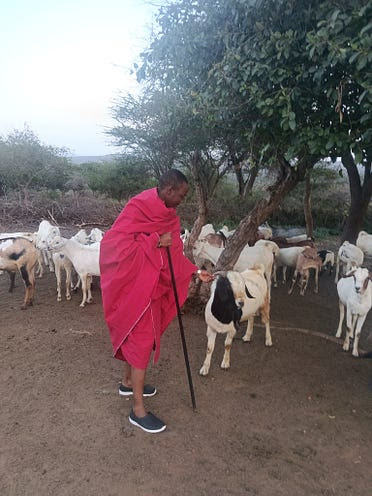
I am a Kenyan Maasai registered nurse, entrepreneur and livestock enthusiast running my own clinic in the village while building businesses around healthcare and farming. I’m rooted in Maasai culture, and passionate about community development, learning from different cultures, and creating opportunities for myself and others.
PHYSICAL
- A Young Ram: Livestock has become both a passion and an investment for me. I enjoy raising sheep and goats and watching small beginnings turn into something valuable.
- Maasai Shuka: My Maasai shuka represents my heritage and reminds me of the importance of preserving and sharing culture.
- My Stethoscope: My stethoscope represents my journey in nursing and my work providing healthcare in my own community.
DIGITAL
- Fiverr app: Fiverr showed me that opportunities aren’t limited by geography. During university, I used it to earn money to sustain my studies.
- Spotify: Music has become one of my favorite ways to discover cultures beyond my own, especially African and international artists.
INVISIBLE
Big things rarely start big.
I’m learning to appreciate small steps, whether it’s a young animal, a small business, education, or a new relationship because consistency can turn them into something much bigger.
Sign up here to get What’s in my NOW? a week early in your inbox.
10/14/2613 October 2026
The Bar Book / The Very Persistent Gappers of Frip
Issue No. 139
THE BAR BOOK GIVES YOU A 360-DEGREE EDUCATION IN BARCRAFT
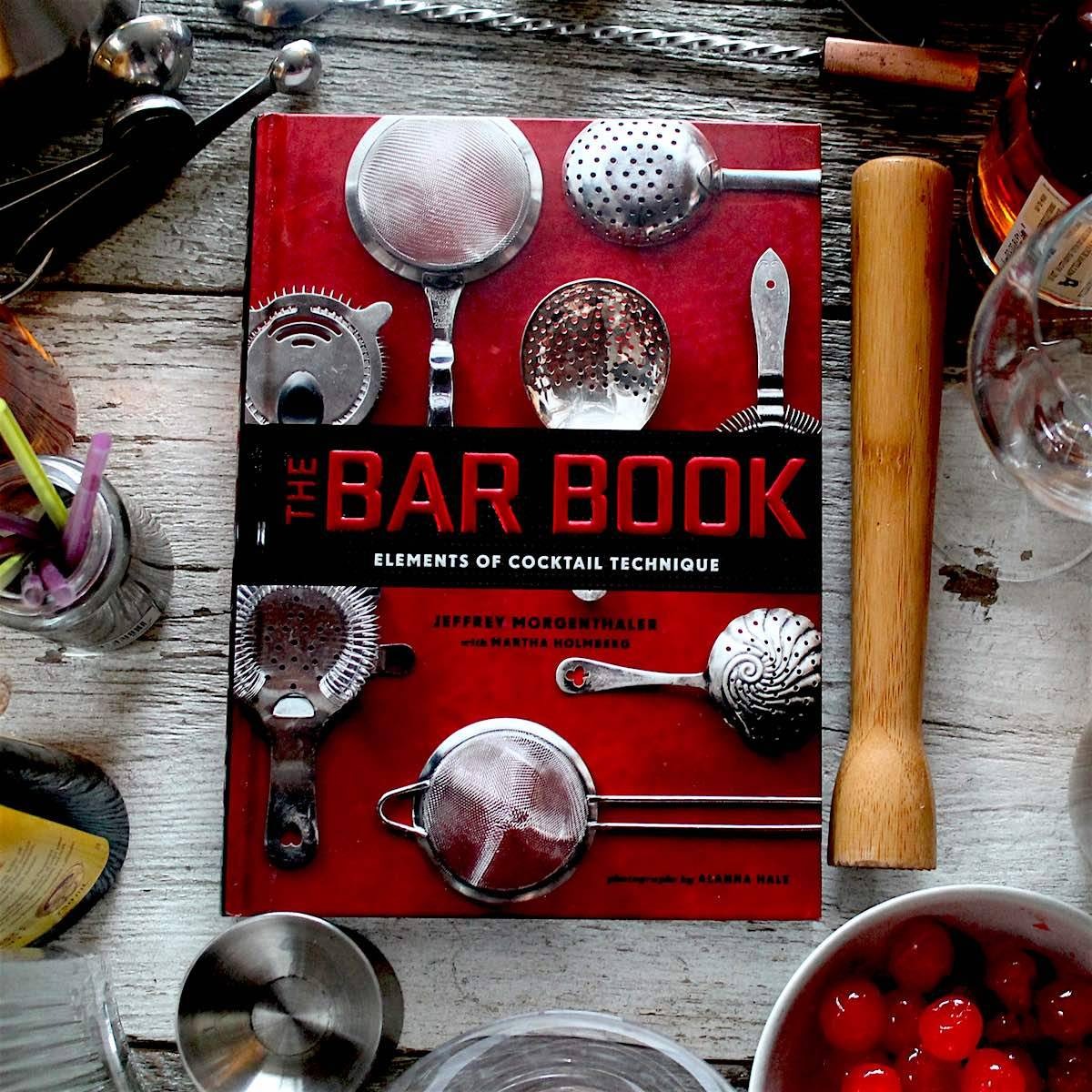

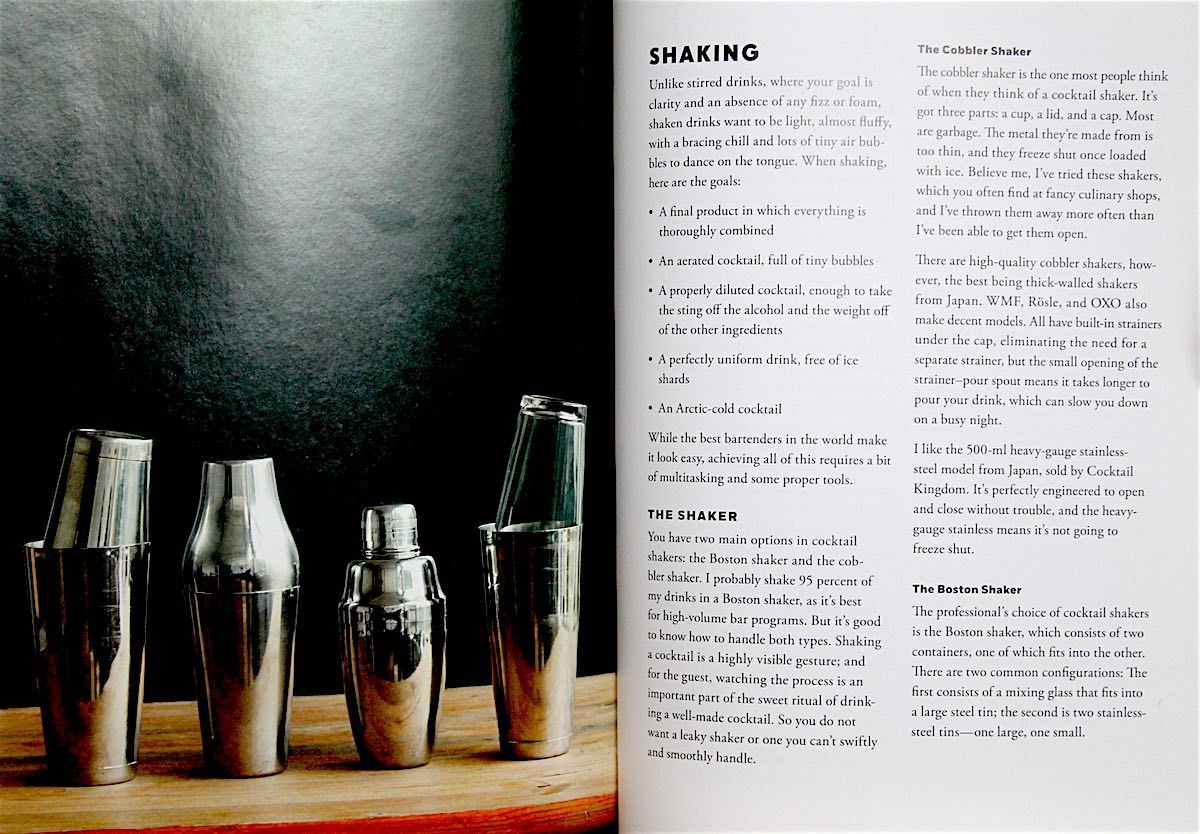
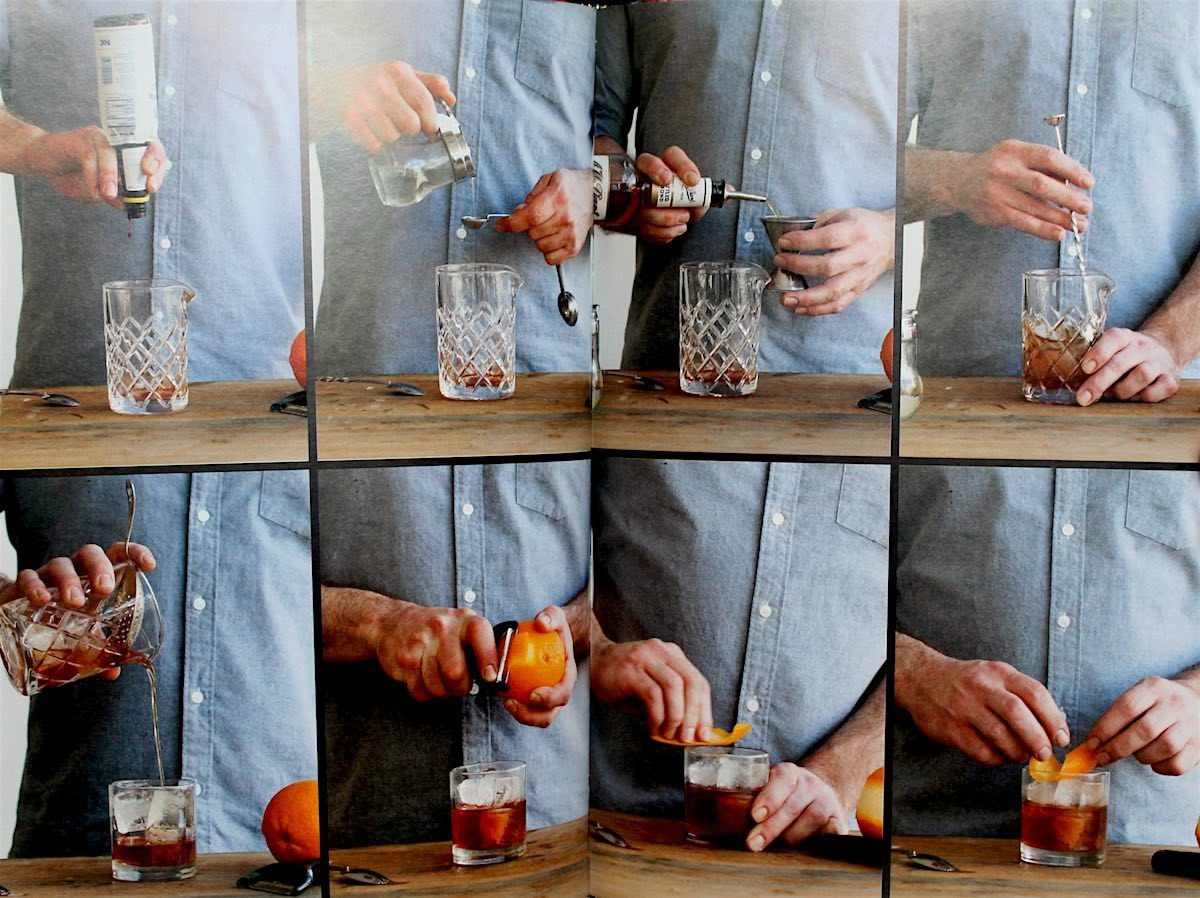
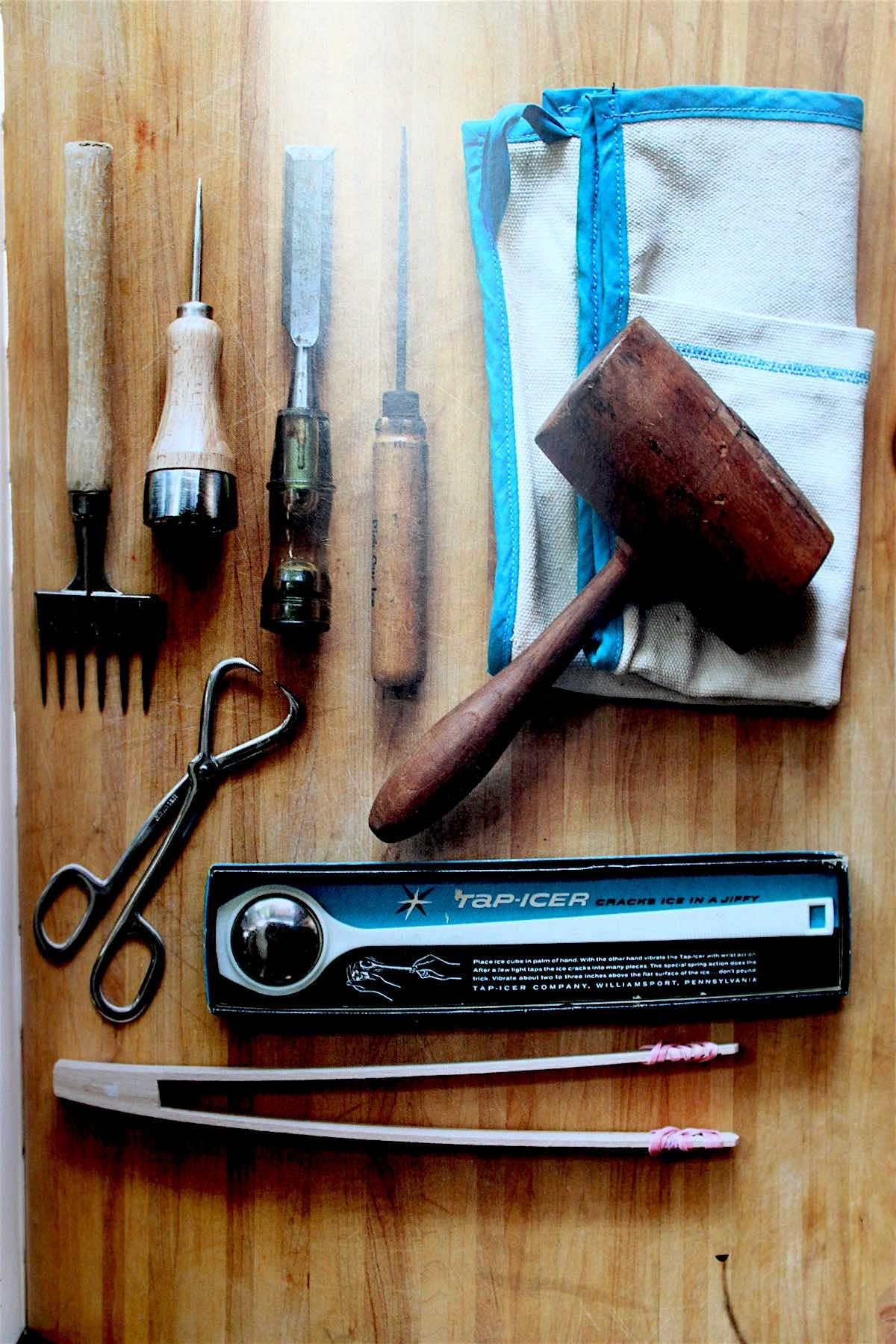

The Bar Book: Elements of Cocktail Technique
by Jeffrey Morgenthaler (author) and Alanna Hale (photographer)
Chronicle Books
2014, 288 pages, 7 x 9.5 x 1 inches
As someone who spent many misguided years of my youth drinking poorly-eyeballed gin and tonics out of coffee mugs, I never really understood: How exactly can you make cocktails “well” or “poorly”? Isn’t it a simple matter of ratios – of pouring the right amount of the right things into a glass, chucking in an ice cube or two and calling it a day? Where is the mysterious opportunity in that simple process to either mess it up or do it exceptionally well? Jeffrey Morgenthaler’s The Bar Book is a masterclass on that very subject.
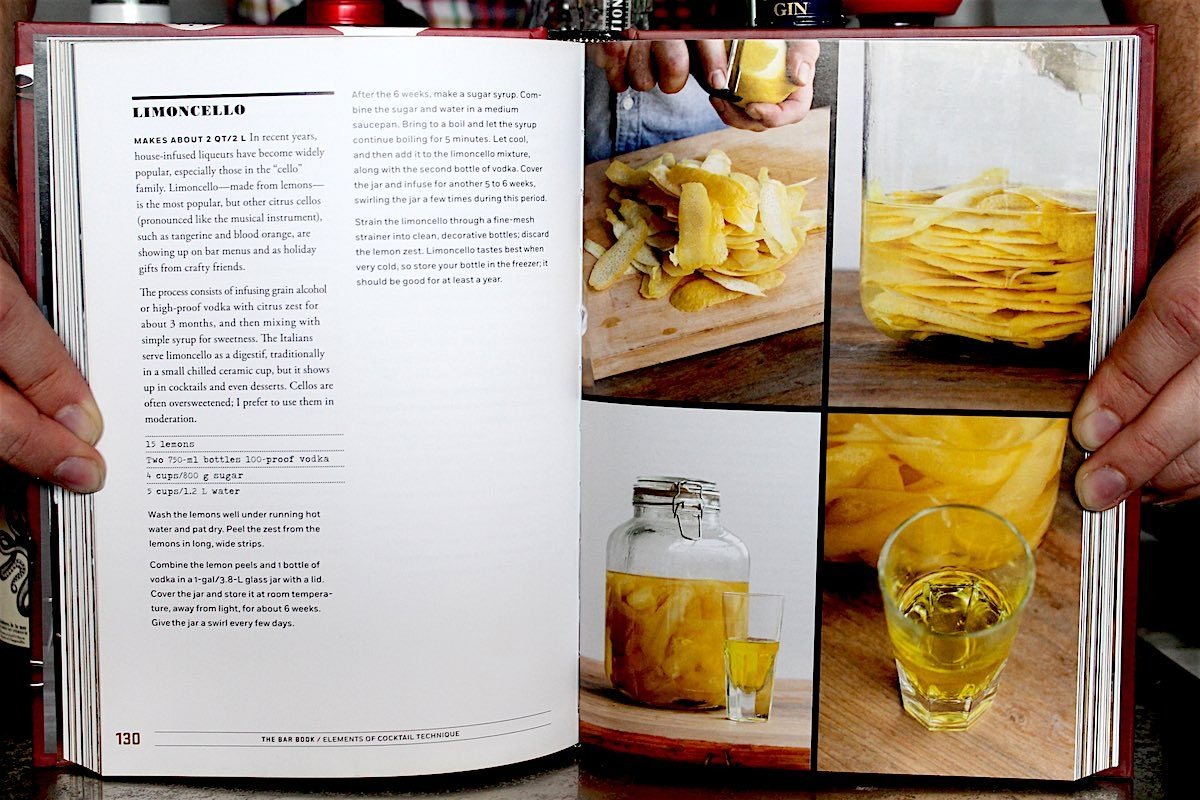
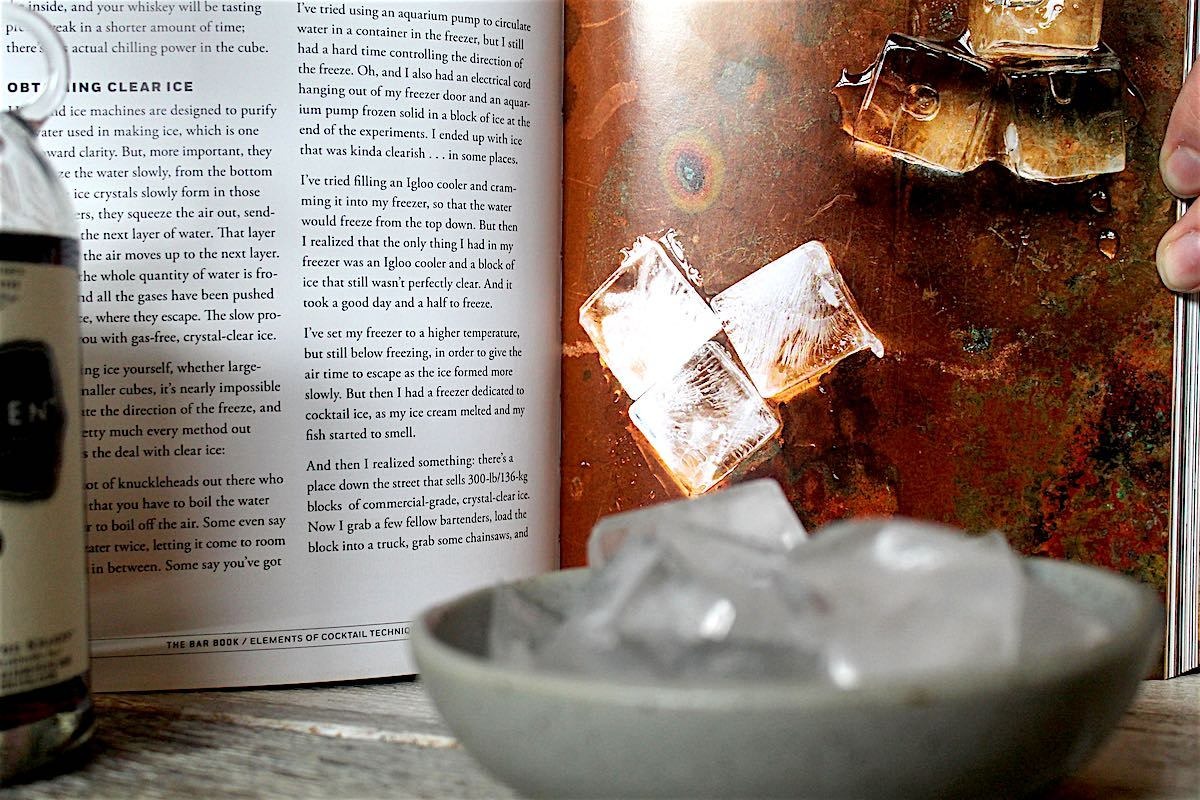
The Bar Book is not a recipe book. Instead, it is a techniques book. Morgenthaler elevates making cocktails into a craft, focusing on finding the right recipe, using the best ingredients, and executing it all using effective techniques. While the author does include expertly curated recipes for some must-know cocktails, instead of focusing on what to mix (which can always be found with a quick Google of “how to make a Cosmopolitan”), it focuses on how, why, and when to mix it. He gives you a 360-degree education in barcraft, from what shapes cocktail shakers come in and what the differences mean to why the shape and size of your ice is important and how to make it so that it comes out of the tray clear and beautiful. He’s a big proponent of making things like mixers, garnishes and even liqueurs from scratch, so the book offers up recipes for making things like flavored syrups, infusions, and even tonic water. Even if you’re not the type who relishes taking the time to create something you can easily buy from a store, seeing and understanding the DIY processes behind these ingredients is fascinating and demystifying.
The book is peppered with stories, some steeped in niche-y barcraft history and delightful tradition, some from Morgenthaler’s own bartending days. Striking, minimalist photography guides you from the easiest recipes to the most hardcore. A perfect blend of science, theory, philosophy, history, and personality, The Bar Book is a must-read material for anyone who wants a deeper look at what exactly it means to be a good bartender. – Michelle Kaatz
THE VERY PERSISTENT GAPPERS OF FRIP – CREEPY MULTI-EYED CREATURES TORMENT A VILLAGE
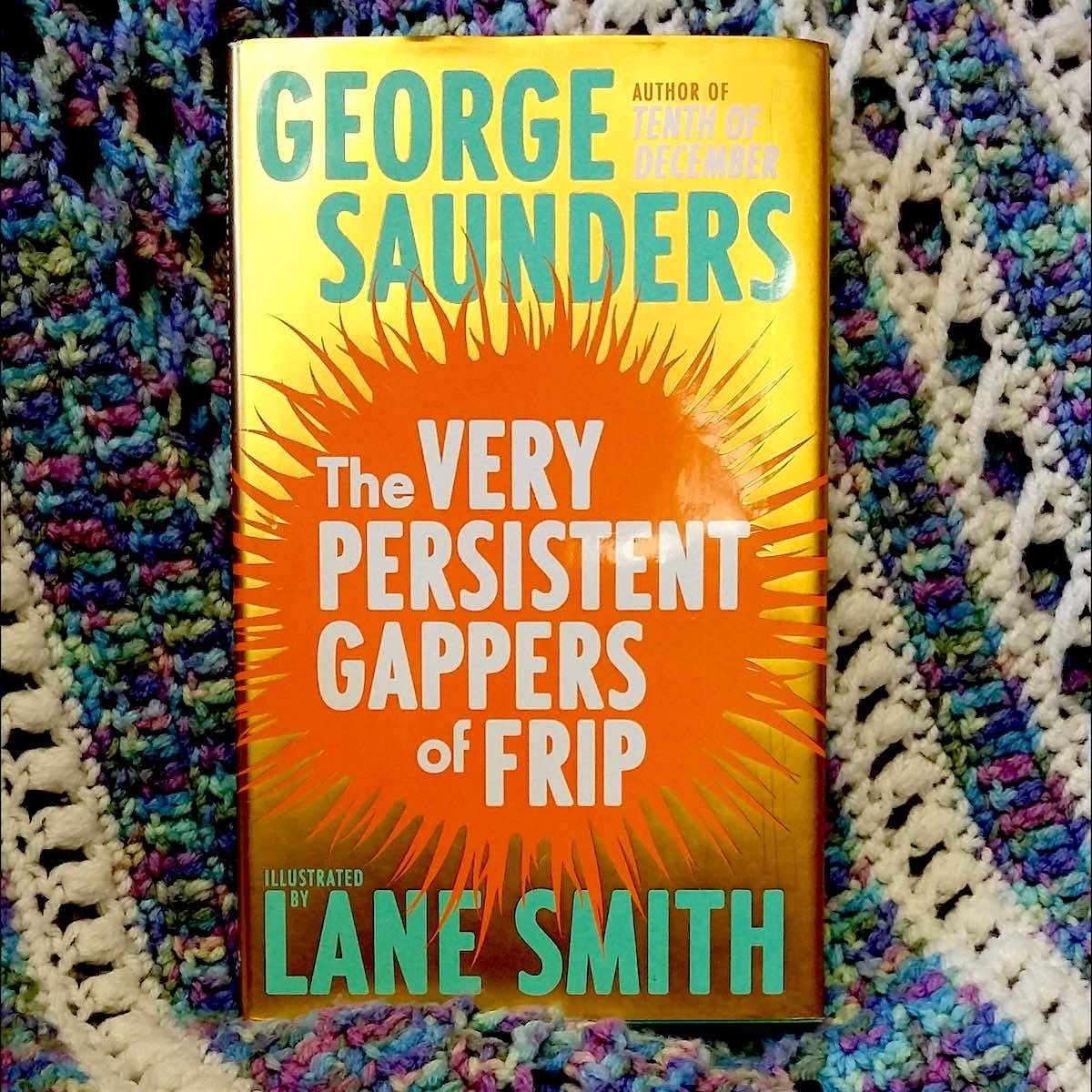
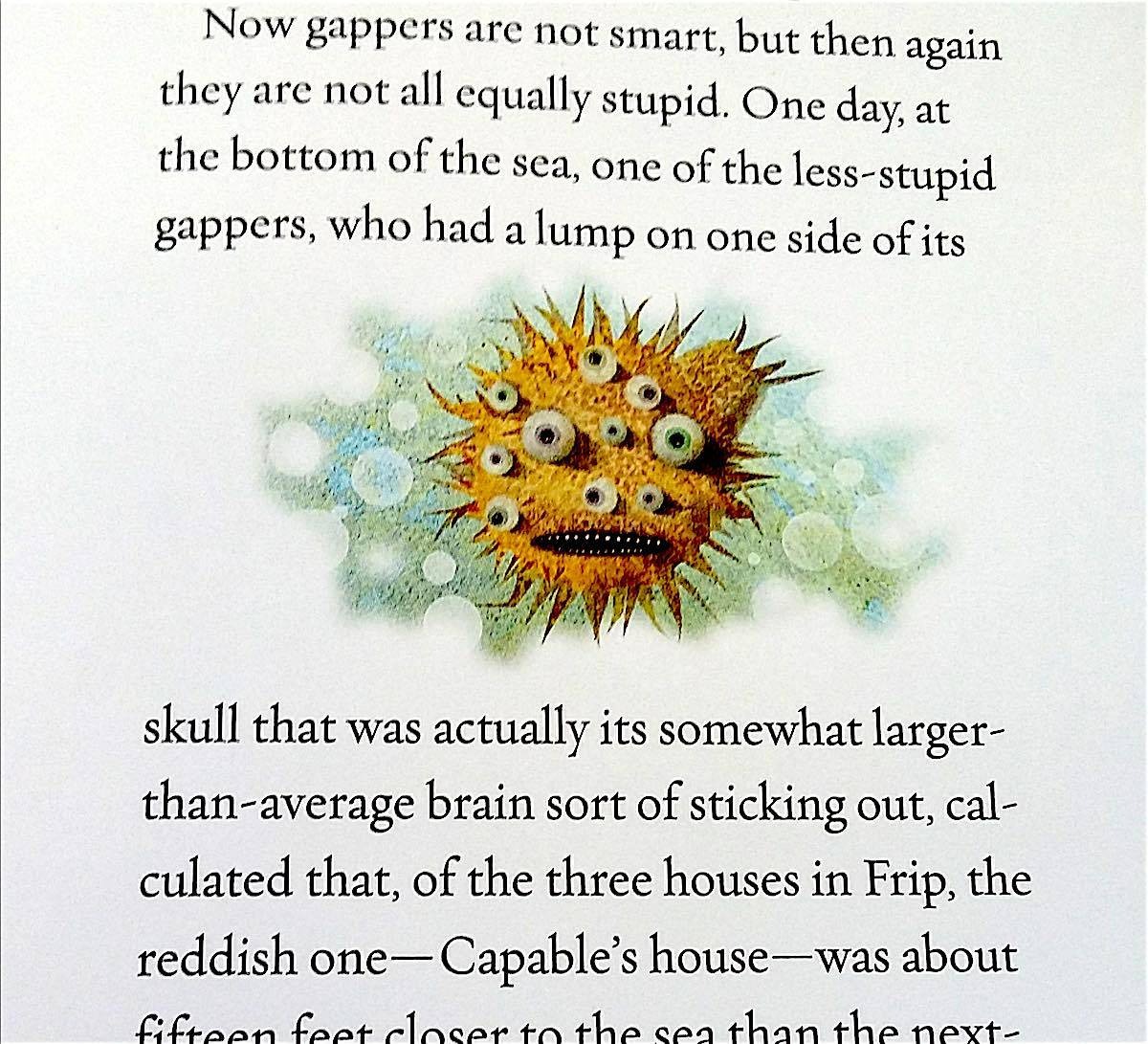
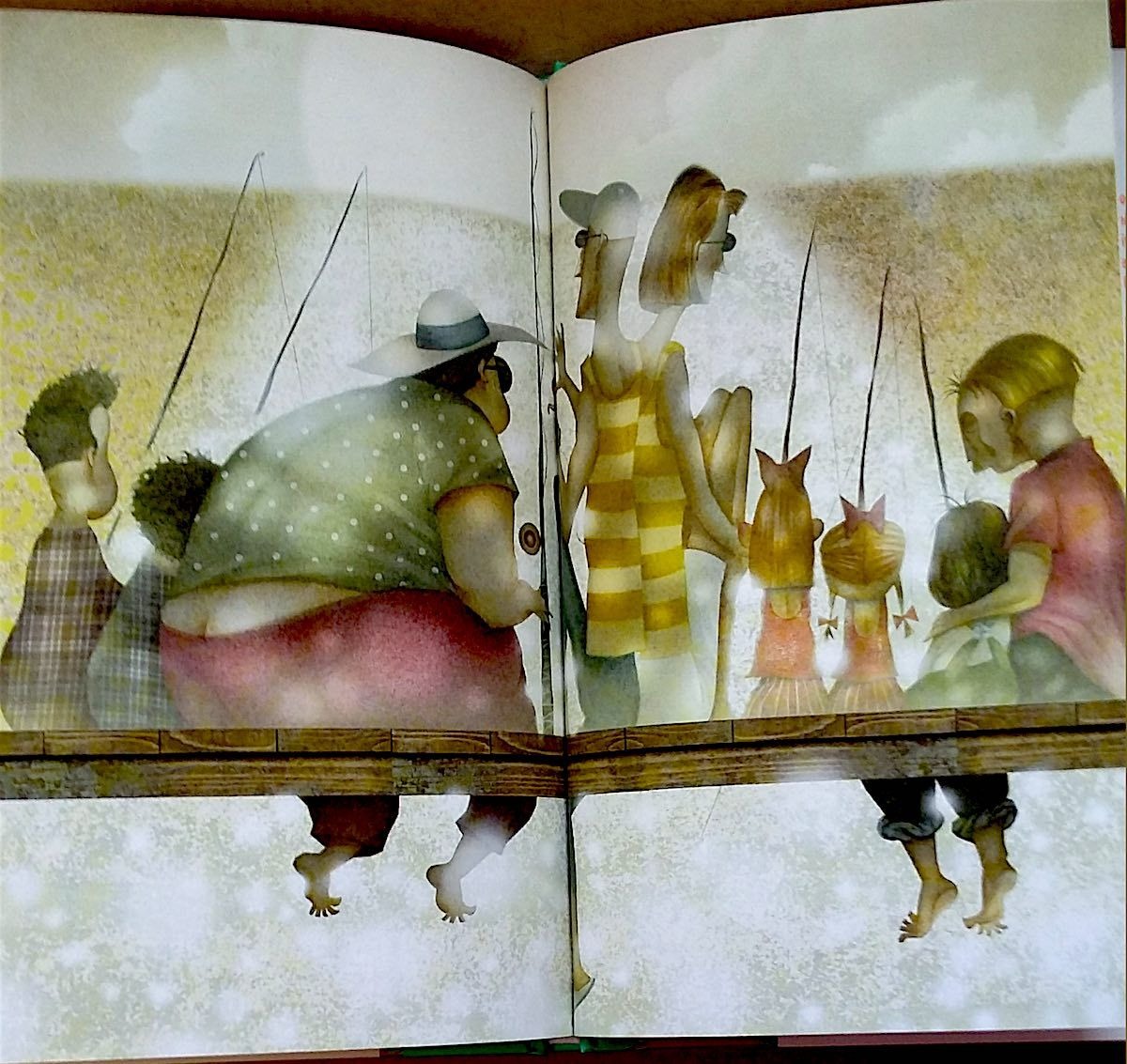
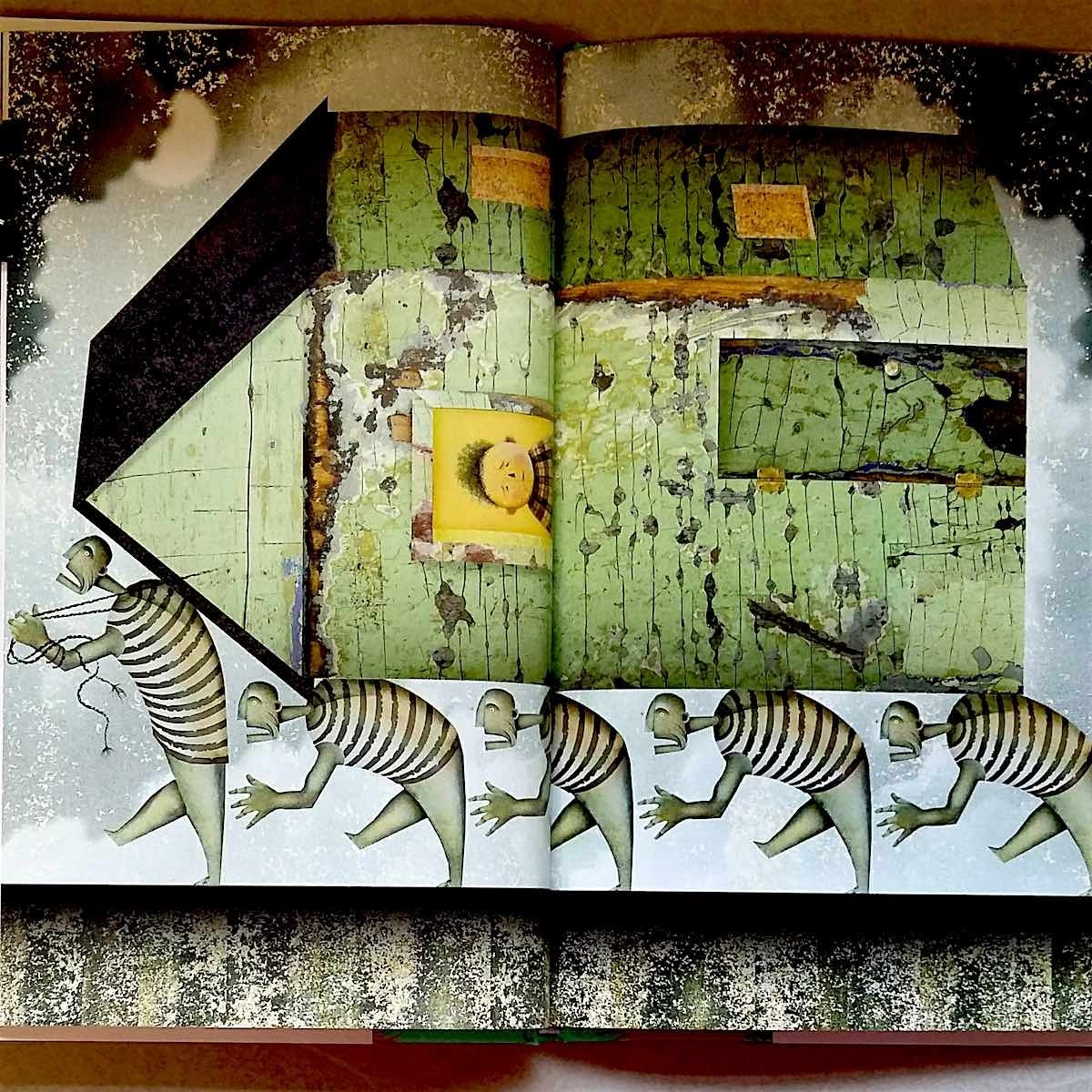
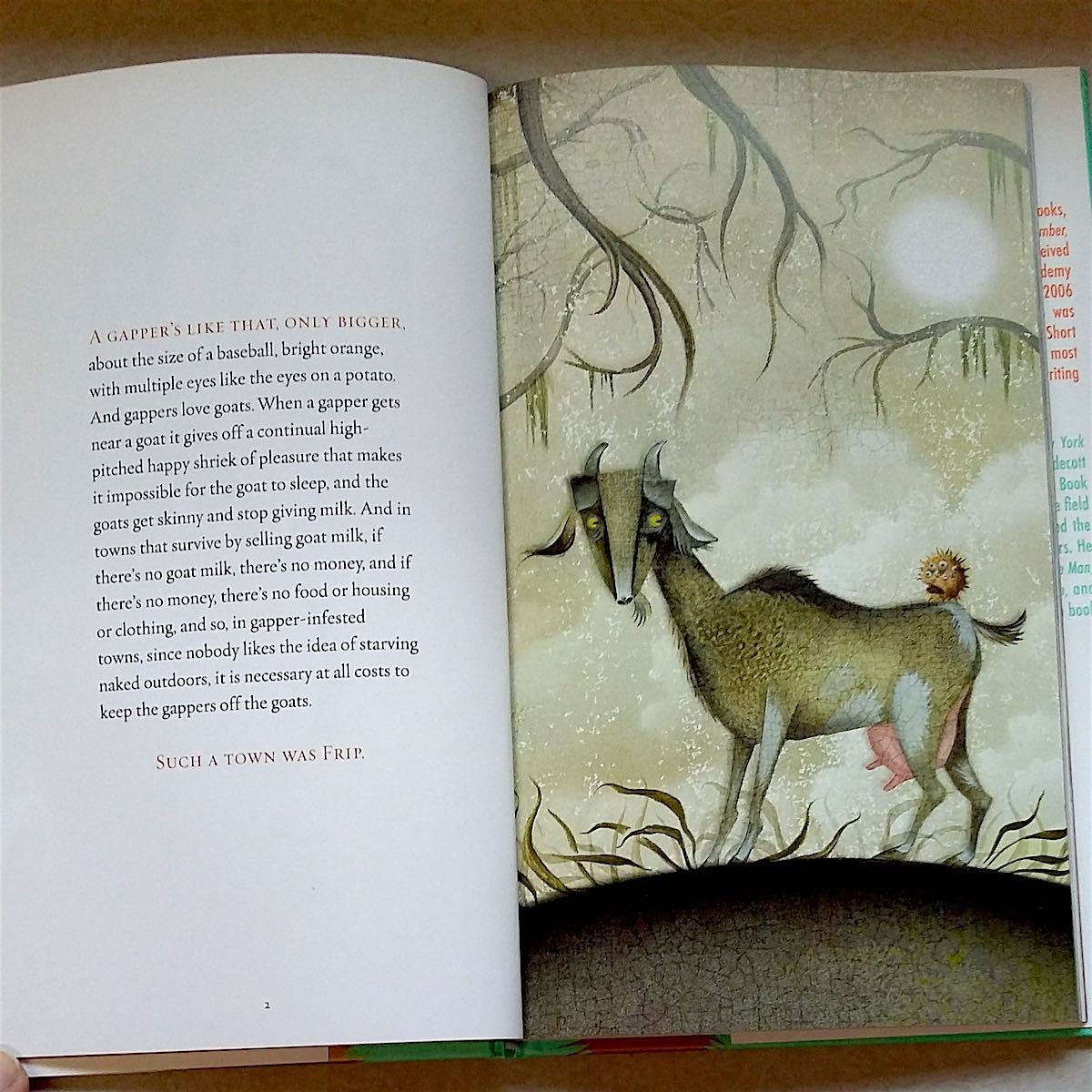
The Very Persistent Gappers of Frip
by George Saunders (author) and Lane Smith (illustrator)
Random House
2015, 96 pages, 5.8 x 9.6 x 0.5 inches
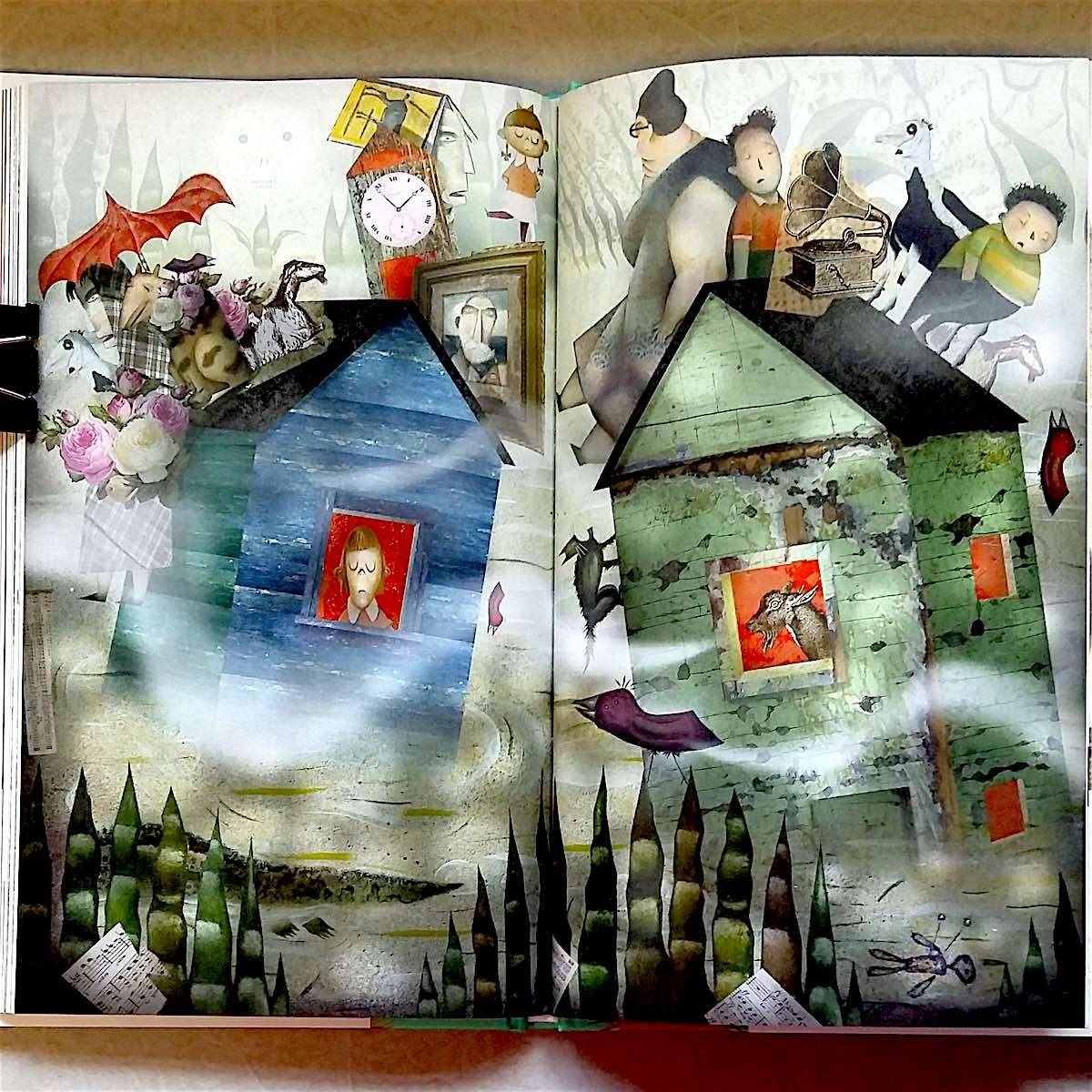
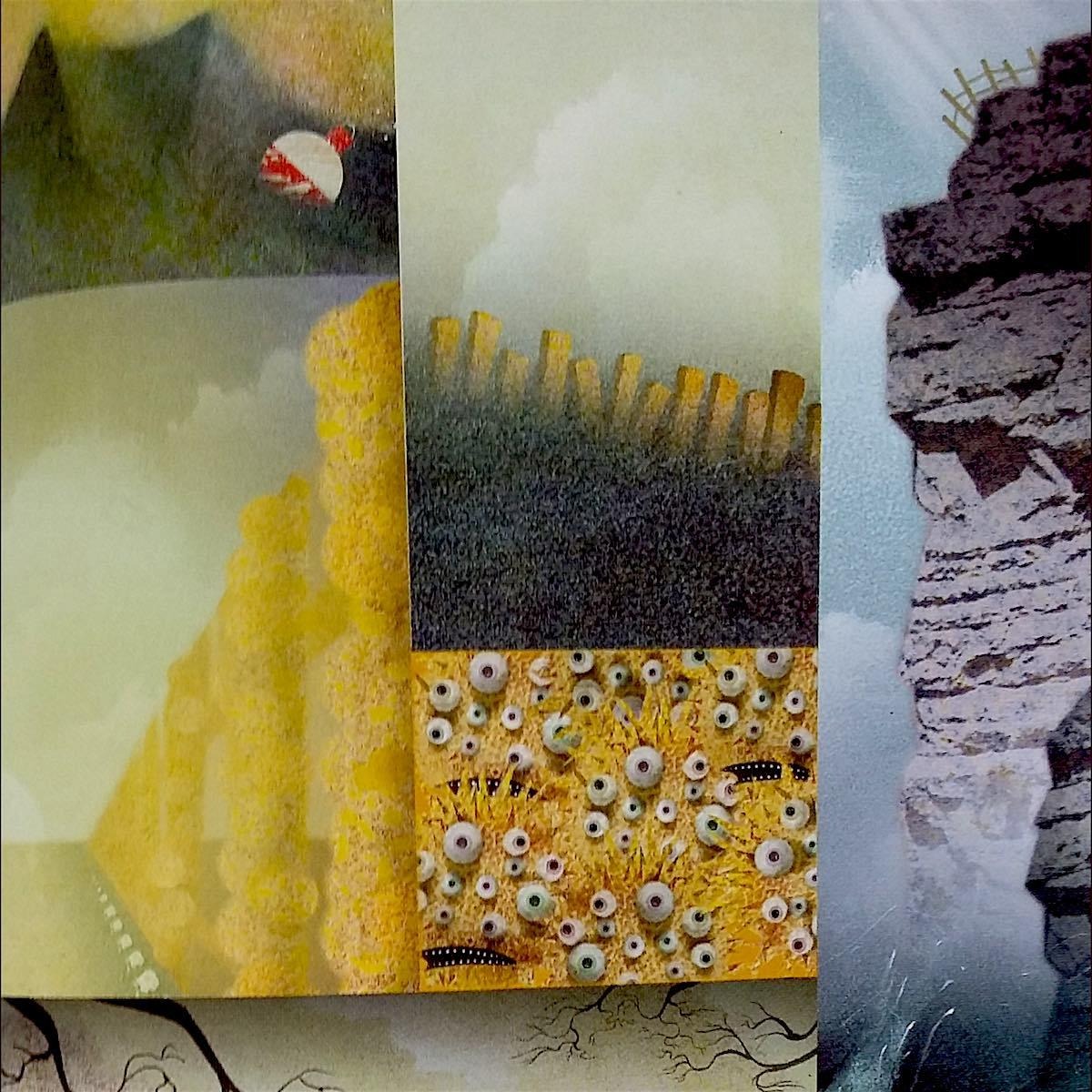
Gappers are creepy little orange, multi-eyed, round creatures that love nothing more than to hang out on or near goats, shrieking all the while. As you might imagine, this is very stressful to the goats. They stop eating; they stop giving milk. If your family gets its livelihood from that milk, you’re in bad shape when the gappers are around. They emerge from the ocean, find the goats, and wreak their shrieking havoc.
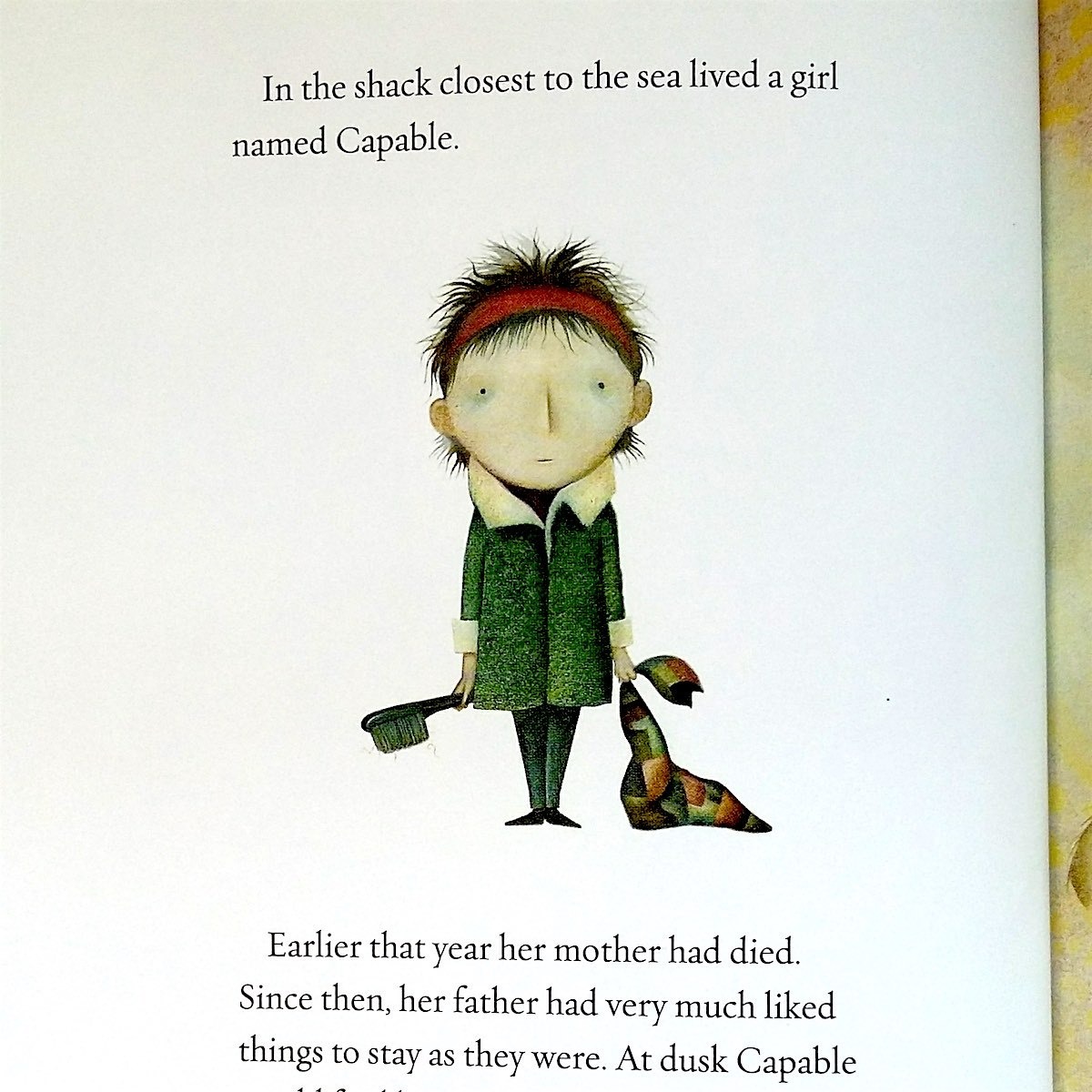
The village of Frip is made up of three ocean-side shacks. The girl Capable and her widowed father live in one. Mrs. Romo and her sons live in the second. Sid and Carol Ronson and their daughters (who “sometimes stood completely motionless in order to look somewhat pretty”) lived in the third. In Frip, the children must check on the goats eight times per day in order to remove the gappers and return them to the sea (from which they will reemerge again and again).
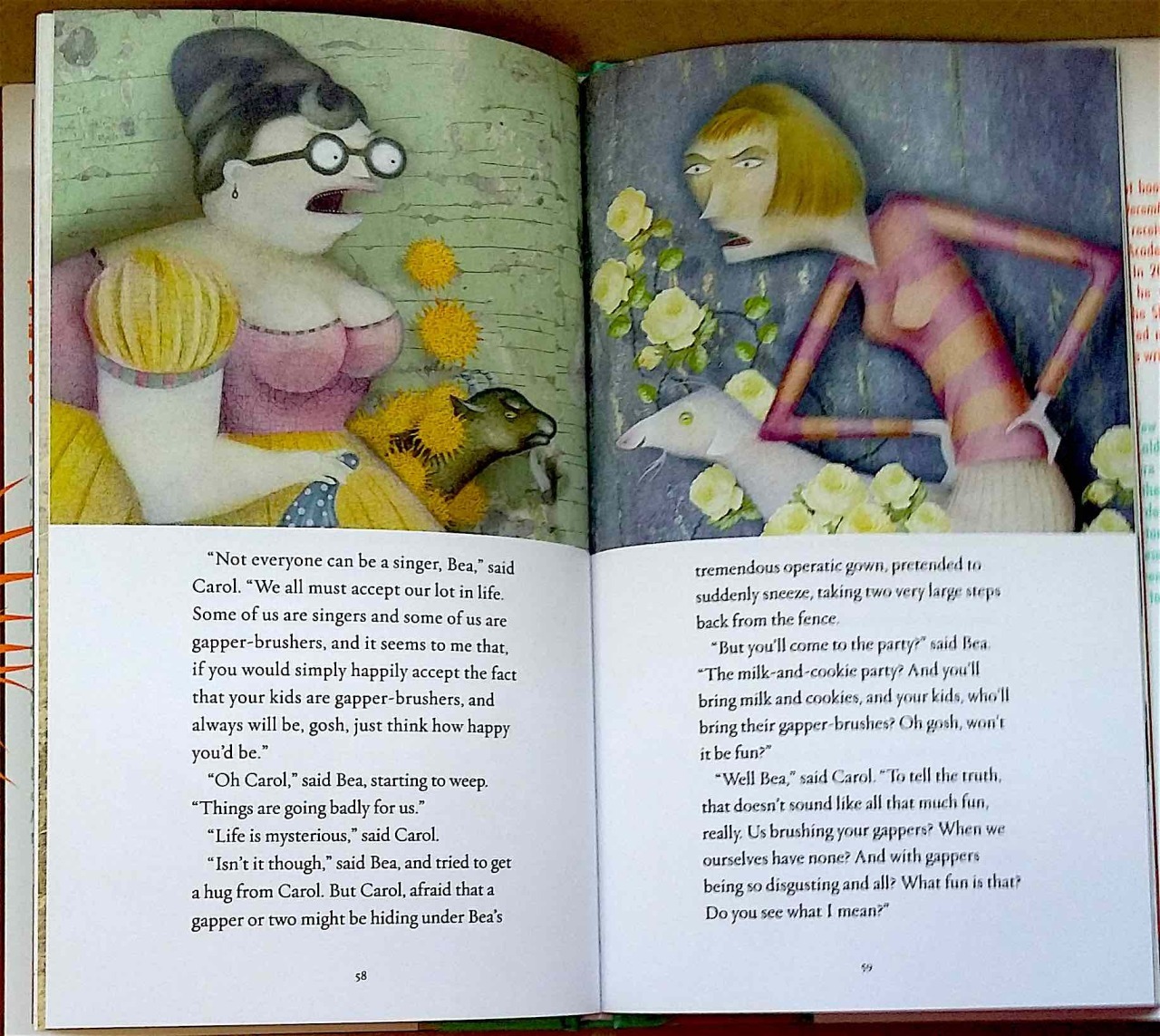
The Very Persistent Gappers of Frip is a fable about the perils of putting oneself before the community and the ultimate merits of sharing amongst a community. The gappers have bothered the three families’ goats equally for ages, until one of the smarter gappers realizes that Capable’s goats are slightly closer than the others. Once the gappers converge, Capable is unable to keep them away. She asks for help, but she is refused:
“We feel strongly that, once you rid your goats of gappers, as we have, you will feel better about yourself, and also, we will feel better about you. Not that we’re saying we’re better than you, necessarily, it’s just that, since gappers are bad, and since you alone now have them, it only stands to reason that you are not, perhaps, quite as good as us.”
Capable is, in fact, quite capable – she takes care of those around her and solves problems for herself. The illustrations are lush and whimsical. The book is a lovely parable for children, but the tale and visuals are engaging for readers of any age. – Meagan Rodgers
Books That Belong On Paper first appeared on the web as Wink Books and was edited by Carla Sinclair. Sign up here to get the issues a week early in your inbox.
10/13/2612 October 2026
Straps
Tools for Possibilities: issue no. 211
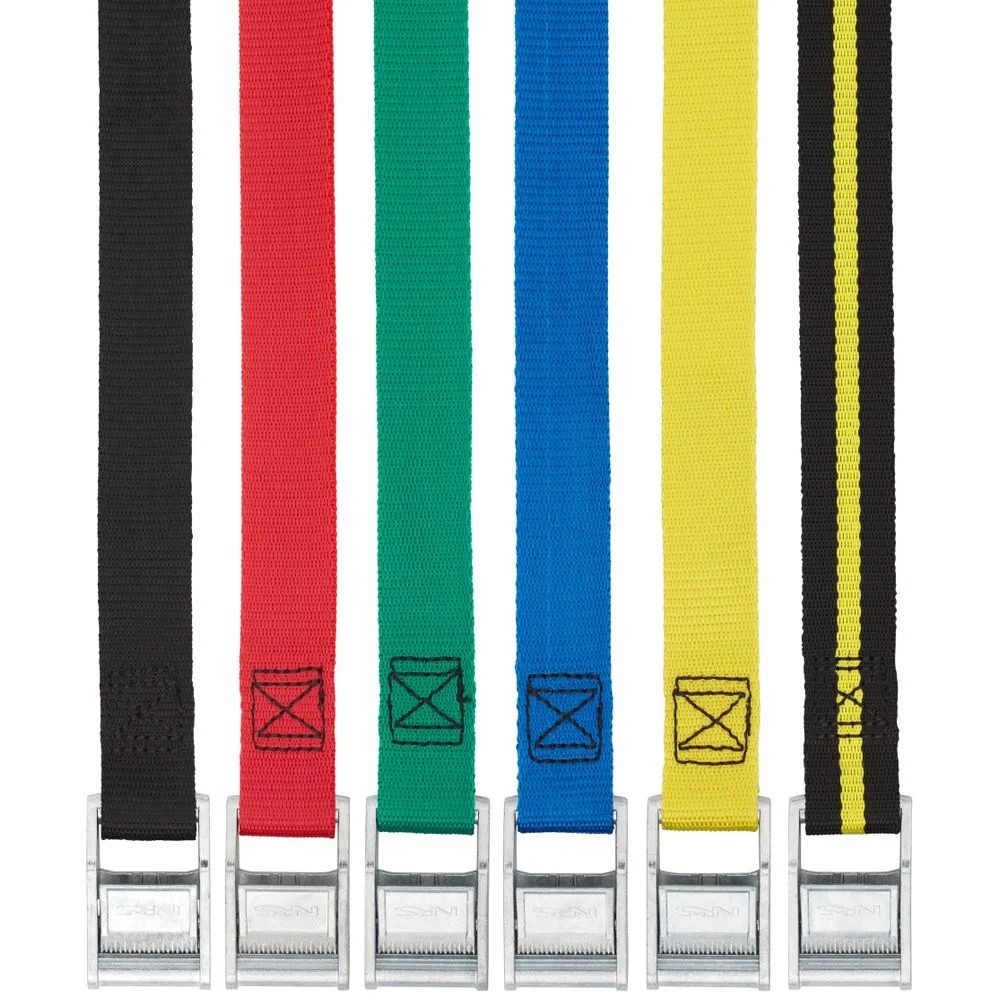
Quick strong tie downs
These straps are incredibly strong. The tensile strength of these 1.5 inchers is 2000 pounds. With their cam locks these NRS straps are easily and infinitely adjustable and can be cinched down very tight. They have almost no flex/stretch and can be used in situations where a bungee would be too weak or stretchy and would not be “bomb-proof” like a cam strap.
If you are a river runner you are already familiar with these straps. They hold your boat, frame and oars on your truck for the drive to the put-in. You then use them to hold the frame to the boat, your bags, spare oar and rocket boxes to the frame. The originals are 1″ wide and come in sizes from 1 foot up to 20 feet. As a commercial boatman I used these for everything from bundling firewood collected for that nights campfire to pulling a truck out of a ditch.
NRS has come out with a 1.5″ model that is the perfect width. I have even been using one for several months as a belt. In a pinch it can be used (at the risk of my shorts heading south) to strap/bind/tow just about anything. I keep two of the twenty footers in my truck at all times. These straps are a permanent part of my kit, right next to the duct tape, bailing wire and channel locks. — Topher Stephenson
Strap supplier
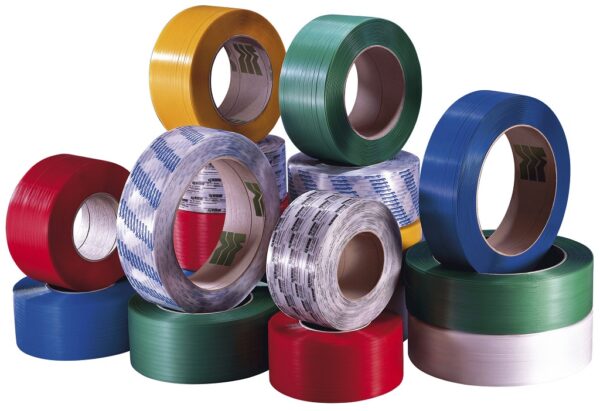
You can see all the different strap types and strap hardware (buckles, tie downs, keepers, clips, etc.) in use on all sorts of stuff swirling around us in daily life. But if you want to get some for your own projects?
Strapworks.com has pretty much all of it. Metal or plastic hardware. All sorts of strap and webbing material.
Inexpensive, easy to work with. Helped me a few times, and I know I will continue to use them when the need arises. — Wayne Ruffner
Extra Large Rubber Bands
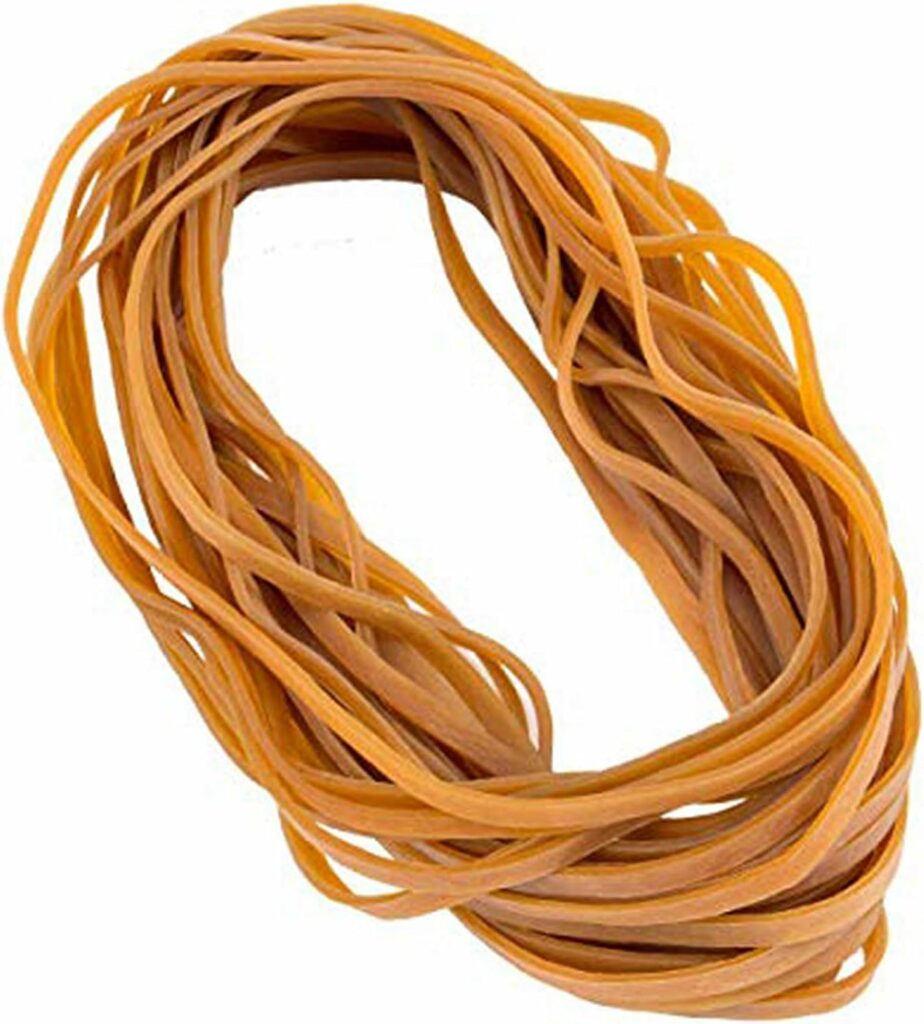
I have been buying one pound packs of rubber bands from LFSMarine for over five years now (along with their cheap and tough nitrile gloves and barge glue). My first buy was an impulse one. I thought, “It’s hard to find this size rubber band (3/4″ x 6″) and, besides, I wanted to make some slingshots so…” I got a one pound bag. When you get them, you realize a pound of these is a lot of banding material. With that abundance, you don’t stint their use.
I love them for binding together papers and books (I teach so I always have a few in my desk.) I have used them to hold wood in place for gluing. I use them along with barge glue and duct tape to splice materials together in the garden. And I use them for sling shots., too. In fact they are always in mind and on hand for any kind of kludge. I usually buy a couple of pounds of them at a time for less than ten bucks.
It’s fun to give them as gifts just for the odd looks you get now and the thank-yous you continue to get as they too discover that these bands are handier than a pocket on a shirt. Perfect for the maker/tinkerer in you and yours. — Terry Elliott
Gigantic twist ties
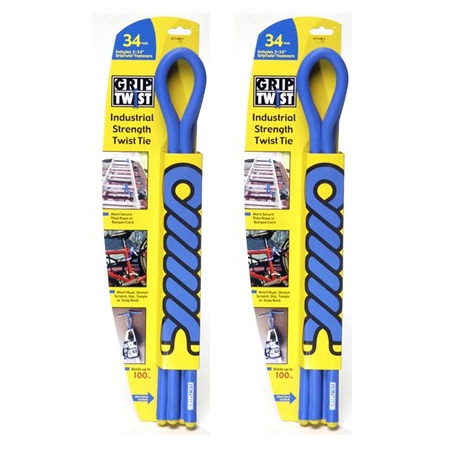
I picked up four of these at my local container store, not knowing exactly how I’d use them, but guessing they’d come in handy. Within 48 hours I’d already used them twice-once to secure the barrel of my telescope to its collapsed tripod for easy transport to a remote location, and then to stabilize a table and chairs in the back of my car for a trip across town-both times with great success. These giant, rubberized “twist-ties” were much more efficient and easier to use than a bungee cord in both cases.
Griptwist offer several advantages over bungees in particular. First, they provide “point-to-point” stability, rather than “tie-down” or “net-like” attachment. For example, when moving dining room furniture in the back of my car, I was able to use four Griptwists to connect the legs of chairs to each other, etc., at critical points, so that the entire mass (i.e., of one table and four chairs) was stabilized from within, rather than essentially trying to “net” or “wrap” the mass together from the outside, with bungee cords. Second, with bungee cords, there’s always a certain amount of “give,” unless you stretch them to their maximum, which isn’t always practical; bungeed objects will often move a bit more than you want them to. Third, if you do stretch bungee cords to their maximum, they exert great pressure on the object being contained. I wouldn’t have wanted to use bungees around the barrel of my telescope, for example. The Griptwists remain as tight (but only as tight) as you tie them, with no inherent potential energy to give or take along their own length like elastic bands. This brings to mind a fourth benefit: no danger of “snapback” when it’s time to unload or unpack.
Some things will always have to be netted down, and sometimes the stretchiness of bungees provides a benefit in and of itself (like the ability to squeeze one more last-minute object under the cords, without having to repack). Moreover, from the outside to the extent they lack handy points where a Griptwist could be employed (e.g., a couch, a canoe, a stack of luggage or boxes). But for temporarily affixing one object to another in a point-to-point fashion, with stability, I see more everyday utility in the Griptwist. — Adam Zaner
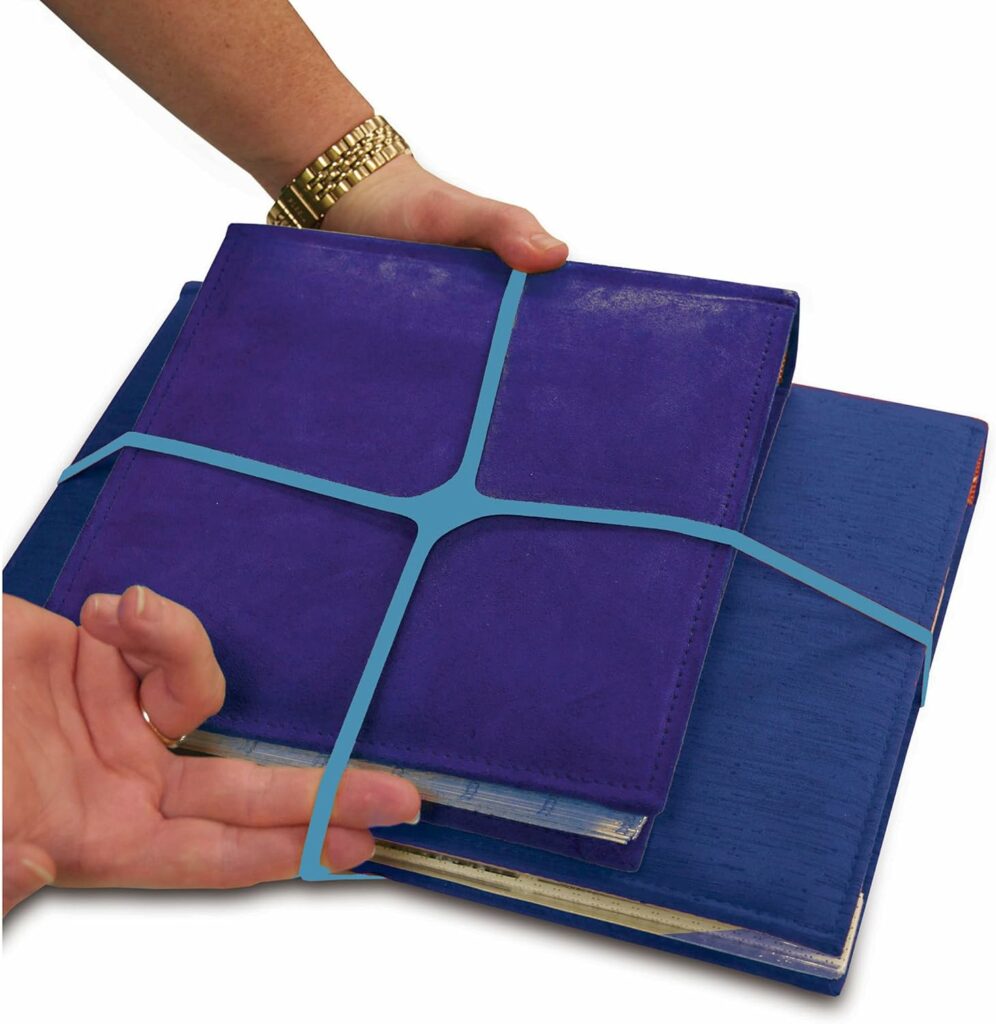
Parcel bands
These hefty four-way rubber bands are so much more useful that a plain old rubber band. Also they can be used decoratively on a simple brown-paper-wrapped gift. Or as a solid tie for bundles of magazines or newspapers. — Kaz Brecher
Once a week we’ll send out a page from Cool Tools: A Catalog of Possibilities. The tools might be outdated or obsolete, and the links to them may or may not work. We present these vintage recommendations as is because the possibilities they inspire are new. Sign up here to get Tools for Possibilities a week early in your inbox.
10/12/2611 October 2026
Jurassic sounds / Free Utilities / China travel tip
Recomendo - issue #535
Listen to a Jurassic forest
Scientists have reconstructed what a Jurassic forest might have sounded like 165 million years ago, and the one-minute audio is a really cool soundscape to imaginatively step into. They created it by analyzing and modeling the sound-producing structures preserved in 20 fossil insect wings from nine species that lived together in what is now Inner Mongolia. It’s a diverse chorus of low trills and high-pitched chirps, and I wish I could loop it all day as background noise. — CD
Inexpensive exercise headphones
If I’m doing vigorous exercise, my earbuds fall out. I didn’t want to spend a lot of money on a second pair, so I bought these inexpensive Joywise Bluetooth headphones. They are wireless, have loops that fit around the ear, and are connected to each other with a wire. Unlike most small earbuds, they charge via USB-C directly rather than in a case. The sound quality is great for the sub-$20 price, and the batteries last up to 16 hours before needing a recharge. — MF
Analog math
For mathematical nerds, Henry Segerman is your channel. Segerman 3D-prints weird mathematical shapes, invents curious mathematical toys, constructs intricate mathematical models, and turns math into analog things you can 3D-print yourself. His YouTube channel demos all this with expert explanations of the math behind it. — KK
Free online utilities
Normal Tools is a free collection of 193 single-purpose tools for all kinds of random small tasks, including calculators, color pickers, image resizing, and file conversion. It has more tools than I will ever need, but useful to bookmark. Most tools are private by default and process everything locally in your browser, with no account or download required. — CD
China Travel
I am traveling in China again and I am reminded that the best way for foreigners to book hotels, trains, and flights anywhere within China is to use Trip.com. It is easy to use, comprehensive, accurate, and reliable. — KK
The White Rose
Besides Recomendo, Cool Tools publishes a newsletter about books called Book Freak. I’ve been doing it for quite a few years, and I recently started finding old out-of-print books, scanning them, and turning them into ebooks with a new foreword and cover. This is a benefit for paid subscribers, and so far the library includes four books, with a new one coming every month. The latest is The White Rose by B. Traven, who also wrote The Treasure of the Sierra Madre. It was translated into English in 1979 but is out of print, so I used AI to translate the German version. It’s very readable and a fantastic book. You can read about it here. —MF
This Issue’s Sponsor
Why do smart people miss the future? Dev Patnaik explains why smart, hardworking people still get blindsided by change, and how to get better at noticing what’s coming before it arrives. Watch the TEDx talk.
Sign up here to get Recomendo a week early in your inbox.
10/11/26ALL REVIEWS
 10/9/26
Book Freak #221: Ways of the Six-Footed
Anna Botsford Comstock on the Dignity of Life’s Upward Struggle


EDITOR'S FAVORITES

COOL TOOLS SHOW PODCAST
WHAT'S IN MY BAG?
14 October 2026

ABOUT COOL TOOLS
Cool Tools is a web site which recommends the best/cheapest tools available. Tools are defined broadly as anything that can be useful. This includes hand tools, machines, books, software, gadgets, websites, maps, and even ideas. All reviews are positive raves written by real users. We don’t bother with negative reviews because our intent is to only offer the best.
One new tool is posted each weekday. Cool Tools does NOT sell anything. The site provides prices and convenient sources for readers to purchase items.
When Amazon.com is listed as a source (which it often is because of its prices and convenience) Cool Tools receives a fractional fee from Amazon if items are purchased at Amazon on that visit. Cool Tools also earns revenue from Google ads, although we have no foreknowledge nor much control of which ads will appear.
We recently posted a short history of Cool Tools which included current stats as of April 2008. This explains both the genesis of this site, and the tools we use to operate it.
 Kevin Kelly started Cool Tools in 2000 as an email list, then as a blog since 2003. He edited all reviews through 2006. He writes the occasional review, oversees the design and editorial direction of this site, and made a book version of Cool Tools. If you have a question about the website in general his email is kk {at} kk.org.
 Mark Frauenfelder edits Cool Tools and develops editorial projects for Cool Tools Lab, LLC. If you’d like to submit a review, email him at editor {at} cool-tools.org (or use the Submit a Tool form).
 Claudia Dawson runs the Cool Tool website, posting items daily, maintaining software, measuring analytics, managing ads, and in general keeping the site alive. If you have a concern about the operation or status of this site contact her email is claudia {at} cool-tools.org.