












Dog First Aid

If you’re caring for a multitude of critters, the previously-reviewed Merck/Merial Manual for Pet Health is essential. If you’ve never had a dog or, for whatever reason, never took the time to do your due diligence, the Red Cross’ Dog First Aid is an excellent primer and quick emergency guide worth reviewing and keeping handy. Beyond the basics of general care, the guide provides short, clear instructions and photos (plus a DVD) on how to diagnose and tackle everything from choking, pad wounds, anal sac swelling (it happens), constipation, bite wounds, burns and ear infections to frostbite, electric shock (cord bites), parasites and the more esoteric afflictions you hope never to see, like “rectal prolapse.” There’s also a checklist and instructions on how to assemble the ultimate first aid kit (the list is much longer than I would have imagined).

Our best buddy’s been with us for five years and — *knock wood* — we’ve had only one serious emergency, which luckily happened outside the vet’s office: anaphylactic shock due to an allergy. As time passes, of course, the chances of potential emergencies and health issues will inevitably increase. I know the little dude appreciates our preparedness.

-- Steven Leckart  

Dog First Aid: Be Red Cross Ready
Safety Series Vol. 2
2008, 116 pages
$17
Available from American Red Cross

Sample Excerpts:

Nails (Broken or Torn Toenails)

What You Can Do.
If the nail is bleeding, apply styptic powder to the area… You can also try applying direct pressure to the nail with a piece of gauze or clean cloth for 5 minutes. If you do not have these items available, try the following:

1. Take a bar of soap and push it into the bleeding nail, or apply flour or cornstarch to the area with firm pressure for 5 minutes.

2. If you are not successful, wrap the paw (See Pad Wounds, page 89.) After bandaging the paw, transport your dog to a veterinary hospital.

If you are able to stop the bleeding at home, wait 1 day (to make sure you do not disturb the clot that has formed) then soak the paw in warm water and a saline solution to help it heal. Monitor the site for infection, as evidenced by swelling, pain, redness and reluctance to put weight on the paw. If any of these signs appear, take your dog to a veterinarian.

*
Tourniquet Technique

Use only on limbs — never place a tourniquet on the neck!

1. Wrap a strip of cloth or gauze (about 2 inches wide) twice around the limb above the bleeding area. DO NOT MAKE A KNOT.

2. Tighten the gauze or cloth by wrapping each end around a rigid object, such as a stick.

3. Turn the stick slowly and just enough to stop blood flow. Write the time on a piece of tape on the tourniquet.

4. Loosen the tie for several seconds at least ever 10 minutes to help avoid permanent tissue damage.

5. Be aware that the interrupted blood supply may cause your dog to lose the limb.

6. Take your dog to a veterinarian immediately.


Clearblue Fertility Monitor

ClearBlue_Easy_Fertility-sm.jpg

This fertility monitor is designed to predict ovulation and optimize a couple’s chances of conception. It requires test sticks which are used at the onset of a woman’s menstruation to monitor urine once daily (best in the AM). The urine is applied to the test stick which is inserted into the monitor. When ovulation is at its peak, the monitor shows a dot within a circle. We referred to this as the “egg’s in the basket.” My wife and I had tried for quite some time to have a second child. Our firstborn son was conceived in vitro, and the second time around we paid for two attempts at a cost of approximately $16,000 — both failed. Just as we started to save up money to try again, we stumbled across the fertility monitor (it cost $250 when we bought it six years ago). We thought we’d just keep trying with the monitor until we’d saved enough for another in vitro attempt. To our surprise, the monitor worked on only the second attempt using it. Much quicker than when we had our son. I’m pretty sure it would have worked on the first attempt, but at the time we actually didn’t believe the readings were accurate. It showed my wife ovulating extremely late in her cycle. News to us! There are now monitors available that don’t require test sticks ($50-60/pack). This one’s still the best purchase we’ve ever made. The average cost for an in vitro attempt is $12,000 to $16,000, which was not covered under our medical plan. The first attempt is the most expensive and subsequent attempts can be less expensive depending on the number of embryos available from the first attempt. We had four embryos remaining and if we paid for that treatment, it would have run around $6,000. The unit saved us roughly $5,750, which was a blessing, but needless to say, the birth of our daughter using this monitor is one of the greatest joys in my life. We have since loaned our monitor to four other couples that were having trouble conceiving. All four mothers got pregnant — interestingly, all with girls.

clear-blue-fertility2-sm.jpg
-- Jeff Cruz  

Clearblue Fertility Monitor
$150
Manufactured by Inverness Medical, Inc.

Available from Amazon


StrollAway

strollaway-sm.jpg

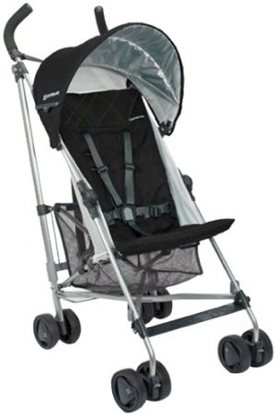
Strollers these days are huge, mammoth contraptions. Sure they fold up nicely, but you still have to find a place to put them. Once we got this hook, rather than just parking our stroller in the kitchen or dining room, we created a set, out-of-the-way place to store it. And since it’s off the floor, that gives us more space to fill up with more baby stuff. The hook is strong (we have a Quinny Buzz stroller, which weighs abouts 15 lbs.). It doesn’t require drilling or mounting into anything, since it hangs over the top a door. It comes down far enough that never have to lift the stroller very high to hang it up (I’m about 5’5″). The sides pivot, too, allowing you to adjust the width to fit a variety of strollers. It looks nice to boot — modern, sleek and not babyish, though the white ends soften it up a bit. Doesn’t look like an industrial garage hook, although you could probably use it as one. Plus, when we no longer need a stroller, we have a coat hook that can be easily relocated.

-- Amanda Hughes-Watkins  

strollaway2-sm.jpg

StrollAway
$40
Available from MetroTOTS


HypnoBirthing

hypnobirthing-sm.jpg

Hypnobirthing is a technique that requires meditation, practice, and a quiet atmosphere during labor and delivery. No drugs are used and if done correctly, women who use the technique are said to experience little pain. Overall, it promotes transcending pain so a woman can experience birthing as other animals do. If you think about a cat, a deer, or any other mammal, during birth you would notice how quiet and calm they are. Our bodies are designed for this process, and hypnobirthing methods, including visualization, meditation, exercises and positions like the “Polar Bear” and “Leaping Frog,” empower a woman with this reminder. As soon as I became pregnant, I looked into every method I heard about from Lamaze to The Bradly Method to waterbirth to hypnobirth to natural birth. I met with a doula, had three midwives, watched any video on childbirth I could find, and researched online about L&D (labor and delivery). When the day finally came, I used certain hypnobirthing methods with great success.

My partner and I used the “birthing companion reading” (except we wrote our own script). Basically, we wrote things for each other and read them to each other before labor. Then during labor, my partner would whisper in my ear, “remember when…” and I envisioned myself out of my body: relaxed and calm. We used this in the last few hours of labor, especially. During labor, I meditated during each contraction when they came. I envisioned my cervix and whole body opening up, and I surrendered to this process. I also visualized myself at the ocean (Point Arena to be specific). It worked. I felt no pain at times. With the physical exercises, I used them all (25 hours is a long time!). My favorite position was the Toilet Sitting. I was on that toilet for over an hour. It was amazing how comfortable it was, and I actually fell asleep between a few contractions. All of the squatting exercises were great, too. The Leaping Frog is a version of a squat, as was the Supported Squat. When a contraction came on it was important for me to let gravity and breathing help me open up. Anything that required getting low to the ground and relaxing my muscles worked for me. I didn’t like any of the reclining positions. It wasn’t comfortable for me, personally.

I’m not sure how hypnobirthing is exactly different from basic meditation techniques, because I never practiced meditation before I was pregnant. I’ve taken a lot of yoga and it’s always worked for me for relaxation, but meditation was something I was always wary of. I have a hard time quieting my mind, which is why I was so interested in hypnobirthing. I never took any hypnobirthing classes. I only read this book and practiced what I liked from it. Since it took me 25 hours to finally deliver our newly-born son, as the day progressed, I found myself using everything I learned from childbirthing classes, birth partner yoga, and prenatal yoga classes (eventually, I found I needed to make a lot of low, primal birth sounds!). If we have a second child, though, I will be more diligent about practicing this method in particular. The book itself was easy to read, provided interesting theories, and replaced my fears with strength. The book was also really my first step towards feeling empowered and excited about going through labor without drugs.

-- Amanda Meyer  

HypnoBirthing
Marie Mongan
2005, 326 pages
$14

Available from Amazon

More info available at HypnoBirthing.com

Sample Excerpts:

For the birthing parents, birth is not about science, it’s not about anatomy, it’s not about doctors or midwives or nurses, it’s not about who has control. It’s about family, parents and their babies. Families embracing the belief that birth is about them and the wonderful life-changing transition they are making into parenthood don’t really need to be taught how to birth. They simply need to learn about birth. They come to understand that when the mind is free of stress and fear that cause the body to respond with pain, nature is free to process birth in the same well-designed manner that it does for all other normal physiological functions.

The Leaping Frog position comes to us from midwives in the Virgin Islands. This easy, forward squat is used in many places in the world. Not only does this position help to tone your muscles, but it also provides you with one of the best positions in which to labor during the birthing phase. While women in other cultures regularly use a squatting position for birthing, you must remember that these women use this posture for much of what they do on a daily basis. Western women are not naturally inclined to squatting, so this posture needs practice. There are two ways of assuming the Leaping Frog stance — with your arms thrust forward inside your spread knees or with your arms behind you at the side of your hips. The second position is an ideal position to assume for birthing as it relieves all pressure from the buttocks, and provides open and clear access for both baby and attendant.

If a pregnant woman wants and needs to be pampered, “waited upon” and coddled, and buys into the concept that pregnancy is an abnormal condition and she is “ill,” the attention that she gains during a troublesome pregnancy and a difficult birthing can definitely make it all worthwhile in her mind. She barely tolerates her pregnancy and constantly proclaims her annoyance at all the aches, pains and other pregnancy “disorders,” while she uses body language that demonstrates her plight. Family members often contribute to this scenario by cautioning the woman that she must “give in” to her frailty during this precarious time of her life.

arrow See another excerpt


Podee Hands-Free Bottle

The Podee Hands-Free bottle feeder is a small tube that attaches to a regular bottle to make feeding a lot easier. It is a dream because the baby doesn’t have to hold the heavy bottle and you don’t have to lay them down and prop the bottle up. You can set the bottle next to the baby and put the nipple in their mouth like you would a pacifier; they do what comes naturally. Viola! Granted there’s no substitute for holding a baby during a feeding, but that’s not practical when driving. No more going down the road in the passenger seat with my butt in the front window while I’m turned around feeding the baby in the backseat. I purchased mine at Toys ‘R Us in Madison, WI in 1993. It is still my favorite all-time gadget. Why didn’t we think of this decades ago?

-- Becky Thompson  

Podee Hands-Free Bottle
$10
Manufactured by Podee International

Available from Amazon


Kidz-Med Medicine Dispenser

My infant daughter has acid-reflux. Although a medicine dropper works for administering Zantac a couple times a day, she always makes a terrible face and winds up spitting out a good portion. This dispenser takes advantage of her natural tendency to suck: The medicine reaches the farthest into her mouth. I worried it seemed mean to use something she associates with comfort to give her something she’d hate, but after a few weeks of seeing those faces, I decided it’d be worth trying. The pacifier was a little big when she was a couple of months old but she took it just fine. Now, at almost five months, she’s grown into it. Occasionally, if she mouths but doesn’t suck the pacifier, we use the plunger to push it on in. Either way, she hasn’t made a single bad face since we’ve been using it, and I don’t have to mop up all the Zantac she used to spit back out. I read a review of a similar product — the same concept executed by another company. People complained the other one leaked. This is now my second medicine pacifier (I lost the first one on a road trip); neither has leaked. The best $6 I’ve spent on baby things.

-- Amanda Long  

Kidz-Med Medicine Dispenser
$2

Available from Amazon


Enurad

Our son is a very sound sleeper and had problems with bedwetting. We tried everything we could think of. Finally I stumbled across a mention of Enurad in a parents’ forum. It’s a wireless wetness sensor that you place in the child’s underwear. A standard alarm clock has been modified to ring at the slightest wetness. Enurad combined with limiting nighttime fluids solved the problem in a couple of months. He wore the device for sometime after that as an insurance policy. He just slept better knowing it was there. At $210 it’s not inexpensive, but worth every penny. Enurad doesn’t have a US distrubuter that I know of. I ordered ours from Austrailia. Highly Recommended.

-- Johnboy  

[According to the most recent science (see this article) moisture alarms are the most lasting medical cures for nocturnal bedwetting, better than commonly prescribed drugs. -- KK]

Enurad 400 Remote Sensor Alarm
$309
Available from Pedihealth
Manufactured by Enurad


Tangoes

Simple games are the best. Tangrams are an old puzzle based on a set of elemental shapes that can be arranged in thousands of different patterns. To recreate a given picture is challenging, yet not too daunting even for kids. Playing gently encourages lateral thinking. It exercises a geometrical logic, rather than words or numbers. The puzzles are almost like peanuts; you keep wanting just one more.

We use tangrams as an after dinner parlor game. Everyone gets a set and we compete to find the solution first. Since the shapes can be contained in one large square, you can easily cut your own version from cardboard or plastic (and we have). But I’ve found that this Tangoes model is precise, won’t wear out, and crates up easily and tidily. Each Tangoes case contains two sets of tangrams (in two different colors) and a nifty set of puzzle pattern cards, all of which slide into a plastic case with instructions on the inside. It’s a very nice package. We have several sets, to fill all the seats at a table.

-- KK  

Classic Tangoes
$10

Available from Amazon

Manufactured by Tangoes


Cuboro

Cuboro is they best toy I have seen since Lego. I recently purchased a set for my 3-year-old son, and we both have been having a blast with it ever since. The basic idea is simple: marbles and a track. The interesting thing is that the track is built out of individual wooden blocks with curves and channels cut into them, allowing the builder to create a track of whatever shape their imaginations can conceive. The marbles are moved along strictly by gravity, falling from one level to another and cutting back and forth through hidden tunnels. After starting out with some simple structures, you will quickly start to think of more complicated structures. I found the challenge to build more interesting designs quite addictive.

The company is based in Switzerland, but sets are available from several US retailers. There are several starter sets, plus add-on kits that allow you to build more complicated structures. I started with the Cuboro Standard, and recently added the Cugolino set. Although Cuboro is a bit pricey for a toy, the manufacturing quality is exceptional and you get what you pay for.

-- Kurt Thearling  

Cuboro, Standard set of 54 pieces
$280
Available from Oh! Toys

Also available from The Wooden Wagon

Manufactured by Cuboro

Learning effect and therapeutical use: Cuboro encourages imagination (three-dimensional thinking) and creativity. Assembling requires care and patience. Due to elements with several functions (on different levels or in different directions), two or more crossing courses can be developed. Playing and planning in a group can be very interesting. Individual elements can be selected from the boxes and specific tasks can be placed, depending on the learning stage.


Dr. Brown’s Baby Bottles

Even if you intend to exclusively breastfeed your infant, you may find you’ll need to supplement with a bottle occasionally. Or if father is needed to handle feeding duties when mom’s not around, you’ll need a bottle. For those times — or if you are bottle feeding all the way — Dr. Brown’s Baby Bottles are the only bottles you’ll want to use. We found these Bottles to be absolute lifesavers, and have recommended them without hesitation to other new parents who have immediately confirmed our experiences with them: less gas, colic and other feeding-related unpleasantness.

The secret to Dr. Brown’s Baby Bottles, apparently, is the tube system inside — it prevents the infant from swallowing air, which makes for a happier baby (and by extension, happier parents). As baby eats and the bottle drains, the internal tube directs incoming air to above the bottle contents, so the young one’s not working against a vacuum. This is supposed to be easier on their eardrums, too. Make of it what you will, but we’ve managed to avoid the ear-infection boogeyman which seems to hit nearly every other young family we know. Also, unlike similar systems that use collapsing bags to keep out the vacuum, you don’t need to keep a supply of the little bags around.

The only downside I can see to Dr. Brown’s Baby Bottles is that there are more parts to clean – the nipple, ring, rubber disk/valve and rigid tube inside. (The FAQ says you need to use their nipples. We never tried any others when we were using them so I don’t know if you can use others.)

Our kids were about 90% breastfed (the last 2 of our 5 kids didn’t use bottles at all), but we used these bottles extensively when we were sharing feeding duties or had to supplement with formula. A co-worker who tried them on our recommendation came back the very next morning — nearly in tears — thanking me. The bottles are available in 2, 4 and 8 oz. sizes.

-- James Quinby  

Dr. Brown’s Baby Bottles
$22 (three 4-oz. bottles)
Manufactured by Handi-Craft

Available from Amazon