Cutco’s Table Knife

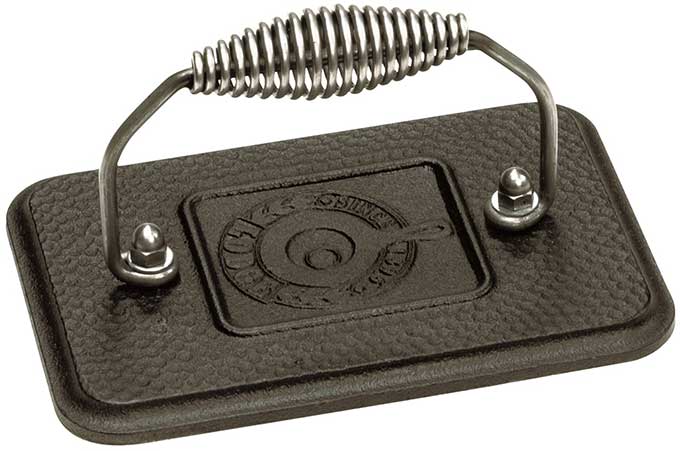
Killer new grill, Montreal steak seasoning, luscious thick steaks. What was amazing to me? That I hadn’t thought ’til then to consider Cutco’s “Table Knife” a Cool Tool.

What must be 20 years ago, Honeypie said to me, “The Cutco person’s coming over tonight.” No clue what that meant, but after a little discussion I put fresh, badass edges on our set of excellent kitchen knives.

Our visitor: “Here, cut this piece of sisal rope with your knife.” I sawed with my Chef’s knife and finally had a shiny crisp end. “Now try the Cutco.” Zip zip, through! Huh, I didn’t expect this…

“Cut this piece of leather with your steak knife.” Our steak knives at the time weren’t good, and it was an embarrassing struggle. Then the “Try this” and another zip, zip gave a good clean cut.

I was absolutely amazed and we bought a set. And all this time later, they’re still amazing. We could ship them back for free sharpening – but we’re still using the original edges, and they still glide through all sorts of meat with ease.

Cutco’s Double-D edges are the thing. We love them.

-- Wayne Ruffner  

[Note: My family has owned Cutco knives since I was a kid (I've got the cuts to provei it), and we've only had positive experiences with their products and support. With that ind mind, before you order you might check around to see if any of your friends or their children are working for Cutco as I'm sure they would appreciate the commission.--OH]

Cutco’s Table Knife
$33 individually, $107 for 4-piece set

Available from and manufactured by Cutco


Stainless-Steel Stove-Top Popcorn Popper and Coffee Roaster

Roasting coffee at home is one of the best kept secrets. You get far superior coffee at a much lower cost – and I live in Seattle so I’m comparing this with the best roasters around. It’s easy to do, takes about 20 minutes (basic instructions and links below) and produces about a pound at a time. I’ve been roasting 1-2 times a week for over 2 years.

This popcorn popper is much like the previously reviewed Whirley-Pop Theater Stovetop Popcorn Popper but it is significantly more durable in material (stainless steel vs aluminum), gauge (much thicker) and gears (metal vs plastic). This is important when roasting coffee (vs. popcorn) because it is much heavier and puts significantly more strain on the parts. Also, heavier pots distribute heat better.

Why Roast at Home? Because you have a far bigger selection of beans to choose from so you can cater to your personal taste (chocolate, lemon hints, molasses, florals, etc.). Grean beans are much cheaper than roasted. Freshness is probably the biggest factor in coffee taste and unless you are picking your coffee up from a roaster the chances are you’ve never had really fresh coffee.

Why Stovetop? Many home roasters use old air poppers as roasters. These can work fine but you need to get the correct air popper (new ones usually don’t work). They are much harder to control and they make a serious mess (when fresh beans are roasted the outer skin cooks off as a light chaff which air poppers blow all over the place). Home roasters (previously reviewed here) give you far less control and typically involve somewhat laborious cleaning of parts. Also the inexpensive ones don’t handle the chaff problem. Air poppers and home roasters also provide almost no way to control the considerable smokiness of the process which is why most people use them outdoors.

Stovetop Method: Sweet Maria’s has a whole section on this as well as adaptations made to this popper (have it do the work for you by adding a drill to do the stirring!) and the many cool devices people have hacked together for home roasting using everything from old BBQs to hot air guns which is one of the reasons they are the best home coffee site around.

Stovetop Popper Options: This popper varies in price so you might want to start with the previously reviewed whirley pop. It costs $21 and I used at the beginning. I switched once I knew I would be doing this a lot and for a long time to come. I’ve been using this popper for almost 2 years and it’s never been cleaned and it works like a charm – well worth it. Replacement gears are available for a few bucks online and they will eventually wear out (especially if you use a drill for stirring instead of your hands).

Jump In!: Reading about coffee roasting is worthwhile and Sweet Marias has everything you need to know. The only problem is that it will make you think it is far more complicated than it really is. The bottom line is that it takes a little practice and once you have done it you realize you just have to get the temperature right and watch/listen/smell for the obvious signs of it being ready. Don’t be put off just jump in and try it. I’ve tried many DIY things from the Arduino to making jam and I can assure you that this is the easiest and most rewarding of all them.

-- Charles Borwick  

[We first reviewed the Stovetop Popcorn Popper and Sweet Maria's here in 2010, but thanks to Charles we're highlighting the wonders of simple home-roasting again!--OH]

Stainless Steel Stove-Top Popcorn Popper
$31
Available from Amazon

Sweet Marias
Available from http://www.sweetmarias.com/index.php


Tovolo King Cube Ice Tray

I don’t own a fridge with an ice maker, and so for the past few years have been relying on the cheap white ice trays that seem to inhabit everybody’s freezer. They’ve done their job, but never very well. Recently, however, I picked up the Tovolo King Cube Ice Tray, and have been blown away with the oversized ice cubes it produces.

The silicone ice tray produces the largest cubes of ice (they’re 2″ x 2″) of any tray I’ve seen. Outside of being a gigantic novelty, the increased size is a boon as it reduces the surface area to volume ratio. This means the ice melts slower in your drink keeping it cold longer while minimizing how much it waters down your drink. I hadn’t expected it to make that much of a difference, but it’s really astonishing how much longer the ice remains in the drink. I’ve found these large cubes are downright perfect for cocktails like a gin and tonic, and while I’m no whiskey connoisseur I imagine they’d be even more at home in a scotch on the rocks. Simply put there’s something special about having an oversized piece of ice clinking in your glass.

Another design plus is that the silicone tray holds a greater volume of water than other ice cube trays I’ve tried (which all seem to hold a pitiful amount of water), while taking up less valuable freezer real estate (the tray is significantly taller, and not as long as my old trays). Popping the ice cubes out takes a bit of wrangling, but no more so than cracking traditional ice trays, and because silicone is a good insulator you’re not left with ice cold hands in the process.

The only downsides I’ve found so far are that the flexible silicone tray can twist and bend and slosh while finagling it into the freezer, and the fact that it only makes six cubes at a time. This hasn’t been a problem for me as it takes fewer cubes (read: one) to cool down most drinks.

Overall, these big ice cubes are just plain cool, and for $8 it’s a cheap and functional upgrade to any freezer.

-- Oliver Hulland  

Tovolo King Cube Ice Trays
$8

Available from Amazon

Manufactured by Tovolo


Garlic Twist

We’ve always used a standard, run-of-the-mill garlic press, probably just because it was what was in the drawer. It only used half the clove. It was a pain to clean. And stinky hands were hard to avoid. It’s a device whose engineering is outdated.

We were downtown recently, just having finished brunch, and decided to walk around the square. Just a couple of doors down we have a cute little kitchen store. It’s always a fun place to cruise, and as I’m checking out, with a brand-spanking new garlic press in my hand, there at the register is a box labeled Garlic Twist. It was the same price as the garlic press so I swapped.

This thing is awesome. Give the cloves a whack with the bottom of the press (it’s nice, sturdy acrylic). Remove the outer layer and toss them in the garlic twist. Slip the lid on and twist the top and bottom in opposite directions. Stop twisting when the garlic is the desired consistency. It works equally well with a single clove or a handful.

The package says you can also do ginger or olives or cherries. I haven’t tried that, but it should work just as well.

-- Melissa  

Garlic Twist
$17

Available from Amazon

Manufactured by Garlic Twist


Omega 8004 Juicer

A few months ago a friend recommended that I watch two movies, Forks Over Knives and Fat, Sick, and Nearly Dead. Consequently, I have significantly modified my diet, and part of that has been drinking a lot of fresh juice. Before purchasing a juicer I extensively researched what was available and ultimately purchased the Omega Juicer 8004.

I have been using the Omega juicer twice daily for the past few months. There are two major types of juicers, centrifugal and masticating. The Omega 8004 is the later. Centrifugal juicers have higher juice yields for some times of fruits and vegetables and are a bit faster than masticating juicers, but masticating juicers are better for a litany of reasons.

First, they’re quiet. The Omega juicer operates at about 80 RPM and operate at a tolerable decibel level. Centrifugal juicer are LOUD. I have not experienced in person, but there are several videos on YouTube where the presenter has to yell over the noise generated by centrifugal juicers. They also work better with leafy greens like kale, swiss chard, spinach, etc. They also can be used for a variety of tasks. Masticating juicers are multifunctional in that they can be put to use making pasta, nut butters and milks, and baby food.

One of the biggest reasons the Omega 8004 is superior is because it is easy to clean. It disassembles quickly and the parts can be cleaned in just a minute or two. The construction is also quite solid. The Omega 8004 and its slightly more expensive counterpart the Omega 8006 are the only juicers on the market that have a 15 year warranty. And the only difference between the 8004 and the 8006 is the finish: the 8004 is white plastic and the 8006 has a black and chrome finish.

On the downside it is ugly, but in my opinion all juicers are ugly and in this case it is a question of function over form. It also has a large footprint compared to other juicers, and this is an issue for people who have small kitchens. I live in New York, but am fortunate enough to have a decent sized kitchen

One other small (sic) issue is the size of the feed tube, which is rather narrow (about an inch and a half in diameter), which makes it necessary to cut up fruits and vegetables a bit more than some other juicers on the market.

Omega has another line of masticating juicer which are “vertical” taking up less counter space, have larger feed tubes, and are highly recommended by people who seem to know what they are talking about on the Internet. However, they are a lot more expensive.

I chose the 8004 over the Omega vertical models, because the 8004/8006 seemed mechanically simpler and has a 15 year vs. 10 year warranty. Overall, I have found the Omega 8004 easy to use and actually fun. The variety of juice you can make is amazing. I will let others discuss the health benefits of juicing, but unscientifically after using it I have lost some weight and feel really great.

-- Max Abramowitz  

[Brian Lam over at The Wirecutter has an extensive (and I mean extensive) review of the Omega 8003 Juicer (a slightly cheaper variation of the 8004). I highly recommend taking a look at his long form review.--OH]

Omega 8004 Masticating Juicer
$256

Available from Amazon

Manufactured by Omega Juicers

Long time readers might recognize that we've published a review of the Omega Juicer in the past. Given that we frequently receive rave reviews for this product we felt it deserved an update. --OH


Korean Stainless Steel Spoon and Chopsticks

chopsticks.jpeg

Since experiencing the canteen at a Korean chaebol three years ago, Korean cutlery has been in heavy use at my house. The spoon — with its long, slim handle — is just the right size and heft for everything from cereal and soup to ice cream. The flat steel chopsticks are short enough to get a good grip on most food, and will survive dishwashing forever. A pair of cheap Korean chopsticks also does double duty on my workbench as general purpose drifts, picks and levers for fiddly work.

You can pick up a basic set for about $3, and really well-finished sets come in at around $10. These are simple, well thought-out utensils that easily match the knife and fork for table use.

-- Stewart Russell  

Korean Stainless Steel Spoon and Chopsticks
$5

Available from Amazon

Manufactured by eKitron


Kuhn Rikon Pressure Cooker

kuhn rikon.jpeg

This is not your grandmother’s pressure cooker. Modern day versions are safe, easy to lock tight and are far quieter than units of yore. I can’t imagine my kitchen without one. The convenience plus time and energy savings associated with making things ranging from roasts to perfect risotto and even desserts is incredible. On top of that, everything inevitably turns out tastier and more nutritious than it would otherwise.

For the uninitiated, pressure cooking is a method of cooking in a sealed vessel that does not permit air or liquids to escape below a certain pressure. Pressure is created by boiling a liquid, such as water or broth, inside the closed pressure cooker causing the trapped steam to increase the internal pressure and temperature. This causes wet steam (or “saturated steam”) to be forced through the food and results in faster cooking times compared to conventional cooking methods. Once pressure is reached, the heat source can be dialed down significantly to maintain proper pressure for cooking. Pressure is slowly released through an external venting mechanism so that the vessel can be safely opened. A pot roast can be ready in 45-minutes, potatoes are cooked through in 10, broccoli and other vegetables barely take 5-minutes (at pressure) to become tender.

I’ve owned several brands and sizes over the years, but my favorite by far is the 6 qt. stockpot model made by Kuhn-Rikon of Switzerland. This unit, while not cheap, is extremely well-built, whisper silent and has multiple safely mechanisms built-in. Unlike the classic stream-release versions with the loud jiggly knob on top, this design retains most of the moisture, thus minimizing the amount of liquid required to get up and stay pressurized.

There are many less expensive, good quality pressure cooker alternatives out there that will serve you well, but I believe my Kuhn Rikon cooker will last for years of frequent use and look good doing it.

-- R. S. Parikh  

Kuhn Rikon Duromatic 6-L Stockpot Pressure Cooker
$203

Available from Amazon

Manufactured by Kuhn Rikon


Hario Skerton Hand Crank Coffee Mill

hario skerton.jpeg

One of the first things one learns when one gets serious about coffee is never, ever to use those whirring coffee grinders with the blades. To make consistently good coffee, you need an adjustable burr grinder, for which you could spend hundreds of dollars.

I don’t have hundreds of dollars, but I do have this diminutive, inexpensive and nearly perfect burr grinder by Hario. They call it a “Skerton” by which I think they mean “Skeleton” but what do I know?

It is extremely well made, with a ceramic burr; it’s easy (although a little imprecise, until you get to know it) to set the desired grind, it does the job every bit as well as the expensive grinders, and I find that hand-grinding has become a lovely part of my daily coffee ritual.

Caveat: If you are grinding for more than two people, you will find that it quickly becomes a pain in the butt. But it’s a perfect tool for traveling, and when you combine it with an Aeropress there is no better way to grind and brew a cup at a time.

-- Peter Dworkin  

Hario Skerton Hand Crank Coffee Mill
$40

Available from Amazon

Manufactured by Hario


Canning for a New Generation

canning1.jpeg

This is not your grandma’s canning book. Preserving is not really cheaper, nor is it a survival and disaster remedy. Canning these days makes sense as a culinary endeavor — because you can make preserves that taste better, or are far more varied than anything you can buy. This book is the best of a bunch of new guides on modern canning techniques and recipes (like Put ‘Em Up, which is decent but not as good). I prefer the recepies in Canning for standard items like james and jellies because it calls for far less sugar than other books, and it has a wide range of culinary influences. The book is also intelligently and simply designed with beautiful illustrations of the preserved treasures.

-- KK  

Canning for a New Generation
Liana Krissoff
2010, 304 pages
$15

Available from Amazon

Sample Excerpts:

When I was growing up, canning was for old folks and cranks and separatists –oh, and for my parents, who spent every summer of my Virginia childhood scrambling to convert overflowing bushel baskets of fruits and vegetables from their garden into a pantry lined with shelf upon shelf of colorful canning jars, not to mention a stuffed-to-the-rim chest freezer or two. Not for me. I had better, far more important things to do. I can’t remember what they were.

*
canning2.jpeg

*

For me, putting up the very best produce I can find in season–especially if it’s homegrown or from a nearby farm–is quite simply a way to spend some marginally productive time in the kitchen, preferably with my family and friends. Opening the jars and enjoying them later, I’m reminded of those fun times of tasting and talking, usually about food but also about music and politics and everything else that matters. In addition, taking on a kitchen project of a certain complexity, like canning or pickling or fermenting (or smoking meat or stuffing sausage or aging cheese), helps me remember what food was like when I was a kid and my mom and dad did these things, and what it might have been like when they were kids.

*

Low-sugar jams and preserves

The jams and fruit preserves in this book are all quite low in sugar, simply because I think looser, less-sweet spreads taste better than sticky, cloying ones. Most contain fresh lemon juice, which is added primarily for flavor but also to up the acid content a bit. The jams and preserves have a remarkably intense fruit flavor because excess water is cooked out rather than gelled with store-bought pectin.

*

Real pickles

Here you’ll find everything from refrigerator pickles in vinegar brines that will last a few weeks or months in the fridge and don’t need any processing, to canned quickly brined pickles that will last a year in the pantry, to long-fermented pickles made sour by fermentation, to Indian and Middle Eastern-style “pickles” such as citrus preserved in salt. Most pickles are low in sugar, but not low in salt (which I fervently adore) or delicious tanginess, whether it’s that sharp bite of the acetic acid in vinegar or the mellow tang of fermentation-produced lactic acid.

*

So there you go. Heating to kill off existing microorganisms, processing to create a vacuum and prevent introduction and growth of microorganisms, and using high-acid foods or acidulating those that are not in order to create an acidic environment that’s inhospitable to microorganisms.

*

Quick, High-Yield Strawberry Jam: Makes about 7 half-pint jars

Here’s a basic jam recipe that uses Pomona’s Universal, a commercial sugar-free low-methoxyl natural pectin derived from citrus rinds. It can be used in low- or even no-sugar recipes because it’s activated by calcium rather than sugar. You can adapt it to just about any fruit. If what you want is a lot of jam from not a lot of fruit (say, if you’re making a big batch to give as gifts), and if you want to cut back dramatically on the sugar content, this is the way to go. This jam, while not as intensely fruit-flavored as the no-commercial-pectin preserves in this book (here you’re essentially gelling the water that in other recipes is cooked off), will be thick, semi-firm, and light–a refreshing jam, if you will allow that such things exist. Pomona’s Universal can be found at health-food stores or online (see Sources, page 291).

*
canning3.jpeg

Strawberry Jam with Thai Herbs: Makes about 4 half-pint jars

This is a sweet-tart preserve, but the mineral cilantro, fragrant thai basil, and fresh mint give it a complexity reminiscent of a good, well-balanced yum, or thai salad. Strawberries pair so well with herbs, and indeed all sorts of crazy savor things–balsamic vinegar with strawberries being one surprisingly long-lived trend–that it didn’t take much to come up with this extraordinary jam. Try this: Go out into the herb garden with a plate piled with halved berries and a little mound of sugar. (Or gather a bunch of leftover herbs from the refrigerator, or befriend a generous herb grower.) Dip a berry in the sugar, and pop it in your mouth with a few leaves of different herbs, tasting and tasting until you come up with a combination you like. It’ll be a little different from the actual jam, of course, but you’ll be able to tell if you’ll like the finished result.

*
canning4.jpeg


In the Land of Cocktails

cocktails.jpeg

This is a simple, bright and colorfully illustrated book from the proprietors of Commander’s Palace in New Orleans. It looks and feels like something from the French Quarter, and could easily pass for a children’s book if one were to quickly flip through it.

I cannot recollect how I came to purchase this book, however, I have searched for, and invested in, my share of cocktail books. What I have found over the years is that this is the only book that I consistently reach for in making cocktails at home. It has great recipes, is full of sound and logical tips, and has provided me so much useful and memorable history and background regarding this art form that I consider it essential. I believe you will as well.

-- Leo Ishibashi  

In the Land of Cocktails: Recipes and Adventures From the Cocktail Chicks
Ti Adelaide Martin and Lally Brennan
2007, 169 pages
$14

Available from Amazon

Sample Excerpts:

Angostura v. Peychaud’s Bitters
There are many kinds of bitters available, but angostura and Peychaud’s are used most frequently in cocktails. Bitters add another dimension to cocktails, much like using the right salt when cooking. Both are made with herbs and spices, including the bitter herb gentian, but each has its own flavor profile. Angostura is earthier, with a more pronounced orange flavor, while Peychaud’s is local to New Orleans, but can be ordered online at www.sazerac.com/bitters.html.

Antoine Peychaud brought his family bitters recipe from the island of San Domingo to New Orleans and set up an apothecary on Royal Street. He dispensed medicines but became famous for his bitters, a tonic and cure for stomachaches. These bitters gave an added spark to the potions of brandy he served in eggcups, known to the French-speaking population as coquetiers. Soon, those who spoke less-than-perfect French were calling the spiced drink a “cock-tay”. Imbibers slurred the word into “cocktail” and the rest is history. The Peychaud’s label still reads today as it always has, “good for what ails one irrespective of malady.” Now there’s a health claim we can relate to, and we can vouch for its veracity, too.

*
Brandy Alexander
There are two schools of thought on the Brandy Alexander: those who consider it an eye-opener and make it with heavy cream or milk, and those who enjoy it made with ice cream and served as a dessert or after-dinner drink. The breakfast version is first, followed by the late-day recipe.

Makes 1 cocktail
1 1/2 ounces brandy
2 ounces heavy cream
1 ounce dark creme de cacao

Combine all the ingredients and 1 cup of ice in a blender. Blend on slow speed until frothy and well combined. Pour into a rocks glass and serve immediately.

Makes 1 cocktail
2 ounces brandy
1 ounce dark creme de cacao
1 cup good-quality vanilla ice cream

Combine all the ingredients in a blender on slow speed until just thick. Pour into a brandy snifter and serve immediately. (p. 108)