Become a Patron!Support our reviews, videos, and podcasts on Patreon!
Cool tools really work.
A cool tool can be any book, gadget, software, video, map, hardware, material, or website that is tried and true. All reviews on this site are written by readers who have actually used the tool and others like it. Items can be either old or new as long as they are wonderful. We post things we like and ignore the rest. Suggestions for tools much better than what is recommended here are always wanted.
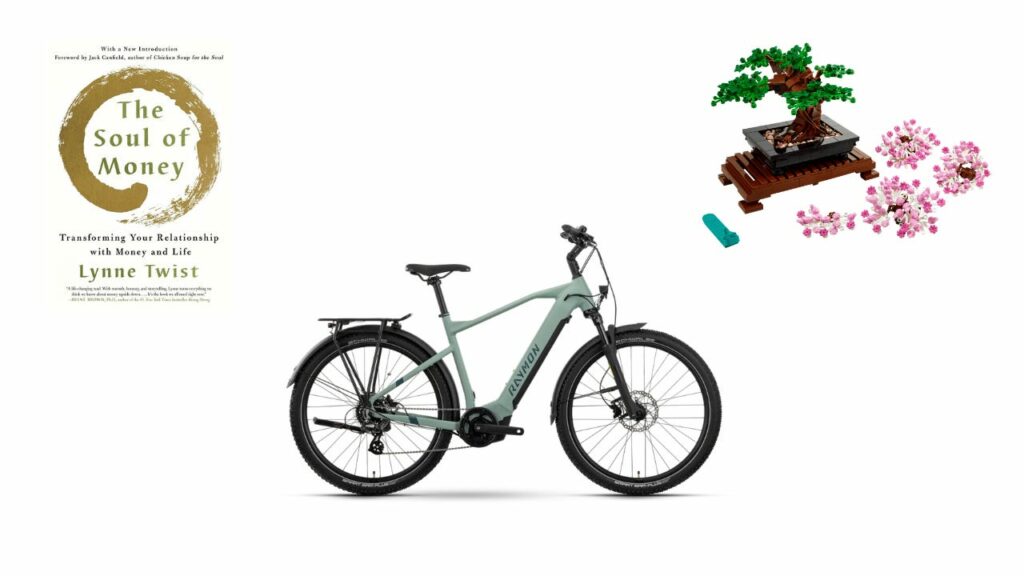
Raymon Tourray Select 27.5” 2025 (Anthracite Black) — This is my latest addition — and my everyday means of transportation. With a fully charged battery, I can ride up to 113 km. It has been a fun change from a regular bicycle. Although I still ride my ordinary bikes too. What surprises me most is the power of an electric bike. It simply launches from a standstill, thanks to the mid-drive motor. No wind or hill feels intimidating anymore. This bike is German-made.
LEGO Bonsai Tree — A lovely little decoration — and something that gives you about an hour of fun while putting it together. :) You can swap the leaves for flowers depending on the season or your mood. I don’t own much LEGO, but I really liked this particular set. It now lives on my bookshelf. It’s beautiful to look at — and, honestly, fun to pick up and play with.
The Soul of Money — An inspiring non-fiction book about philanthropy, told through real and vivid stories. The author has raised a significant amount of money for charitable causes and shares what she has learned along the way. The way we think about and handle money can tell us a lot about who we are. In a way, this is also a book about the soul — and how it can change. Above all, we need to remain human.
DIGITAL
Linux Mint 22.3 — Switching to Linux has been an amazing experience. Before that, Linux was surrounded by all kinds of myths and legends in my mind — that it was mainly for hackers, programmers, and people who spend their lives staring at terminals. But after installing it, I realized that almost everything I used to do on Windows could also be done on Linux. You just need to learn a little. Now Linux Mint is my main operating system. I’ve even become friends with the terminal. And I have to admit — I kind of enjoy watching all those numbers and letters scrolling across the screen.
Claude Code — I started using Claude Code recently, and I’m still enjoying it. You simply tell it what you want to do in your project, and Claude Code does it. As a beginner, I find that incredibly exciting. I don’t need to know every detail of programming — Claude can write the code for me. It’s a great way to get started when you want to learn programming and actually build something.
INVISIBLE
Psalm 23:1
The LORD is my shepherd; I shall not want.
Sign up here to get What’s in my NOW? a week early in your inbox.