02 November 2026
Off-Road
Tools for Possibilities: issue no. 214

DIY tours
Packaged adventure tours can be fun and useful. A guided hut-to-hut walk in the Italian Alps, or a bicycle tour around the villages of Rajasthan, or a kayaking cruise between Caribbean islands are fantastic journeys that can be hard to program yourself. A good adventure tour agency knows how to smoothly sequence events like this, and on higher-price tours you may get a guide as well.
But I prefer to create my own adventure tours, because I can save many thousands of dollars that way. I use the commercial adventure tour itineraries as a basis for my own travels, and then modify them as needed. The way I figure it, if they can move a dozen people along the route, I should be able to do it with one or two. The most reputable agencies publish their itineraries online in great detail as a sales incentive. But to complete many of the routes they are selling requires private transportation or special accommodations. You might need a pick-up or delivery at a trail-head, or a jeep to reach a village, or even a plane flight, etc. This is where many budget travelers stop. It took me many years to realize that in most places in the world today — even developing nations — it is not hard, or very expensive, to arrange private transportation or expert help. And with the internet, these arrangements can be made beforehand. I’ve pre-arranged jeeps, vans, buses, and boats. The simple rule of thumb is: if a US-based tour agency can pre-arrange it, you can too, and at a great savings.
It will take some time and googling to arrange all the parts of an adventure tour, but the payoff is that you can replicate the same tour for about 1/5th the cost of the glossy professional version. So now I page through the adventure travel sites discovering all kinds of nifty tours I would have never thought about doing. Unlike the unconnected places in a guide book, there’s a logical flow to an itinerary, and because of their high prices, these agencies will hone and optimize a trip for peak experiences. A key thing: pay attention to the time of year they run a tour, which is again highly optimized. Still I wind up modifying them in some way for my own use. I usually chop off the leisurely entry in a big city and head directly to the adventure (I call that laser-forward-slow-back travel).

Adventure Tour Agencies
- National Geographic Expeditions
- Wilderness Travel
- Geoex
- AsiaTranspacific
- Africa Adventure
- Zegrahm
- Journeys International
Some famous adventure travel companies specialize in highly-refined premium tours around the world, but they may be low on actual adventures. For instance I find National Geographic Expeditions’ trips (better than their Adventure trips) involve more car and plane travel than suits me, but occasionally they’ll have a nice gem worth replicating. Wilderness Travel gets you walking or kayaking a bit more, but still cover more miles in vehicles than I want, but I have used their itineraries a few times with great success.
Geoex offers pretty cool offbeat trips I’ve not seen elsewhere, but they also have plenty that are too mileage-hungry to count as an adventure. AsiaTranspacific specializes in Asian trips, a few of which stay close to the bone. For Africa and animals I look to Africa Adventure; they have a really good season chart for best times of year and parks for wildlife viewing. I like Zegrahm for inspiration. They do real off-the road adventures, including trips one might describe as “expeditions” which is more my kind of adventure travel.
But of all the tour sites, the one that has provided me with the most appealing itineraries is Journeys International. They emphasize in getting you to walk, hike, bike and kayak and this is really the way to go anywhere. Almost any one of their itineraries would yield a fantastic adventure.
Remember, I have no personal experience with the tours given by any of these outfits. I only use their freely published routes. All these tours are super expensive if you buy them but I would bet they would be really fun and generally well done. I recommend them here only as models to assemble your own. — KK
Serious off-road survival
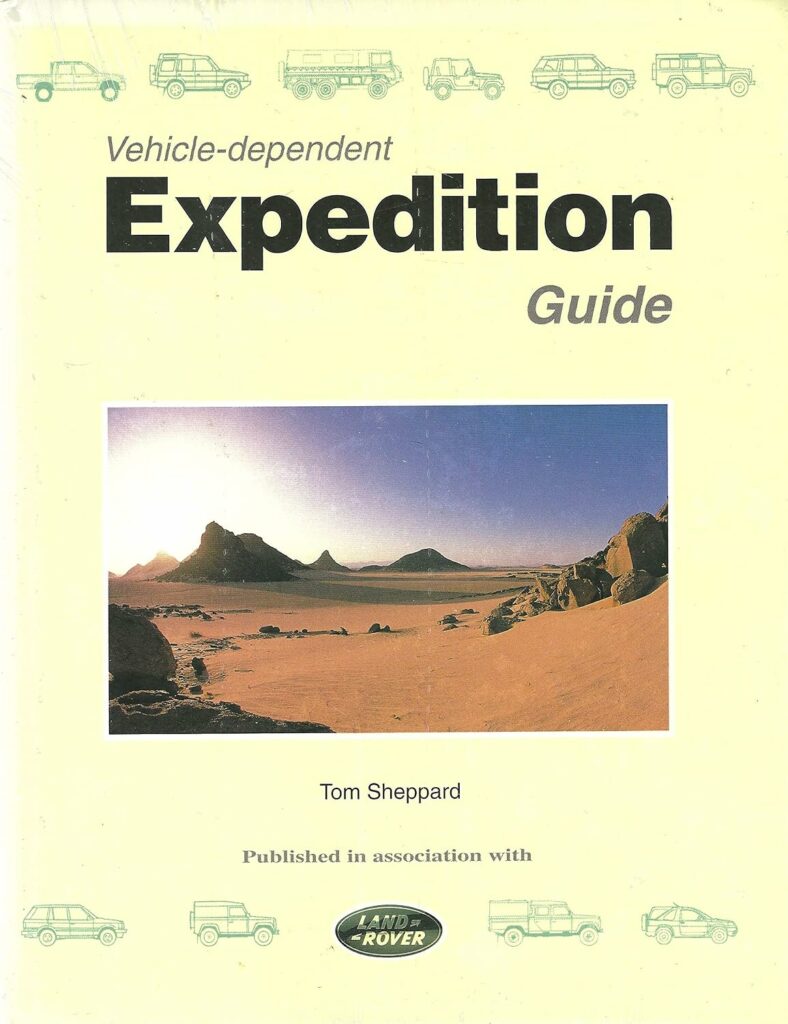
Vehicle-Dependent Expedition Guide
This great book is unfortunately expensive and difficult to find. However it is the most stunning collection of vehicle expedition lore anyone is likely to encounter. It lists everything from how many Land Rover Defender 90’s you can fit in a cargo container, to what socks to wear while driving in the desert. It is extremely detailed, does not shy away from product names, and is rife with real-world life-saving data. It includes tons of information on planning, visas, customs, shipping, survival, vehicle set up, driving tips, GPS and traditional navigation etc. On top of all that the writing style is matter of fact, the book is very well organized, and the photos and examples are inspiring. The most surprising fact that I learned from this book was how much weight matters, just like backpacking and mountaineering, it is the single most important thing to minimize in vehicle expeditions. Weight adversely affects handling, fuel efficiency, acceleration, braking, and your ability to traverse sand, mud, or steep grades. The $150 spent on this book will save anyone thousands on any offroad trip or expedition they are undertaking. — Alexander Rose

Best of the world
I’ve slowly clued into the fact that there is a network of “World Heritage” monuments, sites, and natural parks throughout the world–places that are deemed unique enough, or endangered enough, to deserve funding by UNESCO. A cultural site can be a monument, a group of buildings, or an entire city. But to be granted a World Heritage designation, it must “represent a masterpiece of human creative genius; or bear a unique or at least exceptional testimony to a cultural tradition or to a civilization which is living or which has disappeared.”
I like to think of these creations as the Best of Civilization.
Almost every country has at least one site, and sometimes many. Some places are justifiably famous, but many are mysteriously overlooked. Heritage sites are always among the most interesting destinations to visit in any country, well worth going out of your way to see. The sites range from ruins like the famous Inca Machu Picchu, to the less known ancient city of Fatehpur Sikri, India, to preserved towns like Visby, Sweden, to unspoiled wilderness areas like the Galapagos Islands. In total UNESCO lists 788 sites in 100 countries, which also include about 150 natural sites, deemed “areas of exceptional natural beauty and aesthetic importance” or outstanding bio-diversity.
In my travels I’ve learned to seek them out.
For a full list, and criteria, see World Heritage List. — KK
- BULGARIA (Year added to list)1979 Boyana Church1979 Madara Rider1979 Rock-hewn Churches of Ivanovo1979 Thracian Tomb of Kazanlak1983 Ancient City of Nessebar1983 Srebarna Nature Reserve1983 Pirin National Park1983 Rila Monastery1985 Thracian Tomb of Sveshtari

Exploring with a vehicle
This is a more affordable version of Vehicle Dependent Expeditions. For $30 you’ll get most of what is in that $100 plus book. In fact, this Handbook is more practical, with the kind of information you would want to take with you on a rough vehicle expedition, while Expeditions is more for pre-planning your trip. Think of it as the Lonely Planet guide to overlanding. — Alexander Rose
- The single biggest mistake first-timers make is over-equipping and overloadingtheir vehicle.
- Do You Need a Powered Winch?A powered winch may be crucial to the ‘expedition look’, but the received opinion from most 4×4 overlanders who’ve been there and got stuck is that, unless you’re looking to push your 4×4 to the limit, there are many other more useful items.However they’re powered, the typical permanent front mounting will be at the wrong end more than half the time and on many occasions there’ll be nothing close enough to winch off unless other vehicles are present. And if they are, chances are they can simply pull you out.
- Shipping involves so many entities that it’s very difficult to discern where a service charge ends and a bribe begins.
- You must also be very conscious of your situation and the local culture. In many developed countries, an attempted bribe could land you in a lot of trouble. On the other hand, in some countries, without a small bribe your vehicle could turn to rust before you get the single stamp you need on your temporary import document.
Once a week we’ll send out a page from Cool Tools: A Catalog of Possibilities. The tools might be outdated or obsolete, and the links to them may or may not work. We present these vintage recommendations as is because the possibilities they inspire are new. Sign up here to get Tools for Possibilities a week early in your inbox.
11/2/2601 November 2026
Credit-card-size e-reader / TV ads removal / The Invisible Encyclopedia
Recomendo - issue #538
Credit-card-size e-reader
I cracked my Kindle’s screen a month ago, and when I looked to replace it, I was surprised by how much prices had jumped. So I tried the XTEINK X4 Pro, a pocket-sized e-reader no bigger than a credit card. Its screen light adjusts from warm to cool, and it lasts for weeks on a charge. It reads EPUB, PDF, MOBI, and text files and holds 16GB of books. The drawback is that it can’t read Kindle books. A fan community has built a free replacement operating system called CrossPoint that adds features, including a way to read Libby library loans, but it takes some tinkering. At $99, it’s much cheaper than a Kindle, and it snaps magnetically onto my phone so I can take it everywhere. — MF
TV ads removal
The promise of coding AIs is that it is super easy to take control of your devices. You just ask Claude to write you a program to do what you want on demand. As an example, folks are vibe coding apps to remove all the ad clutter on their TVs. This article in TechCrunch reports on this guerrilla frontier with two vibe apps that do just that. Employing AIs to remove ads is almost sacrilegious, so it will be interesting to see how the media companies respond. — KK
The Invisible Encyclopedia
The Encyclopedia of Invisibility is a collection of people, events, and ideas connected by invisibility—things that are deemed hidden or erased from history. The entries listed on this webpage are just a tiny sliver of what the artist Tavares Strachan compiled for the actual 2,400-page sculptural book. I think what makes it contemplative and “artful,” even as just a link dump, is how differently invisibility is measured. Some entries are literal, like dark matter and glasswing butterflies. Others inform us about the things that have been erased from cultural memory, or that have gone extinct or have been destroyed. — CD
Mesmerizing card shuffler
The Lotus ($89) is a cleverly designed card shuffler that can shuffle up to two decks at a time. It’s a black plastic box with a folding top. Place the deck in the center and touch a sensor; a pair of silicone rollers then divides the deck into two stacks on either side. Then you pick up the two stacks, put them back in the center, and repeat. Each pass takes about five seconds, and the site suggests repeating it three to seven times. It runs on a standard 9V battery, which is included and rated for more than 500 shuffles. It folds shut with the cards inside, which makes it easy to carry. It’s a joy to watch in action, and it would make a great gift for anyone who plays card games. — MF
Save Page Now
This is more of a public service announcement than a recommendation. I recently tried to load a page I’d bookmarked, but it was gone, and when I checked the Wayback Machine, I was so sad to see it had never been captured. So I finally downloaded the Internet Archive’s browser extension, which now auto-saves every page I bookmark. If you’d rather not give an extension access to your browser, you can paste any link into Save Page Now instead. — CD
Heritage scissors
I overpaid ($48) for a heavy duty scissors, but I think it is worth it because it will not only outlive me, but my great grandchildren as well. The Craighill Chroma is a heavy duty, stainless steel, super sharp, ergonomic, colorful, makes-me-happy-to-use-it 8-inch scissors. Most fine scissors have slightly curved blades to ensure a cut, but these are so hefty the blades are straighter, so have less friction, to make each cut effortless. I keep mine on my desk so I can see and enjoy its tri-colors. Makes a great gift, too. — KK
THIS ISSUE IS SPONSORED BY Incogni
Searching yourself on Google or ChatGPT exposes shocking details like your address, SSN, and financial records. Incogni’s Unlimited plan automatically erases your sensitive data from online brokers, protecting you from identity theft and fraud. Get 58% off with code RECOMENDO
Sign up here to get Recomendo a week early in your inbox.
11/1/2631 October 2026
Gar’s Tips & Tools – Issue #216
Access to tools, techniques, and shop tales from the diverse worlds of DIY
The Accessible Workshop
Adaptive Tools That Make Your Work Easier
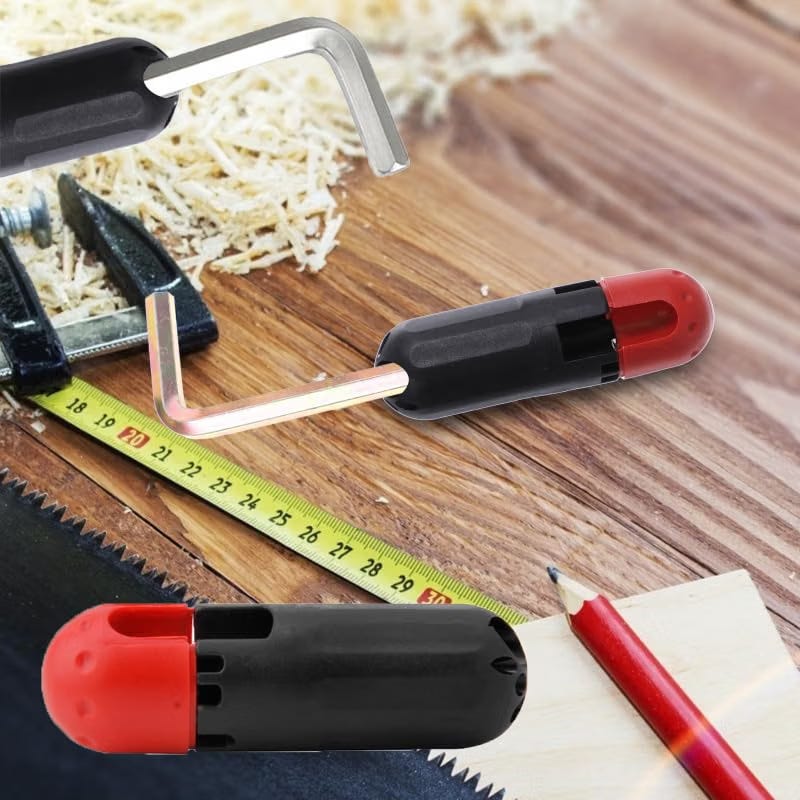
Hex Key Handles
How did I go so long without one of these simple hex key T-handles? I’ve known about them for years and thought about them every time I was cursing my way through assembling flat-pack furniture, I finally got some, and they’re great. I got a pack of three cheap, chunky plastic ones and the size is perfect for confident gripping with arthritic hands. The handles are made to accept a variety of common hex sizes, and they’re designed to be used either in a T- or L-handle configuration. At under $2 each, you definitely want some of these around your home and shop.
Exploring Weird Tools Concepts and the Infimaker 5-Axis Desktop CNC
While this Laura Kampf video is basically a promotion for the forthcoming Infimaker 5-Axis Desktop CNC, it uses that opportunity to explore an “Is this crazy or clever?” idea. Laura wants to know if there’s any real value in a disk-shaped measuring tool that you keep in your pocket and roll across surfaces and material for rough measuring. She uses the Infimaker to go down the rabbit hole of the idea to see if it’s worth pursuing. Moving quickly (and cheaply) from idea to prototype is a real superpower in developing product ideas, so you can definitely see how a machine like this could be a serious asset. The Infimaker had a successful $4.7 million crowdfunding campaign in Sept. The machines are allegedly shipping in early 2027.
Marveling at Cheap Flat-Pack

My wife recently bought a “baker’s rack” to use as a microwave and coffee stand in her art studio. As soon as I saw it on our doorstep, I knew I had a job ahead of me. The heavy box (for a 21.7” x 14.6” x 49.4” shelving unit) was disturbingly small. I knew it was going to be filled with a TinkerToy collection of short box-tubing components and a big-ass bag o’ hardware. It was.
It took me two nights of after-dinner work to get it all put together. And those hours also became a kind of meditation on the mad genius of international consumer manufacturing and trade.
I don’t mean that as a hymn to global consumer capitalism. There are plenty of uncomfortable questions buried inside cheap imported goods: labor, environmental costs, shipping, disposability. But I couldn’t help marveling at the amount of mostly invisible intelligence embodied in this mundane under-$50 object.
Somebody had to design a nearly 50-inch-tall rack with four shelves, a built-in power strip, and enough strength to hold a microwave, coffee maker, etc. And design it so that it would fit into that alarmingly small shipping box.
Then there’s the manufacturing. There must have been 25 or 30 main components, plus a heavy sack of hardware. The tubing was nicely powder-coated, the shelves were decent, and dozens of holes drilled into dozens of different parts somehow had to line up perfectly. As I worked, I could imagine this deft balancing act of trade-offs around engineering, materials, and precision manufacturing, all within the reality of razor-thin margins.
Somebody designed it. Somebody sourced the tubing, shelving lumber, fasteners, electrical components, and packaging. Somebody worked out the manufacturing, assembly sequence, and instructions. Somebody figured out how to pack it into that tiny carton. Then it entered the vast global Rube Goldberg machinery of factories, warehouses, container ships, ports, trucks, and delivery networks before landing on our porch.
Again, you can’t help but feel like $49 is too cheap, and image the real costs are simply showing up somewhere else. But after two nights of cursing the thing, I found myself admiring it and the processes by which it had come to me. Human beings on the other side of the world had been handed a nearly absurd set of constraints: Make it sturdy. Make it useful. Make it decent-looking. Make all the holes line up. Make it fit into a tiny box. Ship it halfway around the world. And price the damned thing under fifty bucks. How the hell do they do that?
Still Sweet on It
Tools That Remain Favorites
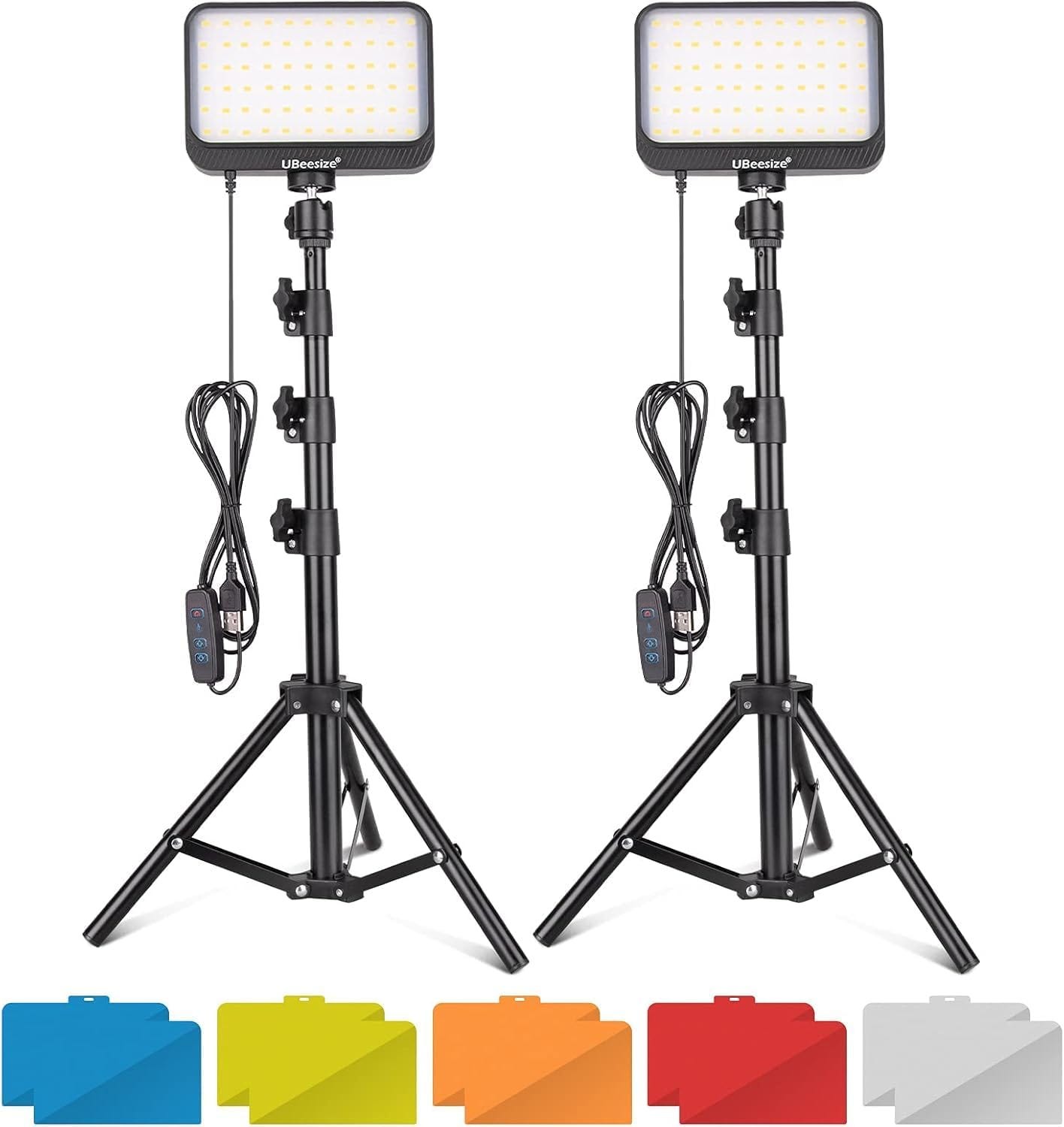
Three years ago, when I got a new remote job that I knew would require a lot of weekly Zoom meetings, I knew I needed decent video lighting for my office. Not knowing what sorts of lights I would ultimately require, I went onto Amazon and ordered a cheap set of LED panel lights on adjustable stands to tide me over until I could figure out what a really needed. Three years later, and I still have the same lights and see no reason to upgrade. When I bought these UBessize lights on stands, they were only $30. Today, they’re even lower, at $25! The stands are a bit rickety, and everything smacks of cost-cutting and minimal amounts of material. But the lights work great, there are four brightness levels, and the stands are adjustable. They even come with five color filters. Honestly, when these eventually die, I’ll likely just get the same ones again. For my needs, they’re perfect. I even sometimes pair them with a USB power brick so I can move them around for close-up photography lighting.
Workshop Setup

In a recent Tools for Possibility on Cool Tools, the subject was workshop setup. There are a lot of really great ideas here, from creating a simple tabletop spray booth from a box and a fan, using PVC pipes for tool storage, and shopping carts as mobile workstations.
Turning a Broken Caulking Gun into a Vise
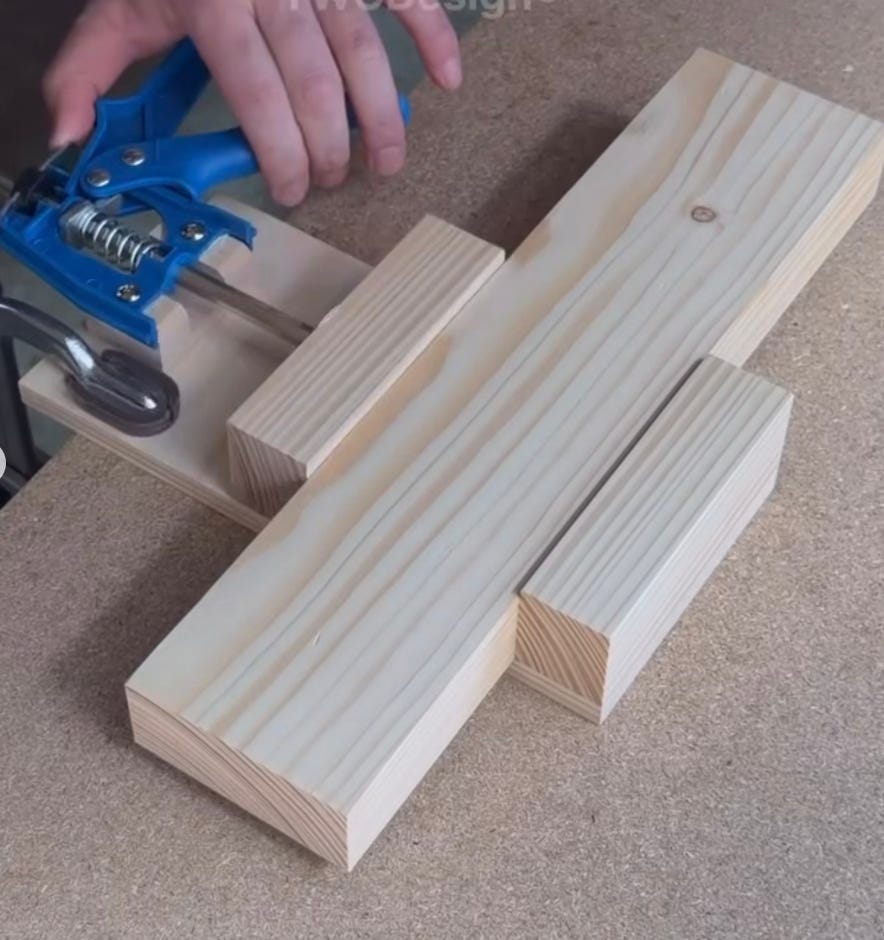
In this Taku Woodcraft Instagram video, Takurou shows how he cleverly constructed a useful bench top cutting vise using a discarded caulking gun mechanism.
Thanks to All My Subscribers!
I now have well over 10,000 subscribers to this humble little newsletter. And 50 paid subscribers. A million thanks to all of you. Doing this newsletters is a true joy for me and I especially like feeling like I’m connected to a community of fellow makers. Thanks to everyone who’s sent me an email, made a comment, shared a tip or tool. Let’s keep the ball rolling for another 200 issues!
If you want to financially support this work, please consider a paid subscription. It helps keep me in PB Swiss. I appreciate you.
A very special thanks to Hero of the Realm subscribers: Moses Hawk, Jim Coraci, Donobster, Peter Sugarman, and Will Phillips for your generous support.
30 October 2026
Book Freak #229: The Social Construction of Reality
How everyday knowledge is built, maintained, and transformed through human interaction

Get The Social Construction of Reality
Peter Berger and Thomas Luckmann’s The Social Construction of Reality (1966) argues that the social world around us, and our understanding of it, is something people fabricated together. Even though we made it, it feels as solid and real as nature, and we usually don’t remember making it.
It reminds me of the “imagined orders” Yuval Noah Harari describes in Sapiens. Enough people believe in money, nations, companies, and human rights that we treat them as real things instead of agreements. The International Sociological Association named it the fifth most influential sociology book of the century.
Reality Is Made in Three Steps
People make the social world, then experience it as a fact outside themselves, then absorb it.
“It is important to keep in mind that the objectivity of the institutional world, however massive it may appear to the individual, is a humanly produced, constructed objectivity. The process by which the externalized products of human activity attain the character of objectivity is objectivation. The institutional world is objectivated human activity, and so is every single institution.”
“It is already possible, however, to see the fundamental relationship of these three dialectical moments in social reality. Each of them corresponds to an essential characterization of the social world. Society is a human product. Society is an objective reality. Man is a social product. It may also already be evident that an analysis of the social world that leaves out any one of these three moments will be distortive.”
Habits Become Institutions
It starts with routine.
“All human activity is subject to habitualization. Any action that is repeated frequently becomes cast into a pattern, which can then be reproduced with an economy of effort and which, ipso facto, is apprehended by its performer as that pattern. … Even the solitary individual on the proverbial desert island habitualizes his activity. When he wakes up in the morning and resumes his attempts to construct a canoe out of matchsticks, he may mumble to himself, ‘There I go again,’ as he starts on step one of an operating procedure consisting of, say, ten steps. In other words, even solitary man has at least the company of his operating procedures.”
Once people share habits and pass them down, they become institutions.
“The institutions, as historical and objective facticities, confront the individual as undeniable facts. The institutions are there, external to him, persistent in their reality, whether he likes it or not. He cannot wish them away. They resist his attempts to change or evade them.”
Language Builds the World
“In the early phases of socialization the child is quite incapable of distinguishing between the objectivity of natural phenomena and the objectivity of the social formations. To take the most important item of socialization, language appears to the child as inherent in the nature of things, and he cannot grasp the notion of its conventionality. A thing is what it is called, and it could not be called anything else. All institutions appear in the same way, as given, unalterable and self-evident.”
Teaching it to children makes it more real to the parents, too.
“The process of transmission simply strengthens the parents’ sense of reality, if only because, to put it crudely, if one says, ‘This is how these things are done,’ often enough one believes it oneself.”
Beware of Reification
“Reification is the apprehension of human phenomena as if they were things, that is, in non-human or possibly supra-human terms. Another way of saying this is that reification is the apprehension of the products of human activity as if they were something else than human products—such as facts of nature, results of cosmic laws, or manifestations of divine will. Reification implies that man is capable of forgetting his own authorship of the human world, and further, that the dialectic between man, the producer, and his products is lost to consciousness.”
“As soon as an objective social world is established, the possibility of reification is never far away. The objectivity of the social world means that it confronts man as something outside of himself. The decisive question is whether he still retains the awareness that, however objectivated, the social world was made by men—and, therefore, can be remade by them.”
Try It Now
- Pick a rule you follow without thinking, like a workplace habit or a family ritual. Trace where it came from and who started it. Could work another way?
- Notice the labels you use today, like “busy person,” “good neighborhood,” or “real job.” Try applying a different label. Does it feel different?
- When someone says “that’s just how it works,” consider whether it’s a law of nature or something people built. What would it take to change it?
Quote
“Social order is not part of the ‘nature of things,’ and it cannot be derived from the ‘laws of nature.’ Social order exists only as a product of human activity.”
Book Freak is published by Cool Tools Lab, a small company of three people. We also run Recomendo, the Cool Tools website, a YouTube channel and podcast, and other newsletters, including Recomendo Deals, Gar’s Tips & Tools, Nomadico, What’s in my NOW?, Tools for Possibilities, Books That Belong On Paper, and Book Freak.
10/30/2629 October 2026
Merino Polo/Best Rental Cars/Cheapest Domestic Flights
Nomadico issue #229
Inexpensive Merino Wool Polo Shirt
I left home with a carry-on suitcase full of clothing two months ago, which means heavy rotation for what I’m wearing. I’ve been especially happy with the Merino.Tech polo shirt I got as a birthday present earlier this year: it doesn’t get stinky, or wrinkled, or itchy and it still looks new. I’m a fan of more expensive brands like Ibex and Icebreaker, but at $60 on Amazon, this one is punching above its price tag.
Easier Hotel Point Redemptions Abroad
If you’ve been sitting on some hotel points that don’t seem to get you much in the USA, Canada, or Europe, you might want to plan your next vacation to some destination where you can do better. Since point requirements roughly track room rates for most programs now, you can find great deals in bargain destinations. I recently scored two nights at a Small Luxury Hotel of the World in Malaysia for 50K points total via Hilton. (Their Surpass card from Amex is a great deal.) The 50K cap on the free nights credits from a Marriott Bonvoy card was no problem: a Westin on a tropical island, with a terrific view, was only 35K points per night. Same with IHG in Saigon for my annual free night through their card. I’ve found similar points bargains from Mexico down to Santiago in the Americas.
Nomadico is a reader-supported publication. To receive new posts and support my work, consider becoming a free or paid subscriber.Upgrade to paid
Highest-rated Rental Car Companies
If you’re renting a car frequently in the USA, you might want to lean toward Enterprise and their associated brands. The latest JD Power & Associates survey scored Enterprise at the top, with sister brand National scoring second and its leisure brand Alamo coming in at #4. The others to score above the industry average were Advantage, Sixt, and Hertz.
Countries With Cheap Domestic Flights
International flight prices are all over the map, but distance does play a big part in it: you’ll pay more to fly across an ocean usually than to go two hours away. For flights within a country though, it’s more about competition. Some countries have lots of cheap flights criss-crossing their nation, while others have one choice only. I just posted this article on countries with the cheapest domestic flights and found that distances and wealth have very little correlation. You will find great flight deals in India, Thailand, and Mexico, but also in Japan, Norway, Australia, and the USA.
* Editor’s note: We’re going to release The Best of Nomadico, the First 4 Years e-book in November and paid subscribers will get it for free. We’re also going to start restricting some content to subscribers only, so if you’ve just been lurking on the app, please join us for real as a free or paid subscriber if you like what you see here. We appreciate it!
A weekly newsletter with four quick bites, edited by Tim Leffel, author of A Better Life for Half the Price and The World’s Cheapest Destinations. See past editions here, where your like-minded friends can subscribe and join you.
10/29/2628 October 2026
What’s in my NOW? — Rob van den Brand
issue #276
Rob van den Brand lives in ‘s-Hertogenbosch, the Netherlands. He loves to read, think, take walks, cook meals with his wife, and travel. His main skill is optimizing systems, which he applies in his work as a bookkeeper and financial advisor. He also has many thoughts about societal systems and how to improve them. He might write them down one day.

PHYSICAL
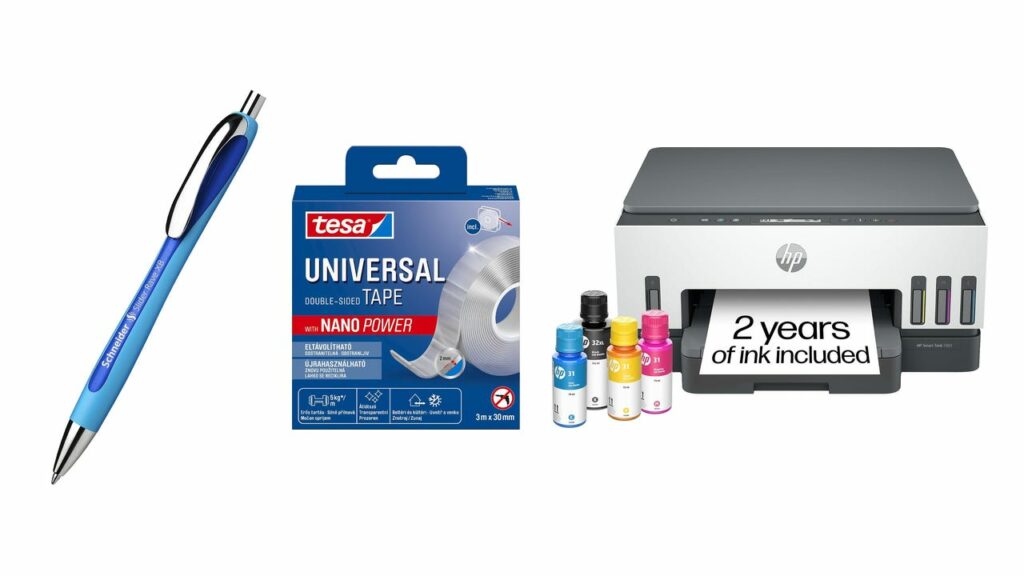
- Schneider Slider Rave XB. This is my favourite pen. It feels comfortable and well balanced in my hand. It’s also inexpensive and just writes well. I have one pen and then buy refills whenever I need them.
- Nano tape. My wife recently discovered Nano tape. We used it for fixing a bunch of power strips to the wall. It’s amazing how well they hold, it feels (and is) very solid. For someone who doesn’t like to drill when not absolutely needed, this was a lifesaver.
- HP Smart Tank 7001. This is an anti-recommendation, can I do that? Not wanting to deal with ink cartridges any longer, I decided to try an ink tank printer and chose this HP model. The first one was “incontinent”, it spilled little yellow ink blots over the prints. I submitted it for repair but got a new one. On that one, the scanner didn’t work. I submitted it for repair but got a new one. That one had incontinence like the first one, but I decided to live with it, because I didn’t want to go through all the hassle again. Aside from the occasional yellow spots on my prints, I’ve been pretty satisfied for about a year. But now, it decided to stop printing blue. My favourite colour!! It’s all very frustrating, don’t buy this one!
DIGITAL
- Deep Questions (Cal Newport’s podcast). I love listening to podcasts doing chores around the house. This is one of my favorites, because it combines the topics of productivity, learning and (the conscious use of) technology. Recently, there have been a lot of episodes on AI. His perspective is critical and anti-hype which has helped ground my own stance about AI, which is enthusiastic (long term) and skeptical (short term) at the same time. All the other episodes are good as well and are about “cultivating the deep life”.
- Emotional Exploration Tool. I use writing to “process” my emotions. That sounds rather technical, I know, but it’s about discovering, feeling and releasing emotions that have been stuck somewhere. The thing is: I have no interest in saving these types of notes. The value is in the act of writing. That’s why I enjoy this tool. I just write freely or based on a prompt. Afterwards, the words disappear into the void. Wonderful!
INVISIBLE
Goals, plans, vision documents, mission statements…I get what they are about, but somehow these have never worked for me. I can write one, sure. But then I just go about my life and some things happen and others don’t. Still, I do like to reflect about my life and the direction it could take. That’s why I’m experimenting with this question:
What wants to happen?
My theory is that if I align with what the universe wants to happen, the actions/projects that come up in my mind can be completed with ease and flow, having the support of invisible but real forces. And that has been my experience so far. It does mean I have to bypass my rational thinking brain, but that’s working overtime anyway. It’s lovely to be able to trust this question.
Sign up here to get What’s in my NOW? a week early in your inbox.
10/28/26ALL REVIEWS

 10/23/26
Book Freak #228: Breakthrough Copywriter
A practical field guide to the copywriting genius of Eugene Schwartz

EDITOR'S FAVORITES


COOL TOOLS SHOW PODCAST
WHAT'S IN MY BAG?
28 October 2026

ABOUT COOL TOOLS
Cool Tools is a web site which recommends the best/cheapest tools available. Tools are defined broadly as anything that can be useful. This includes hand tools, machines, books, software, gadgets, websites, maps, and even ideas. All reviews are positive raves written by real users. We don’t bother with negative reviews because our intent is to only offer the best.
One new tool is posted each weekday. Cool Tools does NOT sell anything. The site provides prices and convenient sources for readers to purchase items.
When Amazon.com is listed as a source (which it often is because of its prices and convenience) Cool Tools receives a fractional fee from Amazon if items are purchased at Amazon on that visit. Cool Tools also earns revenue from Google ads, although we have no foreknowledge nor much control of which ads will appear.
We recently posted a short history of Cool Tools which included current stats as of April 2008. This explains both the genesis of this site, and the tools we use to operate it.
 Kevin Kelly started Cool Tools in 2000 as an email list, then as a blog since 2003. He edited all reviews through 2006. He writes the occasional review, oversees the design and editorial direction of this site, and made a book version of Cool Tools. If you have a question about the website in general his email is kk {at} kk.org.
 Mark Frauenfelder edits Cool Tools and develops editorial projects for Cool Tools Lab, LLC. If you’d like to submit a review, email him at editor {at} cool-tools.org (or use the Submit a Tool form).
 Claudia Dawson runs the Cool Tool website, posting items daily, maintaining software, measuring analytics, managing ads, and in general keeping the site alive. If you have a concern about the operation or status of this site contact her email is claudia {at} cool-tools.org.