19 October 2026
Simple Kitchen Aids
Tools for Possibilities: issue no. 212
Easiest jar opener
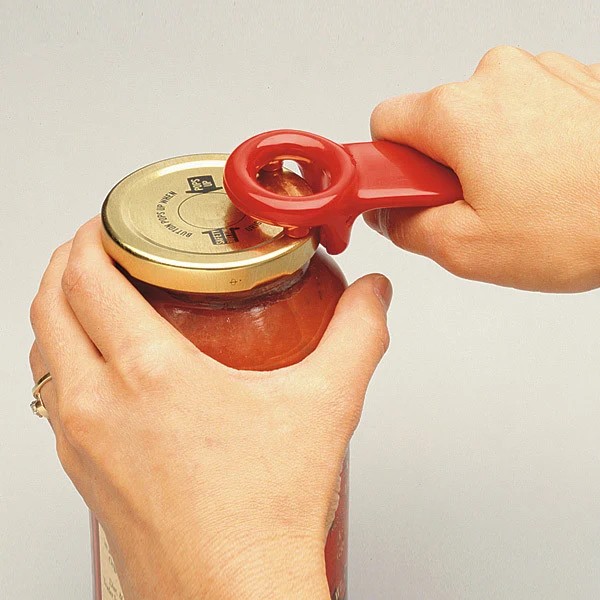
The JarPop jar opener is the best five-dollar gizmo I’ve ever bought. It’s what I gave my mother for Christmas last year. It’s a beautifully simple bottle-cap-opener for lidded jars. It breaks the seal on a jar of applesauce (or anything else), and then the lid twists right off. I’m a little embarrassed how strongly I feel about it. — David McIntosh
Heat-activated frozen treat scoop
Unfortunately for my waist, I love ice cream. For a long time, I accepted the fact I either had to strengthen my wrist muscles, leave out the ice cream to soften up, or run the frozen tub or spoon under hot water before digging in (which dilutes the ice cream if you forget to dry it off beforehand). Not anymore.
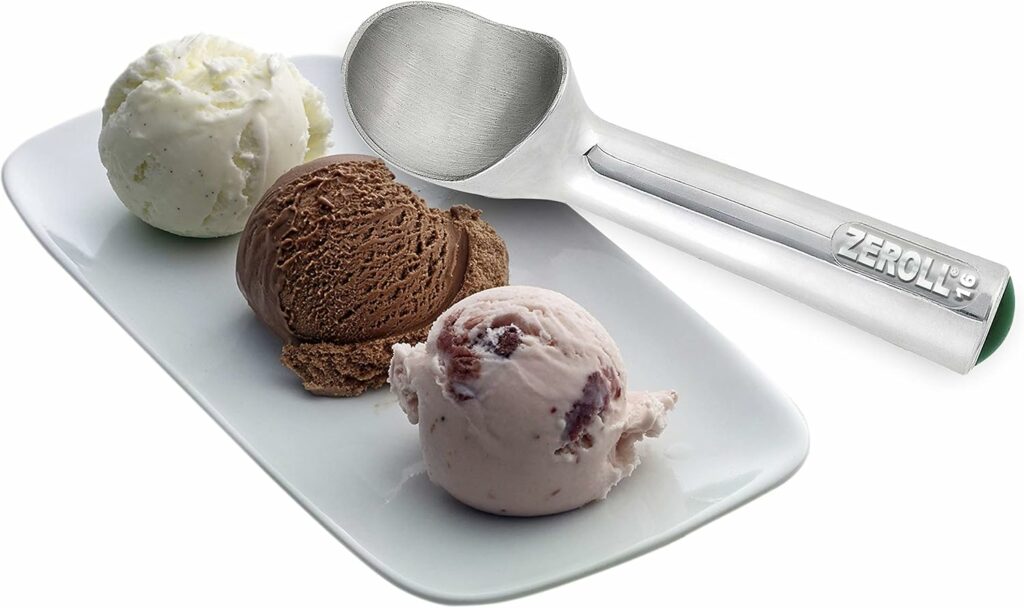
The trick to this scoop is a heat-conductive fluid sealed inside the handle and business end. The heat from your hand warms the fluid, which lets you scoop easier and quicker. I find it can scoop ice cream from ice cream tubs that are hard as a rock, like a spoon through a tub of margarine.
This Zeroll scoop is not dishwasher safe, and must be hand-washed in warm or luke warm water (the fluid in the handle can’t take any hotter). It comes in different sizes from two to four ounces, in either a silver aluminum or Anodized Teflon finish. I opted for the two-ounce aluminum scooper because I’ve heard the Teflon finish wears off over time.
It’s worth mentioning that I learned of the Zeroll from a cooking magazine. They tested various scoopers to settle on one that makes the “perfect, round scoop.” The Zeroll won. — Ethan Stettner
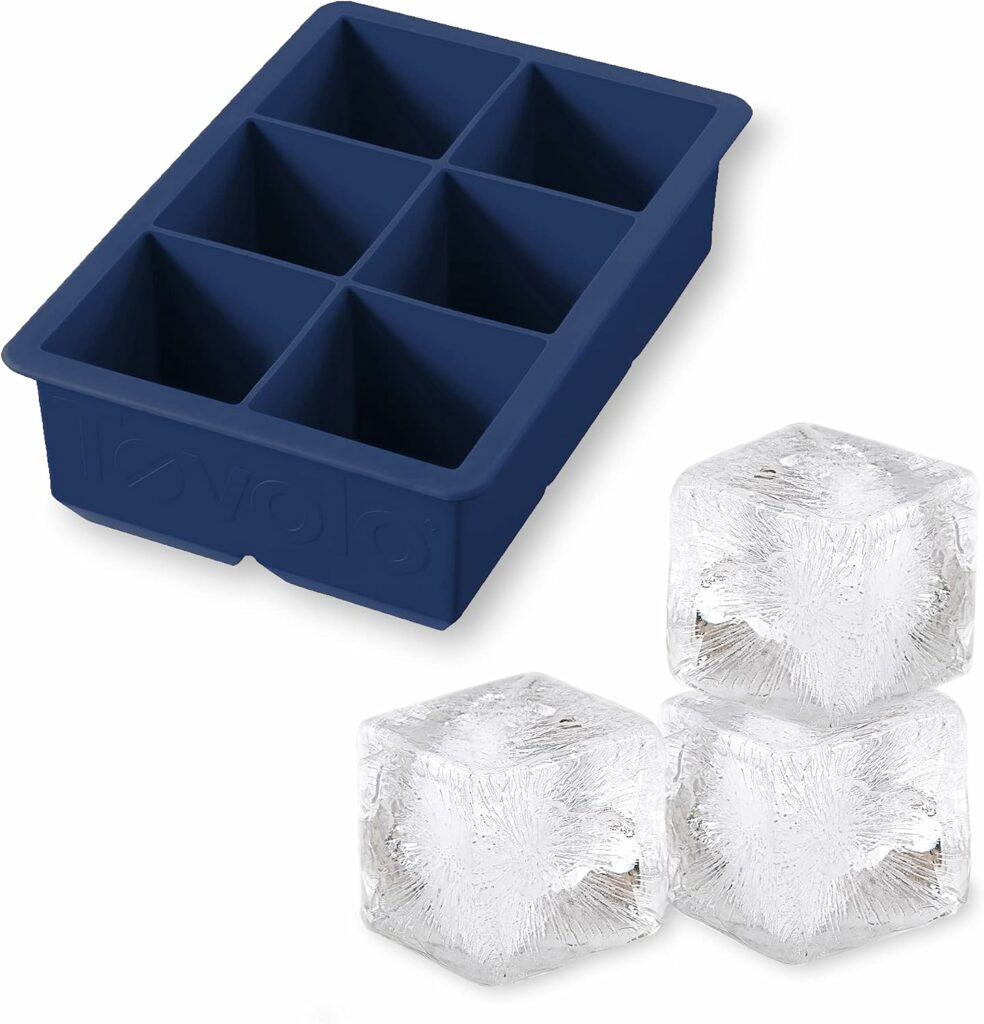
Really big ice cubes
I don’t own a fridge with an ice maker, and so for the past few years have been relying on the cheap white ice trays that seem to inhabit everybody’s freezer. They’ve done their job, but never very well. Recently, however, I picked up the Tovolo King Cube Ice Tray and have been blown away with the oversized ice cubes it produces.
The silicone ice tray produces the largest cubes of ice (they’re 2″ x 2″) of any tray I’ve seen. Outside of being a gigantic novelty, the increased size is a boon as it reduces the surface area to volume ratio. This means the ice melts slower in your drink keeping it cold longer while minimizing how much it waters down your drink. I hadn’t expected it to make that much of a difference, but it’s really astonishing how much longer the ice remains in the drink. I’ve found these large cubes are downright perfect for cocktails like a gin and tonic, and while I’m no whiskey connoisseur I imagine they’d be even more at home in a scotch on the rocks. Simply put there’s something special about having an oversized piece of ice clinking in your glass.
Another design plus is that the silicone tray holds a greater volume of water than other ice cube trays I’ve tried (which all seem to hold a pitiful amount of water), while taking up less valuable freezer real estate (the tray is significantly taller, and not as long as my old trays). Popping the ice cubes out takes a bit of wrangling, but no more so than cracking traditional ice trays, and because silicone is a good insulator you’re not left with ice cold hands in the process.
The only downsides I’ve found so far are that the flexible silicone tray can twist and bend and slosh while finagling it into the freezer, and the fact that it only makes six cubes at a time. This hasn’t been a problem for me as it takes fewer cubes (read: one) to cool down most drinks.
Overall, these big ice cubes are just plain cool, and for $9 it’s a cheap and functional upgrade to any freezer. — Oliver Hulland
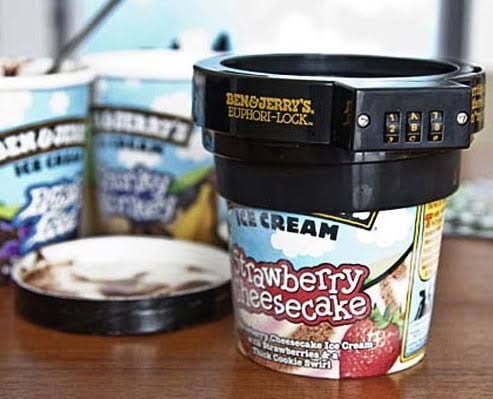
Personal ice cream security
Due to roommates that didn’t quite understand my displeasure at my consistently disappearing ice cream, I had to resort to this. Not a gag, it is actually is designed with the intention to work. Though I suppose that since the container it is “locking” is made of waxed cardboard (which can be deformed a bit) it won’t keep out a serious professional penetration attempt.
I found that it sends a warning message, sort of like one of those little LED’s you put in a car to give the appearance of having an alarm. — Morgan Davis
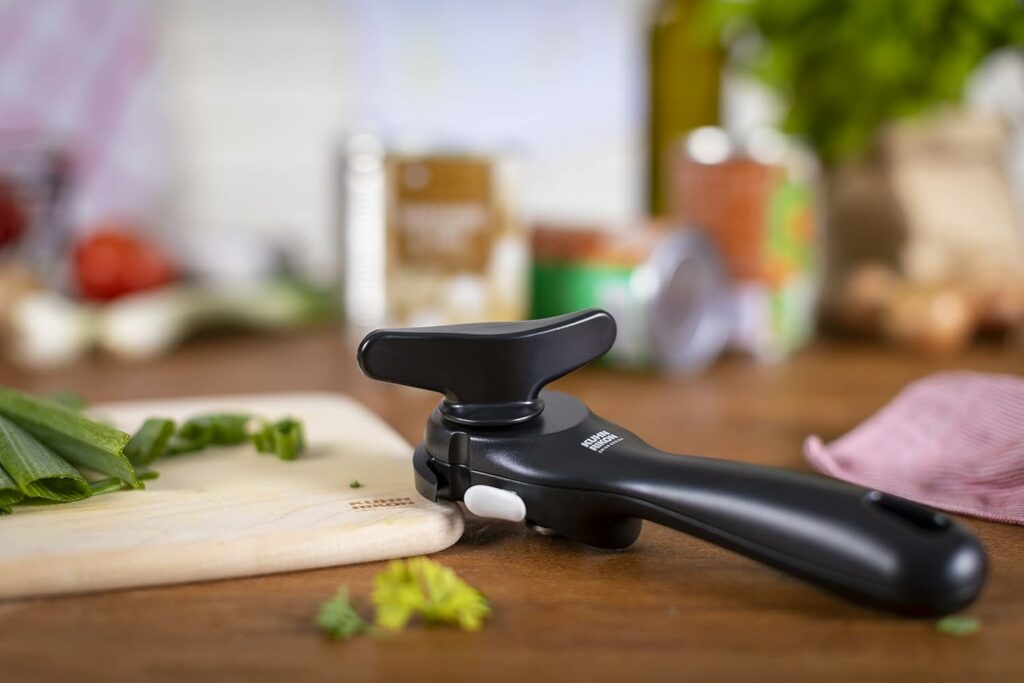
Safe can opener
It may be a terribly long and unwieldy name, but it is far and away the coolest can opener I have ever used.
Why? The blade cuts into the can *below* the rim so the lid never falls into the food, and the blade doesn’t touch the food either. You can use it to open “pop top” lids as well. A can opened with this tool will have no sharp edges. Apparently, it works for both righties and lefties (not tried). Best of all you can challenge your friends by handing them the opener and a can and watch them figure out how to use it. — Marsh Gardiner
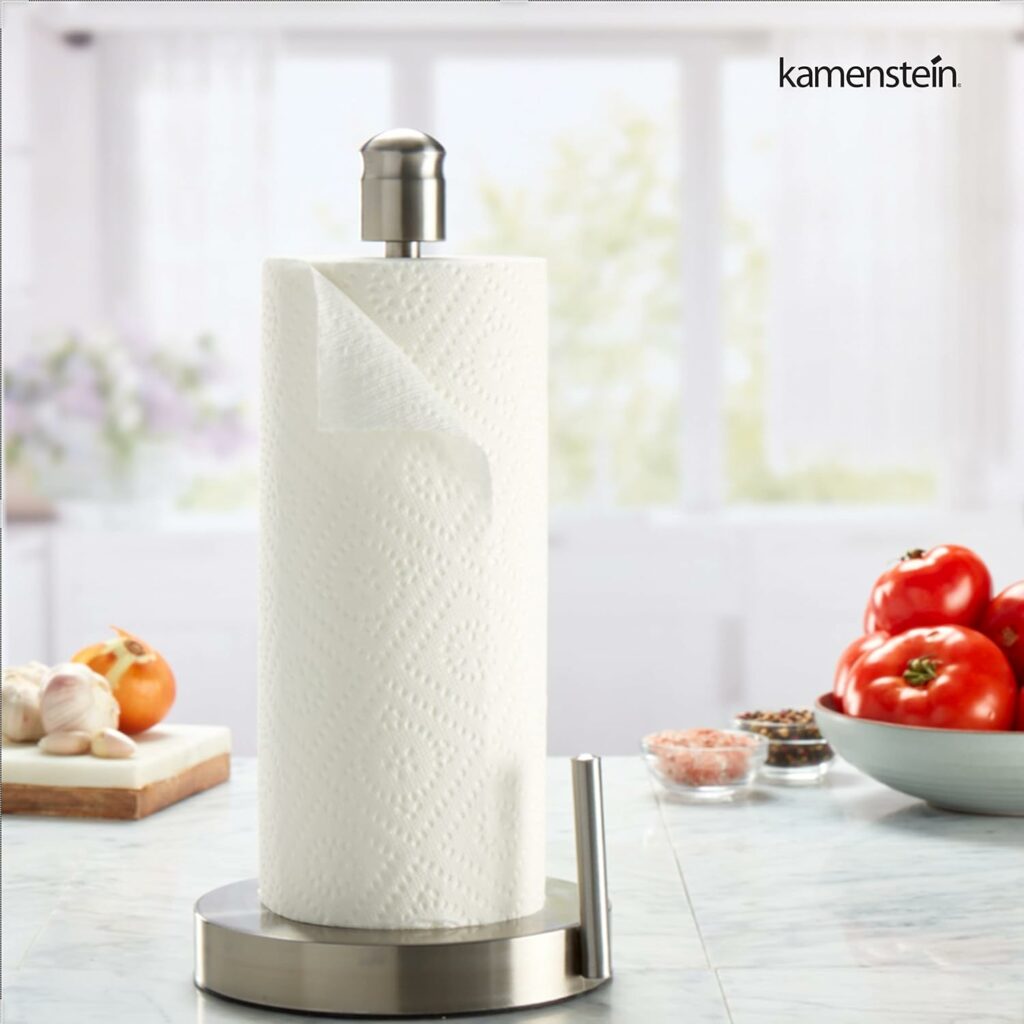
One-handed towel dispenser
Most free-rolling paper towel dispensers just don’t work for me. Since I do a lot of food prep from my wheelchair, I can only grip with one hand. The genius of this “Perfect Tear” dispenser is how it allows enough freedom for the roll to unwind with a steady pull; yet, there’s still enough friction to prevent further unwinding when you pull to detach the sheet.
The secret? 1) The center post is a series of bowed wires that contract and hold the paper roll snugly in place; and 2) The base weighs about four pounds, which adds stability.
No more chasing unwinding rolls of paper across the kitchen floor. Or getting five sheets when I only need one. Better still, it works just as well at the end of the roll as it does at the start. When a roll is out of sheets, just unscrew the top cap, slide off the cardboard tube, push on another roll and replace the cap. All of this can be easily performed one-handed.
After a couple of years, it’s still well worth the precious space it’s claimed on my very limited counter. — Eric Eales
Once a week we’ll send out a page from Cool Tools: A Catalog of Possibilities. The tools might be outdated or obsolete, and the links to them may or may not work. We present these vintage recommendations as is because the possibilities they inspire are new. Sign up here to get Tools for Possibilities a week early in your inbox.
10/19/2618 October 2026
Yesterday’s weather / Quantify yourself science / Advice for parts work
Recomendo - issue #536
The key premise of Recomendo is that everything we have suggested weekly in the past 10 years has been a personal recommendation based on our own experiences. It is something we have seen, heard, visited, or used ourselves. For this Christmas, we’d like to deviate from that principle slightly (and temporarily) to provide you with a dozen of recommendations from our subscribers. That is you. For our brand new Annual Christmas Reader Recommendations issue we will select the best personal recommendations submitted within the next 2 weeks by October 25. To keep it sane, just one recommendation per subscriber. Keep it short and personal. Suggest a product, tool, app, place, book, documentary, podcast, follow—anything—that you genuinely love, and few know about. No self-promotion. Beyond the dozen we share in the newsletter, we will post all of the vetted submissions on our website.
Yesterday’s weather
Most weather apps don’t show you yesterday’s weather. Who cares, right? But it’s useful information if you want to know whether today will be warmer or colder than yesterday. Yesterday is a free iPhone app that shows a chart of the hour-by-hour temperatures for yesterday and today. If it’s late in the day, you can see how tomorrow’s weather will differ from today’s. It also gives you a simple one-sentence summary, like “Today will be noticeably hotter and sunnier” or “Daytime high noticeably warmer and rain unlikely.” It was created by Matt Webb, who publishes Interconnected, one of my favorite newsletters. It’s a great example of vibe coding. — MF
Quantify yourself science
Eighteen years ago Gary Wolf and I started the Quantified Self movement – the idea that you could use technology to track yourself. Gary hosted thousands of meetups where people shared what they were tracking and what they learned, and from this vast experience over decades, he finally wrote up the results of what we know about self-tracking in a new book, The Quantified Self. The book is fabulous, perceptive, useful, and illuminating. Turns out self-tracking is more about observing and having the right questions, than it is about wearable technology. Self-tracking can be a form of what Gary calls “personal science” – you are doing experiments on yourself (N=1), and the methods, criteria, protocols are different than what you would do for N=millions. I highly recommend The Quantified Self for everyone; we are all doing personal science on ourselves, and this will help you do it better. — KK
Advice for parts work
This short guide by Tricycle Day gathers practical advice from licensed psilocybin facilitators on working with the inner child, critic, protector, people-pleaser, and all the other parts that can pull us in conflicting and confusing directions. I think this advice is useful with or without psychedelics. I found it helpful to learn that our inner inhabitants don’t always speak in words: “Our parts can show up through emotions, memories, body sensations, images, or inner dialogue, offering information about what they need and what they’ve been carrying.” — CD
Stainless steel coffee filter
I often take an AeroPress coffee maker when traveling, especially if I’m staying at a hotel or Airbnb. When I arrive, the first thing I do is buy ground coffee at a local market. I’ve streamlined my setup by using this stainless steel filter instead of bringing a sack of paper filters. It does a great job filtering the coffee, and I think it tastes better than coffee pressed through paper. It’s easy to clean with a rinse under the faucet, and Altura says it will replace the filter if you lose it, break it, or even have it stolen, no questions asked. — MF
Inbox recommendations
It feels a little meta to share a newsletter’s list of other newsletters worth your time, but I’ve recommended Wonder Tools before and trust Jeremy Caplan’s curation. His list includes 17 newsletters covering useful tools, technology, AI, news, journalism, and practical wisdom. I’ve already added a few to my Feedly. Worth checking out if your inbox could use some new sources. — CD
Alternative citizenship
There are many reasons to live somewhere else, or to have the option to live somewhere else. The Nomad Capitalist is a YouTube channel that takes a market approach to the question of where you can live. It researches, compares, evaluates how much it costs to purchase a passport, or a residency card, or buy real estate around the world, and gives advice on what are the best bargains for “citizenship through investment” and so on. What is the cheapest price for a passport and what do you get? Where are taxes minimal? Many of the options he examines are not cheap, but for some, it can still be worth it. It’s good to know what your options are. — KK
Sign up here to get Recomendo a week early in your inbox.
10/18/2616 October 2026
Book Freak #227: The Perfume of Silence
A nonduality teacher’s dialogues on finding the freedom that is always already here

The Perfume of Silence is a collection of dialogues between nonduality teacher Francis Lucille and his students that points directly to the consciousness underlying all experience and shows how recognizing it dissolves psychological suffering.
Core Principles
You Are Not the Body-Mind
Are you your thoughts, sensations, and perceptions? Or are you the awareness in which they appear? Lucille says we are the open, borderless consciousness that witnesses these changes.
“We have always been this consciousness, this presence.”
Welcoming Whatever Arises
Instead of fighting unwanted thoughts or chasing pleasant states, Lucille recommends welcoming whatever arises, including fear, boredom, and restlessness.
“We should be present to the totality of whatever arises in consciousness, instead of focusing on something that we want to get rid of.”
Happiness Is Your Nature, Not a Goal
We spend our lives pursuing happiness as though it were something external to acquire. Lucille says it’s always present when we stop covering it with mental agitation.
“Know that your happiness is not in the next situation, in the next object, but that the next situation or object is simply a celebration of this happiness that we already are.”
The Ordinary Is Sacred
Awakening shows up in the most ordinary moments, like drinking tea, walking, or listening to a friend.
“Just stick to the ordinary circumstances without labeling them ordinary. Be open to them with no desire to change them in any way.”
Try It Now
- Close your eyes and notice whatever appears — sounds, sensations, thoughts. Ask yourself: “What is aware of all this?” Then rest your attention on awareness itself, the open space in which everything appears.
- The next time you feel an uncomfortable emotion — irritation, anxiety, boredom — instead of reacting or analyzing, say to yourself, “You are welcome here.” Notice what happens to the emotion when you stop resisting it.
- Choose a mundane activity you do every day without paying much attention—making coffee, washing dishes, walking to your car. Do it with full attention. Notice whether the activity, stripped of the label “ordinary,” reveals a quiet aliveness you might otherwise ignore.
Quote
“There is no freedom at the level of the body-mind. There is absolute freedom at the level of consciousness.”
Book Freak is published by Cool Tools Lab, a small company of three people. We also run Recomendo, the Cool Tools website, a YouTube channel and podcast, and other newsletters, including Recomendo Deals, Gar’s Tips & Tools, Nomadico, What’s in my NOW?, Tools for Possibilities, Books That Belong On Paper, and Book Freak.
10/16/2615 October 2026
Free eSIM Data/A to B Options/Uzbekistan Travel Prices
Nomadico issue #228
Free eSIM Data From Visa
If you have a Visa card of some kind, you can get some free eSIM data from GigSky on your phone when traveling abroad. I can vouch that the promotion is for real because I just used it myself in Malaysia. My data is about to run out, but I can re-up with a different Visa card or purchase a plan at a hefty discount. Benefits run from 3 days to 15, with different amounts of data depending on how “premium” your credit card is. See the details here.
Getting From A to B
There are a lot of tools and websites out there telling you how to get from one location to another, but the one I’ve had the best results from for years is Rome2Rio. While others seem to have blind spots—mostly what they’re not selling themselves—Rome2Rio shows everything. Then it refers you to parent company Omio or directly to the booking platform if it’s proprietary, like some government-owned train systems. I’ve seldom run into a situation where I can’t see every overland option in one place, plus an idea of flight choices as well.
Nomadico is a reader-supported publication. To receive new posts and support my work, consider becoming a free or paid subscriber.Upgrade to paid
American Airlines Offering Cash + Miles
If you don’t have enough frequent flier miles for a ticket, American is now joining the other major legacy carriers in offering a way to pay for a flight—domestic only for now—with a combination of cash and points. This is “rolling out” now so we don’t have the actual formula, but going by this article, it will probably equate to a penny a mile or less. Not a great use of your points if they can get you a full ticket later, but getting a discount is better than just letting them sit there forever, deteriorating in value.
Prices for Travelers in Uzbekistan
As I mentioned a few issues ago, I traveled through Uzbekistan with G Adventures and the price for the tour I took comes out to $140 to $185 per day double occupancy depending on the time of year and demand. I took note of prices everywhere we went, however, for my blog readers who may want to travel around there independently. This country needs to go in my World’s Cheapest Destinations book when I eventually get around to putting out a sixth edition because it’s a terrific value. See the full rundown on lodging, food, transportation, and more here: Uzbekistan Travel Prices and Tips.
A weekly newsletter with four quick bites, edited by Tim Leffel, author of A Better Life for Half the Price and The World’s Cheapest Destinations. See past editions here, where your like-minded friends can subscribe and join you.
10/15/2614 October 2026
What’s in my NOW? — Moses Masenoi
issue #274
I am a Kenyan Maasai registered nurse, entrepreneur and livestock enthusiast running my own clinic in the village while building businesses around healthcare and farming. I’m rooted in Maasai culture, and passionate about community development, learning from different cultures, and creating opportunities for myself and others.

PHYSICAL
- A Young Ram: Livestock has become both a passion and an investment for me. I enjoy raising sheep and goats and watching small beginnings turn into something valuable.
- Maasai Shuka: My Maasai shuka represents my heritage and reminds me of the importance of preserving and sharing culture.
- My Stethoscope: My stethoscope represents my journey in nursing and my work providing healthcare in my own community.
DIGITAL
- Fiverr app: Fiverr showed me that opportunities aren’t limited by geography. During university, I used it to earn money to sustain my studies.
- Spotify: Music has become one of my favorite ways to discover cultures beyond my own, especially African and international artists.
INVISIBLE
Big things rarely start big.
I’m learning to appreciate small steps, whether it’s a young animal, a small business, education, or a new relationship because consistency can turn them into something much bigger.
Sign up here to get What’s in my NOW? a week early in your inbox.
10/14/2613 October 2026
The Bar Book / The Very Persistent Gappers of Frip
Issue No. 139
THE BAR BOOK GIVES YOU A 360-DEGREE EDUCATION IN BARCRAFT
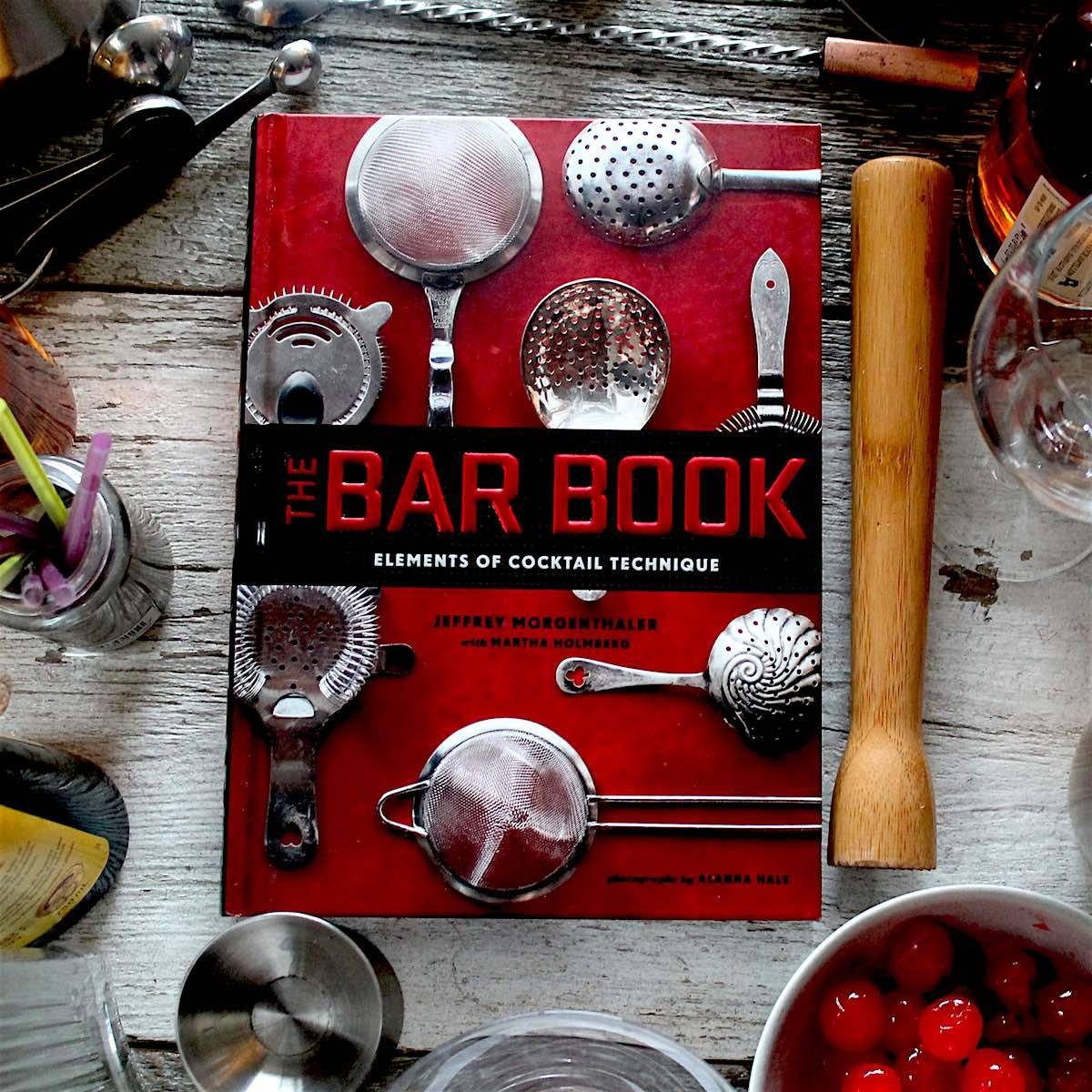


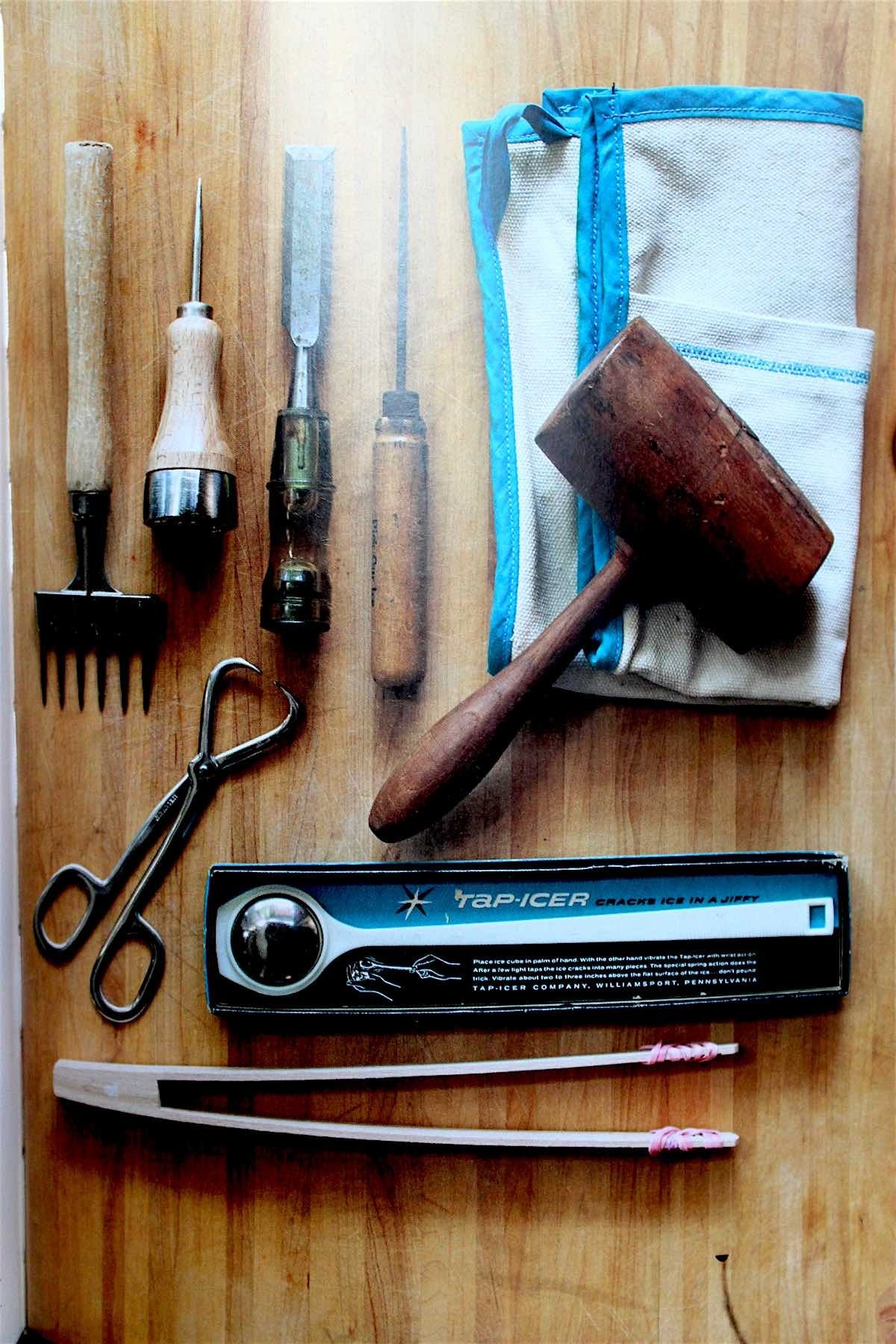

The Bar Book: Elements of Cocktail Technique
by Jeffrey Morgenthaler (author) and Alanna Hale (photographer)
Chronicle Books
2014, 288 pages, 7 x 9.5 x 1 inches
As someone who spent many misguided years of my youth drinking poorly-eyeballed gin and tonics out of coffee mugs, I never really understood: How exactly can you make cocktails “well” or “poorly”? Isn’t it a simple matter of ratios – of pouring the right amount of the right things into a glass, chucking in an ice cube or two and calling it a day? Where is the mysterious opportunity in that simple process to either mess it up or do it exceptionally well? Jeffrey Morgenthaler’s The Bar Book is a masterclass on that very subject.
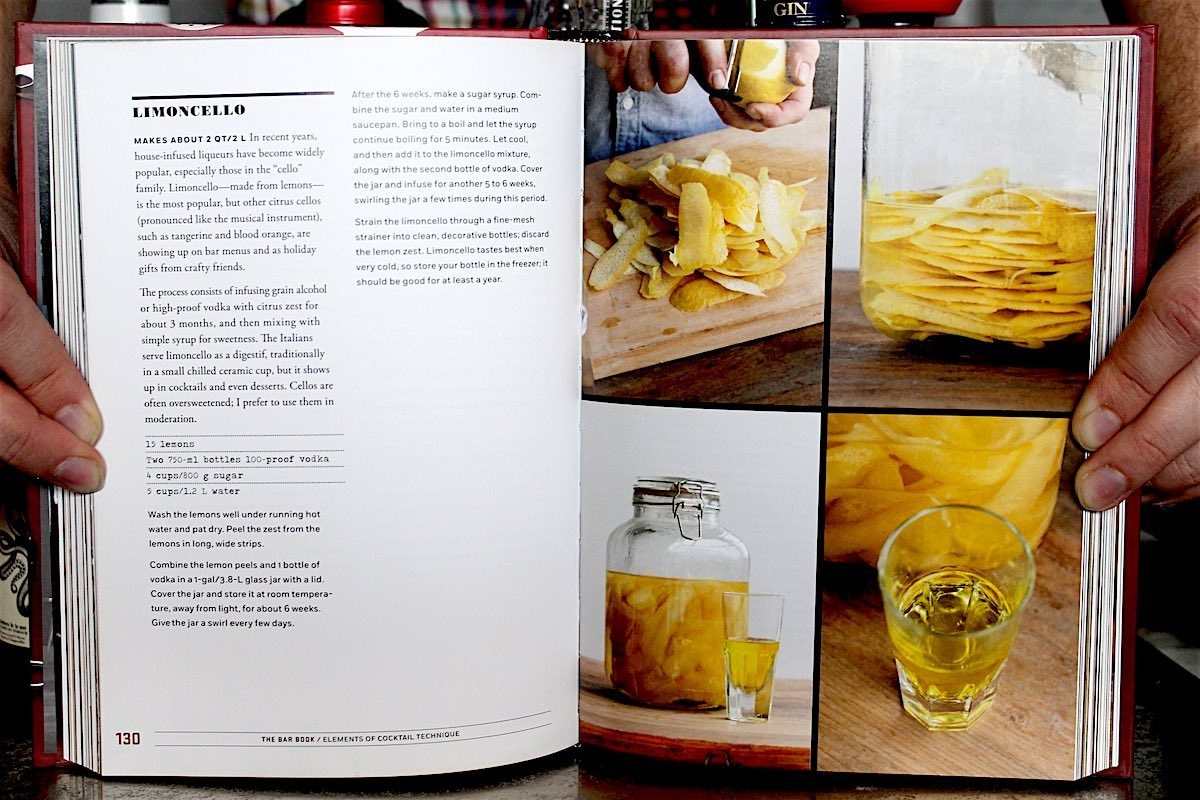
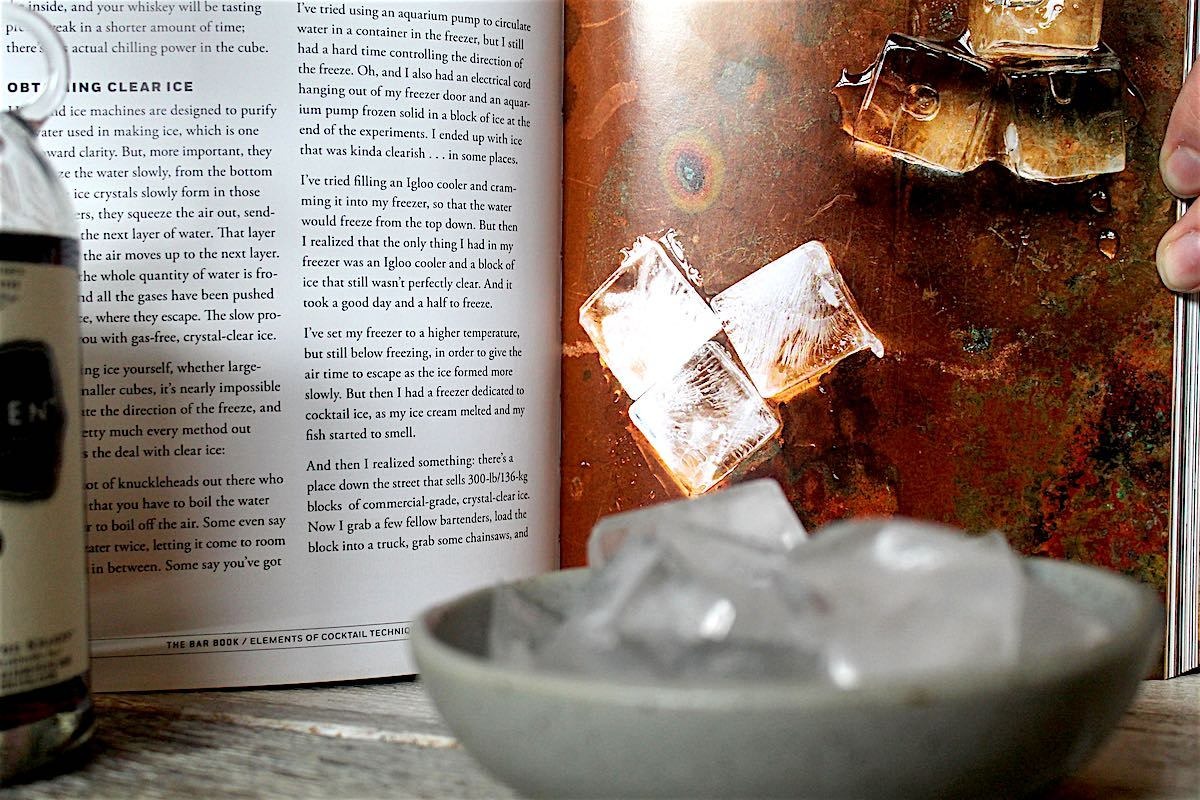
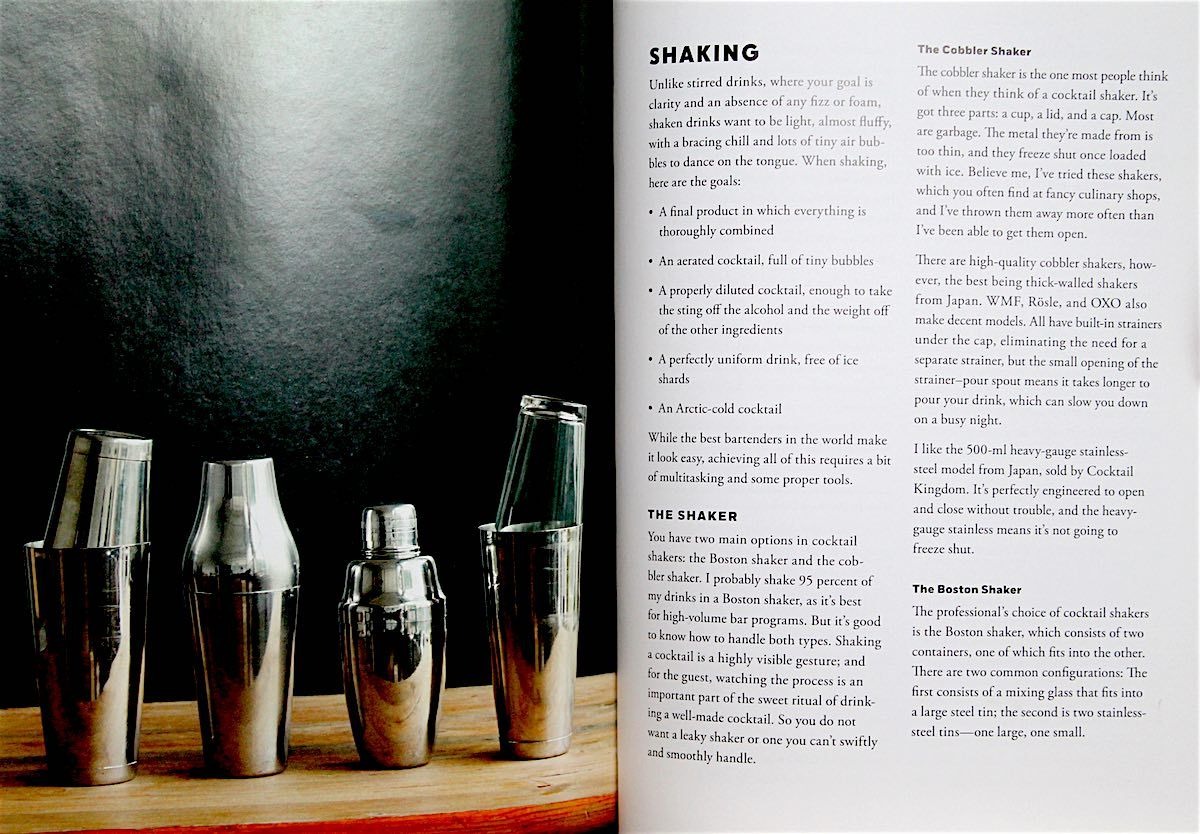
The Bar Book is not a recipe book. Instead, it is a techniques book. Morgenthaler elevates making cocktails into a craft, focusing on finding the right recipe, using the best ingredients, and executing it all using effective techniques. While the author does include expertly curated recipes for some must-know cocktails, instead of focusing on what to mix (which can always be found with a quick Google of “how to make a Cosmopolitan”), it focuses on how, why, and when to mix it. He gives you a 360-degree education in barcraft, from what shapes cocktail shakers come in and what the differences mean to why the shape and size of your ice is important and how to make it so that it comes out of the tray clear and beautiful. He’s a big proponent of making things like mixers, garnishes and even liqueurs from scratch, so the book offers up recipes for making things like flavored syrups, infusions, and even tonic water. Even if you’re not the type who relishes taking the time to create something you can easily buy from a store, seeing and understanding the DIY processes behind these ingredients is fascinating and demystifying.
The book is peppered with stories, some steeped in niche-y barcraft history and delightful tradition, some from Morgenthaler’s own bartending days. Striking, minimalist photography guides you from the easiest recipes to the most hardcore. A perfect blend of science, theory, philosophy, history, and personality, The Bar Book is a must-read material for anyone who wants a deeper look at what exactly it means to be a good bartender. – Michelle Kaatz
THE VERY PERSISTENT GAPPERS OF FRIP – CREEPY MULTI-EYED CREATURES TORMENT A VILLAGE

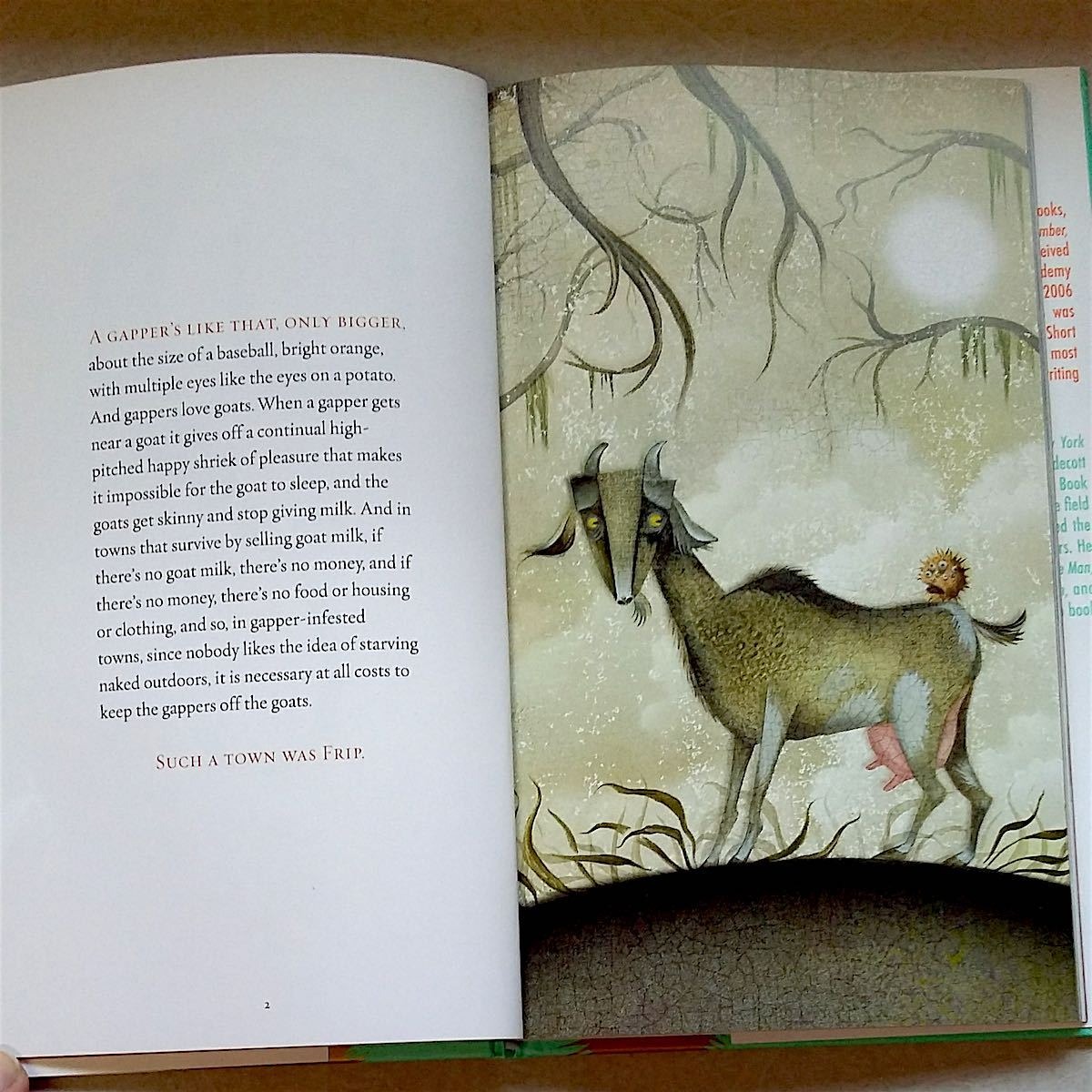
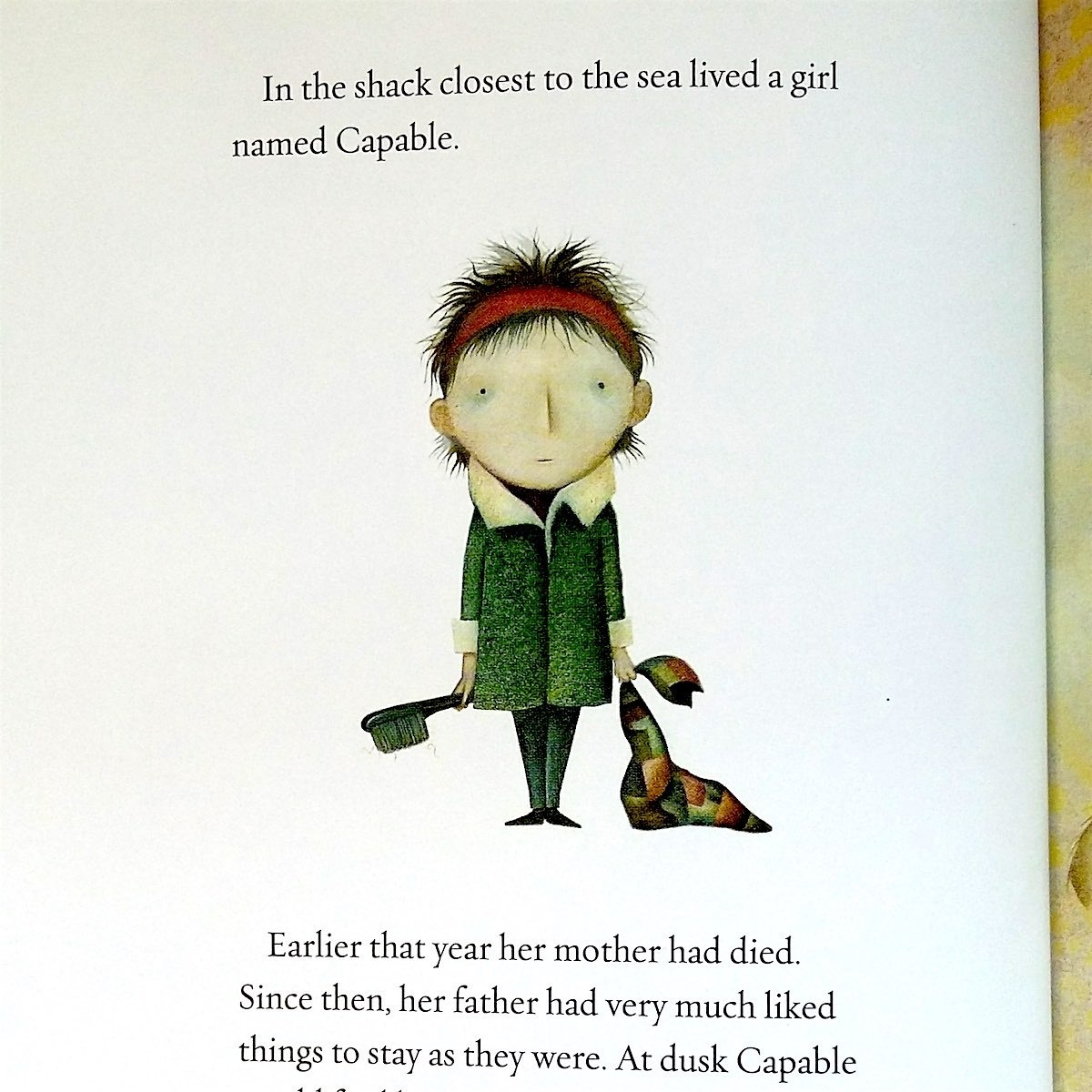
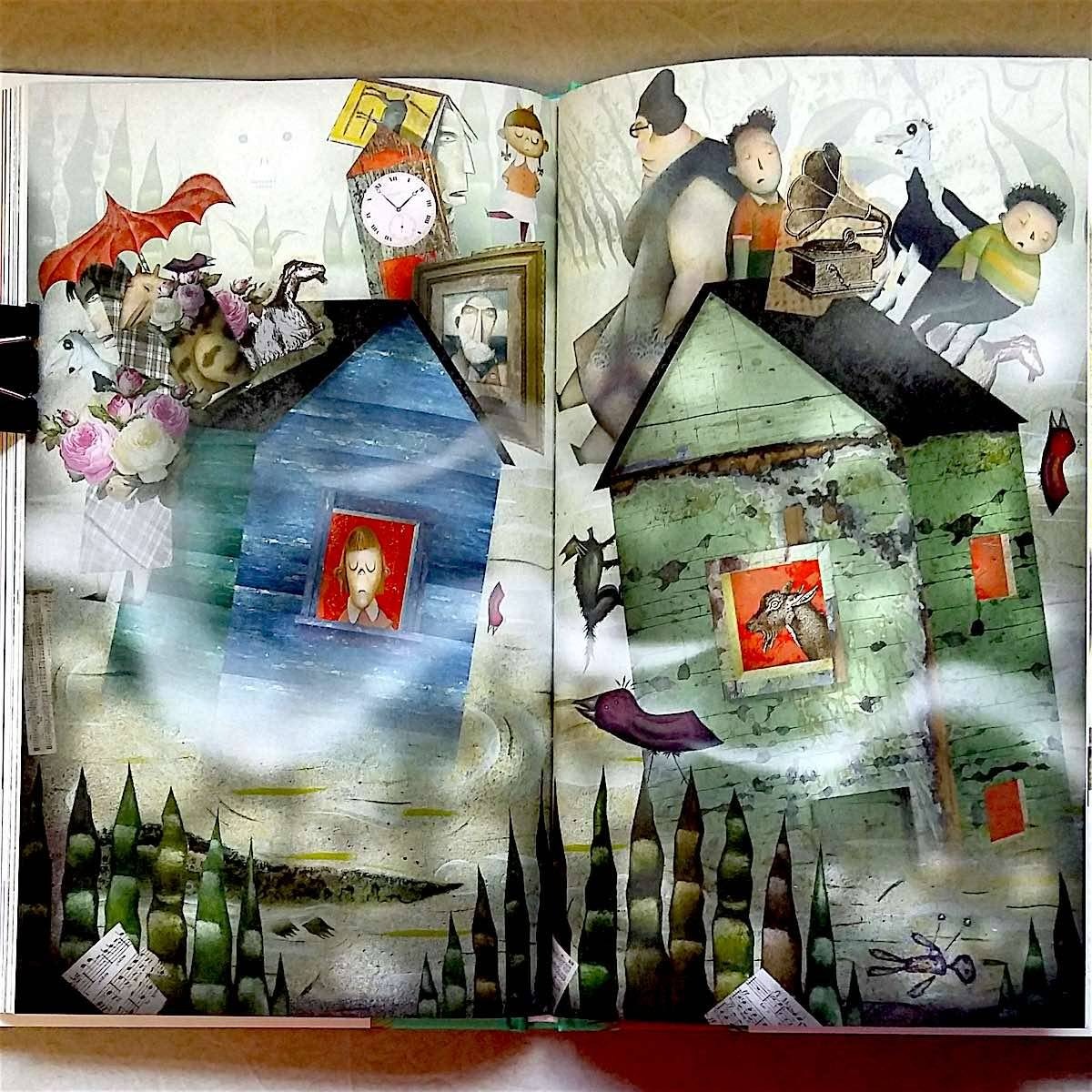

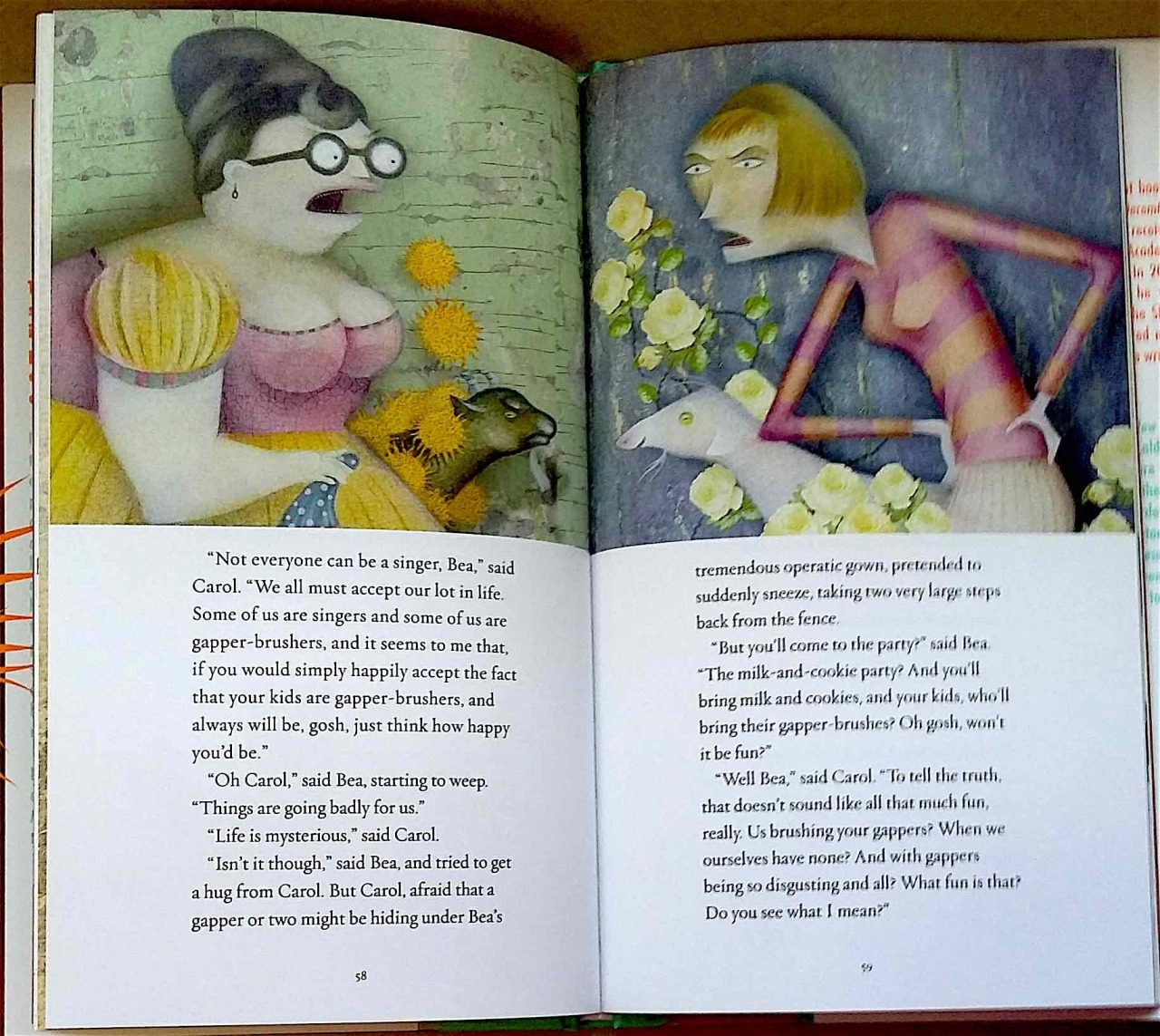
The Very Persistent Gappers of Frip
by George Saunders (author) and Lane Smith (illustrator)
Random House
2015, 96 pages, 5.8 x 9.6 x 0.5 inches
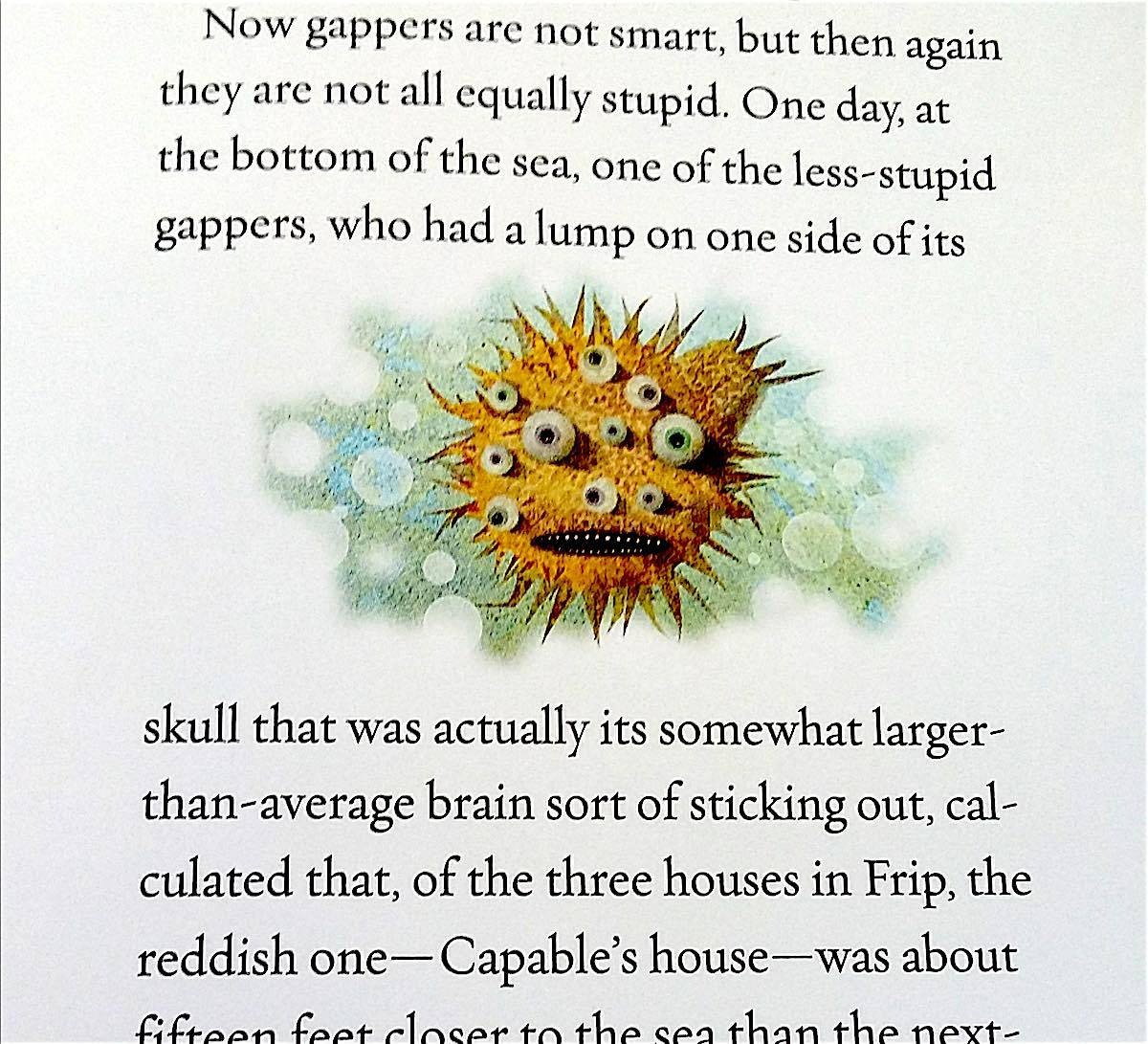
Gappers are creepy little orange, multi-eyed, round creatures that love nothing more than to hang out on or near goats, shrieking all the while. As you might imagine, this is very stressful to the goats. They stop eating; they stop giving milk. If your family gets its livelihood from that milk, you’re in bad shape when the gappers are around. They emerge from the ocean, find the goats, and wreak their shrieking havoc.
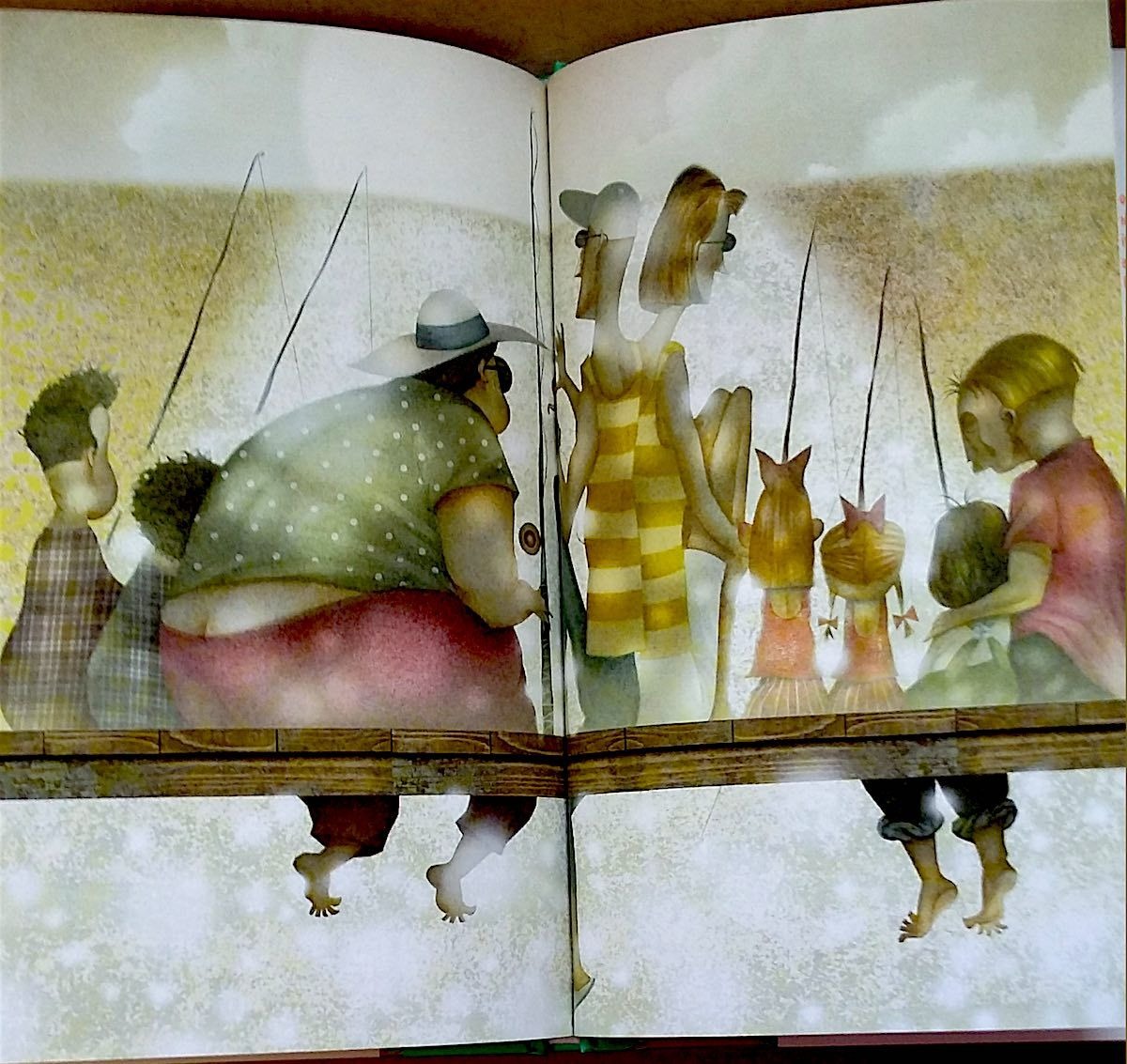
The village of Frip is made up of three ocean-side shacks. The girl Capable and her widowed father live in one. Mrs. Romo and her sons live in the second. Sid and Carol Ronson and their daughters (who “sometimes stood completely motionless in order to look somewhat pretty”) lived in the third. In Frip, the children must check on the goats eight times per day in order to remove the gappers and return them to the sea (from which they will reemerge again and again).
The Very Persistent Gappers of Frip is a fable about the perils of putting oneself before the community and the ultimate merits of sharing amongst a community. The gappers have bothered the three families’ goats equally for ages, until one of the smarter gappers realizes that Capable’s goats are slightly closer than the others. Once the gappers converge, Capable is unable to keep them away. She asks for help, but she is refused:
“We feel strongly that, once you rid your goats of gappers, as we have, you will feel better about yourself, and also, we will feel better about you. Not that we’re saying we’re better than you, necessarily, it’s just that, since gappers are bad, and since you alone now have them, it only stands to reason that you are not, perhaps, quite as good as us.”
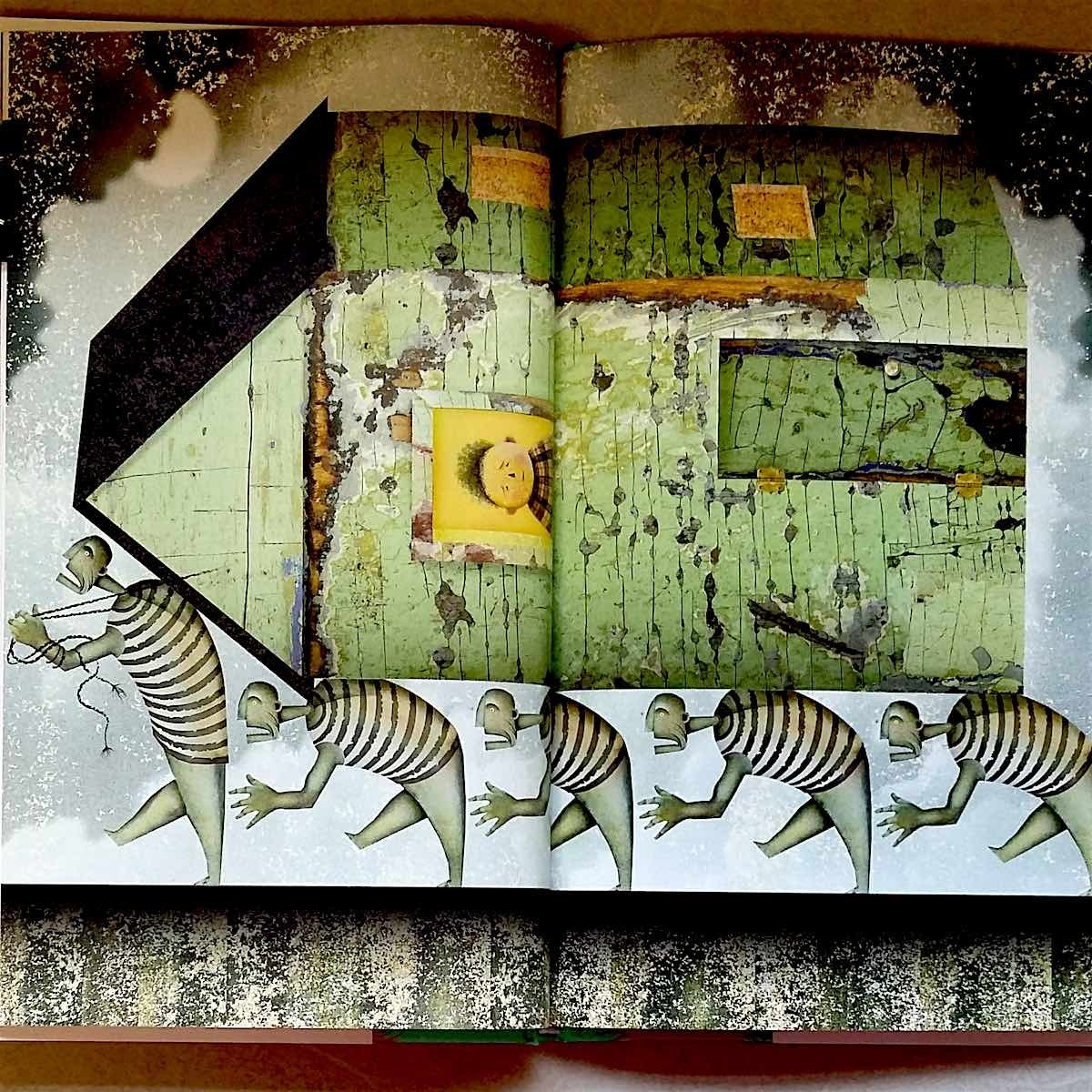
Capable is, in fact, quite capable – she takes care of those around her and solves problems for herself. The illustrations are lush and whimsical. The book is a lovely parable for children, but the tale and visuals are engaging for readers of any age. – Meagan Rodgers
Books That Belong On Paper first appeared on the web as Wink Books and was edited by Carla Sinclair. Sign up here to get the issues a week early in your inbox.
10/13/26ALL REVIEWS

 10/9/26
Book Freak #221: Ways of the Six-Footed
Anna Botsford Comstock on the Dignity of Life’s Upward Struggle

EDITOR'S FAVORITES
COOL TOOLS SHOW PODCAST
WHAT'S IN MY BAG?
14 October 2026

ABOUT COOL TOOLS
Cool Tools is a web site which recommends the best/cheapest tools available. Tools are defined broadly as anything that can be useful. This includes hand tools, machines, books, software, gadgets, websites, maps, and even ideas. All reviews are positive raves written by real users. We don’t bother with negative reviews because our intent is to only offer the best.
One new tool is posted each weekday. Cool Tools does NOT sell anything. The site provides prices and convenient sources for readers to purchase items.
When Amazon.com is listed as a source (which it often is because of its prices and convenience) Cool Tools receives a fractional fee from Amazon if items are purchased at Amazon on that visit. Cool Tools also earns revenue from Google ads, although we have no foreknowledge nor much control of which ads will appear.
We recently posted a short history of Cool Tools which included current stats as of April 2008. This explains both the genesis of this site, and the tools we use to operate it.
 Kevin Kelly started Cool Tools in 2000 as an email list, then as a blog since 2003. He edited all reviews through 2006. He writes the occasional review, oversees the design and editorial direction of this site, and made a book version of Cool Tools. If you have a question about the website in general his email is kk {at} kk.org.
 Mark Frauenfelder edits Cool Tools and develops editorial projects for Cool Tools Lab, LLC. If you’d like to submit a review, email him at editor {at} cool-tools.org (or use the Submit a Tool form).
 Claudia Dawson runs the Cool Tool website, posting items daily, maintaining software, measuring analytics, managing ads, and in general keeping the site alive. If you have a concern about the operation or status of this site contact her email is claudia {at} cool-tools.org.