Coby CV198 Noise Cancelling Headphones

coby198.jpeg

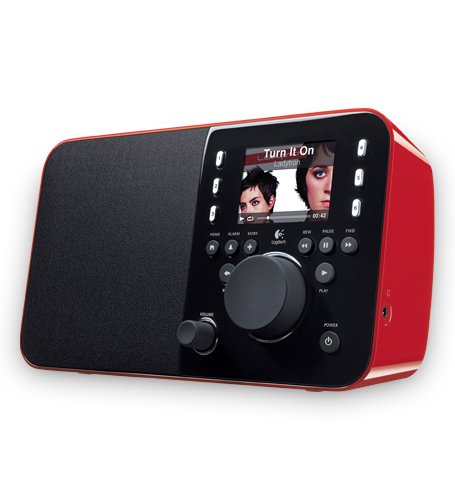
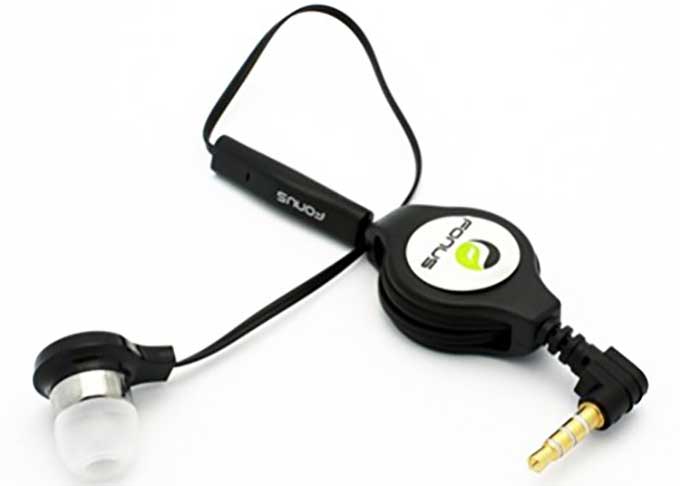
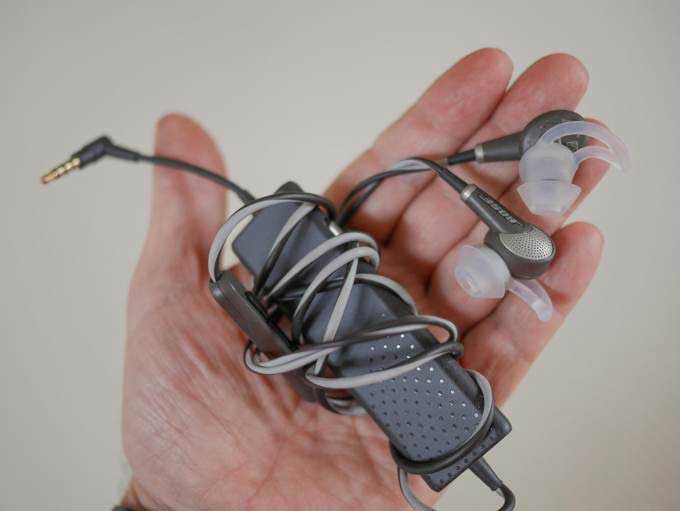
I front a band (the Deathbillies) and we rehearse in three separate studios with JamHub headphone mixers. After a lot of trial and error, I’ve developed the following requirements for headphones for live rehearsal: 1) A single-sided cord, so you can throw the cord behind your back, and it doesn’t get in the way of the guitar or drumsticks. 2) A detachable industry-standard 1/4″ or 1/8″ male-to-male cord that you can replace with any other standard male-to-male 1/4″ or 1/8″ male-to-male cord. 3) Full-size earcups, but not so big that they trap humidity.

The Coby CV198 wins on all three, and at about $30 they’re a bargain. I have at least 10 pairs of these headphones spread across three studios. They use a noise-cancellation system powered by an included AAA battery (but are great without the cancellation turned on).

The only drawbacks to these headphones are that they require a battery to work in any mode, and inserting the battery requires some patience and deductive logic. Also, the included 1/8″ stereo cable is really short, but as the cord is detachable and replaceable with any 1/8″ stereo cable you like I’ll be happy to replace the $1.50 cable instead of discarding the headphones when they short at the hardwire cable connection (which is how even the $300 high-end headphones tend to fail.)

-- Basil White  

Coby CV198 Noise Canceling 198 Stereo Headphones
$31

Available from Amazon

Manufactured by Coby


Altec Lansing Orbit

altec orbit.jpeg

I’ve used this ultra-portable mono speaker for nearly two years, and can’t recommend it enough. Even though it is “mono”, it is “very good mono”, and part of the reason I chose mono is because of the sound limitations of small stereo speakers, best illustrated by Christopher Locke’s comments regarding KK’s review of the iPal.

This little thing easily fits in your backpack, briefcase, purse, or even clipped to your belt for mobile tunes. And the sound is really, really good. Many would call it amazing. Can I compare it to others? I’d rather not get into a holy war. The Orbit, in my mind, is a cool tool for being excellent at what it does for about $20.

I think it is pretty safe to say, that for the intended purpose, it seems to be among the top, if not the top, rated portable speakers for listening to your iPhone, iPad, mp3 player, etc.

I went looking for something like this when I realized that I had a great little MP3 player that was about the size of a matchbox, but unfortunately could only listen to through headphones. There were so many times when we’d go to the park and have a picnic or something and we’d like to have some tunes, but didn’t want to lug yet another thing the size of a boombox. It’s enough to have the ice chest, the bbq, the basket/box of food, etc.

This little hockey puck (well, only slightly thicker, at about 2″) does the trick. We use it often around the house to plug into the laptop when we want to have some tunes but not through the tinny laptop speakers. It comes with a nice little case, a carabiner clip, runs on 3 AAA batteries and just seems to go and go.

There are some minor complaints among detractors, most commonly by people expecting the unreasonable; that a 2 to 3-inch speaker should be able to bring you to your knees with your hands over your ears. It’s not going to be your solution if you want to blast dance band volumes out of your pocket, but it certainly is just the ticket to have on the table with you on the back porch, or beef up the sound out of your laptop.

It is one of my most successful purchases, with great bang for the buck.

-- Jeff Jewell  

Altec Lansing Orbit Portable Speaker
$70

Available from Amazon

Manufactured by Altec Lansing


Pure i-20 iPod Dock

Pure i-20.jpeg

For years I have been looking for a reasonable solution to poor audio quality from iPod devices. Their sound has gotten worse and worse with every succeeding generation, and the only way to obtain quality, outboard digital-to-analog conversion has been to purchase two expensive bulky and cumbersome devices: one to translate iPod digital to common standards and then an outboard digital-to-analog converter. The cheapest combination of products I could find cost about $700.00 and took up a lot of space.

The PURE i-20 fixes all that for $100.00. As a dock it also powers iPod-type devices, and provides both video and audio outputs, including analog audio far superior to any iPods (using its own built-in converters) and digital audio for conversion by high-end devices. Finally, its supplied remote control provides greater control of your device than the Apple Remote can.

Although the audio stored in most iPods is compressed, the compression algorithms used are about the best available, and very good. (I’m an audio engineer and remember discussions at the high end of the mastering community when AAC encoding was introduced and the reaction was very positive.) This means iPods have the potential to deliver high-quality sound, but they don’t.

Most of the sound quality issues people complain about with their iPods/iPhones comes from the circuits which convert the digital music signal to an analog one, for headphones and connection to our stereo systems. Among enthusiasts the consensus is that the analog output from iPods has gotten steadily worse for years.

IPods provide a digital signal output through the bottom connector (which would permit high-quality conversion to analog) but it’s hard to access electronically. Until the PURE i-20 came along, there was no reasonably-priced way to improve the audio quality of iPod playback. As mentioned below, it took combining different expensive devices (a special dock with digital outs and a digital-analog convertor). The PURE i-20 outputs a digital signal and ALSO an analog one using its own digital-analog convertor.

I’ve used the PURE i-20 two ways- I’ve listened to its internal analog-digital convertor, and connected its digital output to an outboard $400+ audiophile convertor: the PURE was remarkably competitive with the outboard unit.

A total winner, in my eyes.

-- John Etnier  

Pure i-20 iPod Dock
$100

Available from and manufactured by Pure


Snark SN-2

Snark.jpeg

I’ve tried several clip-on guitar and banjo tuners over the years, and I finally found the best one: Snark SN-2. It’s fast, easy to use, and very accurate. Best of all, it’s cheap: $13. It’s optimized for all instruments. If you only need it for guitar, get the $10 Snark SN-1.

The build quality seems better than the previously reviewed Intellitouch, and the display is much nicer (glasses not required). And it’s really fast and responsive. Plus, it has a “tap tempo” thing so you can tap the button along with the tune and it will tell you the beats per minute.

I’ve been reading about it on various forums, and I haven’t found any negative comments — except for the colors. For a little bit extra you can get a black model.

-- John Walkenbach  

Snark SN-2 Tuner
Available in red and black
$12-20

Available from Amazon

Manufactured by Snark Tuners


Cambridge SoundWorks Portable Speaker System

cambridge-soundworks.jpg

This is, hands-down, the best portable audio system I have ever heard. It takes a few minutes to set-up and pack-up, and you need a power source to run it, but wow! does it have great sound! I have used it for parties, outdoor BBQs, and on vacation and it never fails to sound great. The included speakers and amplifier, the necessary cables, and your iPod, all pack into the included hard case (which also contains the subwoofer).

cambridge-soundwords2.jpg

My only gripe is that the connections are all clip-connections rather than banana connections, but Radio Shack and other sources sell small banana-style plugs to use with clip connections, making set-up much easier (no frayed wire ends).

I can’t recommend this enough for anyone who wants audiophile-quality music they can take with them to a cabin, condo, RV, or to their backyard as needed. The price is higher than your standard portable units, but Cambridge Sound Works constantly has sales and coupons on the net, making the price a little bit better. In any event, it’s well worth even the full list price!

There are few things I have come across that are “best of class” but this is certainly one. The only other thing I can think of that I have found to be as perfect are metal tongs for cooking; I use those more than any other piece of kitchen equipment to the point that I don’t see how I ever cooked without them.

-- Torgny Nilsson  

Cambridge SoundWorks Model 12 Portable Speaker System
$375

Available from Amazon

Manufactured by Cambridge SoundWorks


Tecsun Dual Speaker Digital Radio

TecsunPL-390.jpg

While looking for an external set of speakers for my iPad, I rediscovered my Tecsun Pl-390 portable radio. Most of the external speakers I had seen were either without power of their own, or they ate batteries too fast to be of much use. Added to that is the fact that most of them were too bulky to haul around. It was then that I realized the Tecsun had a line-in jack and two perfectly sized speakers, and I had suddenly solved two problems: great stereo for my iPad and an excellent radio with great features.

This puppy hooks to the iPad with a standard stereo patch cord, one of those two-ended things with a miniature stereo headphone plug at each end. So it hooks to anything that has a standard miniature headphone jack, like your Walkman (if anybody still uses those things) or any MP3 player.

In effect the Tecsun becomes a great pair of portable stereo speakers that also picks up AM, FM, shortwave, and (for anybody in Europe) longwave. It plays stereo on FM, too. It is the only portable shortwave radio I am aware of that plays in stereo, although I know of many others that will provide stereo through headphones. Not only does this radio pick up all those bands, it does so VERY well. While it only picks up standard radio signals (not “HD Radio”), it processes the signals digitally. This allows several performance advantages and interesting special features.

One of these special features is called “Easy Tuning Method.” Start an ETM scan and the radio will scan whatever band you’re listening to, or in the case of shortwave, it will scan all the SW broadcast bands at once. It makes note of all the listenable signals available. After that, when you turn the tuning knob, it jumps clear signal to clear signal, skipping all the spaces in between. Rescanning this when you’re in a different town, or when listening conditions change, is as simple as pushing the button again. Cool!

Tecsun also makes a smaller, single-speaker version of this radio. I got the larger stereo version because it has a longer case that gives space for a longer AM antenna- and, get ready for a miracle, they actually put a longer AM antenna in it. It makes for borderline amazing AM reception. Plus this set does all the things that have become usual for fancier portables in recent years. It works as an alarm clock, it has more memory presets than I can find use for, and so on.

Mine came with a manual, heavy cloth zipper case, rechargeable batteries, earbuds, fairly long external wire that acts as an antenna for FM and shortwave, and a USB cable for external power or charging. I don’t believe the USB cable can be used to move data to or from this radio in any way, I think it’s only used as a convenient “standard” power plug. Unfortunately, the radio did not come with a plug-in power supply. Any “wall wart” that outputs to a standard USB socket will work, though.

This is a great little set. The price didn’t seem too steep even for a set of computer speakers, let alone all the other cool stuff this fantastic radio has.

-- Bill Rogers  

Tecsun PL390 Dual Speaker Digital FM/AM/Shortwave/Longwave Radio
$60

Available from Amazon

Manufactured by Tecsun


Acoustitone PRO Hearing Aids

acoustitone-hearingaid.jpg

I have used hearing aids for the past seven years. I initially paid $1600.00 for a set of Siemens inner ear digital hearing aids which worked well, but required constant care and tuning by the audiologist. Worse, there was only a 3 year warranty. After that, warranty costs from aftermarket repair facilities are on average $250.00 and up per year. Frustated by the hype and upon learning that the same hearing aid is sold in other countries for as low as $300.00, I started to search for an alternative.

During my research I found the Acoustitone PRO that was designed by an Ear, Nose and Throat (ENT) doctor to be an affordable alternative. I paid $330 from Amazon for a set of two. Overall, they work almost as well as the much more expensive Siemens and other similar types, which are also ridiculously priced. They are FDA registered and Audiologist approved. They are also designed to be simple and rugged. I’ve had these for just over a month, and they have been trouble free. Best of all, they are adjustable for either low or high frequency as well as volume. I highly recommend them if you are as sick of being ripped off by hearing aid companies as I was. At less than a quarter of the cost of other hearing aids I recommend giving them a try.

-- Stephen Young  

Acoustitone PRO Hearing Aids
$180 for one
$330 for two

Available from Amazon

Manufactured by MD Hearing Aid


Manhasset M48 Symphony Music Stand

manhasset-musicstand.jpg

As a junior high school music student, one of the first things I learned was to get to the orchestra room early enough to get one of the few good music stands. Almost all of the stands wobbled, wouldn’t stay at the height you set them, or simply dumped your music with no warning. However, the small handful of Manhasset stands had taken just as much abuse as the others, yet worked perfectly.

The standard Manhasset #48 Symphony music stand is the backbone of ensembles and school music programs across the country. It has no clamps or adjusting knobs; the height and angle of the music table holds through friction. Somehow, it’s easy to adjust, but stays exactly where you put it, even as you load it with stacks of music. The height of the standard model adjusts from 26″ to 48″ (measured from the floor to the bottom of the table), allowing you to use it both sitting down and standing up.

The table is aluminum, powder-coated black. The base is steel, with the lower section also powder-coated and the upper chromed. The base has three arched legs. Despite its stability, it’s light and nicely balanced, making it easy to carry in one hand. The simplicity of its design gives it a kind of unobtrusive elegance, and makes it one of the few pieces of gear used by both students in a classroom and virtuoso performers on stage.

I was still a teenager when I was given my own Manhasset music stand. After thirty years it is slightly (but only slightly) beat up, but it functions perfectly.

-- Tom Sacket  

Manhasset M48 Symphony Music Stand
$40

Available from Amazon

Manufactured by Manhasset Specialty Company


Roland MicroCube

Roland-microcube-sm.jpg

As someone who makes his living playing and teaching guitar, I love the tone and power that large, loud amplifiers provide. But there are many times and places where a big amp just doesn’t work. Sometimes it’s just carting it around; sometimes it’s space issues. If you live in an apartment or townhouse, playing a large amp at supersonic volumes can make for some really bad neighbor relationships or even get you evicted. You really can’t take a large amp camping either, unless you use a power inverter and drain your car battery. Also, you have a difficult time taking it traveling on business or vacation.

What to do? For all those places, the Roland MicroCube is perfect. This little amp has been around for about four years and is loaded with features closely related to its larger, louder cousins. The controls on the top provide a wide range of sonic possibilities. Along with a knob for tone, there are controls for gain (think distortion control) and volume. Most importantly, the MicroCube uses digital modeling to make it versatile and good sounding. What’s digital modeling? That’s where you take a bunch of great-sounding full-size amps and digitally sample the sounds they make and then apply that to the sound architecture of another amp.

The models on the MicroCube make it very versatile. Models include Black Panel (an early 60′s Fender amp style), Brit Combo (a Vox AC-30TB), Stack (Marshall JMP1987), R-fier (think Mesa Boogie here), JC Clean (based on the popular Roland Jazz Chorus amp) and a setting for microphone and acoustic guitar. There’s a “tuning fork” switch that puts out a three-pitch tone to make tuning easy. There are also various effects such as chorus, flanger, phaser, tremolo, echo, and reverb, which makes it sound as though you’re playing in a big room. On the back is a headphone output (that shuts the speaker off when in use), an auxillary line input and power in for a 9 volt DC power source. I love portable, and for such a small amp this thing puts out, and with great tone. My favorite setting? Brit Combo with a little distortion along with my lapsteel.

-- Jeff Bragg  

Roland MicroCube Blk Portable Guitar Amplifier
$110

Available from Amazon

Manufactured by Roland


Salgflojt

salgflojt-sm.jpg

Apart from a drum, it’s hard to imagine a simpler musical instrument than the willow flute: it’s a straight tube with a mouthpiece at one end and no toneholes. But far from being a limited toy, the willow flutes developed in Scandinavia (known as the salgflojt in Sweden, the seljefloyte in Norway, and the pitkahuilu in Finland; willow flutes are also traditional in Russia and several other countries) are capable of playing complex melodies over a multi-octave range. It’s all done through harmonics, breath control, and the judicious use of the index finger to cover the end hole.

I grew up in the U.S. trying to make simple one-note willow whistles, cut from pussy willow branches in early spring, and I read books that described how to make a more elaborate slide willow whistle that works like a trombone. The salgflojt is nothing like either of these, and when I first heard one in the hands of a virtuoso player I was awestruck that such complex music could be made from a simple tube.

If you blow as softly as possible into the mouthpiece of a salgflojt, you produce a tone. Blow a little harder and you get a note that’s approximately a fifth above the first one; blow harder still and you’ll get a note that’s an octave above the first, and so on. If you close the end-hole with your index finger, you’ll get a new scale whose notes fall in between those produced by the flute when the end of the tube is left open.

The scale produced by these overtones is not like the standard Western tempered scale; it’s a natural harmonic scale and will sound “Eastern”; and exotic to American ears. Because you have two scales available, you can play intricate melodies through breath control and by using the index finger to cover the end hole for certain notes.

True willow flutes are temporary instruments, drying out and cracking after a few days or weeks of use, so modern versions are generally made of plastic, often with wooden mouthpieces. It’s easy to make one yourself, although all the instructions I’ve been able to find online are for the smaller one-note version. A number of retailers (mostly in Scandinavia) sell them. Fredman’s Music, in Sweden, also sells the best instruction book available on the salgflojt, Spela Salgflojt, by Jean-Pierre Yvert. Written in English and Swedish, this book explains the scales, introduces you to the blowing and fingering technique, provides music and tablature for a number of melodies, and includes a CD of the exercises and tunes. Yvert also makes flutes and is an excellent player.

I’ve been playing traditional Irish music on the wooden flute for about 25 years, but have long been a fan of traditional Swedish music. The process of learning the salgflojt is very different from that of a standard flute — it’s easier in one sense because you simply blow right into the mouth-hole to produce a sound, but it’s harder in the sense that you have to develop very precise breath control to get the notes you want. You can teach yourself the basics by spending time with the instrument and experimenting with what happens when you blow harder and softer, covering the end hole or leaving it open.

-- Brad Hurley  

Spela Salgflojt, by Jean-Pierre Yvert
(in English and Swedish)
$21
Available from Fredman’s Music (the website is in Swedish only, but phone orders are also an option: 0151-124 10)

Salgflojt and Seljefloyte
about $85 for a standard model pitched in D, wrapped with birch bark
Available from Naturinstrumenter
Also available from Fredman’s Music (in Swedish only)

Everything (almost) You Wanted to Know About a Willow Flute, But Were AFRAID to Ask by Sarah Kirto Northern California Spelmanslag Newsletter, Fall 2

Here are a couple of Youtube videos that show this instrument in the hands of talented players: The brilliant Swedish multi-instrumentalist Ale Moller gives a brief demonstration of the salgflojt to a Japanese audience: An unnamed Norwegian musician plays a tune on the seljefløyte: --BH]