
FireDragon Bellows

firedragon.jpg

I’ve been using the FireDragon for the past five years to quickly and efficiently get my woodstove burning. It allows me to get a fire started using a minimal amount of tinder and kindling, and without any other firestarters. This is one of those simple, good ideas. You blow into the FireDragon to shoot a directed, bellows-like blast of air into your fire, creating a supercharging effect. This helps get larger chunks of wood to ignite and burn steadily when lighting a fire or adding a new log to a fire that isn’t burning well, and it can return a smoldering fire to blazes with a few puffs.

firedragon2.jpg

It’s basically a 3-foot long steel tube with a brass mouthpiece (that makes me think of a flattened trombone mouthpiece) and a forked end that can serve as a fire poker, log re-arranger, and coal raker. The manufacturer says they got the idea from Civil War soldiers that would take the barrels off their rifles and blow through them to fan their campfires.

firedragon3.jpg

Now I find I want the FireDragon any time I’m around a fire, so it goes along camping. It is plenty sturdy. No moving parts, and easy to use.

-- Brent Inghram  

[Note: Mango Energy has a short video demonstrating its use on Youtube. -- OH]

FireDragon Bellows
$35

Available from Amazon

Manufactured by Mango Energy


Clever Hook

Clever Hook.jpeg

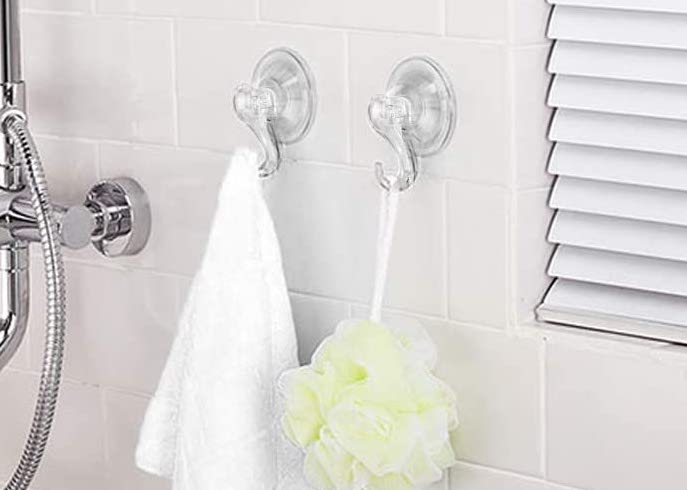
Hang towel on peg. Hop into shower. Step out. Pick up towel from floor. Repeat for, oh, I don’t know, years.

Some of you have no idea what I’m talking about. This innovative hook is for the rest of us. Snag your towel on the hook, and gravity pinches it in place. Lift up, and once again gravity helps out by releasing the pinch. It’s just beautiful in so many ways. Ingenious, visually appealing, and indescribably cool. I find myself wandering into the bathroom just to watch it work. I bring dinner guests into the bathroom to demonstrate it. (Some of them now have their own). I still consciously appreciate it after every shower. During a brief vacation away from home, my wife and I missed it daily. We’ve discussed buying extras to take with us when visiting relatives.

clever-hook.jpg
[Update: added image of installed hook.--OH]

I would haughtily sneer at someone for recommending a tool without years of solid performance, but 3 months on and I am still in love. Maybe it’ll fall apart in a month (it feels sturdy, but what do I know). Maybe the springs will wear out (whoops, no springs: it works by weight). Maybe, maybe. Sneer away. I’ll laugh along with you, but *my* towel will be dry.

It will also work for winter coats and heavier items as it supports up to 40 lbs, but I wouldn’t suggest using it on the International Space Station.

-- Eduardo Santiago  

Clever Hook
$10

Available from Amazon

Manufactured by Linden Sweden


Smart Move Tape

smart-move-tape.jpg

Two things smoothed out my family’s move a few years ago: designating Open First boxes for each room in our new home, so that on the first night after the move we wouldn’t be missing any essentials; and this Smart Move Tape.

The clearly marked and color-coded designations (Office, Bedroom, Bedroom #2, Kitchen, Storage, etc.) made unloading go quickly for our movers, and organizing our many cardboard moving boxes much easier for us later on. No doubt we could have accomplished something similar with a handful of colored Sharpies, but it would have taken a lot of consistently careful writing to even approach the same effect — at a time when we were looking to make less work, not more — and the colored tapes really help make sorting a breeze.

Smart Move Tape Two Bedroom Kit
2 bedroom rolls, 2 kitchen rolls, 1 living room roll, 1 bathroom roll
each roll is 2″ x 30yd
$12

Available from U-Haul


Printed Space

printedspace-logo.jpg

My initial experience with Printed Space came about when family in England bought my wife and I a couple of canvases that used photos from our wedding. An artist at Printed Space worked with my brother to edit a batch of 300 photos down to 60, then cropped and arranged them and gave my brother various digital proofs, from which he selected the one he thought we’d like the best. The canvas was shipped from England to our home in San Francisco in a custom-made picture-frame box, in perfect condition.

When we found out that Printed Space also puts your images (or stock images) on blinds and wallpaper, we got a bedroom decorated for a friend’s 4-year-old son. (Pictured here).

printedspace-sm.jpg

The company now does flooring too, so I’m planning to get the lobby and other areas of my office covered with custom flooring.

What we liked: Limitless choice in images — use your own, or images you can buy from any online source. Printed Space has partnerships with a number of stock image sources, photographers and artists, so you’re not going to end up with the same all-too-obvious images you see elsewhere.

Fully customized to your space. These are not posters. I’ve had other canvases made by online poster vendors, but they’ve been just that — posters printed on canvas. These are images that can be enlarged, cropped, rotated, whatever, to suit the space you’re trying to decorate. Printed Space gave us advice about planning around windows, doors, light switches and power outlets. You pay no extra for this design service.

I couldn’t be happier with the quality of their work.

-- Philip Leonard  

Printed Space
From
$76 for 24″x16″ unframed canvases
$6+/ft2 for wallpaper
£108 for 60cm2 blinds (prices not given in USD for blinds)


Builders of the Pacific Coast

I’ve lived on the California coast all my life, so I’m no stranger to homegrown architecture. I’ve driven by geodesic domes tucked into canyons and hiked passed shack-like mini-mansions perched on solitary hilltops. These encounters have always been brief and, most notably, from afar. As he did with the previously-reviewed Home Work, Lloyd Kahn takes us inside the structures many of us wouldn’t and couldn’t even stumble upon. From Northern California all the way up to British Columbia, he brings us the coastal creations of more than a dozen builders. Driftwood saunas and stairwells, wave-like green roofs, bright wide-eyed yurts, hand-carved pillars and more. A wonderful collection of imagination and possibility.

Builders of the Pacific Coast
Lloyd Kahn
2008, 256 pages
$18
Shelter Publications, Pacific Builders of the Pacific Coast homepage

Available from Amazon

Sample Excerpts:
builders-pacific2-sm.jpg
builders-pacific3-sm.jpg
builders-pacific4-sm.jpg


How to Build an Igloo

A wonderfully illustrated guide to making snow shelters. How to build with snow, how to work with snow rather than against it, and what not to do. Amazingly informative, succinct and fun. This book is the kind of expert you dream of.

-- KK  

How to Build an Igloo: And Other Snow Shelters
Norbert E. Yankielun
2007, 208 pages
$14

Available from Amazon

Here is an unrelated but excellent 10-minute film from the Canadian Film Board on How to Build an Igloo (via Kottke).

Sample Excerpts:
howto-igloo.jpg

A surface entryway should have a header block, or lintel (shaded), bridging the top of the arch opening.

*
One of the challenges faced by the beginner quinzee builder who excavates the interior of the snow mound is not to weaken the structure by breaking through to the outside of the mound or causing a thin spot in the wall. It is difficult while digging inside the quinzee to maintain a uniform wall thickness. To overcome this challenge, try this trick: After completing the snow mound, and before it begins to sinter, gather a few dozen foot-long (30 cm) thin, dead twigs, dried plant stalks, or stiff lengths of straw. Completely push them into the snow mound at various places all over the dome. They will act as depth gauges. During excavation of the interior, if the ends of the twigs or stalks become visible, you will know that enough snow has been removed from that section of the dome. Digging to the point where most of the ends of the twigs become visible inside ensures a uniform 1 foot (30 cm) wall thickness.

howto-igloo2.jpg

Placing twigs of approximately the same length into the snow mound will help to keep the dome of the quinzee a uniform thickness.

howto-igloo3-sm.jpg

Mounding the snow on several backpacks and then removing them once the mound has sintered saves a lot of shoveling.

arrow See another excerpt


Living Aboard

living-aboard-mag.jpg

Living Aboard Magazine, still printed on paper, is devoted to the concerns and needs of liveaboards. It’s a pretty cozy subculture, in part because the cost of mistakes on water are very expensive and possibly dangerous. Think of this as an old fashioned newsletter for liveaboard users; all material is generated by readers.


Living Aboard Magazine
$18/year (6 issues)
$5/issue
Sample Issue PDF

Sample Excerpts:

from Living Aboard Magazine

Living aboard is a dream many share and more and more are achieving. As jobs become more flexible, home offices become more powerful, and people demand more from their lives, the trend is on the rise. Many thousands of people from all walks of life live on all kinds of boats, forming a diverse community with a wide range of personal interests and experience. It is a lifestyle that transcends economic and social boundaries. A sailor in Seattle described the liveaboard community in his marina as comprised of engineers, nurses, mechanics, naval architects, entrepreneurs and salespeople. There are families with young children who live aboard, there are retired couples, single men and women, college students, and nine-to-five professionals. They live wherever there is water on all kinds of boats – of all sizes and makes. They live on lakes and rivers and oceans, north and south, east and west, in all kinds of climates. Some live in marinas, some live on the hook, some cruise, some stay put, leading different lives in different places. What they hold in common is a fierce independence, love of the water and a spirit of adventure. They are a community, albeit a diverse one, bound by their unique lifestyle.

*
We gradually realized that what had started out to be a vacation or a lark, a mid-life dalliance, had become something more. In our 50s, when most of the daily tasks ashore demanded only that we repeat what we already knew how to do, we learned new skills and rejoiced in knowing we could. At a stage when we had come to rely on a circle of old friends and family, we constantly met new people whose friendship we now prize.

*
Moving aboard a small sailboat meant leaving behind the accumulation of stuff that had clung to us over the years. I disposed of former treasures at a series of yard sales and rented a storage unit for the bits of furniture, ski equipment, winter clothes and memorabilia that we would use to jump-start our lives when we stopped wandering. I enrolled in classes called “Medicine at Sea” and “The Offshore Cook.” We took part in a weekend seminar demonstrating rescue-at-sea techniques. I took scuba diving classes and Ham radio license exams. Finally, we sold our home in the suburbs, quit our jobs, and closed the bank account. It took six years from the time we decided to “live differently” until we were ready to go.

arrow See another excerpt


The Essentials of Living Aboard a Boat * Living Aboard

living-aboard-tarps-sm.jpg

The Essentials of Living Aboard a Boat

The uber dream: to live aboard a boat. This book’s job is to wise you up about the reality of that fantasy. It will equip you with essential facts for this grand adventure, or else it will graciously eliminate the notion from your head forever. In either case it deserves a medal. This kind of clarity and sound advice is in short supply. Marina bookstores overflow with practical memoirs by salty authors, few of them with a view wider than their own hulls. This one is based on the experience of many liveaboard practicioners in many styles, and is the most useful way to answer the persistent question: “What is really involved living full time on a boat?” To clarify: The Essentials of Living Aboard is concerned with life on a boat that spends the bulk of its time docked, and only cruises occasionally. Your neighborhood will be other boats instead of open water. It is not too much of an exaggeration to say this lifestyle is less about living on a boat and more about living in a marina.


-- KK  

The Essentials of Living Aboard a Boat
Mark Nicholas
2005, 284 pages
$13

Available from Amazon

Start with the Essentials book and proceed to the magazine if you are not dissuaded.

Sample Excerpts:

from The Essentials of Living Aboard a Boat

Speaking of investments, in general, boats are not good ones. Not only do boats depreciate in value, but the difference in value between a boat that is 19 years old and 20 years old may be significant, because many financing companies will not lend money for a boat that is 20 or more years old. You may find that you own a boat you cannot one day sell, which makes your boat virtually worthless.

Even adding electronics and fancy gear to your boat won’t help much in maintaining value. Once installed, the electronics will immediately depreciate. This isn’t like a house (on real land) in which a $15,000 kitchen renovation might bring about $35,000 in increased market value. On a boat, a $2,000 radar system might bring an increased market value to the boat of $500-$1,000. That’s an immediate net loss of 50-75 percent. Then, after just a couple of years, the electronics, valuable if separated from the boat, will bring no market value increase at all to the boat.

*
A better deal will always come along, even if that deal does not exist today. When you think that a great deal is passing you by, don’t be nervous, because there is another one coming. … So be patient, my liveaboard brothers and sisters. Relax and enjoy the ride. Don’t panic. A better boat is right around the corner. If you remember that, and learn to believe it, this process will be less stressful and more fun; you will be a much better negotiator knowing that you can walk away and still have terrific options. And you will be more emotionally willing to take the time necessary to choose for yourself the best possible boat.

*
We already talked about how accessories are not worth their original prices once installed. Good accessories do not make for a good boat. A good boat is a good boat whether or not it has a good radar system. Unfortunately, a bad boat does not become anything other than a bad boat just because it has a $2,000 chartplotter.

arrow See another excerpt


$50 and Up Underground House Book

underground-house-sm.jpg

My wife and I had some property, but not enough money to build a house without going into debt. We enjoyed staying in a cave B&B in France and love the Troglodyte dwellings in Trôo, France. After consulting several books, including one by Rob Roy, this book just made the most sense. The methods are so low tech, a bum could make himself a mansion. Other books get into engineering with concrete, steel, rebar, etc., which cost a fortune and don’t necessarily function any better and, in some cases, maybe not as well. With this book and the videos, which are a must if you get serious, you really can build a home for the cost of a roll of plastic and a few other items, provided you do the labor by hand and scrounge materials.

Mike explains succinctly what took him years to figure out and you may might never discover otherwise: how to get in light from all four sides, how to protect untreated wood, how to connect the log post and beams together with pins made of low cost rebar, how to evenly compact the earth backfill by hand as to allow nature to finish the job (the backfill also functions as earthquake bracing keeping you tight under the surface rather than hinging at the point where the building meets the ground, a method similar to what Frank Lloyd did to prevent quake damage in Japan). Mike shows how to make a foyer or a gable to keep water flowing around the door opening rather than across it. Skylights are notorious for leaking, even on a conventional house. So Mike invented the “sun scoop,” a method I used that allows natural light to shoot right through the full length of the underground complex at different times of the day and year depending on your design and desires. He also shows how to make clerestory windows to let light into the high side of the house through an uphill patio or a wraparound.

I was a bit skeptical at first. How could all of this work and be so cheap? This type of dwelling is not for everyone, but if you do it right it really does provide great shelter. There are engineering tables in the back of the book providing rule of thumb guides and safety information. It won’t get you something that will pass a code inspection, but I’m of the opinion codes and building regulations are written in part to provide sales for corporations and taxes for the government. A friend of ours designed a small underground house. She wanted to go with engineers and permits. Last estimate: $1.5 million dollars. And she has yet to get it approved. Sadly, she will never build her dream. This book even has a chapter of strategies for getting around that. Keep in mind, too, this book is not a house plan. You learn how to build nearly any design you want. Just put the safe framing building blocks together in a design that suits you, keeping the important rules and directions in mind. After the basic structural requirements are met, the only limit is your imagination…

We started our house in 2002 and had a very crude shelter within a couple months. I framed in about 2,000 square feet, made about a thousand or so fairly comfortable, and continue to expand into it as we need it. We have a studio apartment area, a master bedroom and two bathrooms, as well as a porch area with a conversation pit, uphill patio, green house and shop. We have added a large garden to raise much of our own food, a carport, wood shed and two-story rammed earth, rock and salvaged boat dock and bridge timber garage. With natural earth temps around 50 at night, only a small fire in the wood stove is required to keep things warm. The roof is a garden. It feeds and shelters us and provides a park-like setting with flowers all around. There is no exterior painting required. Nothing to become an eyesore as the paint chips and deteriorates and the shingles rot off. Sure it takes maintenance and there are issues to deal with but if you build it, you will be intimate enough with it to know what to do.

My home is growing. It’s alive. It changes with time and will be here as long as we want it. Or if we leave and no one cares for it, it will someday revert back to the earth from which it came, to be just another one of natures reclaimed gardens.

– Glenn Kangiser

underground-house-bedroom.jpg

The $50 and Up Underground House Book
Mike Oehler
1981, 116 pages,
$20
Available from Amazon

More info and videos available from UnderGroundHousing

Sample Excerpts:

undergroundhouse-uphill-sm.jpg

Related items previously reviewed on Cool Tools:

handmade_houseboats-sm2.jpg

Handmade Houseboats

will-your-home-survive-sm2.jpg

Will Your Home Survive?

mongolian-cloudhouses-sm2.jpg

Mongolian Cloudhouses


Lay-It-Out

Last time I moved I threw out my back repositioning Grandma’s china cabinet for the 10th time. My latest (and hopefully last) moving experience was a dream because of the Lay-It-Out furniture templates. These unique life-sized paper furniture templates are the shape of your bed, sofa, tables, chairs, rugs, billiard table. After trimming them to the appropriate size (measurements are in inches and centimeters), we placed them on the floor and — as I was directed to the appropriate location — continued moving them around with no effort. I had the whole house planned out before the moving truck arrived and it cost less than the physical therapy and pain killers I had to use before. They are a breeze to use. Measure, trim, position, then reposition and reposition and reposition again… You could buy a roll of something like cheap brown crate paper of course, but I liked that Lay-it-out was ready to go, sizes already measured, and in pretty colors. You can buy a “Total Home Package” or purchase smaller packages specific to the Living Room, Dining Room, Bedroom, Game room, Accessory Tables or Rugs packages. I purchased the whole house package and used most of the pieces, except the billiard table, which I kept pinned to the wall for two weeks as a piece of pop art.

-- Rick Sievering  

Lay-It-Out
$20 per room set
$100 for a whole home set
Available from Lay-It-Out