Duluth Firehose Work Pants and Suspenders

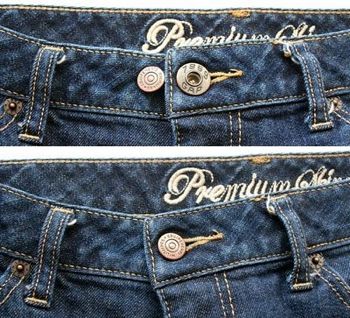
Duluth’s Firehose Canvas Work Pants are made of strong stuff.  I have been using them on my farm for 12-months and have found that they are comfortable and durable.  They have a generous cut so I have room to move when I am crawling around the tractor.  They have wide and numerous belt-loops, velcro-flapped cargo pockets and hip pockets, and a handy loop for a tape measure, as well as a long pocket for a wrench or screwdriver on the thigh on each side (so they suit lefties and righties equally).

I hang them from Duluth’s wide side-clip suspenders so I can load up the pockets without losing the lot around my ankles. These suspenders have two inch wide straps and just two clips; the front and back straps meet at your waist (or where it once was) at the side under your arms.  Normal front-and-back suspenders like to catch on stuff when I am crawling around, and often let go. The side-clips have never come unfastened. Great clothes.

-- Russel Day  

[We've previously reviewed Duluth's suspenders as well as their brass button kits for easy suspender attachment.--OH]


The Art of Manipulating Fabric

manipulating fabric.jpeg

I have used this book for at least 8 years as a source of inspiration for my work as a designer. The author, Colette Wolff, systematically explores the many different ways that fabric can be folded, gathered, tucked and quilted, creating categories for each type. Her explorations start with a simple fold or pleat but become successively more and more complex, and more creative. In the last chapter she includes examples that combine different techniques. She always maintains a clear line of thought as she branches out, providing precise instructions and beautiful black and white photographs of all the “manipulations” executed in plain white muslin.

What I find so remarkable is Wolff’s ability to be at once so methodical and exacting, and at the same time to be so imaginative in her approach. She has created an encyclopedia of fabric manipulation, an incredible resource that anyone involved in working with fabric, from clothing and textile designers to quilters and home sewers, would find not just useful, but truly inspiring.

-- Antoinette Indge  

The Art of Manipulating Fabric
Colette Wolff
1996, 322 pages
$20

Available from Amazon

Sample Excerpts:

Manipulating fabric p 295.jpg
Hand stitches, p 295

*
Manipulating Farbic p 284.jpg


PacSafe RFID-tec Wallet

pacsafe.jpg

Traveling back from Europe last year, I almost missed my plane because I was shopping for a wallet that had a fully closing change-purse (necessary for one and two Euro coins). I bought a very stylish, leather one at the airport for $100, which did not have a bill pocket, only a clip (which itself soon broke).

I replaced it with a more utilitarian PacSafe wallet, and I love it. It has two bill pockets, one that zips closed, as well as a large coin-purse. It has three larger than card-sized pockets as well as three card-slots and a transparent pocket for an ID card.

The material is super-strong nylon and has something sewn-in that blocks RFID signals. It successfully prevents the SF Bay Area touchless transit card Clipper from working while the wallet is closed. I am even more impressed with the construction and the little details like small elastic pockets to hold the zipper-pulls to keep them from jingling and catching on things.
4662_192_RFID_tec_100.jpg
In short, it does what it is supposed to do and does it well.

-- Richard Haven  

[Blocking RFID signals is increasingly relevant given the number of credit cards and passports that currently use the technology. Faraday cages and other signal blocking materials can prevent RFID sniffers from accessing sensitive information used in identity theft. --OH]

Pacsafe RFID-Tec 100 RFID-Blocking Bifold Wallet
$26

Available from Amazon

Manufactured by Pacsafe


Youngstown Waterproof Winter Plus Work Gloves

waterproof work gloves.jpeg

I received these gloves about six years ago from my wife, in one of those rare intersections of need and availability. It was Christmastime and I needed to shovel, so I broke these out and went to work. I never gave them a second thought, until I realized I had done a fair amount of ice chopping, opening the garage, and manipulating other things without ever removing the gloves. This is somewhat of a rarity for me since I usually cannot work in gloves. Fast-forward to spring, and I used them to protect my hands when chopping and stacking wood; working on the car; working in the garage. I *far extended* the prescribed use of these, despite the fact that they were winter gloves and waterproof. In a pinch, I’ve even used them when moving flaming logs in an outdoor fire pit.

A short word about the waterproofing: I tend to agree with other owners in that these aren’t strictly waterproof. If I was a long-line fisherman I may not use them. However, as a north Jersey resident who works on his cars, shovels snow, and builds snowmen for the kids, I can attest to their warmth and utility in the cold and wet.

With respect to function, they fit my slightly larger hand size well, and the back strap does seal in against cold and snow. The palms and fingers are textured and I am able to pick up bolts, thread nuts, small tools and sockets, and work with wrenches rather easily. The fingertips are boxed, not tapered, but in some ways the fingertips work to my advantage in picking up things on the ground.

When they get *really* dirty, you can toss them in the wash. The construction is such that the inner glove liner is not sewn to the shell, but it is a huge pain in the posterior to re-fit the glove components back to original fit. I used a wooden spoon and patience to eventually restore it to normal comfort.

You can kill them. Eventually, I wore them down at the seams where the fingers meet the palm, and the palm itself. I hung onto them as long as I could but until recently could not find them. I hung onto the wrist strap tag so that if I ever found them online, I’d be ready. I rediscovered them on Amazon not too long ago and will be re-ordering soon. I plan to look at the normal work ones in addition to the winter ones; the capacitive thread ones look intriguing, since they have a conductive thread sewn into the fingertips and thumbs for smartphone use.

-- Christopher Wanko  

Youngstown Waterproof Winter Plus Glove
$29

Available from Amazon

Manufactured by Youngstown Gloves


Patagonia Travel Belt

patagonia-travel-belt-xl.jpeg

Belts are boring, but essential tools. Outside of holding up pants their utility tends to be fairly limited. I own the previously reviewed 686 Tool Belt, and find it useful from time to time, but decided I wanted something simpler for traveling. After reading about the benefits of nylon webbing, I picked up one of Patagonia’s Travel Belts.

The Travel Belt, like the previously reviewed Tech Web Belt, is made up of nylon webbing that can be cut down to size and sealed with an open flame. Unlike standard webbing belts, the Travel Belt has a long 19″ x 1.5″ zippered pocket sewn on the inside that can easily stash a folded copy of a passport, folded currency, and keys. The pocket is surprisingly lengthy and capacious that when filled is never uncomfortable or ungainly.

I’m not a paranoid traveller, but I do recognize that it’s possible to lose a wallet, or have a bag whisked away at an inopportune moment. The Travel Belt makes it very unlikely that I’ll lose everything. On a recent trip to Bangladesh, I kept a folded copy of my partner’s and my passport, $20 in local currency, and an apartment key in the hidden pocket. Luckily, we never had need of the belt’s contents, but the security of knowing we wouldn’t be without bus fare home was comforting.

I would wager that it’s impossible to tell from the outside that the belt contains a pocket which should be a deterrent for any potential thieves (I also believe it very unlikely that any assailant would check). I hope to never find out, and in the mean time remain impressed with the added utility provided by the Travel Belt.

-- Oliver Hulland  

[Doh! It was pointed out that we have previously reviewed the slightly cheaper Eagle Creek All Terrain Money Belt available for $18.--OH]

Patagonia Travel Belt
One size
$29

Available from Amazon

Manufactured by Patagonia


RefrigiWear

refrigiwear.jpg

Having to work outside in really tough conditions is bad enough, but many times worse if you’re cold too.

I found RefrigiWear suits years ago. They’re made for workers in blast freezers, so they’re tough, not super expensive and come in lots of sizes. My whole crew got these suits and they kept us fully functional while outside overnight for February-in-Wisconsin telecom projects.

I have no idea what Iditarod racers wear, and I’m pretty sure these won’t have the right cache for the ski set, but for working people these suits help you get the job done in the cold and won’t drain the piggy bank.

-- Wayne Ruffner  

RefrigiWear Iron-Tuff Minus 50 Suit with Hood
$185

Available from and manufactured by RefrigiWear


Ikea Prickar Bibs

kladd-prickar-bib__0105547_PE252951_S4.JPG

I’ve been using these bibs for over a year, and they are the best of the dozens I’ve had and the only ones I use now. They are cheap; a pack of two costs $5. They go on easily with a sturdy velcro closure on the back. I’ve washed them countless times and they’re still like new. The long sleeves and total coverage keep clothes 100% clean.

They are water repellant and even have a flap on the bottom to catch stray food and liquids. They can be wiped clean of small messes with a wet sponge and be ready for reuse right away. For big messes they can be taken off inside out to contain the spill. I always keep some in my bag and find them to be one of the things I can’t go without.

-- Maria Piccolo  

Klad Prickar Bibs
Pack of two
$5

Available from and manufactured by IKEA


Icebreaker GT Wool Running Gear

icebreaker-shorts-sm.jpg

Synthetic exercise clothes have a tendency to get funky after a day or two. They require that you either wash them frequently, or own several pairs. Fed up with the smell and the burden of having to frequently wash my exercise gear several times a week I decided to pick up merino wool running shorts and running vest. After nearly 6-months of use, I doubt I’ll ever go back.

I now wear my running clothes for up to a week before I detect any funk, and when it does smell it tends to be a “wet sheep” aroma; a far cry better than the locker room reek I had been accustomed to. Additionally, wool has antimicrobial properties which can reduce the rate of rashes.

In use, the merino wool isn’t itchy, and performs admirably even when drenched in sweat. This is due to wool’s ability to absorb significant amounts of moisture before it feels wet which also has the benefit of reducing friction in sensitive areas (for me, it reduces nipple chafing).

At first I was worried that the wool would be too hot for summer running, but I quickly found that it was more comfortable than my synthetic gear due to its breathability, wicking, and absorbant properties. Synthetics are breathable, but I have found that the minute I put them on in hot weather I feel damp (synthetic fibers don’t absorb water, but rather wick it away to its surface leaving the fabric feeling wet). Wool, on the other hand, not only wicks but also absorbs, while drying just as fast.

The downside to wool’s absorbance is that it has a tendency of feeling heavier during long runs. My second concern was that wool would wear out faster, but after 6-months of near daily use that hasn’t been the case. Their isn’t even the slightest indication of pilling even in places of high wear (between the legs).

Unfortunately, Icebreaker running gear is more expensive than many of the synthetic alternatives, but its a justified expense given that it feels and performs better. Finally, because a single set of wool running gear can replace several pairs of equivalent synthetics while also cutting down on the number of loads of laundry, you can cut costs elsewhere.

Bicyclists were the first to recognize wool’s superiority as an exercise fabric given their historic use of wool biking jerseys. Now that companies like Icebreaker are incorporating soft but durable merino wool into a much wider range of products it’s only time before most of my wardrobe is woolen.

-- Oliver Hulland  

Icebreaker Men’s Distance Short
$49

Available from Amazon

Manufactured by Icebreaker


Casio MQ24 Analog Watch

CasioMQ24sm.jpg

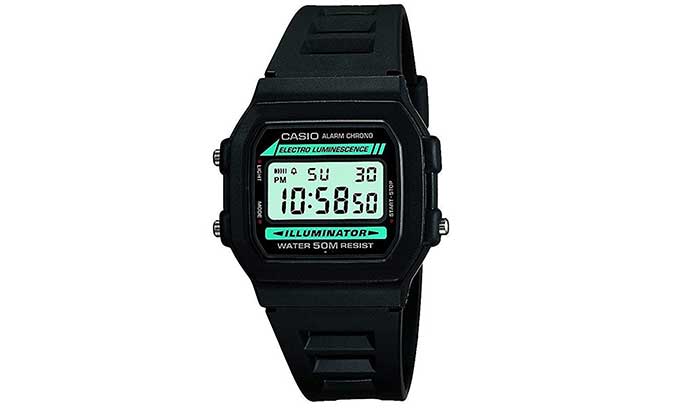
Men’s watches are complicated by superfluous amenities, but if you’re looking for a simple affordable men’s watch this black and white-faced Casio is an excellent analog model similar to the previously reviewed F-91W. This analog Casio keeps the time without frills.

The watch isn’t backlit, doesn’t have a calendar, or any other function for that matter outside of keeping the time. But I love it, and in all honesty, there are few circumstances where I am forced to check the time under cover of darkness, or while under 100-meters of water. If I need a calculator I can get one, and most days I know the date already.

Overall I am very pleased with this minimalist $10 timepiece. It is simplistic in style (lucky for me black goes with anything), and if I lose it or it becomes scratched it is easily and cheaply replaced.

-- Sean Moriva  

[This Casio is an even simpler and more affordable alternative to the previously reviewed Swatch Watch.]

Casio MQ24 Analog Watch and Resin Strap
$11

Available from Amazon

Manufactured by Casio

I rarely go a day without finding my wristwatch useful (as a stopwatch, for timing while exercising, or while traveling) reaffirming, at least to me, that there remains both a time (!) and a place for their use. --OH


Halo II Sweatband

Halo II.jpeg

I live in Ohio and I try to run consistently year round. I’ve run in sub-zero temperatures on many occasions with no problems. My sweet spot temperature for running is around 55 degrees and when it gets over 70 degrees, I start whining like a baby. My body just does not deal well with warmer temperatures and higher humidity, and I tend to sweat like a pig.

I’ve tried many products over the years to keep sweat from soaking my sunglasses and stinging my eyes. I have a few Headsweats and SweatVac products, but the king of headbands is definitely Halo. Their headbands are made out of a soft, stretchable fabric they call DRYLINE. It’s a polyester/nylon combination that feels similar to a thin neoprene. They also use a thin rubbery strip (dubbed Sweat Block Technology) along the front, inside area of the headband so that excess sweat will be channelled to the sides of your face and not straight down into your eyes. I’ve got a pretty good-sized melon and I’ve had no problems at all with fit or comfort.

The amount of sweat that the Halo products absorb is incredible. Naturally, there is a point at which they will become completely saturated. Taking off the headband and giving it a squeeze may amaze and/or disgust you, but you’ll definitely know that it’s doing its job.

I’ve personally used the Halo II headband and the Sport Visor (which features a slightly smaller band sewn into the cap) and strongly recommend both.

-- Jason Long  

Halo II Headband
$5+

Available from Amazon

Manufactured by Halo