HitchSafe Key Vault

HitchSafe1.jpg

I do a lot of outdoor stuff like fishing, hunting, diving, etc and when I leave my car I am always trying to figure out what to do with my keys. In the past I had three places I hid the keys but I never felt really comfortable about it. I never liked taking keys with me because I worried too much that I might lose them. I used to be able to take them diving, but now that most keys have electronics attached, it has made it impossible.

I recently discovered the HitchSafe, an attachment that slides into my tow hitch that has a compartment that can hold credit cards, drivers licenses, keys, etc. The hitch has four dials on the drawer allowing you to create a custom unlock combination. And it comes with a cover that conceals the HitchSafe.

HitchSafe2.jpg

I recently bought a second for my wife as she is always getting locked out of her car and so she now keeps her spare key in there. In the past she has tried those magnetic boxes that stick to the underside of the car, but they kept falling off and it was hard for her to find it, let alone reach underneath and grab it.

This is exactly the kind of tool I wish I had thought of.

-- John Davis  

HitchSafe Key Vault
$47

Available from Amazon

Manufactured by HitchSafe


Mountek MK 5000 CD Slot Mount

Mountek.jpg

After I bought my smart phone, I wanted to find the best way to play mp3 and navigate with the built-in GPS when I am driving. Since then I have been searching for the best car mount. There are two common types of phone mount on the market, suction cup that sticks to the wind shield or flimsy clips that clip on to the air ventilation. I have tried both and found them to be inadequate and imperfect solutions.

I did some research and came across a mount that uses the CD slot. This is especially useful as I no longer use the CD player, but it is possible to play CDs at the same time. I have found that it is the perfect place to mount my smart phone. The MK5000 phone mount is very sturdy, and it has an adjustable blade than I can slide inside the CD slot and lock it tight. The mount supports vertical and horizontal rotation for easy screen rotation. It is adjustable and fits devices of different size.

Mountek2.jpg

I have been using the mount for a couple of months and it works very well. Every day when I hop into my car, I place my smart phone onto the mount and it holds really well. The only downside I have found is that it is more expensive than some of the other mounts, but it is definitely worth it.

-- Horace Chan  

Mountek CD Slot Mount
$25

Available from Amazon

Manufactured by Mountek


Along Interstate 75

along75.jpg

I’ve used CAA (AAA for those in the US) maps and TripTiks for long journeys in the past. In January I went on a greatly anticipated road trip on I-75 to Florida from Toronto, ON. Though I have a GPS in the car, iPhone, and iPad, my favourite directional aid was Along Interstate 75 by Dave Hunter.

Think of it as a TripTik on steroids. Dave and his wife are into the 16th printing of the guide. They’ve not only mapped the entire route from the border at Detroit/Windsor, to the Georgia/Florida border, but they’ve made remarks about the entire route. Remarks is even an understatement. The book has a page for each 25-mile segment of the highway. Each exit has details on the gas stations, restaurants, and accommodations available.

along75-body2.jpg

There’s also the usual stuff one finds on maps: place names with populations, and secondary roads. But there’s so much more. Photos of architectural or agricultural or historical interest. Hints on where to eat; where the locals eat, in many cases. Descriptions of tourist spots, what to miss, what to visit. He includes what he calls “hidden gems;” a food joint, or a historical home you might miss if you’re just driving through. Great places to shop, along with places to avoid. There is also loads of historical information about the communities you drive by or through, along with interesting facts about the highway. And in many stops including the tourist information centers, restaurants, or lodging, he includes the names of the people working there.

The book is easy to follow, and perhaps best used when there’s a navigator and a driver. It kept us amused for hours and hours on the journey. We looked forward to what Dave had to say as we rode the road. We missed the book a great deal when we took another route home.

You can find out more information about the book on Dave’s website www.i75online.com. He has also written a companion to the book for inside Florida called Along Florida’s Expressways. We weren’t quite as comfortable with it, but it did go up a notch in our own rating system when we figured out that he was the only one to mention the best manatee viewing station in Florida in Ft Myers at the Lee Co. Manatee Park. None of the big name travel guides we had did that.

-- Helen Hegedus  

[Note: Dave Hunter provides a free sample 14-page PDF that covers most of Kentucky. --OH]

Along Interstate 75
Dave Hunter
2010, 208 p.
$17

Available from Amazon

Sample Excerpts:

p. 86
Exit 154-A Civil War Execution: Just a quarter of a mile east of this exit is an historical marker commemorating a sad Civil War event which took place in 1864. Three Confederate soldiers were brought here from the Union prison in Lexington. At this spot, the three were hanged as a reprisal for the guerrilla murder of two Union sympathizers.

*

along75-1.jpg

*
p. 90
Exit 99- Clay’s Ferry (not suitable for large RVs). If you’re getting a bit tired of the freeway, I’ve got a small diversion for you. It will only take a few extra minutes- the entire distance is 2.9 miles (4.7 km). Let’s go down and visit the Kentucky river and see the site of historical Clay’s ferry.

Actually, there’s very little to see now but the scenery is pretty and the drive interesting (don’t try this if icy!). After leaving I-75 at exit 99, follow the winding road down 200 ft into the river valley. Riptide on the River- this 75-year-old restaurant on the banks of the Kentucky river has recently changed ownership.
*

along75-2.jpg


Split-Pea Lighter

splitpea-lighter-sm.jpg

My Cool Tool gift this year is the “Split Pea” Lighter from County Comm. It’s the “world’s smallest lighter,” a stainless steel tube 1.3″ high and 0.5″ in diameter. Unscrew the top, flick the flint wheel, and behold! Fire!

Now I don’t smoke, and rarely do I need to start fires here in Brooklyn. But the Split Pea appeals to my inner gearhead. It’s ridiculously small, well machined, and functions well. It’s sealed so that you can carry it in your bag, Every Day Carry kit, purse, etc. without worrying about fuel spills or spontaneous combustion. Plus, you never know when you might need fire, right?

I’ve carried a number of fire-starters in my EDC kit, and the Split Pea is the one I’ve settled on for durability, weight and size. I wouldn’t want to light 20 cigarettes a day with it — it’s almost *too* small — but for occasional or emergency use it’s perfect.

splitpea-lighter2.jpg

It’s a great gift because it’s useful, fairly cheap ($11.50), and universal in appeal. If you’re giving it to someone in person, it’s a good idea to fuel it up with liquid lighter fluid (from the hardware store) first, so they can try it out right away. (It’s probably a bad idea to send a fueled-up lighter through the mails, although apparently you can take it with you through TSA security as a carry-on item.)

Even people who don’t carry lighters will like the Split Pea.

-- Mike Everett-Lane  

Split Pea Lighter
$12

Available from County Comm


Iroda O-Grill 1000 Portable Grill

irodagrill.jpg

The Iroda O-Grill is an exceptionally well thought out portable grill with “big grill” capability. It looks like a flying saucer when the top is closed and the legs swung up. It is very well finished, inside and out, with what looks like auto-quality paint. It has been easy to wipe clean, even after greasy meats have cooked. The grill plate is cast iron, and takes up probably half of the grill’s weight.

The O-Grill has a hole below the chromed burner and an outside drip catcher that is easy to remove. It uses Coleman-type camping gas canisters, but it seems threaded for other types of adapters (I haven’t checked).

irodagrill2.jpg

When closed the grill sits upright with a sturdy handle available for carrying. I have found a minor problem with the handle latch. It is held by pressing the handles together and clicking the latch in place. I have had to learn not to press the handle together when carrying the grill. Not a big problem.

Oh yeah, it cooks like a charm. Good control, auto-lighter. Very well machined and built in China. Check out this sleeper if you like a capable, but portable, grill.

-- Greg Schultz  

O-Grill 1000 Portable Gas Barbecue Grill
$138

Available from Amazon

Manufactured by Rockler


Red Oxx Small Aviator Bag

RedOxxDuffle-sm.jpg

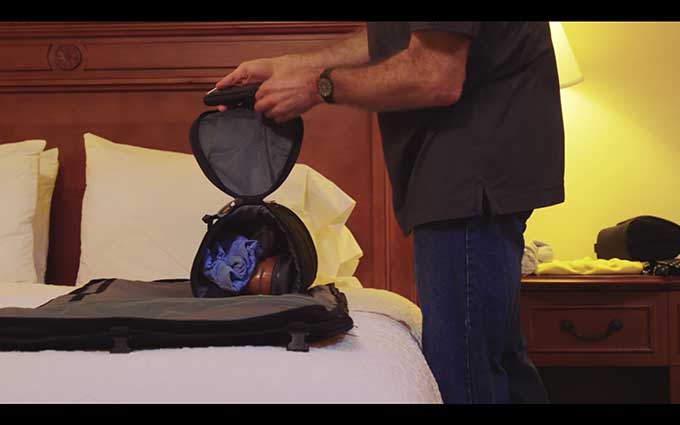
I’ve had a Red Oxx Aviator bag for a few years now. I have both the small and extra-small varieties. These bags are as plain as can be; no shoulder strap, no pockets, no lining of any kind, just tough-as-nails canvas, a good zipper, and strong handles.

My small bag has seen duty as a camping duffle getting kicked around in the dirt, as well as a carry-on for a week-long trip to Italy where it held its own, both as a carry-on (the small bag is almost the maximum legal carry-on size) and as checked luggage. These days I keep a sleeping bag and camp pillow in the extra small (!) and throw it in the car when I know I’ll end up sleeping outside or on someone’s floor. The bags zip all the way open allowing you to pack them sideways, like a suitcase, which is nice for laying out clothes and shoes. The zippers on these bags are nice, smooth, and non-catching; which is essential for stuffing my sleeping bag. The bags are guaranteed for life, and it is easy to see why; they are simple and well-done.

There are times I prefer traditional luggage but it is becoming more seldom. The aviator bags, make no mistake, are completely bare bones. This is what I like about them, but packing for a long trip might require you use some other bags inside to keep things apart. I typically use a small drawstring bag for a pair of shoes and stow an empty reusable shopping bag for dirty clothes. Some people use packing cubes. If you want compartments, a frame, straps, compression, organization, etc. built-in this isn’t the bag for you. Red Oxx makes well-reviewed complete bags but I have really come to prefer the aviator bags for their simplicity.

For the money, I can’t imagine a bag I’d rather use for stowing gear or packing on trips. I have some nicer luggage, but I end up using these bags more often and when I have any concern about durability.

-- Rob M  

Red Oxx Small Aviator Bag
$35

Manufactured by and available from Red Oxx


Cheap RV Living

cheap-rv1sm2.jpg

Roomier than a car, but cheaper than an RV, a retrofitted van makes a cool inexpensive house. Once popular during hippie days, the ancient American tradition of modifying a van is undergoing a resurgence as rents continue to rise. More folks each year commute from work and then park their home, instead of parking in front of it. On this lovely free website, you can find inspiring examples of cheap nomads, detailed instructions for conversions, gear recommendations, and lots of advice for living in a low rent or homemade RV from “them that’s doin’ it.”

-- KK  

[New content is posted to Cheap Green RV Living. -cc]

Sample Excerpts:

And what about gas mileage? With a car you may get 50 mpg and with an RV you may get 5 mpg. Since we are living cheaply, this is a very important consideration. It’s hard to be too specific with mpg numbers. If you buy a 1975 1 ton pickup with a 454, you might get 6 mpg with a camper, but if you buy a 2005 diesel, you may get 20 mpg with the same camper. If you get a 1985 Ford van with a 460, you may get 6 mpg but if you get a 302 V8 you may get 22 mpg. Or, even better, get a Astro minivan, you could get 25 mpg.

*

STEALTH PARKING: After I bought the van, I didn’t know where to go with it. I couldn’t afford to pay for an RV park (and they probably would not have accepted me anyway since my van was pretty beat-up looking) so I slept in the parking lot of the store where I worked. No one even noticed me! The great thing about the box van was that when I parked in front of any large store, it looked like it belonged there. I lived in that van for 6 years and never once paid for parking anywhere and was never bothered for where I did park.

*

I have a cell phone, a loan payment, van insurance, and credit cards. One of the first things I did to handle this was go “paperless” – I now get all my statements by email and pay my bills online. I get wifi on my laptop, and many public libraries have computers & internet available.

*

cheap-rv2.jpg

Kitchen:
This changed several times as I was building it. I needed pantry space, drawers, and fresh/gray water for the faucet/sink. The kitchen is positioned along the passenger side so I can open the doors when cooking on my camp stove. The counter is actual Formica with a drop down leaf to give me more room when cooking. I have 2 six gallon containers, one is for gray water and one for fresh. I use a hand pump for water, or use gallons of water from the store for cooking and cleaning more often now. I may add a small pump in the future. The microwave sits underneath with enough space in the pantry for about a week’s worth of food. The spice rack is a must have for me, because while the portions are smaller and more challenging to make, I still don’t sacrifice on good food! Under the pantry I store my pans, lids, and plates in a magazine rack from Ikea. The fridge is a standard dorm minifridge I found on craigslist for $20 but I only turn it on when driving or when plugged into shore power, as it can drain my batteries in two days. Most of the time I use it as a glorified icebox, as I tend to buy fresh foods the day I use them.

*

cheap-rv3.jpg

The Pee Bottle:

First and foremost, the pee bottle must be leakproof and unbreakable for obvious reasons! For all my adventures, I’ve used a 1 liter, wide-mouth Lexan bottle made by Nalgene. They come in a variety of colors – I’ve settled on the dark yellow one for my pee bottle so I don’t mistake it for my drinking water bottle. Similar, less expensive brands can be found in the sporting goods department at WalMart or Target, or experiment with plastic food product containers with tight fitting lids and enough volume.

Spill Proof – One fear I have in van or tent is fumbling and spilling the pee bottle before I have the lid screwed on all the way. To safeguard this, I made a wrist loop out of a piece of 1inch wide nylon webbing which I duct taped to the bottle (see photo). The wrist loop is loose enough to slip easily on and off and to hold the bottle with that hand, but tight enough that the bottle won’t fall if I loose my grip. Slip the loop over one hand, unscrew the lid, and away you go; just be sure to screw the lid on tightly before slipping out of the wrist loop. A piece of cord would work just as well as the nylon webbing – just get the loop the right size.

I keep two pee bottles in the van just in case I forget to empty one during the day – and on long, cold nights sometimes one liter just isn’t enough!

*
What vehicle to buy?

If gas mileage and stealth are most important: Chevrolet Astro minivan–great mpg and super stealth.

If room and stealth are most important: Full-size American van, especially the Dodge with a 318 V8.

If headroom is most important: High-top American conversion van.

For a couple, or if you need lots of room: Box van or Step-van, both with a diesel engine.

If you want to go further into the back-country: Pickup with a camper with 4X4.


Eaglecreek Packing Cubes

Eagle Creek Pack-It Half Cube.jpeg

These nylon zip-up packing cubes vastly simplify travel of all kinds. I’d used ziploc bags, net bags, and many other sub-containers, and couldn’t imagine why anyone would pay $10 or so for a nylon box with a mesh lid. Now I always use them.

They aren’t cube shaped, but more of a lunch-box flat rectangle shape. Because of their shape, you can cram lots into one, and still have a firm rectangular parcel. They come in various colors, and modular sizes–cube, half cube, double cube etc– so they stack efficiently. There is a convenient nylon-strap handle on one edge.

I traveled 6 weeks in the Middle East in winter, with just a carry-on backpack. Though it only opened at the top, I could unpack in minutes, pulling out the various parcels, to stack on a hostel bed or floor. Red was clothing, blue was first aid, green was food, black was bedding, and so on. None of the usual backpack chaos. When camping, I don’t have to deal with rummaging in a suitcase in the tent, just grab the parcel I want. Things stay neat.

Periodically, I treat myself to another one. I haven’t used the two-sided, padded or other fancier models, just the basic 1/4, 1/2, and double cube.

-- Mariah Nadeau  

[Note: Multiple sizes (and features) are available but they vary in price. -- OH]

Eagle Creek Pack-It Half Cube
$10

Available from Amazon

Manufactured by Eagle Creek


Tour:Smart

Tour-Smart.jpg

I don’t have a band, but if I did, I would use this book to guide me through the intricacies of touring. That’s the new economics of the music: a returning emphasis on live performance. This fat book is the best guidance I’ve seen for emerging musical artists. It is brutally honest, remarkably wise, and extremely helpful. Atkins is really good at extracting lessons. There are testimonies not just from many other musicians, but their roadies, agents, bus-drivers, managers, fans, and all the other folks you will need supporting you. This book is so good, in fact, anyone “touring,” including authors, dancers, filmmakers would find pats of it useful. In the new economy, your live presence is more valuable than copies of your past work. Here’s how to maximize your presence with the least hassles, and hopefully make a living do it.

Practicing what he preaches, author Martin Atkins offers live interactions, chats, lectures, performances, and email correspondence versions of his advice. Another kind of touring.


Tour:Smart: And Break the Band
Martin Atkins, Cynthia Plastercaster, Suicide Girls, Henry Rollins, Jade Dellinger, The Enigma, Chris Connelly
2007, 592 pages
$18

Available from Amazon

Book website http://tstouring.com/

Sample excerpts: You should feel very confident that 40 to 50 people would come to see your band on a Monday night. If you don't feel that's the case, you should wait a bit before playing this particular club. You shouldn't be in a big hurry to play to nobody, and that's what happens if you play before you're ready. Until then, be patient. * Should I take any show that's offered to me? No. Be smart about the shows you take. In the beginning, it's not wise to be too choosy, but before long, you should start turning down shows that don't make sense. Realize that more is going on than just a show being played. You are being associated in the minds of the audience with the other bands on the bill and with the venue. * Look at the incremental build up of costs (financial and human) with an understanding of the total investment needed for a two year commitment for your band. Then, apply some of the budget you'll need to slog through year two onto the front of year one. If done intelligently, you will be in a much different place by year two. you can use this strategy on a smaller scale with a single show or tourŠmore money spent earlier will help more. * Tour Bus Nothing makes sleeping on a bus over a long overnight journey sweeter than having spent a few years driving in a crappy vehicle, eating dust and unidentifiable truck stop food. When you are in a bus, it becomes a traveling cocoon. People like to be safe and comfortable in all understandable things everything is there: cell phone, fridge, toilet, and band members begin to magnetize to it. When you are in a van, you need people to stay with. You'll find those people by staying in the club longer, interacting harder, being more alert, smelling better, and not drooling. Yes, free accommodations also come with obligations, but it's these social obligations that interlock and weave their way through the fragile endeavor of "Breaking America." There is an unwritten underground contract that strangers in a city honor when they trust and open their hearts, homes, showers, beds, washing machines, and high-speed DSL lines to a beat-down band on the road. To deny that contract, to deny that 5 a.m. conversation, to deny their ability to make a massive difference with a bed, a blanket, a bagel, and a bath is to deny the bond that will reverberate for years afterwards. Maybe part of touring in a band has nothing to do with the music. Maybe it has more to do with meeting people, seeing differences across the country, and discovering their changing attitudes. All you see inside the bus is the changing landscape, the mold growing inside the refrigerator, and the bass player's growing porn collection. * When Your Agent Suggests an Opening Band Be careful. This is an easy way for your agent to get 30 shows for another one of his bands, get them off his back, and get more commission. Check for yourself to find out some information about the band: -Do they have a label? -Is that label going to help in any way at all? -Have they sold any CDs? -Do they have a following? How many people are on their MySpace page (divide by two)? -Have they played in these markets before? -Do they have a street team? -Do they have posters? Or will they contribute to printing posters (saving you each half)? -Do they have mountains of equipment, throw vegetable oil all over the stage, or have a reputation for causing problems? Do your homework! You might be better off with a strong local opener in each city, at least you'll have a chance at a place to stay! * You might be sitting down wondering how you could possibly pull off seven shows per week. You want to know what I'm thinking? What would happen if you could do eight or nine shows? * Will the volume be at the a realistic level for the room or will the main band's sound guy pull the faders all the way down? You would be surprised and horrified at how often that happens. It is reasonable for an event to increase in tempo and volume as the night unfolds, but there are respectful limits to that curve. I did an open-air show with Killing Joke, opening for the Mission UK, at some huge park in London. We had a double-decker tour bus and Henry Rollins was opening. We did our show and then I went back to the bus to try and have a bit of a nap. All of the sudden, I heard this amazingly loud, thunderous sound. I asked one of the crew guys what is was. "Oh," he laughed, "they just turned the rest of the PA on!" * Let's look at this for a bulb in Cincinnati. For a show there, I'd want to play a show in Dayton, OH (49 miles away), a show in Richmond, IN (63 miles away) or any other closer, small market in a 60-mile radius. Try for six to ten shows within OK driving distance for your rabid fans. Make sure that you get every single name you can on your mailing list. These are gold dust or any kind of dust that turns you on. You're trying to build a support base so that when you go to Cincinnati for the make or break show with the 450-person built-in crowd, you can entice people on your mailing list from each of the surrounding, accessible cities, task your street team in each city to round up as many people as they can, and organize transportation if necessary (I'm not talking about renting a bus, although I have done that in the past. I'm talking about ride-share). Because you've planned this in advance, you've held back the three-song preview CD from your new album or the cool, new t-shirt so that you can give one of those away free to anybody traveling more than 30 miles. Give people gas money if necessary. Help them to join this crusade with you! So, when you hit the stage you have 200 extra people at the venue. The promoter will notice the increased attendance. The bar staff will notice the increased revenue. The 450 kids who usually go will notice the larger crowd and get pulled in. End result: you've done something other than talk and hype and the next time the promoter is looking for a solid band that works hard with a good following to help a national show that might be struggling, he's going to call you. That's it, simple. As Sun Tzu would say, "Never take your country to war unless you're sure of the outcome." * Tools - Don't Be One, Use One For fewer than ten dollars you can get a Rand McNally Dist-O-Map. It is not some new, gimmicky tech tool, it's way cooler, very much like the cover of Led Zeppelin's Album III. It has the advantage over map-questing in that you can sit on the phone, run a budget, and dial up distances at the same time. it will also show you options that you might not have thought of previously. If you are lucky enough to be traveling by bus, you will be able to easily see which cities lie within the magical 450-mile overdrive mark. I cannot think of one single agent I have ever met who doesn't need this tool (or frighteningly, one that already has one when I meet them!) Think about that for a minute (especially after you realize that this costs $7.95). It has been the catalyst for the rerouting of several tours, which not only reduced the overall mileage, but put us in the right venues on the right nights. The other reason you need one is to dial up the total distance covered on a tour, divide that by the gas mileage of your chosen vehicle, multiple that by the average cost of gas, and begin a budget.


Clean Bottle

clean-bottle.jpg

The Clean Bottle is a 22-oz sports water bottle with removable bottom. It is one of those products that seems like a no-brainer the instant you hear about it.

Many athletes put electrolyte/endurance/recovery drinks into their bottles. Some of those bottles inevitably get forgotten in the bottom of a bag, under a car seat, or in a closet where they develop lush colonies of mold and bacteria which are impossible to clean out completely, so the bottle gets tossed. With the Clean Bottle you just unscrew the bottom, scrub the pieces and you’re back in business; no moldy residue left to taint your drink.

I train 6-7 times a week, and while I haven’t forgotten a dirty bottle in my car, I did leave one there on purpose for a week. It molded up as expected but was a cinch to clean out. I’ve been using the bottles for about 3 weeks and so far I’m very happy with them, as are the friends I’ve recommended them too.

At $10.00 each they aren’t cheap, but the savings from not having to replace dirty bottles (as well as keeping that plastic out of landfills) offsets the price.

The bottles are BPA-free.

-- Galen Pewtherer  

Clean Bottle
$10

Available from REI
Manufactured by Clean Bottle

[Note: You can purchase them directly from Clean Bottle where if you order four you qualify for free shipping, and if you order five they thrown in an extra bottle to boot. -- OH]